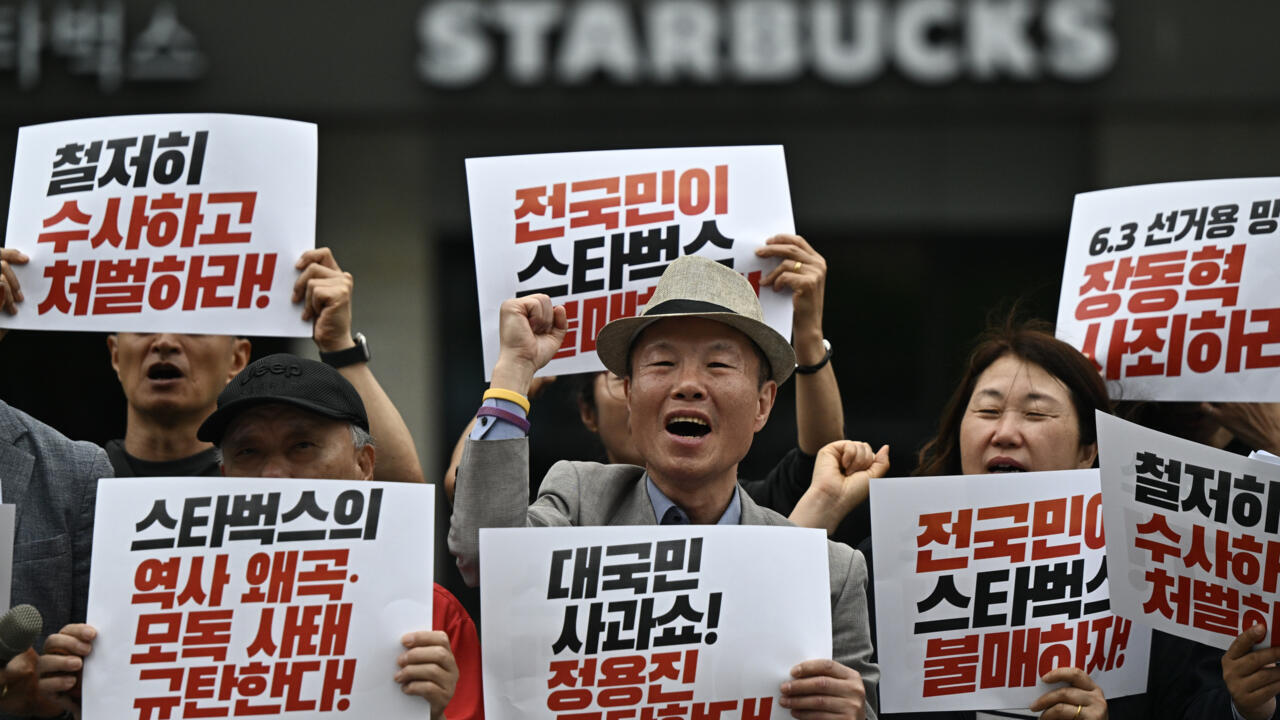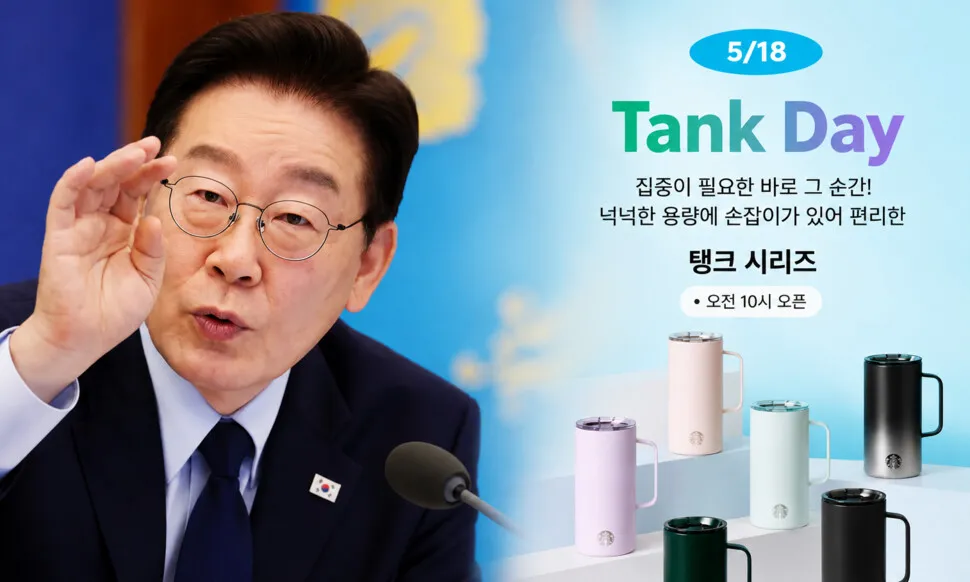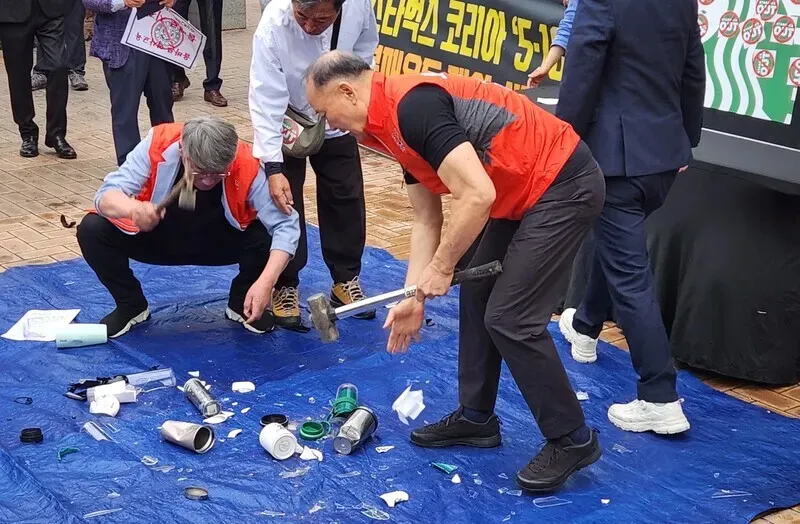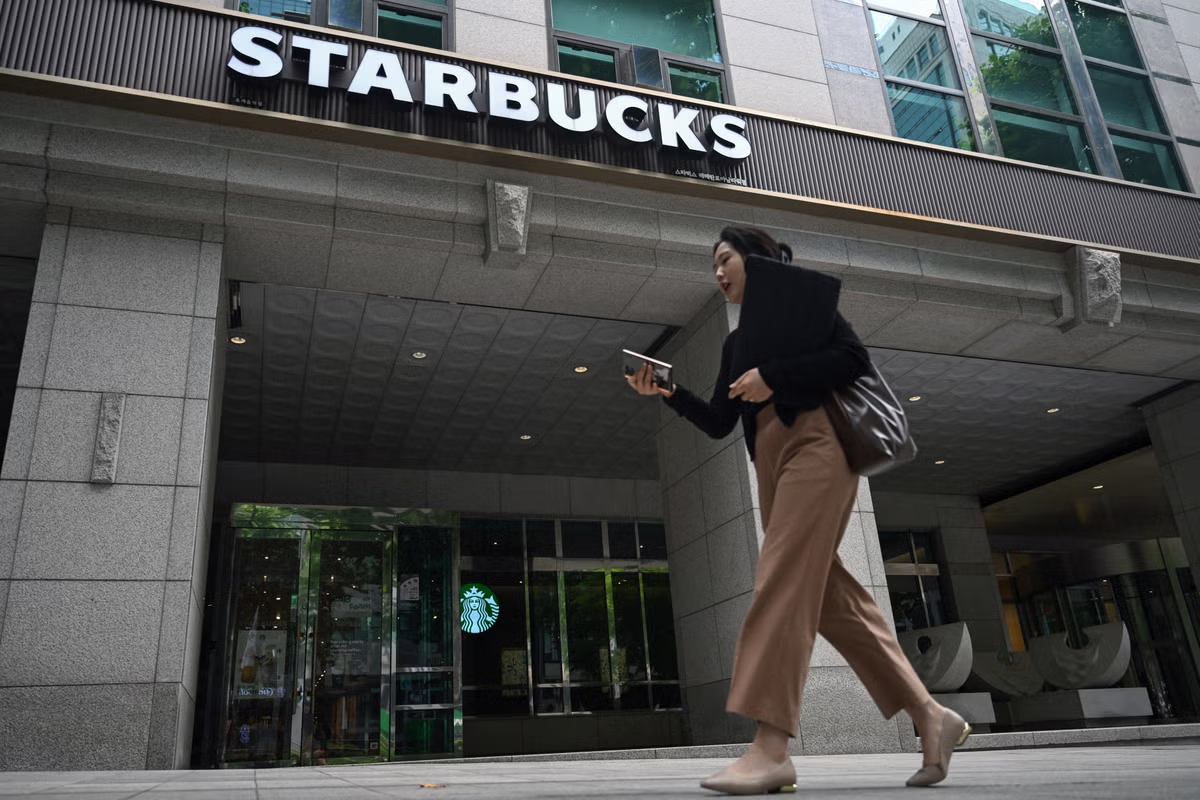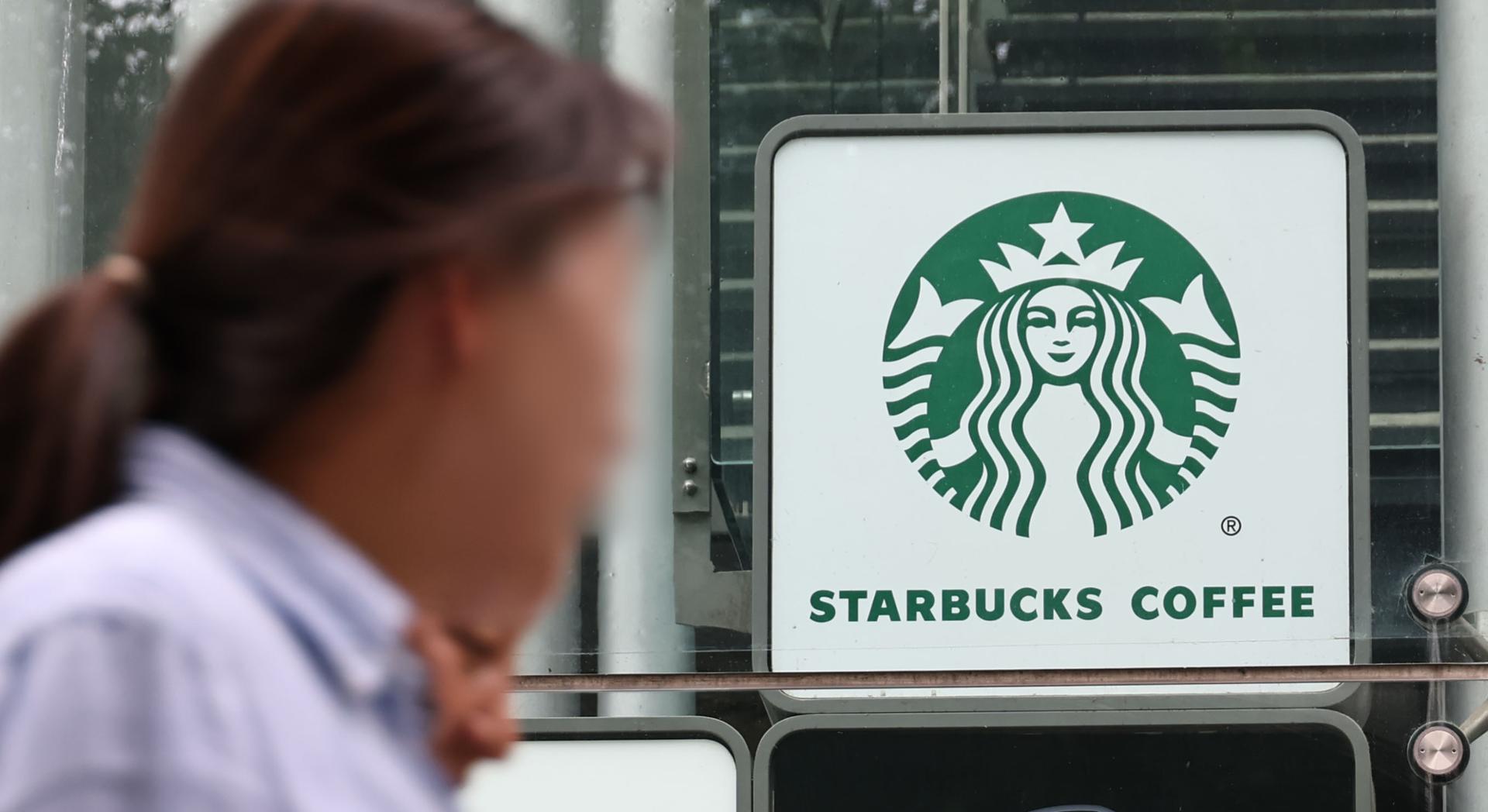
Teachers raise refund requests for gift cards as Gwangju educators call for stronger history education and civic awareness. Civic groups protest on Thursday in front of a Starbucks Korea's Gwanghwamun Branch in Jongno-gu, Seoul. (Yonhap) Boycotts of Starbucks Korea are spreading to the education sector after the coffee chain came under fire for a “Tank Day” tumbler promotion launched Monday, which critics said insulted victims of the May 18 Gwangju Democratic Uprising.According to education circles Friday, the Korean Federation of Teachers’ Unions recently received multiple inquiries from teachers about canceling or refunding Starbucks gift cards received as Teachers’ Day gifts.The Gwangju branch of the Korean Teachers and Education Workers Union also said Thursday it would exclude all Starbucks-related products from its programs and events.Local media reported that a high school in Gwangju also canceled a purchase of about 300,000 won ($200) worth of Starbucks gift cards that had been prepared as birthday gifts for faculty members.The backlash began after Starbucks Korea unveiled a tumbler campaign using the phrases “Tank Day” and “Slam on the desk!” The wording appeared on the anniversary of the May 18, 1980, Gwangju Democratic Uprising and was widely criticized for echoing two of the most painful episodes in Korea’s struggle against military rule.Tanks and military troops were used in the crackdown in Gwangju under Gen. Chun Doo-hwan, in which hundreds were killed. The latter phrase evokes the police cover-up of the 1987 torture death of student activist Park Jong-chul.“In Gwangju, there has been a lot of discussion within schools about refunds and boycotts,” said Baek Seong-dong, a spokesperson for the union’s Gwangju branch. “Some teachers say they will stop using Starbucks products, while others are organizing one-person protests near Starbucks stores.”The Gwangju Metropolitan Office of Education has also proposed that the National Council of Governors of Education draw up joint guidelines on how to respond to companies accused of distorting or insulting history.Educators said the controversy highlights the need for stronger history and civic education that helps students understand the pain certain expressions can cause to victims, survivors and their families.“Alongside history education, students need to develop the ability to empathize with how certain words or expressions can hurt victims’ families and others,” said Han Sung-jun, co-representative of the Good Teachers Movement, a civic teachers’ group. “That should be cultivated through democratic citizenship education.”Some teachers also said the episode reflects broader limits facing educators, citing the decline in teachers’ authority and restrictions on teachers’ political rights.“The problem is that these issues have not been rare inside schools,” said Kang Cheol, policy chief of the Korean Federation of Teachers’ Unions. “When teachers bring the Tank Day controversy into the classroom and discuss whether it is right or wrong, some students turn it into an ideological dispute, calling the teacher left-wing, and use it as another pretext to attack them.”“This is why we say teachers’ basic political rights must be restored,” he added. “Teachers should be able to express their views based on historical facts.”
Starbucks boycott spreads to schools as educators urge stronger history lessons
Boycotts of Starbucks Korea are spreading to the education sector after the coffee chain came under fire for a “Tank Day” tumbler promotion launched Monday, whi
498 words~2 min read