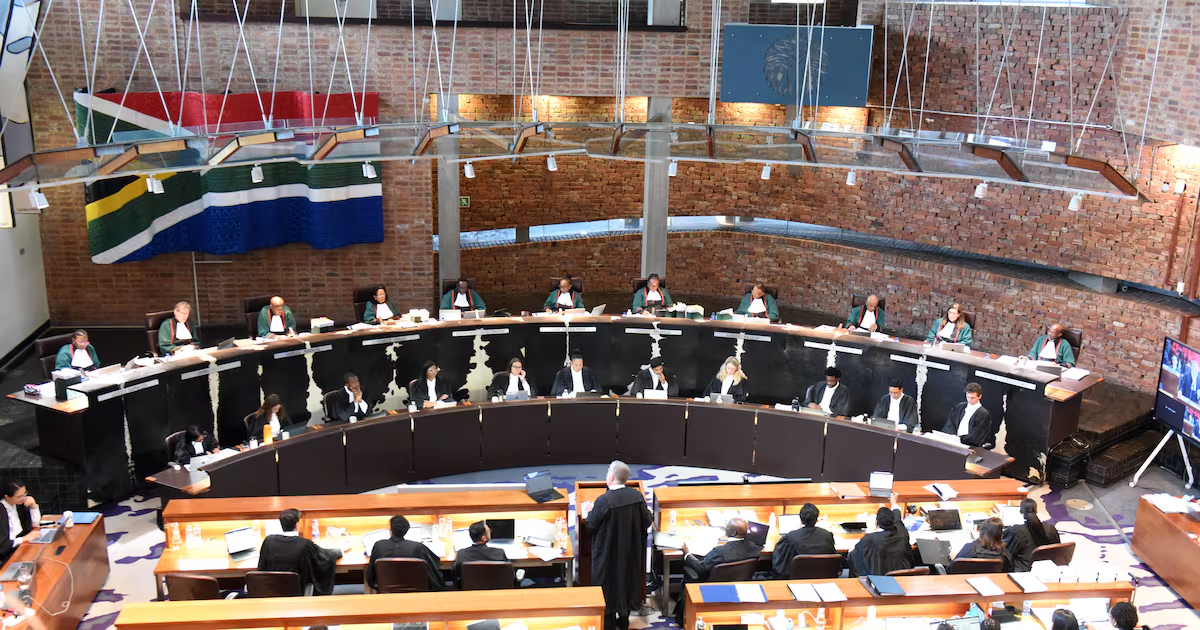
Explore the implications of the Supreme Court of Appeal's judgment in SARS v Poulter, which affirms the right of taxpayers to be represented by non-legal practitioners in the Tax Court. This article delves into the legal and strategic considerations for taxpayers navigating tax disputes.
The Supreme Court of Appeal’s judgment in Sars v Poulter confirms an important taxpayer right: a taxpayer may be represented in the Tax Court by a duly authorised person who is not a legal practitioner. The SCA held that neither section 125 of the Tax Administration Act nor rule 44(7) of the Tax Court Rules requires the taxpayer’s representative to be an attorney or advocate.
That finding is important for access to justice. It recognises the practical reality that South African tax disputes often involve accounting records, tax computations, reconciliations, Sars correspondence, and procedural detail that accountants and tax practitioners may understand intimately.
However, the judgment does not justify under-resourcing a tax dispute.
From a legal defence strategy perspective, Poulter addresses who may appear. It does not answer the more important commercial question: who should be involved if the taxpayer wants to protect the record, manage Sars’s litigation posture, and preserve appeal options.