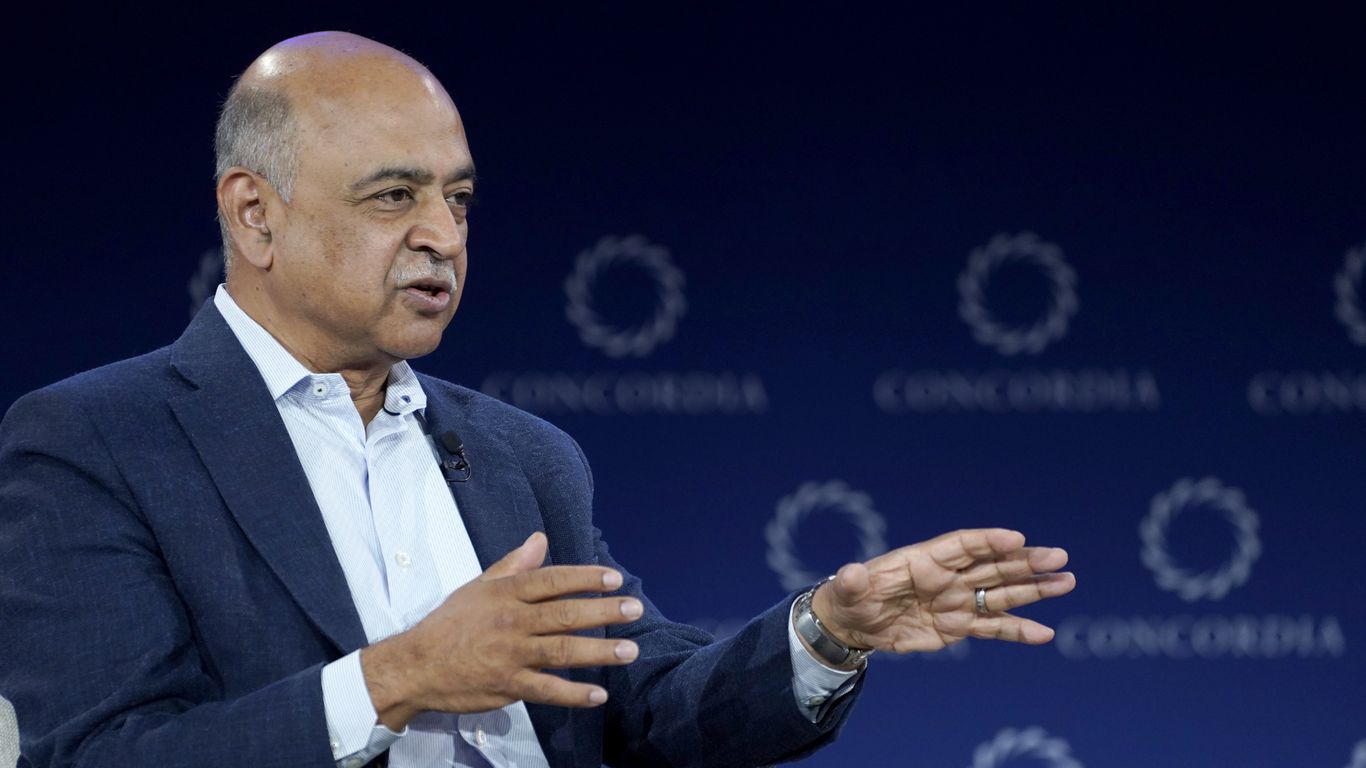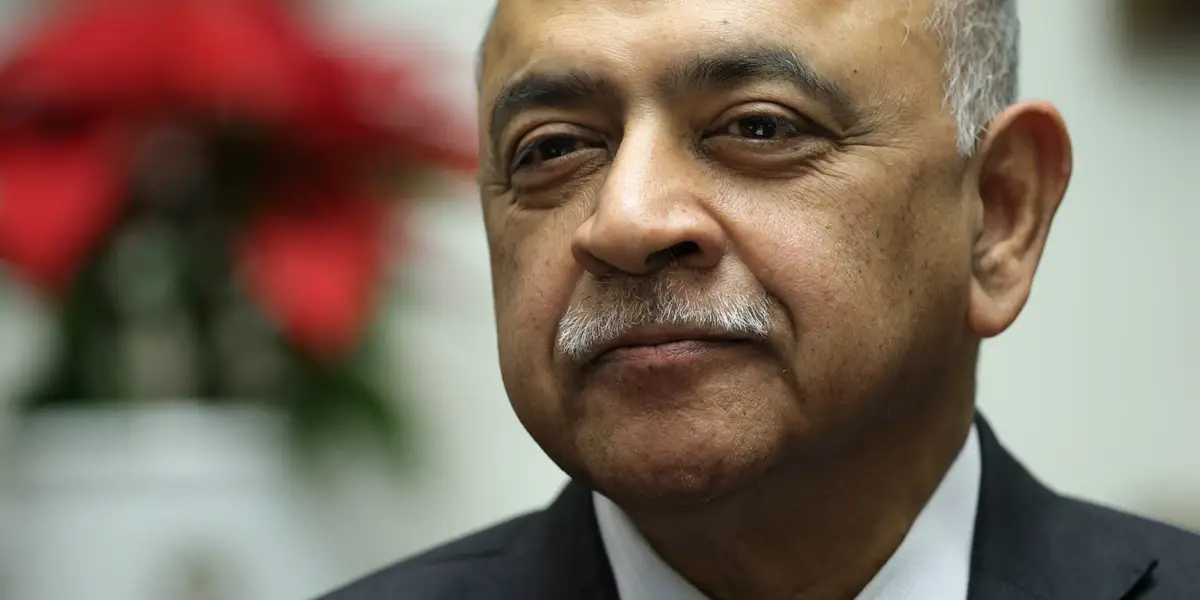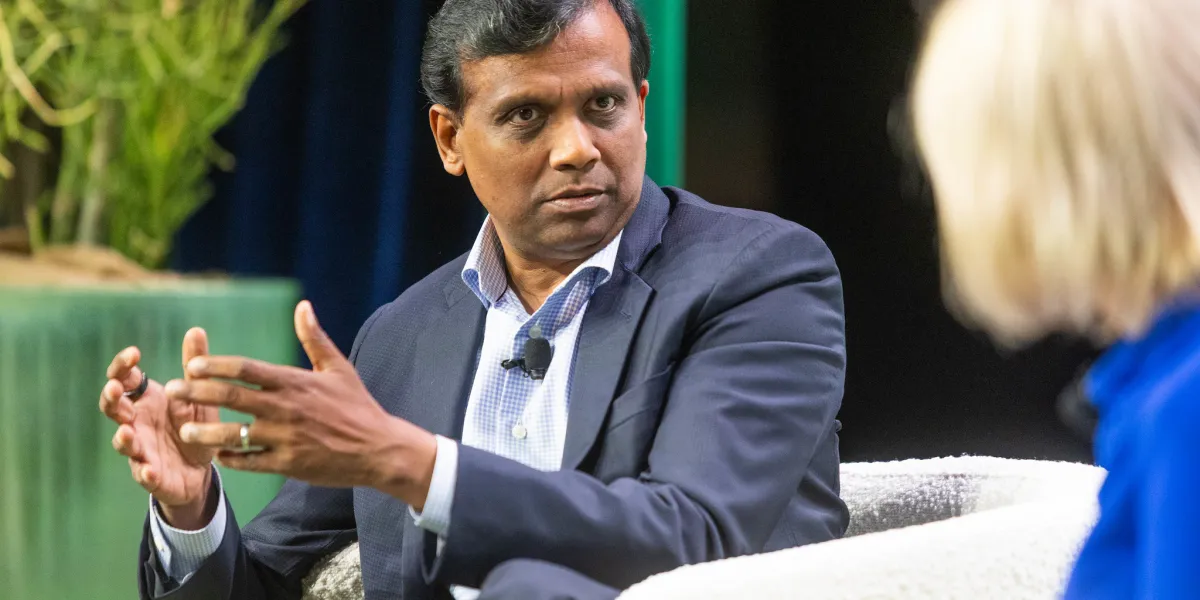
When James Kavanaugh comes up against difficulty in his life, he turns to some old family advice. “Never lose the ability to continuously learn. Life is about learning lessons.”The IBM executive may be responsible for steering IBM’s AI strategy these days but becoming a finance executive at a tech giant wasn’t always his life plan. Born and raised in what he describes as “very lower middle class” south side of Chicago, Kavanaugh has had to adapt over the years. His father, a fireman for 40 years, is the source of much of his outlook on life. “He instilled what I think is the most important thing as a parent, and that is a core set of values,” he says. “He always believed we make our own life lessons and decisions.” That was a philosophy that served Kavanaugh well. His first passion, sports, came to an early end when an injury cut short his college sports career and forced him to transfer from the University of Montana to the University of Dayton in Ohio, where he says he had never intended to go to in the first place. He pursued a degree in finance, where he was among the top in his class, and found a new passion for the world of finance. And just as things looked settled – top of his class, four job offers waiting – another twist of fate changed his career path. “I wanted to go like everyone else and work on Wall Street,” he says. “Then Black Monday happened.”The 1987 stock market crash was swift and brutal, hitting not only US stock markets but global ones, with an estimated impact of $1.7 trillion. In the US, it wiped $500 million off the markets, caused the Dow Jones to fall by 22.6 per cent – a record for a single day’s trading. Despite fears of an economic impact to rival the Great Depression of the 1920s, the effect of Black Monday was limited – for the stock markets at least. For Kavanaugh, it had wider repercussions. “Within 48 hours, my offers were rescinded,” he says. “There I was, top of my class. And I had no job.”Looking back, he says the setback was another opportunity. He landed a job at National Cash Register, working in accounts receivable. It was a low-level, low-paying job, he says, but it taught him some tough lessons. “From there, I found my love of technology and what it really meant. I found my love of applying finance to business. And I’ve taken that approach as a business leader, as a strategic leader, and today as the CFO of a Fortune 25 company in the world.”When Kavanaugh joined IBM as a finance executive, it was a huge leap of faith. A stalwart of the tech sector, IBM had contributed some of the key products driving the tech industry: the hard disk drive inside your computer, the floppy disk of the 1970s and even the magnetic stripe on the back of swipe cards. It was a key player in the personal computer revolution, too.In the mid-1990s, however, the company was on the verge of bankruptcy. The mainframe business, a core part of IBM’s business, was seen as cruising towards obsolescence. There were plans to split Big Blue into autonomous units. The company brought in an outsider as chief executive – Lou Gerstner – to turn things around. Kavanaugh describes Gerstner, who died in December 2025, as “one of the most phenomenal leaders I’ve ever met in my life”. He strategically pivoted the company, recruiting new leaders, and concentrating on simplifying the business. IBM did not need a new vision, but rather to focus on its existing strength – being able to offer an integrated range of technology services to clients. It paid off, and IBM lived to fight another day. Over the years it has reinvented itself over and over, shifting its focus to IT services, exiting a struggling PC business in 2005 with the sale to Lenovo and, in more recent years, adopting AI as a core pillar of its business.Last year, IBM reported revenues of $67.5 billion, an 8 per cent rise year-on-year. That was a significant uptick from the previous year, when revenues rose only 1 per cent. Software and infrastructure revenues for 2025 outperformed, rising by 11 and 12 per cent respectively, with only the consulting division lagging behind at 2 per cent growth. Kavanaugh has been key to some of those changes. He was appointed chief transformation officer in 2015, with the task of reinventing the company’s portfolio, before becoming chief financial officer (CFO) in 2018. He is currently approaching the longest-tenured CFO in IBM’s history. But rather than adopt the more traditional “guardian of stability” role of a CFO, Kavanaugh prefers to approach it as an agent of transformation. “What is required today as a CFO is strategic vision about where the markets are going, how you create value, how you create competitive advantage. You’ve got to be able to enable organisational capability and agility, to mobilise an organisation at speed. And, you’ve got to be able to operate and do business model innovation. One thing is having a strategic vision; another thing is enabling that vision to execution. And I think that sits at the cornerstone or the epicentre of what a CFO does inside a company.”Kavanaugh oversees IBM’s “client zero” approach to its business; it acts as the first client, developing a blueprint for enterprise-wide productivity using AI, hybrid cloud and automation. He has also played a key role in advancing IBM’s transformation into an AI-driven and hybrid cloud enterprise.IBM’s willingness to adapt and change when necessary has been one of the key things that has kept him at the company for three decades. “This industry, I always say, is defined by a relentless characteristic of innovation and commoditisation. To sustain lasting relevance, you have to continuously reinvent yourself. Our founding father used to always say: ‘You have to have the willingness to change everything other than the core values that you built the company on.’ “Technology can be used for good, technology can be used for bad. But at IBM, we’ve always prided ourselves on a core purpose and mission: to be the catalyst that makes the world work better. I think that’s pretty aspirational, but it defines who we are as a culture. Our job is to bring responsible, ethical technology for the common good, period. The purpose, the mission, the values that this company was built on, we would never sacrifice.” Those core values have generated a lot of loyalty to IBM, which may work in its favour as the expected AI revolution takes hold. The company is no stranger to the technology. It was investing in artificial intelligence before ChatGPT was a gleam in Sam Altman’s eye. In the 1950s, it began experimenting with machine learning to play games. That developed further into chess and, in 1997, IBM’s chess-playing computer Deep Blue beat champion Garry Kasparov, the first time a computer programme had beaten a human chess champion. IBM, sensibly, retired the computer after its victory. Then followed Watson, the Jeopardy-playing supercomputer that became the basis for IBM’s next-generation AI products, through watsonx. This is where the company is betting it will see future growth. Although AI is still in its early days, it is already making a big impact, and not all of it is positive. In recent weeks, tech companies such as Oracle and Meta have announced redundancies in Ireland as the focus – and funding – remains firmly on the next wave of technology. But while some are considering AI to replace human workers, Kavanaugh thinks the reality will be more nuanced. “I firmly believe that we cannot operate in a world of ‘AI plus’ – we have to operate in a world of ‘plus AI’. It is the augmented intelligence of human plus digital that have to synergistically work together for incremental value. And I think that’s the way the world is going to be.” Ireland is a key part of that future. IBM has only a handful of research competency labs in the world, one of which is located in Ireland. “We’re working on the future of AI, the future of computing, future of quantum. So we have a research branding here. We have the largest software lab across all of IBM – in all of Europe – in Ireland, working on bringing research and the future of computing to the reality of scale today in products, services and solution offering.” That is in addition to global services hubs, treasury operations and support for the domestic Irish business sales and service. But IBM has a long history in Ireland. It opened its first office here in 1956, starting out with three staff. In those days it was electric typewriters and punch card machines. Seventy years on the company has 3,000 employees, working across AI, cloud and quantum computing. Two years ago, it announced 800 new jobs here; more recently, it committed to tripling junior hires throughout the company. But it has also cut jobs globally, announcing in November last year that it would lose a small percentage of its employees in the fourth quarter of the year. With almost 280,000 employees worldwide, even a 1 per cent cut would have resulted in a significant number of redundancies. Kavanaugh is upbeat about the prospects for investment in Ireland, though, praising the “pro business environment” and noting the company remains committed to the country even in the face of political changes in the US. “We’ve operated with different policies, political environments around the world for a long period of time. We’ve always prided ourselves on policy, engagement and discussion versus politics,” he says. “As a CFO, I’m always looking for certainty of environment, which arguably is tough today. But I’m also looking for how we create the most value. We don’t make quick decisions based on politics. We always follow policy over a long period of time, and I’m sure we’ll continue to do that.”Kavanaugh now turns to his own family to handle tough situations. He has five children, all grown up, and recently became a grandfather. There is a new generation to pass on the lessons his father instilled in him. “I wouldn’t change one thing in my life. That doesn’t mean that everything is perfect, but I firmly I believe that things happen for a reason and you have to learn as you move forward,” he says. “Do I wish I never got injured playing sport and I could have followed my passion there? Absolutely. But those were lessons that I think change the course of defining who I am. And to me, that’s the most important thing.”CVName: James Kavanaugh.Job: Chief financial officer, IBM.Family: Married with five children and one grandson.Something you might expect: He is of Irish descent, as the name suggests; his great-great-grandfather came from Dublin.Something that may surprise you: He never intended to go into corporate finance. His first love was sports – he played American football in college – and his Wall Street aspirations were tanked by Black Monday in 1987.
IBM’s global CFO: ‘To sustain lasting relevance, you have to continuously reinvent yourself’
Having seen two potential careers cut short, James Kavanaugh is set to become IBM’s longest serving CFO
1,859 words~8 min read