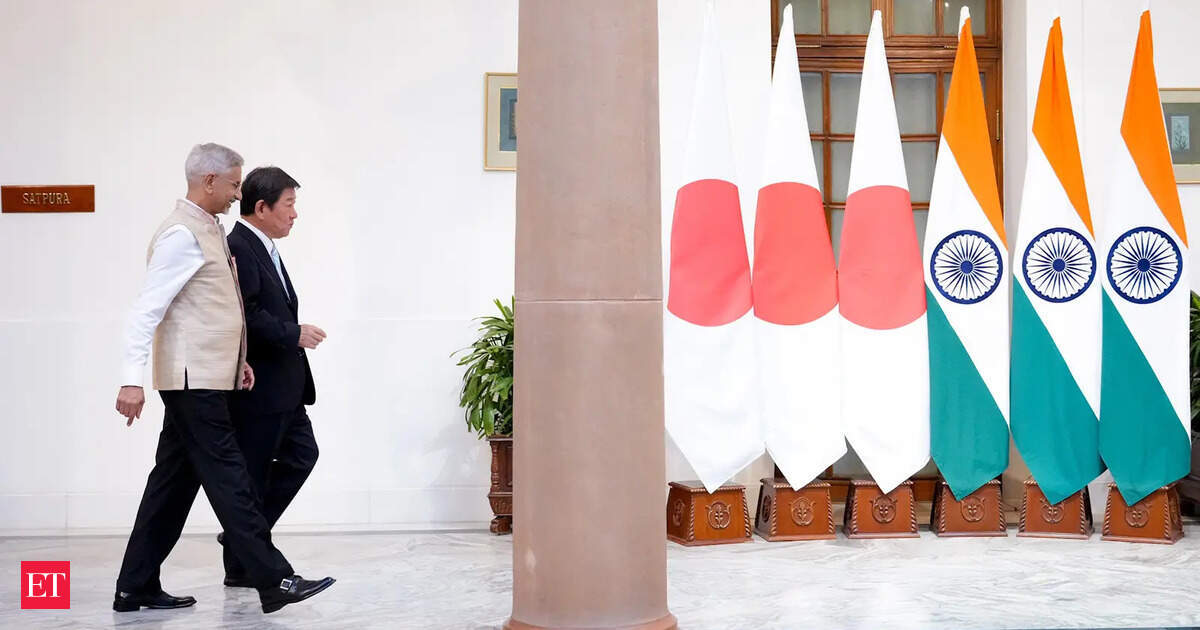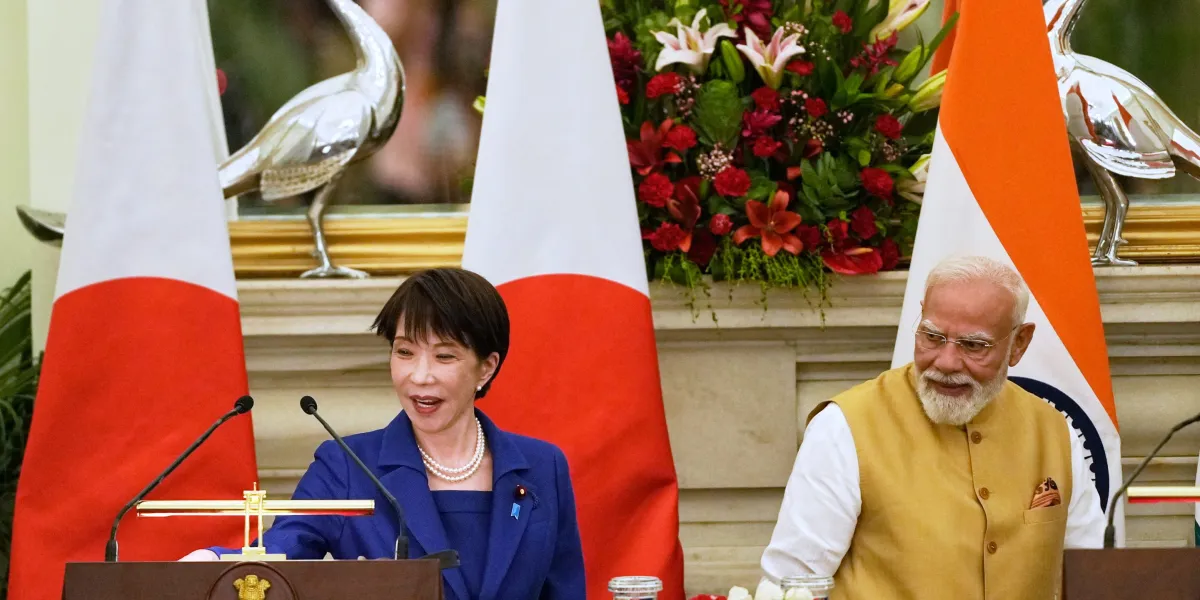
Japan’s recent foreign direct investment (FDI) patterns appear to support policymakers’ ambitions for closer geopolitical ties with India. Japanese FDI outflows to India have exceeded those to China for three consecutive years. But while Japan–India business relations have grown steadily over the past two decades, the broader strategic picture is considerably more complex.
Net Japanese investment flows into China fell from US$12.5 billion in 2021 to an estimated US$1.7 billion in 2025, while investment into India steadily increased from US$3.7 billion in 2021 to US$7.6 billion in 2025. Japan’s FDI in India is primarily market‑ and infrastructure‑oriented whereas its investment in China has been more manufacturing‑led.
This development should be understood as a reflection of Japanese firms’ autonomous market‑diversification strategies. It represents a commercially driven reallocation of capital rather than a policymaker‑led geopolitical shift from China to India.
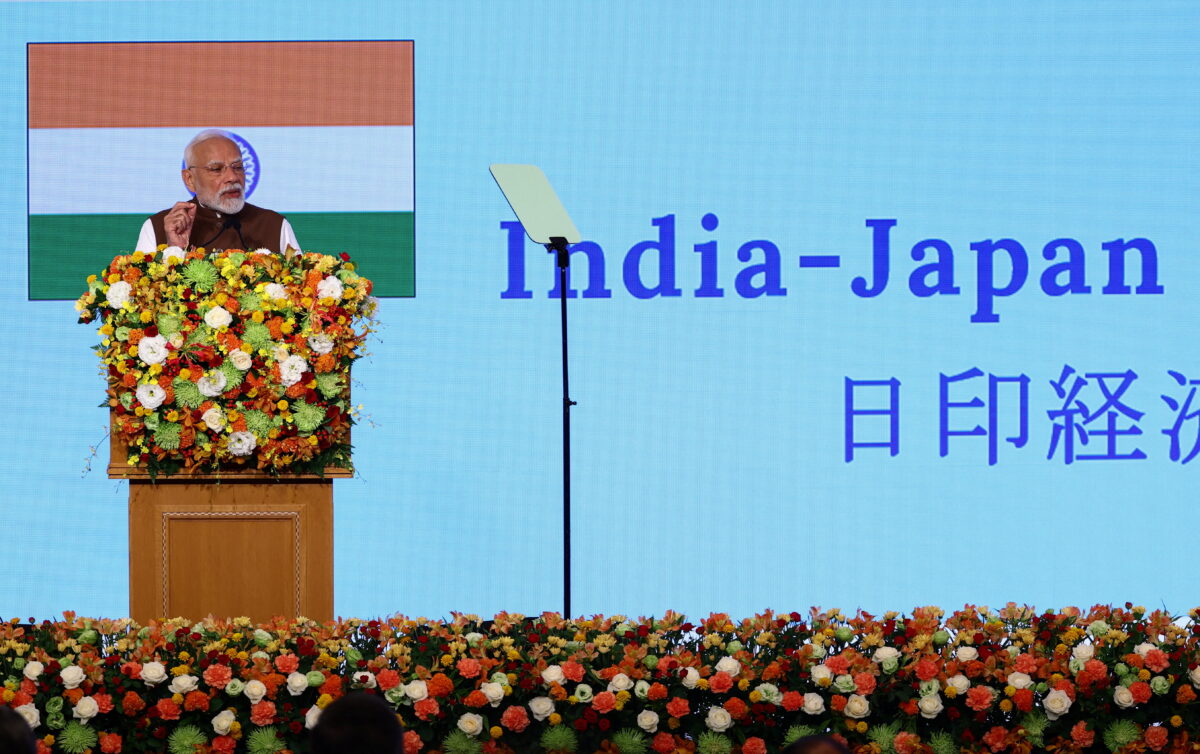
Japanese companies spent a record amount on stakes in Indian businesses in 2025. India remains a top-priority market for Japanese firms, driven by its market size and long‑term growth potential. Notable developments include active megabank investments that could help India’s financial sector upgrade its services under the government’s big-bang reforms.