Published May 21, 2026, 4:56 PM EDT
A national moment of observance takes place during the afternoon of Memorial Day that most people have never heard of.
It started in a cemetery after the Civil War. It took a century to become a federal holiday. Now it’s the last Monday in May, and at 3 p.m., the whole country is asked to stop. Memorial Day is Monday, May 25, 2026. It is a federal holiday, the last Monday in May, and the day the United States sets aside to honor the military personnel who died in service to this country. Not veterans broadly. Not currently serving troops. The fallen, specifically — the more than 1.1 million Americans who have died in the nation's wars since the American Revolution. Most Americans know that much. Fewer know where the day came from, why it falls when it does, or that a specific national moment of observance is built into the afternoon that most people have never heard of.
Where It Started
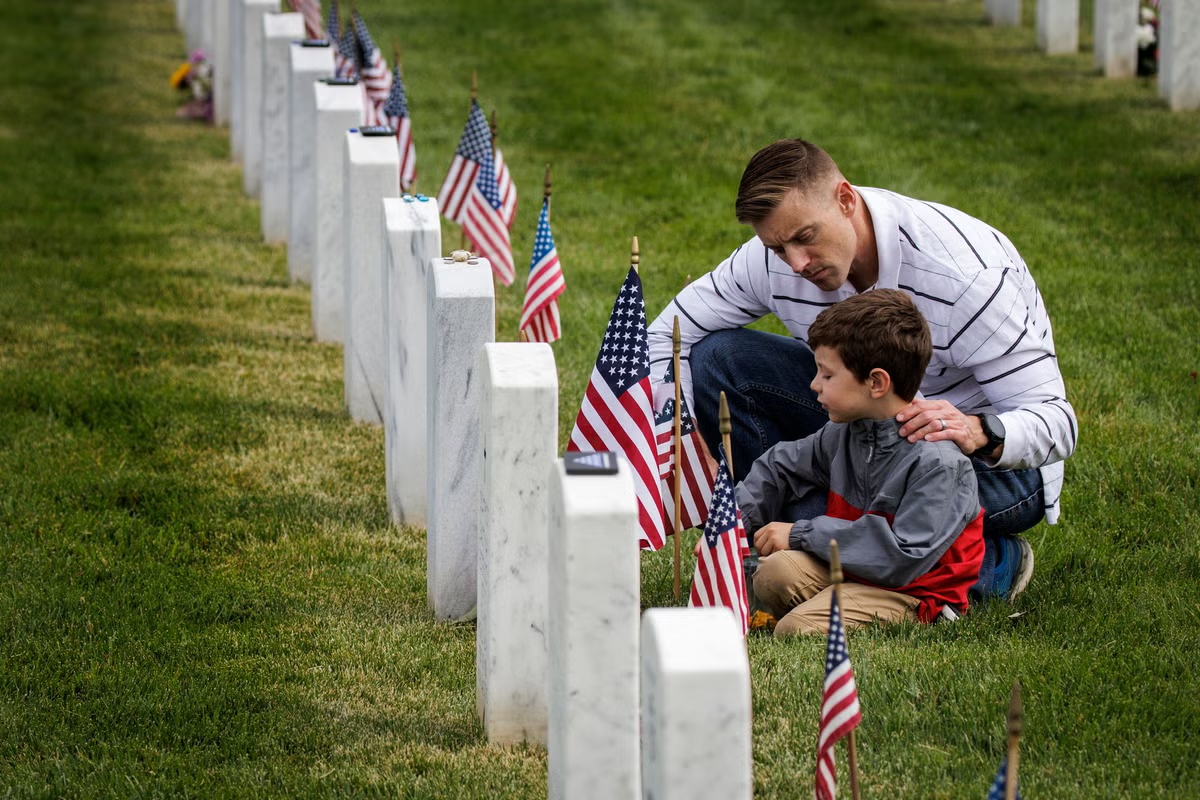
The holiday's origins are contested — over two dozen cities and towns have claimed to be its birthplace — but the official record traces the formal beginning to May 5, 1868. That is when Maj. Gen. John A. Logan, national commander of the Grand Army of the Republic, a fraternal organization of Union Civil War veterans, issued General Order No. 11, designating May 30 as Decoration Day: "The 30th of May, 1868, is designated for the purpose of strewing with flowers, or otherwise decorating the graves of comrades who died in defense of their country during the late rebellion, and whose bodies now lie in almost every city, village and hamlet churchyard in the land." — Maj. Gen. John A. Logan, General Order No. 11, May 5, 1868 Read More: John A. Logan Gave America Memorial Day. Why He Was Forgotten May 30 was chosen deliberately because it was not the anniversary of any particular battle, ensuring the day would have a unified, nonpartisan character. The first large national observance took place that same year at Arlington National Cemetery, where future president James Garfield delivered an address before 5,000 participants who decorated the graves of roughly 20,000 Union and Confederate soldiers buried there. The practice of decorating soldiers' graves had already been occurring informally across the country since the war's end. One of the earliest documented instances took place in Columbus, Mississippi, on April 25, 1866, when a group of women visited a cemetery to decorate the graves of Confederate soldiers killed at Shiloh. When they noticed that the nearby graves of Union soldiers had been left bare, they placed flowers on those, too. That gesture — enemies remembered together — carried forward into what the holiday became. Read More: 'Old Guard' Soldiers Place 260,000 Flags at Arlington for Memorial Day