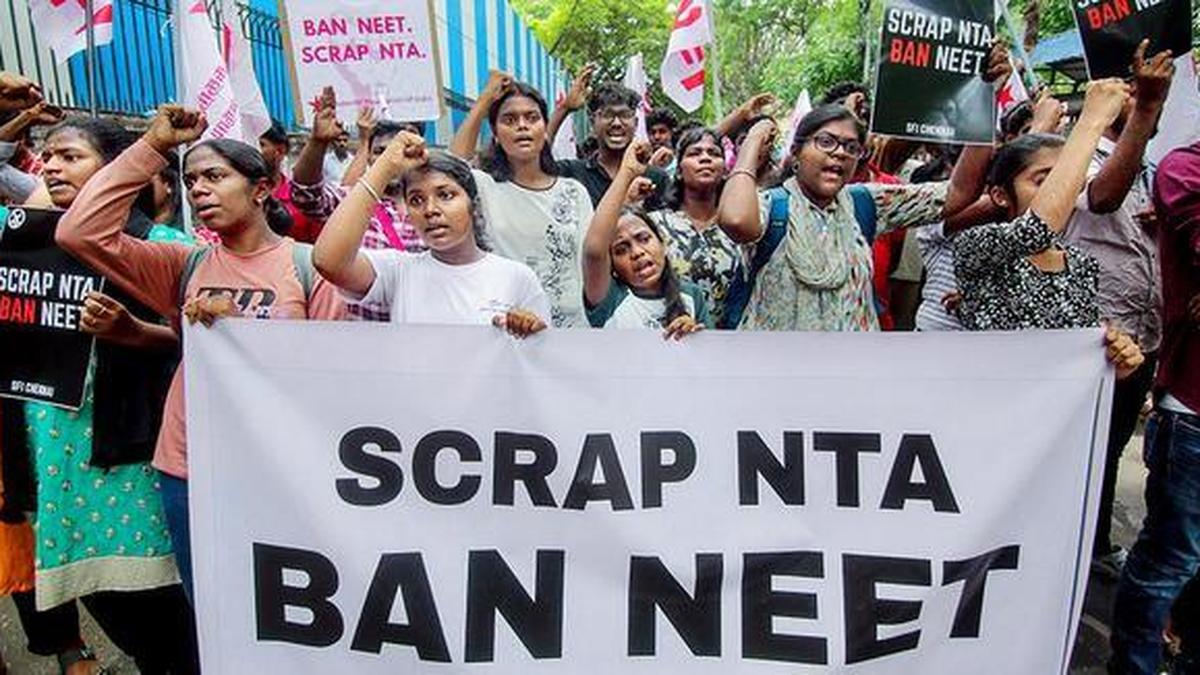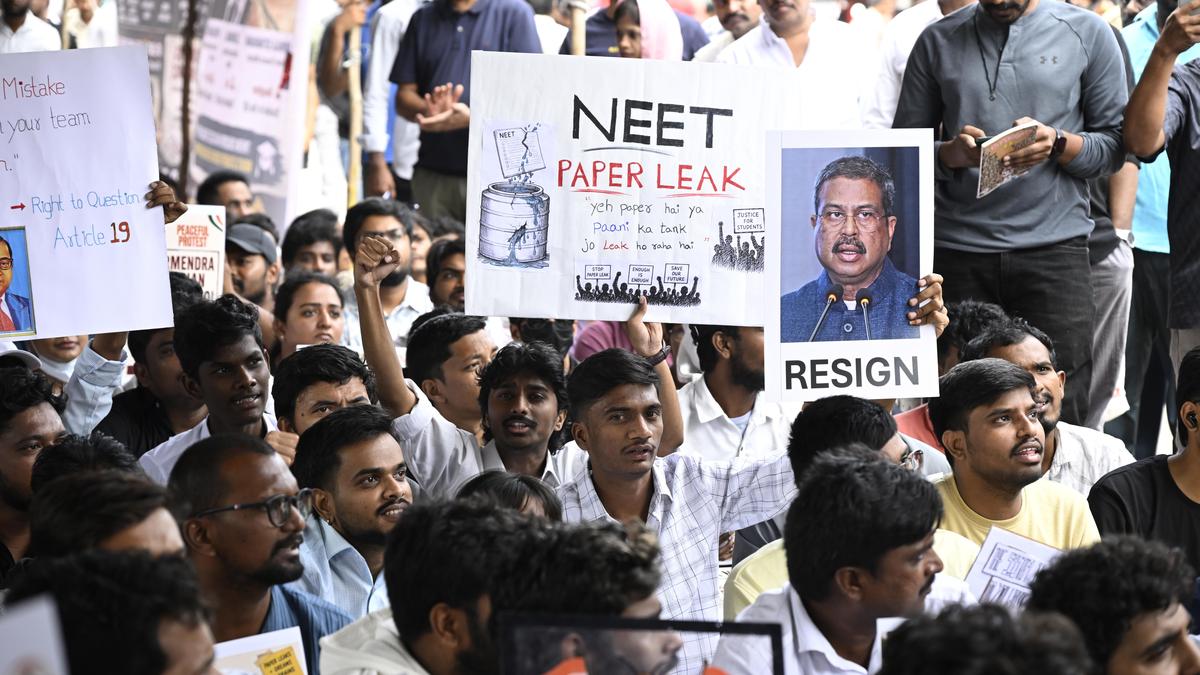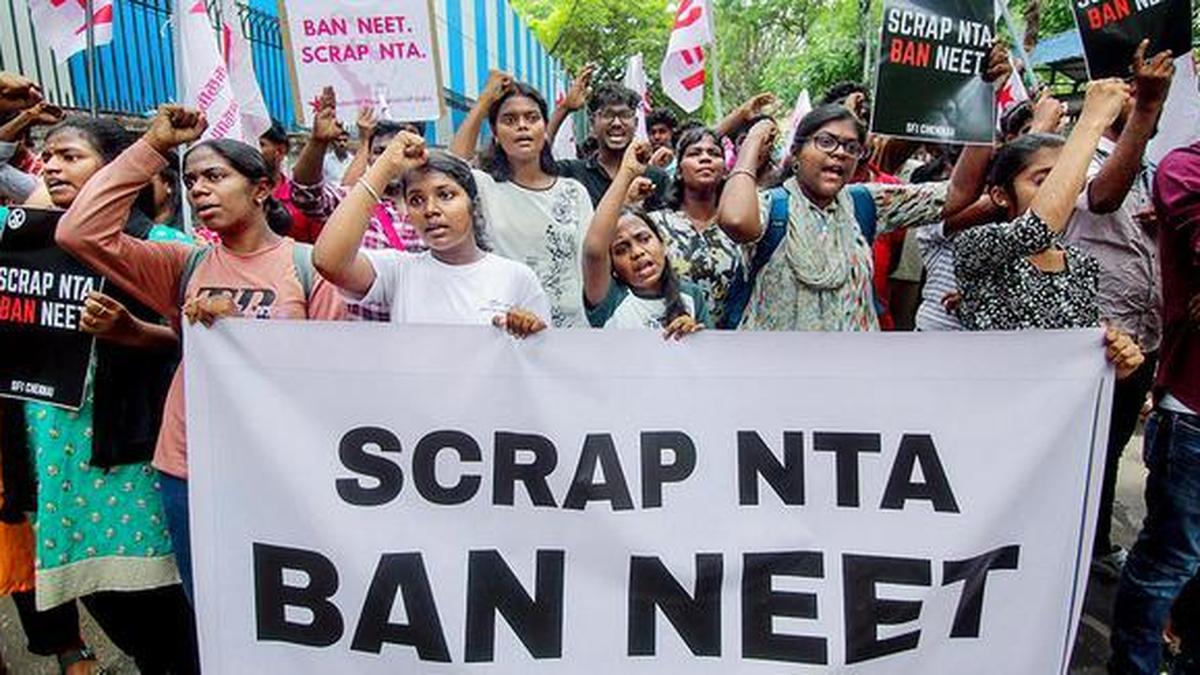
Members of the Students’ Federation of India protest in Chennai over the cancellation of the NEET-UG 2026 exam following allegations of paper leak and examination irregularities. File
| Photo Credit: ANI
The cancellation and retest of the National Eligibility cum Entrance Test (NEET-UG), 2026 has exposed deep cracks in India’s examination system. Allegations of paper leaks, corruption and repeated lapses by the National Testing Agency (NTA) has pushed lakhs of aspirants into uncertainty, stress and emotional exhaustion. This has led to many asking whether such a high-stakes, single day, single shift, national exam for admission to all medical courses in India should be decentralised. Dr. G.R. Ravindranath and Balaji Sampath discuss the question in a conversation moderated by Bindu Shajan Perappadan.Edited excerpts:
Since its inception in 2013, the NEET has been marred by controversies. What was envisioned as a transparent and uniform entrance exam has instead become synonymous with administrative lapses. Is the answer then to decentralise the exam?G.R. Ravindranath: NEET has reduced the burden of multiple medical entrance exams and lowered students’ financial, mental and physical stress. Unlike Plus Two cut-off admissions, NEET offers multiple attempts, giving students another chance to improve. However, rural, poor and government school students remain disadvantaged due to unequal access to coaching and resources. Measures such as special reservations, fee support scholarships, additional marks, and free coaching classes for government school students can ensure equitable opportunities. Tamil Nadu’s 7.5% reservation for government school students can serve as a model for nationwide reforms to make NEET fairer and more inclusive. States should be allowed to conduct their own entrance exams and admit students in order to ensure that students from vulnerable socio-economic sections are not put at a disadvantage.