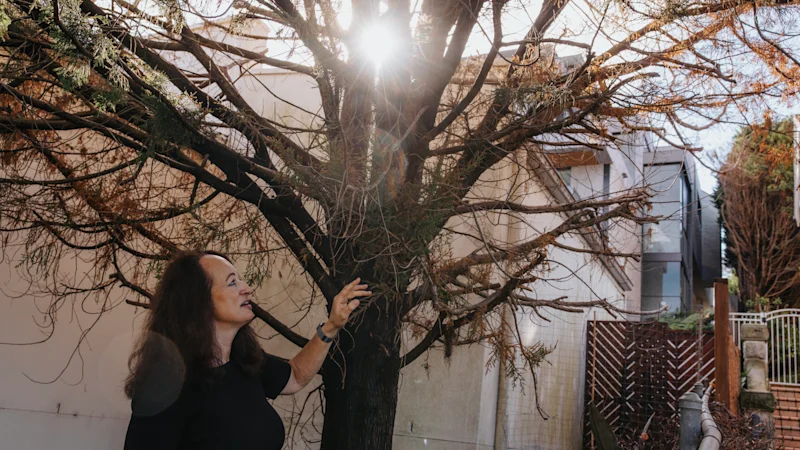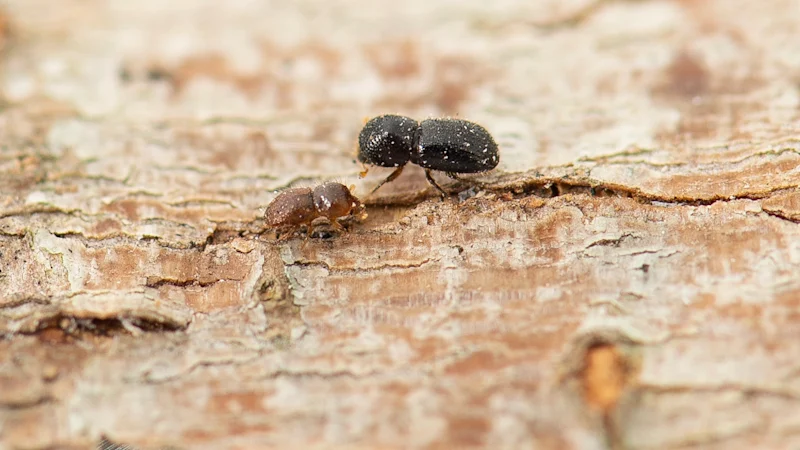
May 22, 2026 — 5:00amLocal governments across Perth are calling for better investment from the state government to help mitigate the spread of the polyphagous shot-hole borer, which has wreaked havoc on the city’s tree canopy.The 2026-27 state budget promised a further $4.8 million to help over the next four years – $3.8 million of which will be given to local governments, who have been put in charge of managing the spread.The shot-hole borer attacks living trees by farming fungus.NSW Department of Primary Industries and Regional DevelopmentThe funding is far less than the amount the WA Local Government Association stated it needed to manage the situation effectively.Its pre-budget submission called for an additional $45 million, plus $40 million over the next decade to plant new trees, and $7 million over the next three years for residential prevention efforts.WALGA president Mark Irwin said he recognised the investment from the state government but confirmed it was lower than what they had called for.“We will continue to work with the state government to ensure that local government and key stakeholders are equipped to appropriately manage the impact of polyphagous shot-hole borer,” he said.City of Vincent Mayor Alison Xamon said local governments had been left to manage the long-term environmental and financial consequences of the shot-hole borer on the ground.“As we enter the management phase, councils are facing significant ongoing costs,” she said.“For the next financial year alone, the City of Vincent is looking at a cost of around $500,000 for just the most basic level of management.“If we are to deliver the optimal level of management, the cost is closer to $1 million each year. That is not sustainable and certainly not a cost that can be borne by ratepayers.“For context, every $480,000 we are required to find over and above our core business translates to around a one per cent increase in rates.”She said although the state government’s investment in the budget would go some way towards helping, “it still falls short and there has been no indication on whether this will be a one-off or ongoing contribution”.“It is deeply concerning to see the huge majority of management costs shifted onto local government,” Xamon said.“Vincent is not alone. Managing PSHB will require millions of dollars which local governments across Perth are being asked to find on top of essential local services.“This is a figure far beyond what has been announced. Local governments can’t rely on short-term or ad-hoc funding.”Politicians in opposition have also called out the problem in parliament.Member for Murray-Wellington David Bolt said the $4.8 million figure “completely ignores” advice on management costs.“It always seems to be like: ‘Here’s a few dollars; the rest over to you, local government’.”Member for Geraldton Kirrilee Warr said disaster recovery and climate resilience had been overlooked in the budget.Pictures of the tree stumps left after tree removal due to the Polyphagous shot hole borer, on the edge of Kings Park, fronting Mounts Bay Road in Perth.Ross SwanboroughA Department of Primary Industries and Regional Development spokesperson said a total of $77.8 million has been committed nationally to the response to shot-hole borer to date.In addition, the state government has also committed around $13 million to “support the WA community transition”.“The additional state funding includes $3.6 million in grants for inner Local Government Authorities to manage the invasive pest, including pruning or removing priority or infested trees, developing management plans, surveillance and community engagement,” they said.“Another $2.17 million will fund three new research projects to help limit the spread of shot-hole borer, including investigating chemical treatments, through the WA Agricultural Research Collaboration.“Biosecurity is everyone’s responsibility. Now the national shot-hole borer response is transitioning to management and the pest is considered established in the management zone, it is landholders’ responsibility to manage their trees and decide on borer management options – as with other existing plant pests or diseases.”More than $30,000 in cash rebates have also been distributed to residents impacted by shot-hole borer as part of the state government’s Tree Recovery Residential Rebate program.From our partners
WA’s shot-hole borer response labelled ‘deeply concerning’
The 2026-27 state budget promised a further $4.8 million to help manage the pest over the next four years. Local governments say that is nowhere near enough.
669 words~3 min read