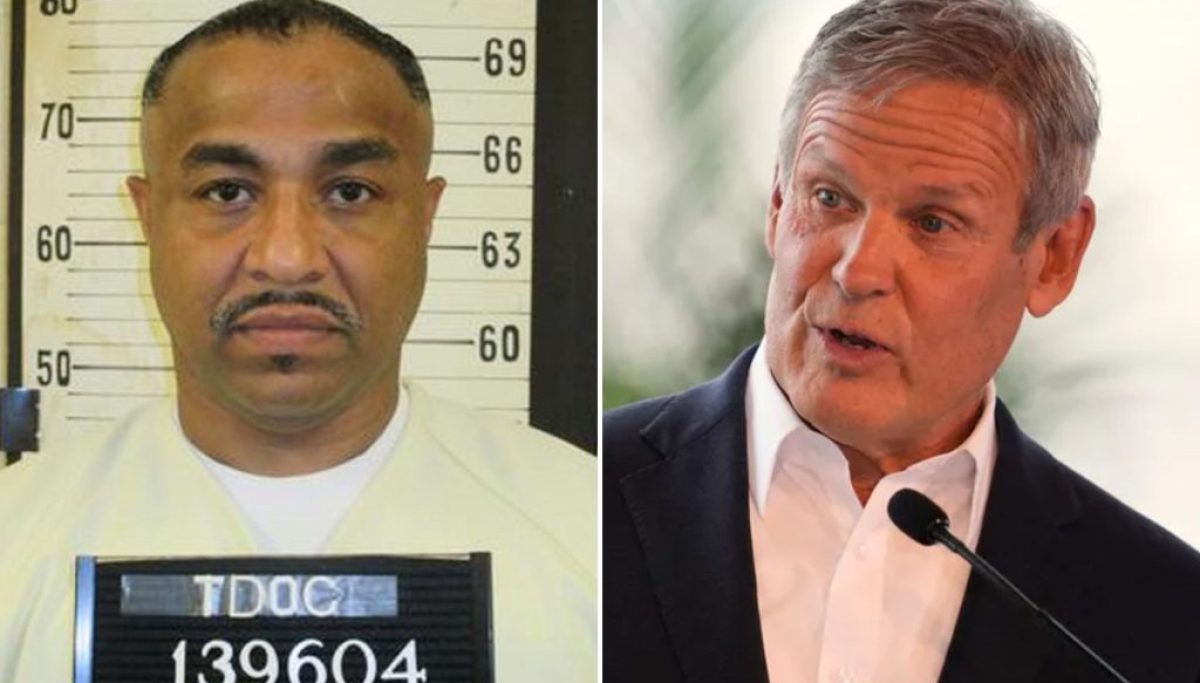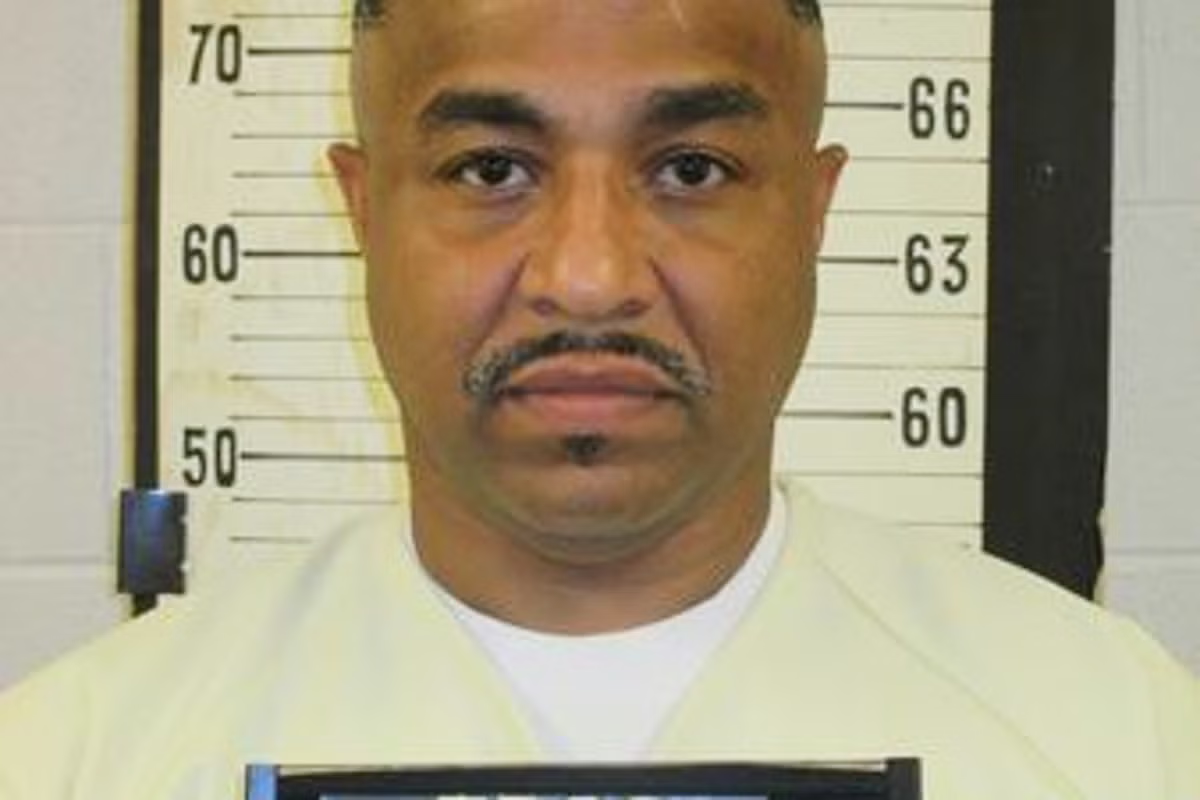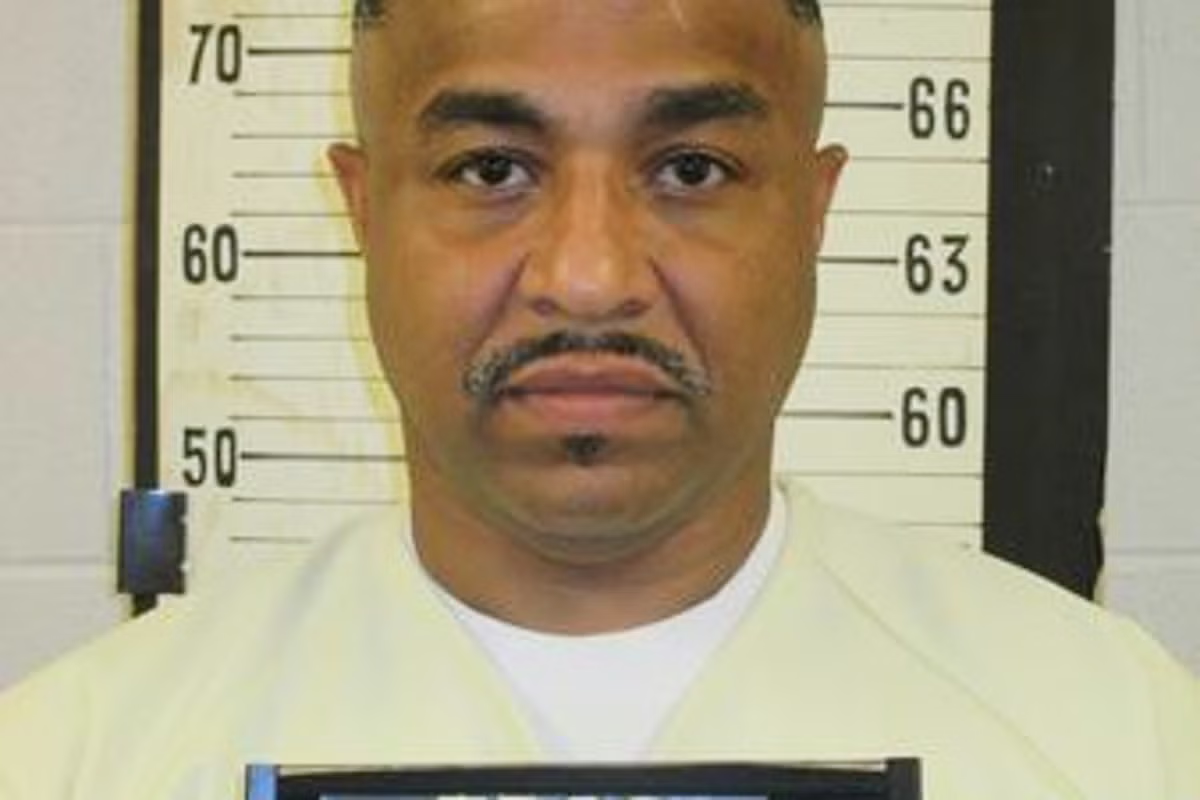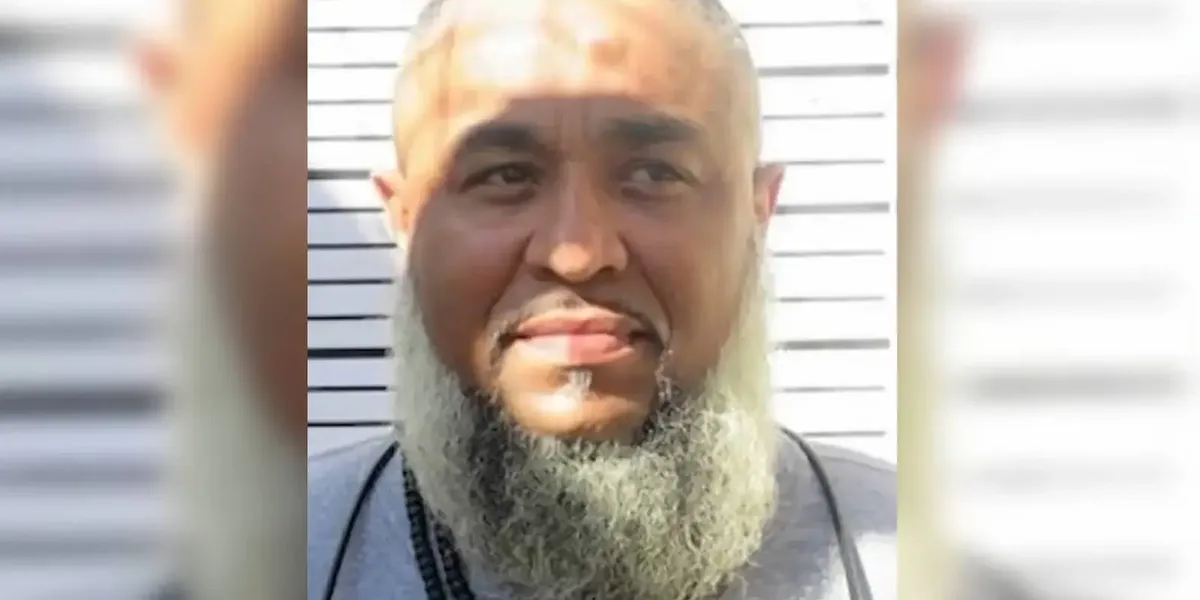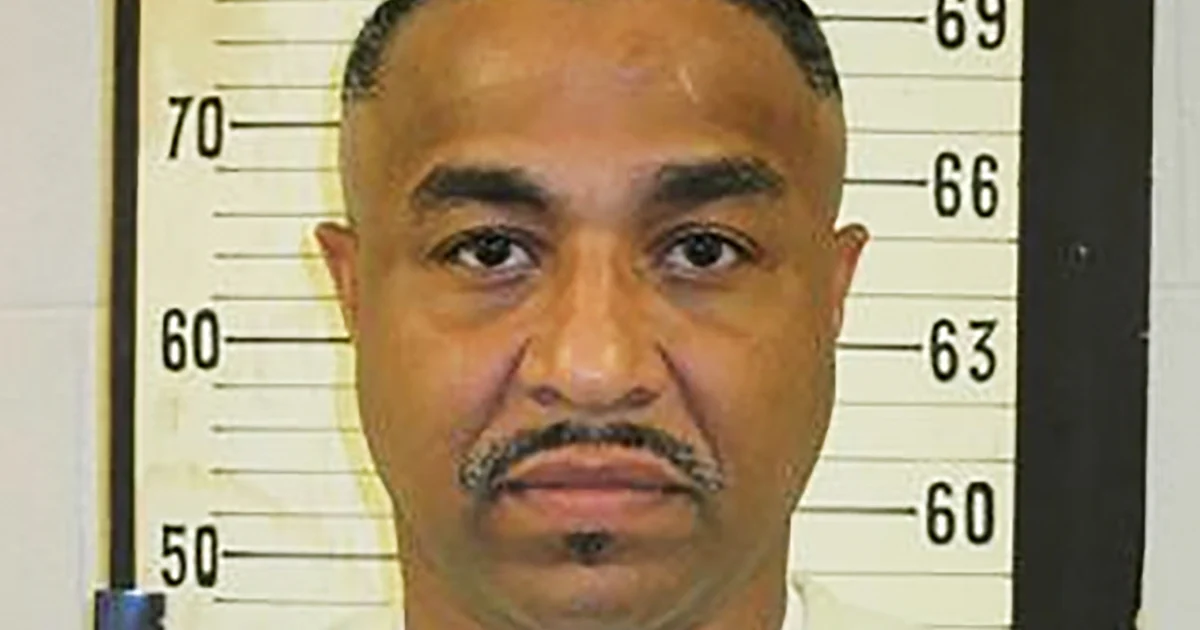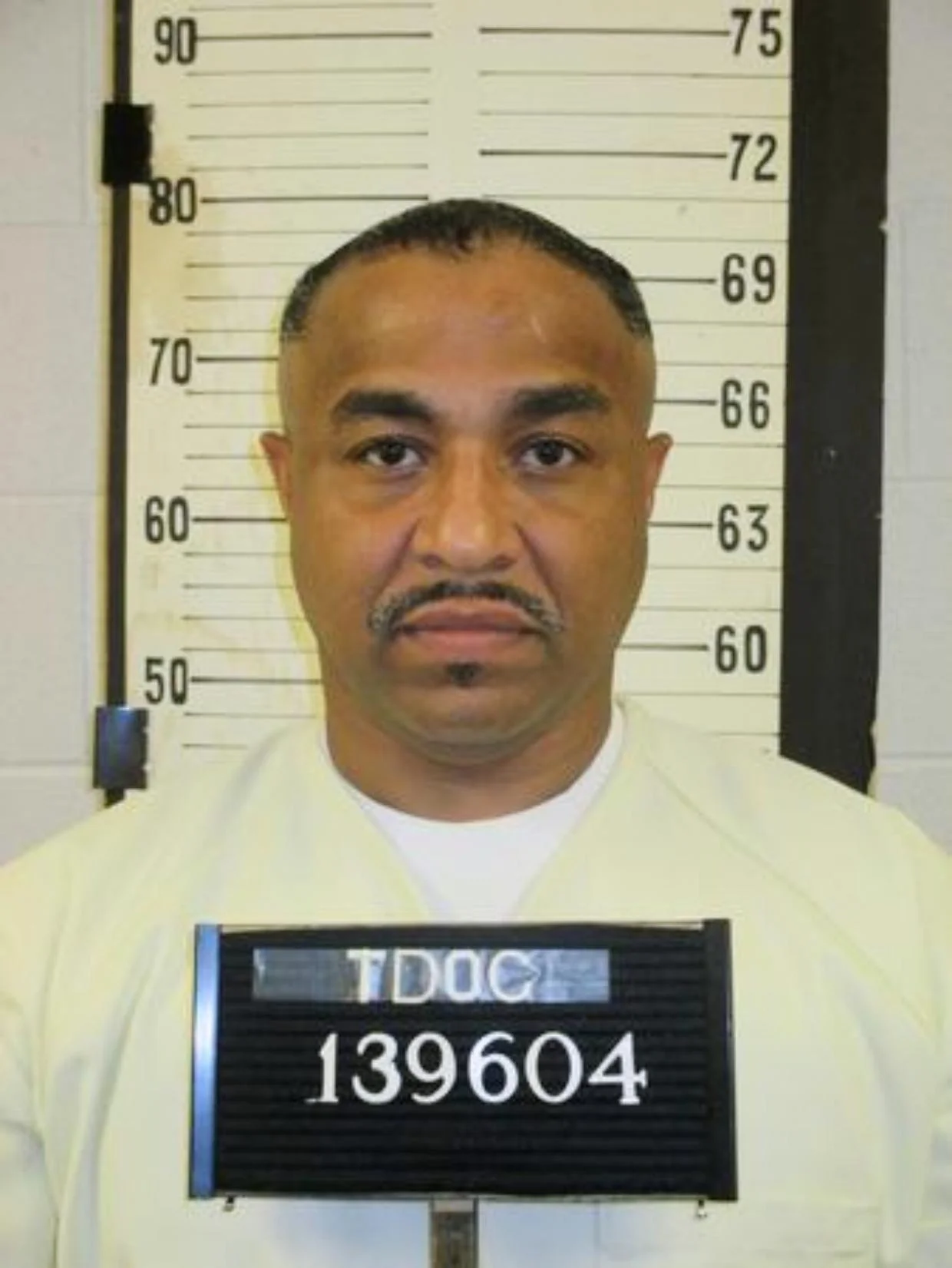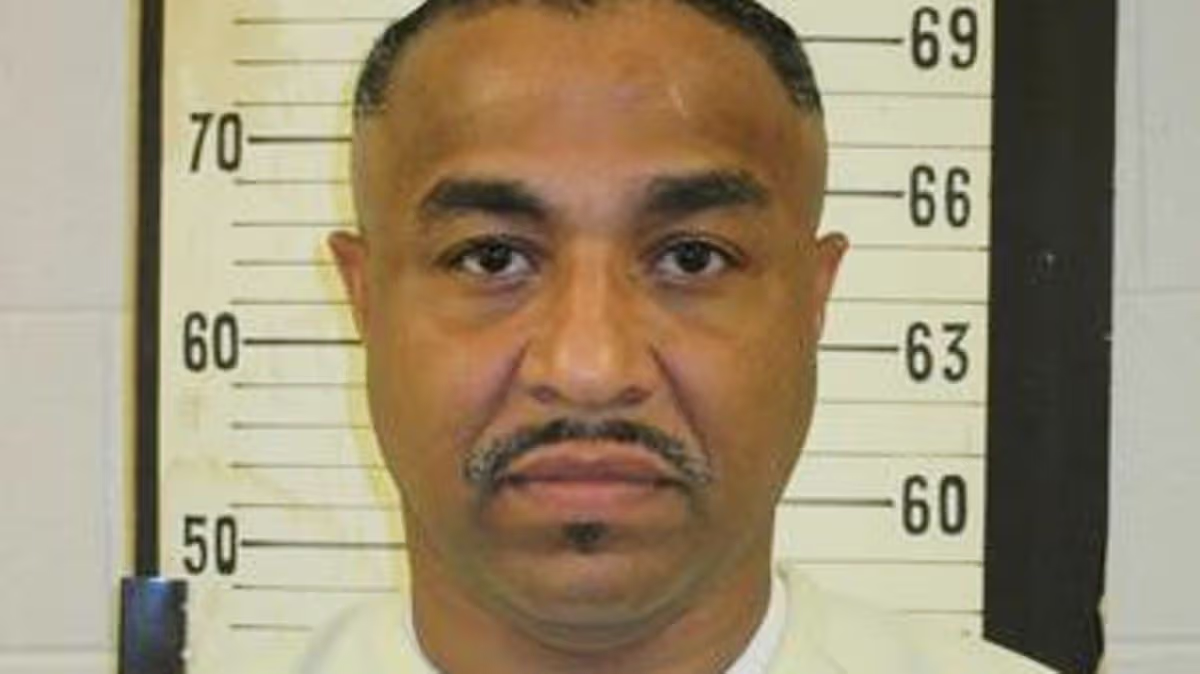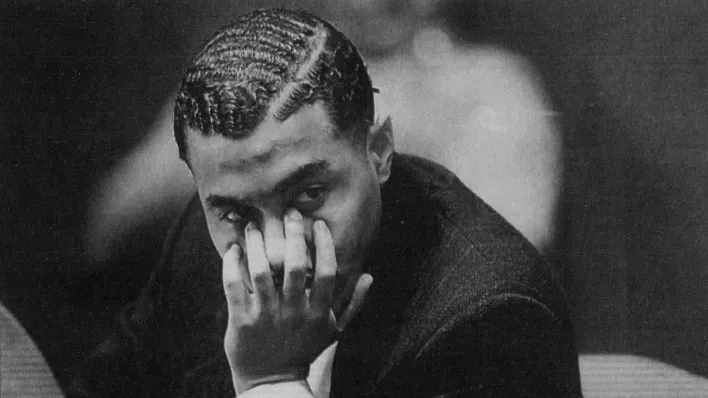
In a rare move following the failed execution of Tony Carruthers, Tennessee Gov. Bill Lee granted him a one-year reprieve. Carruthers was convicted of killing three people in 1994 in an infamous case.Show Caption
Tennessee has called off the execution of a death row inmate convicted of triple murder after his executioners failed to insert a backup intravenous line, and the governor has issued a one-year reprieve, the state's correction department told USA TODAY.The execution team "quickly" established the primary IV line for Tony Carruthers on Thursday, May 21, but "could not find another suitable vein" for a backup line, which is required under the state's lethal injection protocol, the Tennessee Department of Correction said.After the backup line failed, "the team attempted to insert a central line pursuant to the protocol but the procedure was unsuccessful," the department said.Carruthers was in pain as the executioners tried to find a vein and there was "lots of blood," one of his attorneys, Amy Harwell, told The Commercial Appeal, part of the USA TODAY Network.Carruthers had been set to be executed at 10 a.m. CT. Nearly two hours later at 11:52 a.m., Harwell told the Commercial Appeal that executioners had removed the intravenous lines from her client.In a rare move following the failed execution, Tennessee Gov. Bill Lee granted Carruthers a reprieve from execution for one year. He did not issue further comment.The last time there was a botched lethal injection in the U.S. was in 2024, when Idaho called off the execution of serial killer Thomas Eugene Creech after executioners had trouble placing an IV line.Problems with inserting an IV have lingered since the country's first lethal injection was performed in 1982, and an analysis published by the Death Penalty Information Center found that it's the most likely execution method to experience problems.Here's what you need to know.More about Tony Carruthers' caseOn Feb. 24, 1994, Tony Carruthers and James Montgomery carried out three murders as part of their plan to take over the drug trade in their Memphis neighborhood and prove to everyone how ruthless they were, according to prosecutors.They targeted a 21-year-old drug dealer named Marcellos Anderson, his innocent mother and a 17-year-old friend, taking them to an empty grave that had already been dug for an upcoming funeral at a local cemetery, according to court records. There, as the three victims begged for their lives, prosecutors say Carruthers and Montgomery shot the young men, rolled all three of them into the grave and covered them with plywood and dirt, court records say. Anderson's mother, a 43-year-old housewife named Delois Anderson, was buried alive and died of suffocation.The funeral took place as scheduled soon after and a person was buried on top of the hidden bodies. The crime might have gone undetected had Montgomery's brother not informed police about what happened and led them to the gravesite, court records say.The case, which became infamous in Memphis, has gained national attention in recent weeks amid Carruthers' fight to have testing done on forensic evidence and fingerprints that his attorneys argue could exonerate him. Kim Kardashian recently called on Tennessee Gov. Bill Lee to hold off on the execution for the testing, and the American Civil Liberties Union has joined his attorneys in the fight."We know that there is no physical evidence that matches Tony," Lucas Cameron Vaughn, interim legal director for the ACLU of Tennessee, said earlier this month. "Investigators recovered fingerprints from the home where the victims were kidnapped, and locations exactly where you would expect a kidnapper to have touched. None of those fingerprints matched Tony. To this day, they remain unidentified."Lee said in a statement on May 19 that "after deliberate consideration" and "a thorough review of the case," he would not stop the execution.More about botched lethal injectionsOf more than 1,000 lethal injections in the U.S. between 1982 and 2010, 75 were considered to have been botched, according to an analysis by the Death Penalty Information Center, which tracks executions in the U.S. That's 7.2%, more than any other method, including firing squads, gas, electrocution and hanging, the center says.During the country's first lethal injection in 1982, executioners in Texas struggled to find a suitable vein in Charles Brooks because of his heavy drug use, Fordham University law professor Deborah Denno wrote in a chapter in a forthcoming publication titled "Six U.S. Execution Methods and the Disastrous Quest for Humaneness."In 2022, Alabama Gov. Kay Ivey temporarily paused executions and called for an internal review after officials experienced issues inserting an IV in multiple cases.Factors including dehydration, stress, room temperature and certain illnesses can also make veins more difficult to access. Another problem may be that the person inserting the IV line during an execution lacks experience, Denno, the founding director of the university's Neuroscience and Law Center, told USA TODAY in 2022."They may not be the person who you and I might go to to have blood drawn who's done this a thousand times, right?" she said. "I mean it may be somebody who is doing much lower level kind of work even though they're a medical professional."Attorneys speak out about Carruthers' failed executionCasey Stubbs, director of the American Civil Liberties Union's Capital Punishment Project, said that repeated efforts to find an IV line for Carruthers were "barbaric.""Permitting Tony Carruthers' execution without ordering DNA testing was a grave injustice," Stubbs said in a statement. "This injustice turned barbaric when Tennessee’s efforts to set an IV line for the lethal drugs failed and the executioners continued to press forward anyway with the botched execution."Melanie Verdecia, one of Carruthers' attorneys, told the Commercial Appeal that Tennessee was "torturing a man who maintains his innocence in the name of justice.""This is not how our system is supposed to work," Verdecia said.What's next for Tony Carruthers?It wasn't immediately clear what the next step in Tony Carruthers' case is, but he could live to see many more months or even years beyond the reprieve that Lee granted him.When Idaho called off Creech's execution in 2024, it was never rescheduled and he remains on death row.This story has been updated to add new information.