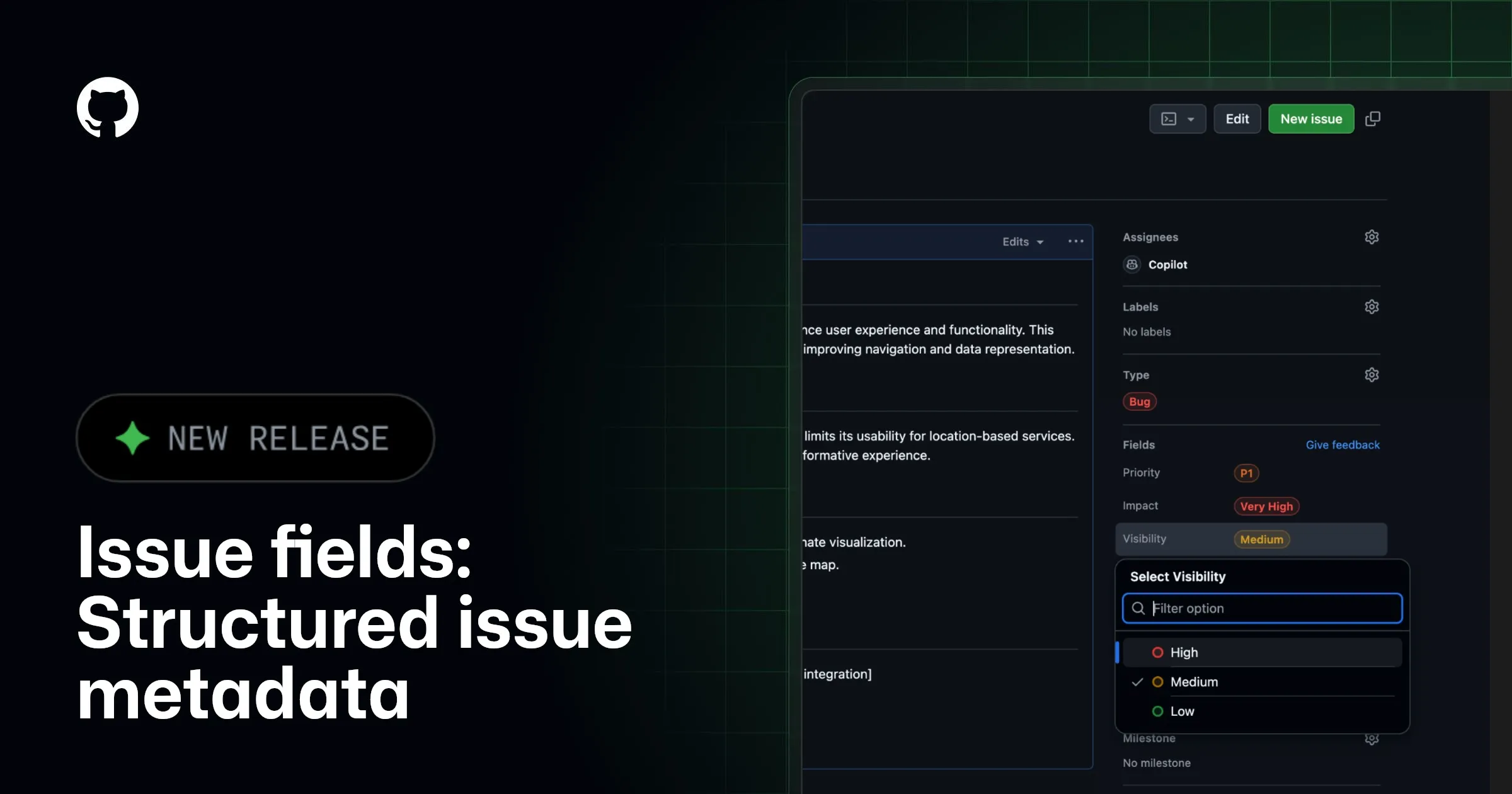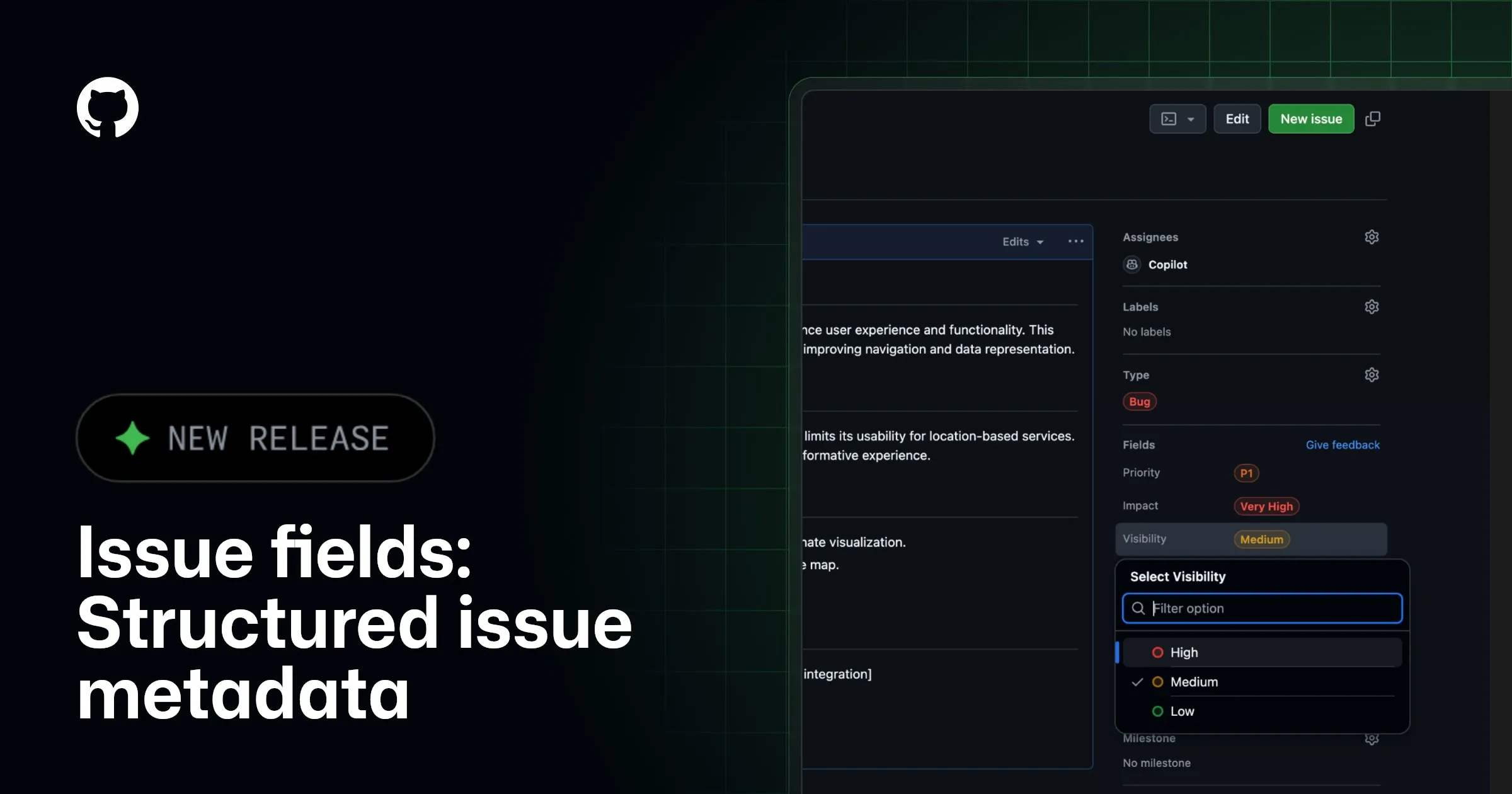
Issue fields are now available in public preview to all GitHub organizations on github.com and GitHub Enterprise Cloud with data residency. When you define typed metadata like Priority, Effort, or any custom field at the org level, and it automatically shows up on every issue, in every repository.
Fields support four types (i.e., single select, text, number, and date), can be pinned to specific issue types, and work across the platform. You can search and filter issues by field value, add fields as columns in project views, track changes in the timeline, and automate via REST and GraphQL APIs or webhook events.
Since the initial preview in March, over 1,000 organizations have adopted issue fields, including some of the largest enterprises and open source projects on GitHub. Teams are building fields into their creation workflows and using bots, GitHub Actions, and integrations to keep field values consistent without manual effort.
The most common themes from early adopters include:
Replacing sprawling label systems with structured, queryable metadata unifying priority and effort tracking across hundreds of repositories without manual syncing.