The Supreme Court on Thursday let stand an appeals court decision that barred Alabama from executing a man that lower courts found is likely intellectually disabled.
The Supreme Court, in an unsigned opinion, took the unusual step of dismissing an appeal, filed by Alabama, after it heard arguments in the case. A lower court decision barring the execution of Joseph Clifton Smith will stand, and the Supreme Court will save for another day the questions about intellectual disability that the appeal raised.
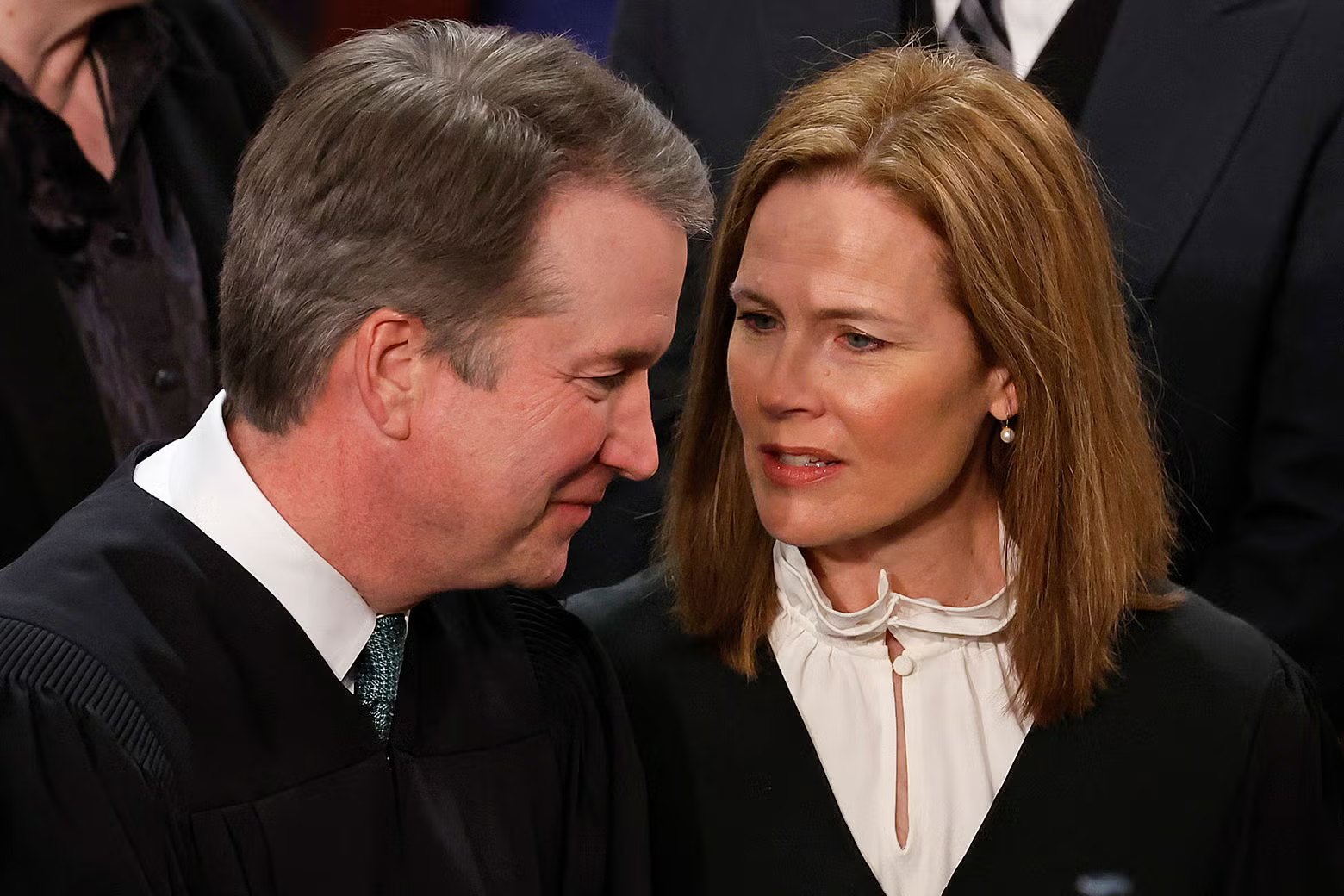
Four justices dissented from the decision: Chief Justice John Roberts as well as Justices Clarence Thomas, Samuel Alito and Neil Gorsuch.
Smith was convicted and sentenced to death for the brutal murder in 1997 of Durk Van Dam in Mobile County. But Smith’s attorneys argued he was ineligible for the death penalty under a 2002 Supreme Court precedent that determined the execution of intellectually disabled inmates violates the 8th Amendment’s prohibition on cruel and unusual punishment.
A series of tests put Smith’s IQ at just over 70, a threshold referenced in the Supreme Court’s 2002 decision. But the 11th US Circuit Court of Appeals noted that the number isn’t a strict cutoff and that the error deviation in the testing could potentially put Smith’s actual IQ slightly below 70. The question for the Supreme Court was how lower courts are supposed to determine if an inmate is intellectually disabled in edge cases when there are multiple IQ tests.