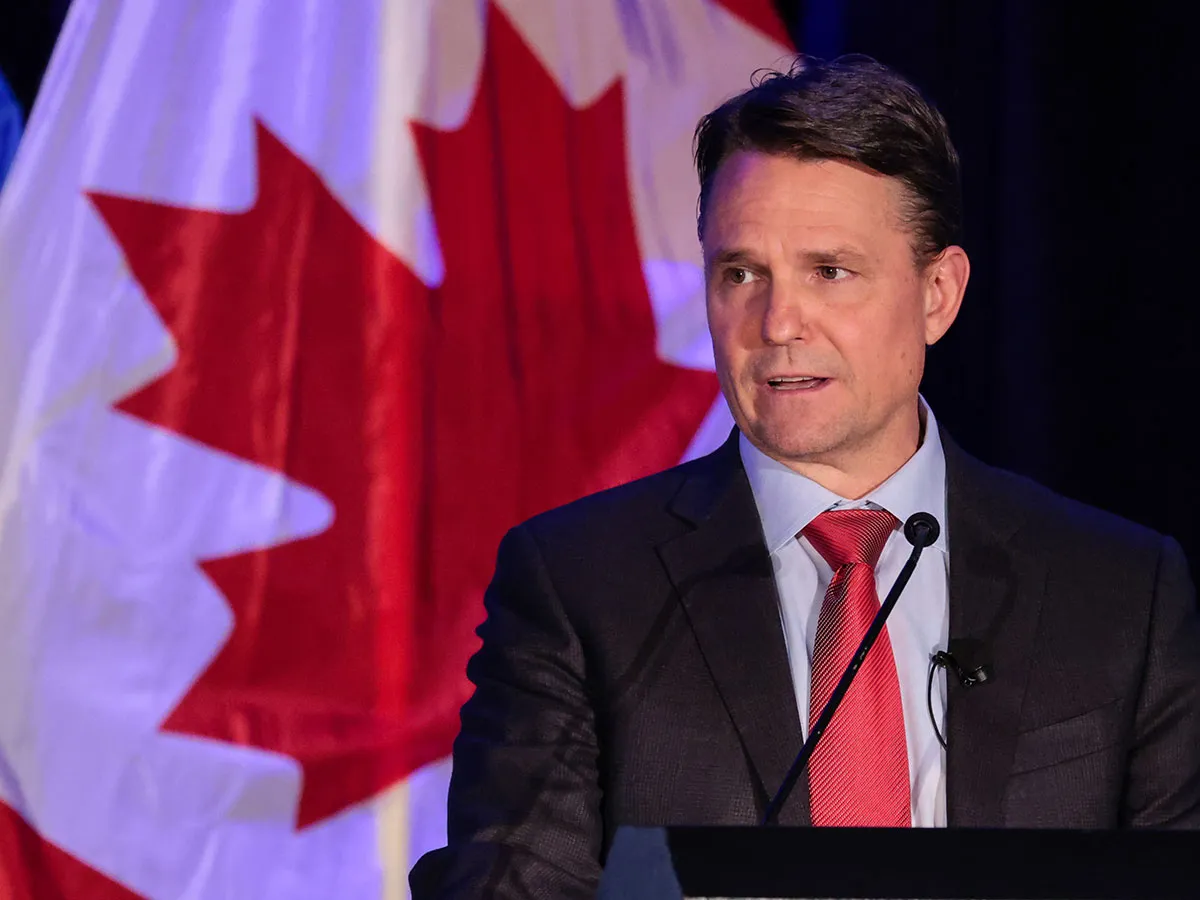
Skip to Content News Archives Economy Energy Oil & Gas Renewables Electric Vehicles Mining Commodities Agriculture Real Estate Mortgages Mortgage Rates Finance Banking Insurance Fintech Cryptocurrency Work Wealth Smart Money Wealth Management Investor Personal Finance Family Finance Retirement Taxes High Net Worth FP Comment Executive Women Puzzmo Newsletters Financial Times Business Essentials More Innovation Information Technology FP500 Podcasts Small Business Lives Told Tails Told Shopping Financial Post Store Obituaries Place a Notice Advertising Advertising With Us Advertising Solutions Postmedia Ad Manager Sponsorship Requests Classifieds Place a Classifieds ad Working Profile Settings My Subscriptions Saved Articles My Offers Newsletters Customer Service FAQ News Economy Energy Mining Real Estate Finance Work Wealth Investor FP Comment Executive Women Puzzmo Newsletters Financial Times Business Essentials HomeFinanceCPP Investments CEO says Carney government is offering interesting opportunities, but 'devil's in the details'Canada's biggest pension fund grew to $793.3 billion this past fiscal yearLast updated 2 days ago You can save this article by registering for free here. Or sign-in if you have an account.CPP Investments chief executive John Graham. Photo by Gavin Young/PostmediaThe federal government’s newly created sovereign wealth fund and Ottawa’s openness to privatization of large assets such as airports could present interesting investment opportunities for Canada’s largest pension fund, says the CEO of CPP Investments.Subscribe now to read the latest news in your city and across Canada.Exclusive articles from Barbara Shecter, Joe O'Connor, Gabriel Friedman, and others.Daily content from Financial Times, the world's leading global business publication.Unlimited online access to read articles from Financial Post, National Post and 15 news sites across Canada with one account.National Post ePaper, an electronic replica of the print edition to view on any device, share and comment on.Daily puzzles, including the New York Times Crossword.Subscribe now to read the latest news in your city and across Canada.Exclusive articles from Barbara Shecter, Joe O'Connor, Gabriel Friedman and others.Daily content from Financial Times, the world's leading global business publication.Unlimited online access to read articles from Financial Post, National Post and 15 news sites across Canada with one account.National Post ePaper, an electronic replica of the print edition to view on any device, share and comment on.Daily puzzles, including the New York Times Crossword.Create an account or sign in to continue with your reading experience.Access articles from across Canada with one account.Share your thoughts and join the conversation in the comments.Enjoy additional articles per month.Get email updates from your favourite authors.Create an account or sign in to continue with your reading experience.Access articles from across Canada with one accountShare your thoughts and join the conversation in the commentsEnjoy additional articles per monthGet email updates from your favourite authorsSign In or Create an Accountor“Airports, pipelines, other types of infrastructure, these are well-established assets for institutional investors such as us, and we have all those assets in the portfolio today in some form,” CPP Investments chief executive John Graham said Thursday. “So these are assets that would generate a lot of interest from institutional investors.”However, if Ottawa hopes to attract interest from institutional investors like CPP Investments, Graham said it will be crucial to clearly articulate what the investments are intended to “solve for” and ensure pensions are given sufficient control.Breaking business news, incisive views, must-reads and market signals. Weekdays by 9 a.m.By signing up you consent to receive the above newsletter from Postmedia Network Inc.A welcome email is on its way. If you don't see it, please check your junk folder.The next issue of Posthaste will soon be in your inbox.We encountered an issue signing you up. Please try again“If you’re coming in with large amounts of capital, you’d want to have some governance rights and ability to control your own destiny,” he said Thursday. “So the devil’s in the details …. We’re hopeful that this will all get fleshed out in the near term and (we’ll) be able to see some interesting opportunities.”In late April, Prime Minister Mark Carney announced plans for a $25-billion sovereign wealth fund to help finance nation-building projects alongside private sector and international investors.The fund is expected to grow from its initial modest size through reinvestment and the proceeds of asset recycling, which typically involves leasing or selling a government-owned asset to private-sector investors, with the proceeds used to invest in new priority infrastructure projects.Graham said asset recycling has been used successfully in countries such as Australia to draw in private capital because programs are structured to meet the risk appetite and investment objectives of long-term institutional investors.“That’s going to be really important to attract private capital (in Canada): a clear articulation of what exactly we’re solving for here, and what success looks like over the long run,” he said.“Sometimes you sell assets outright, sometimes you sell it a 20-year concession (to institutional investors), sometimes you bring them in as a partner, so there’s different ways to do this.”He said CPP Investments doesn’t favour one construct over another for infrastructure and has a range of investments around the world including projects with some government involvement.Graham made the comments following the release of the pension fund’s annual financial results.The CPP Investments fund posted a net return of 7.8 per cent in the fiscal year ended March 2026, with the fund growing to $793.3 billion.The $78.9 billion increase in net assets in fiscal 2026 consisted of $56.9 billion in net income and $22 billion in net transfers from the Canada Pension Plan (CPP).Public equities, particularly in the United States, drove the investment performance, while energy and infrastructure investments contributed meaningfully along with steady gains in credit, Graham said in a statement.These gains were partially offset by foreign exchange movements, driven by the depreciation of the U.S. dollar against major currencies including the Canadian dollar, and by losses in government bonds as market expectations for major central bank interest policies shifted, he said.Following the release of the fiscal 2026 results, Graham said there have been no major shifts in bond strategy at CPP Investments, despite new inflation fears and rising long-term bond yields.“Longer-term inflation expectations have not become unanchored, and they still are in the target range,” he said. “We’re seeing inflation due to this energy shock in the market, but we haven’t changed a lot of our long-term perspective on asset allocation at this time, so we haven’t made any dramatic changes … but it’s something we’re watching.”The conflict in the Middle East that began near the end of the CPP Investments’ fiscal year rocked global equities markets and stoked global inflation. In the 2025 calendar year, CPP Investments’ net return was 7.7 per cent.CPP Investments’ return in fiscal 2026 fell short of the 13.2 per cent generated by its benchmark portfolio, which the pension management organization said is heavily influenced by a concentration in public equities and particularly exposure to large-cap technology and communication services companies tied to artificial intelligence.However, the fund’s 10-year return outperformed the aggregated benchmark portfolios, generating 0.7 per cent “value add” per year, net of costs.Graham said he views some of the valuations driving stock markets as “astronomical compared to intrinsic value” and added that CPP Investments must follow a mandate of avoiding undue risk of loss.“I think it’s fair to say we struggle with the valuations in parts of the market, he said. “If we have a view that the range of potential outcomes is increasing or large to the point that we’re exposed to undue risk, we need to prioritize resilience, and we do that through diversification.”At the end of the fiscal year, 36 per cent of the fund’s assets were allocated to public equities. Real assets including infrastructure and real estate accounted for 20 per cent of the fund, while 22 per cent was allocated to private equity. Government bonds, at 13 per cent, and credit, at nine per cent, made up the balance.Geographically, 48 per cent of the fund’s assets were in the United States, up from 47 per cent a year earlier, and a steady 12 per cent of the portfolio was invested in Canada.Graham said the fund’s strong performance in a year of geopolitical uncertainty, market volatility and currency movements demonstrated the strength of the fund’s diversified portfolio and global reach, with a 10-year annualized net return is 8.8 per cent.“What matters most for a pension fund serving generations of Canadians is long-term performance, and over the past decade our investment programs have contributed positively to the fund’s returns,” he said.“Through disciplined decision-making and global diversification, we have earned $549 billion in cumulative net income since we started investing more than 25 years ago, helping us protect and grow the fund while building resilience through changing market conditions.” Get the latest from Barbara Shecter straight to your inbox Join the Conversation This website uses cookies to personalize your content (including ads), and allows us to analyze our traffic. Read more about cookies here. By continuing to use our site, you agree to our Terms of Use and Privacy Policy.
CPP Investments CEO says Carney government is offering interesting opportunities, but 'devil's in the details'
The CPPIB posted a net return of 7.8% in the fiscal year ended March 2026, with the fund growing to $793.3 billion. Read more.
1,481 words~7 min read