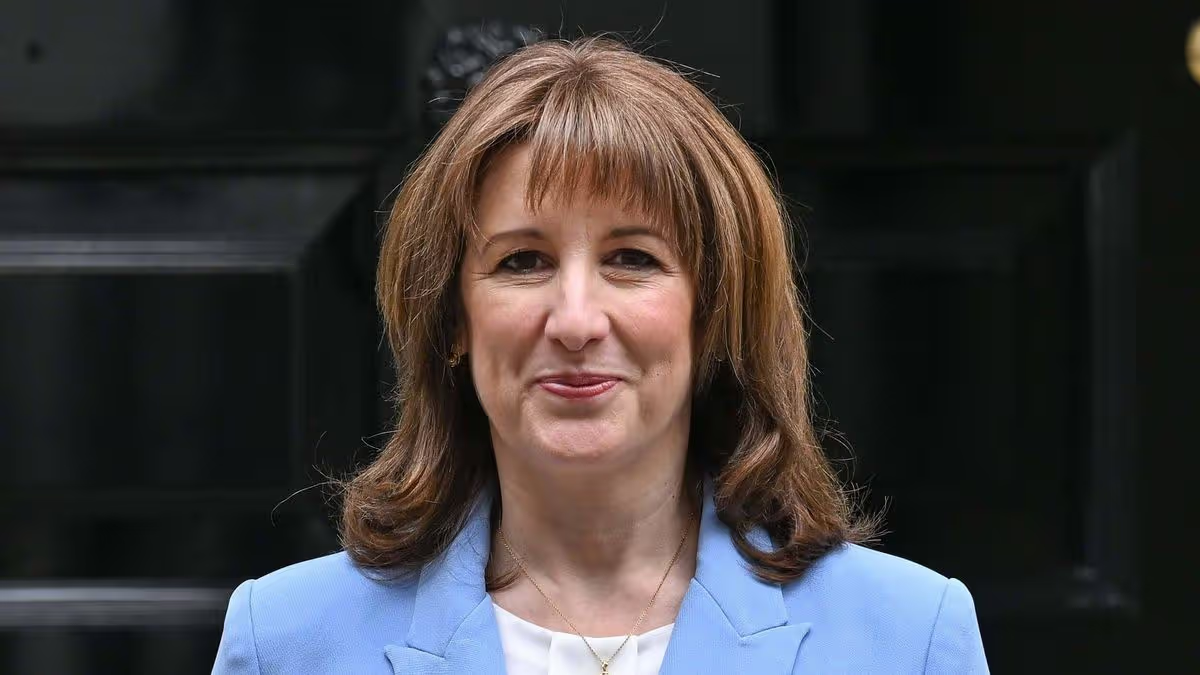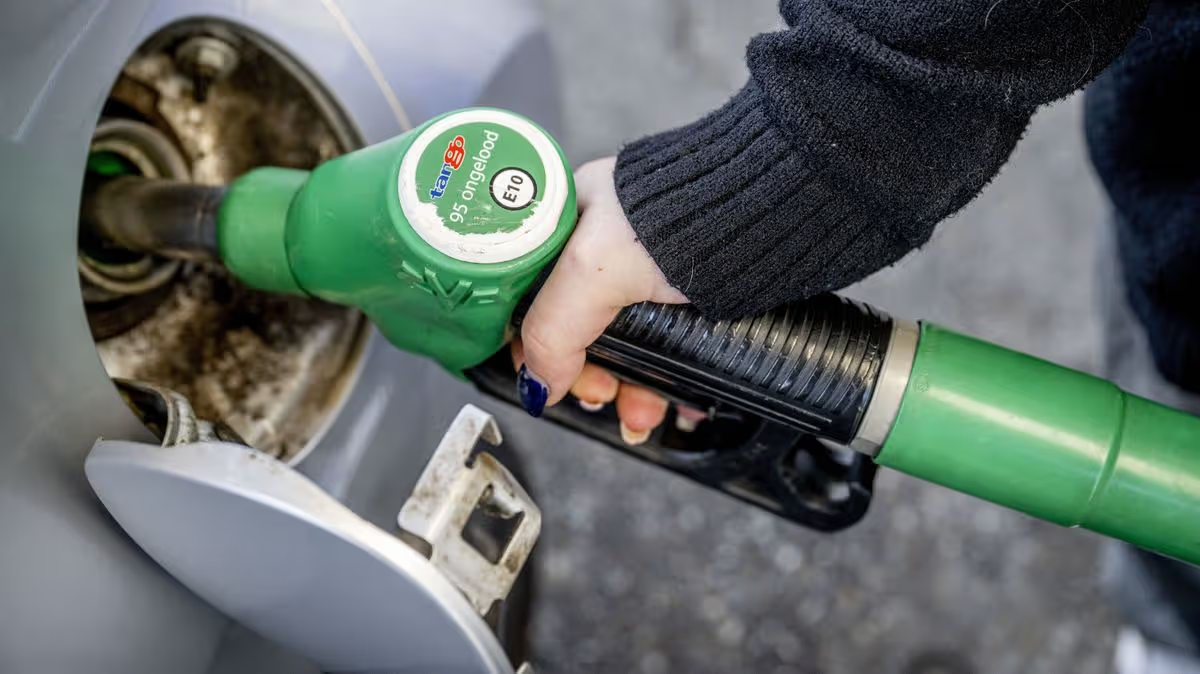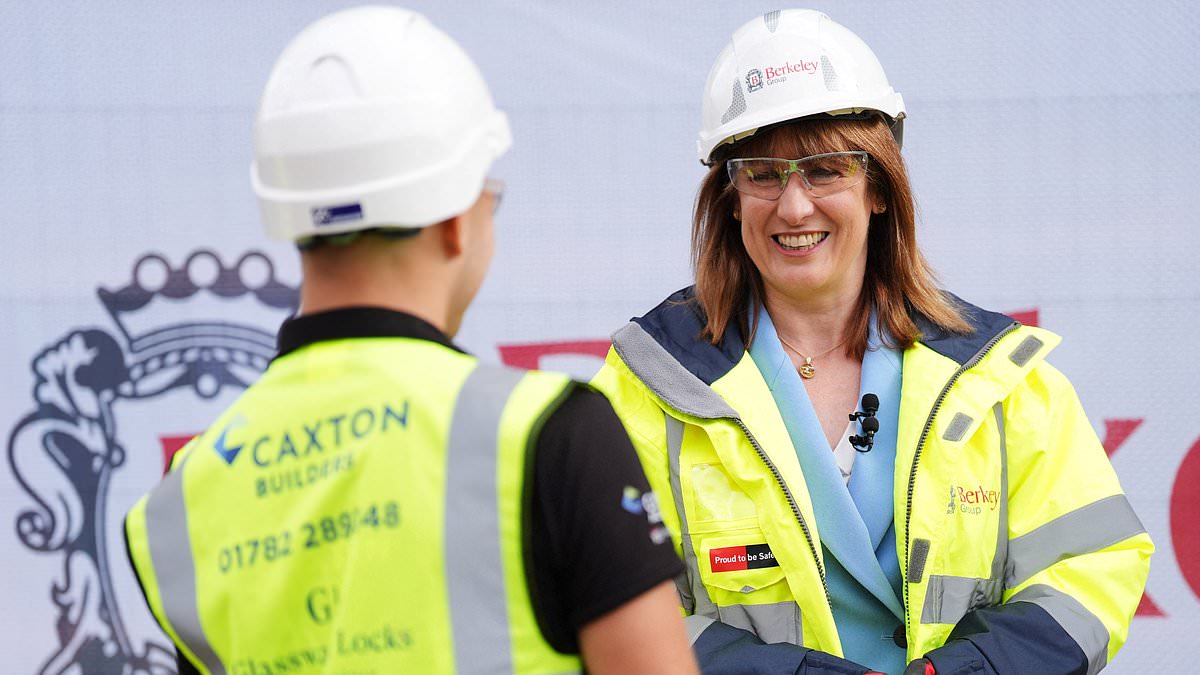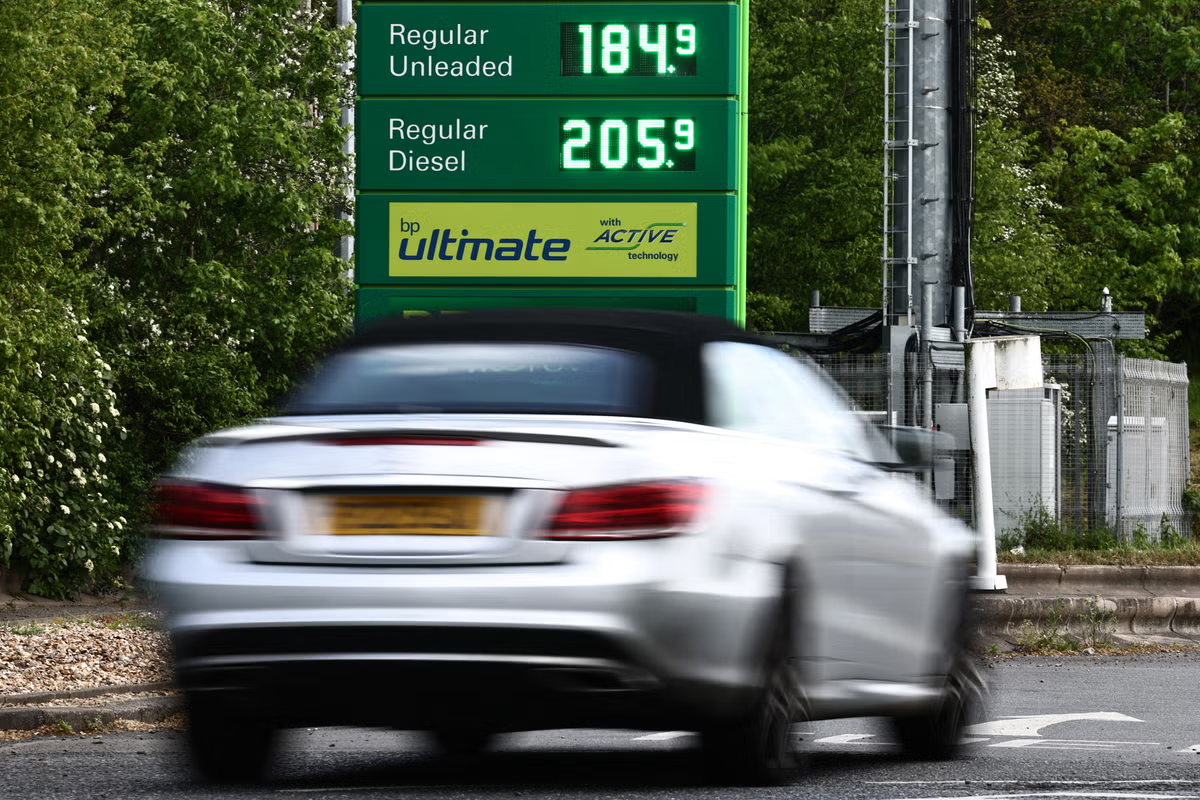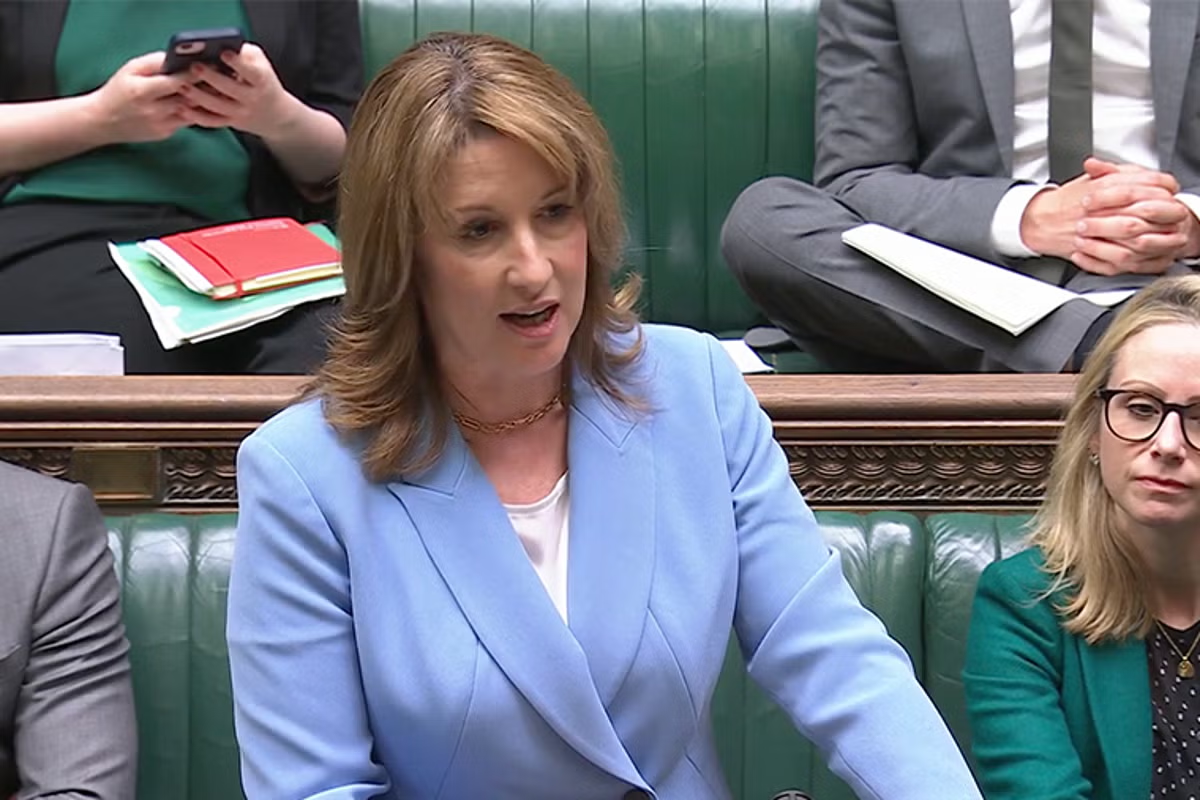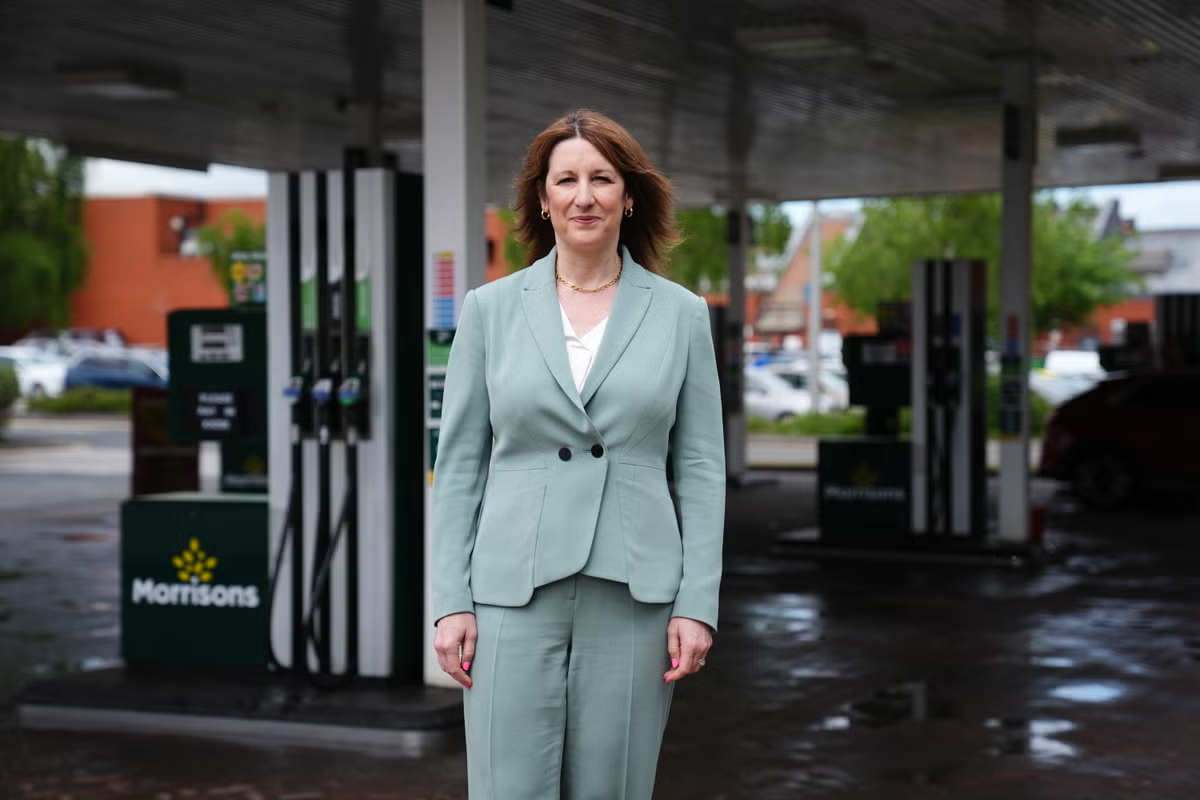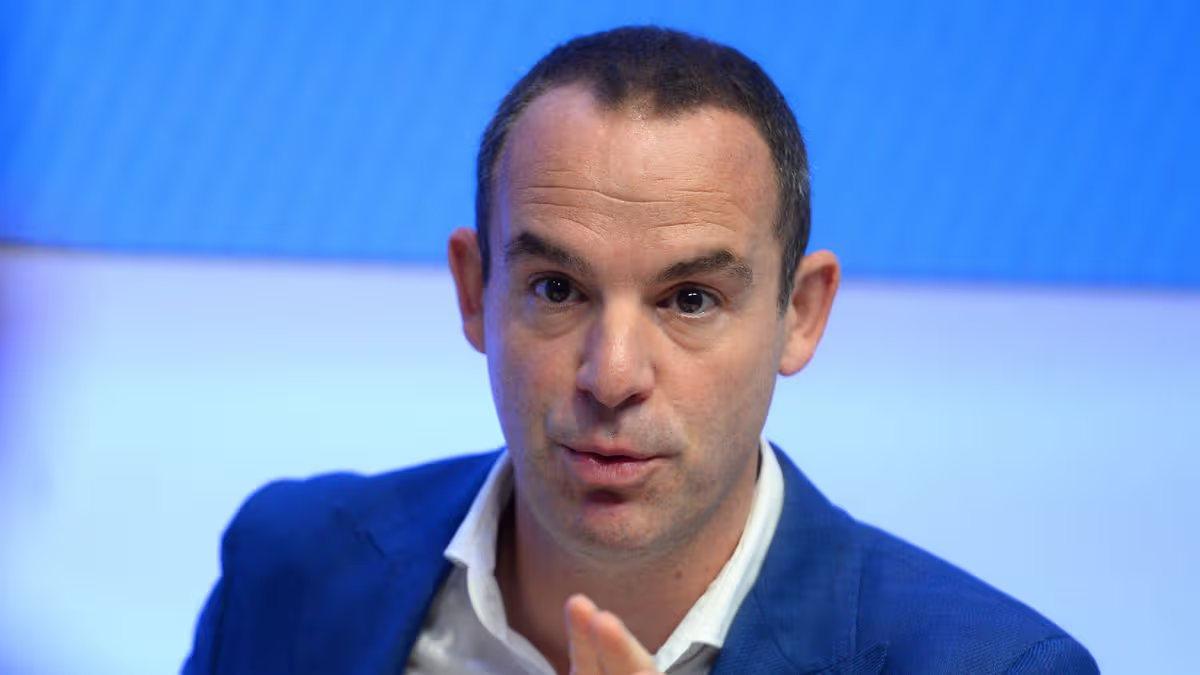
The money-saving expert had his say on the Chancellor's latest measures15:16, 21 May 2026Martin Lewis has shared his thoughts on one of Rachel Reeves' announcements aimed at easing the cost of living crisis. The Chancellor of the Exchequer today (Thursday, May 21) revealed a raft of measures designed to alleviate financial pressure on struggling Britons.These encompassed a VAT reduction on summer attractions and children's meals, free bus travel for youngsters, and targeted food tariff reductions. Dubbed the Government's 'Great British Summer Savings' scheme, it is partly financed through reforms to the taxation of energy firms' overseas operations.However, money-saving expert Mr Lewis highlighted another measure that has largely flown under the radar. Motorists who use their vehicles for work purposes will now be entitled to claim tax relief at 55p per mile for the first 10,000 miles travelled during the tax year — a rise of 10p from the previous rate of 45p per mile.Mr Lewis told Adrian Chiles on BBC Radio 5Live: "The big one that I think is going to be under-covered, but is actually really important, is the increase in the mileage allowance for people who drive as part of their work. This has been frozen at 45p since, I think 2011, so the increase from 45p to 55p for the first 10,000 miles that you drive is really important."To explain to people how this works, if you drive as a part of your work, and the big sector that's very important on this is care workers who are driving from house to house to house.Content cannot be displayed without consent"What this mileage allowance does is this is the amount that your employer can give you to cover your costs, and you don't pay tax and National Insurance on it. So it doesn't count as like earned money. It's a special allowance.", reports the Express."So moving that from 45p to 55p is important. It is also worth noting that even if your employer does not give you the full amount of the mileage allowance, let's imagine they give you 30p. And the allowance is 55p."For amounts that you drive for work, not commuting, not to and from work, this is intra-work travel, intra-day work travel, you can claim that 25p per mile back - tax back on it - because you'd have been paid that in your wages, you're having to pay it, you can get the tax back in the difference between what they give you and the full allowance. And if they didn't give you anything, you could claim the full 55p back. And similar applies to people who are self-employed for driving in their work."This has long been a complaint I've got, so I think the change from 45p a mile to 55p a mile backdated to April 2026, so backdated a couple of months, is really going to be quite useful for people.READ MORE: Ryanair boss Michael O'Leary gives price 'rise' warningREAD MORE: Santander customers have days left over £1,000 windfall"It's only for the first 10,000 miles, there's a lower rate after that. I haven't heard anything about that rate being changed. I also haven't heard anything about whether they're changing the rate for people who cycle, because there is an allowance for cycling that you're allowed to claim too. I've just got my team trying to check on that." In a post on X, Mr Lewis continued: "The work mileage allowance for under 10,000 miles will rise by 10p to 55p backdated to April 2026."So this means if you drive for work in your own car (like many care workers for example) you can be given up to 55p a mile tax and NI free. And if you're not given that level you can claim the tax back on the difference between what you're given and that amount. So if you're given 30p /mile. You can reclaim tax paid on your wages for the 25p/mile difference."Article continues belowThe 45p, now 55p, mileage rate is applicable to cars and vans, reducing to 25p per mile beyond 10,000 miles. For motorbikes and bicycles, a fixed rate of 24p and 20p respectively applies, regardless of distance covered. Claims are typically made through HMRC or via your tax return if you complete self-assessment.
Martin Lewis flags 'overlooked' Rachel Reeves 55p mileage rule
The money-saving expert had his say on the Chancellor's latest measures
706 words~3 min read