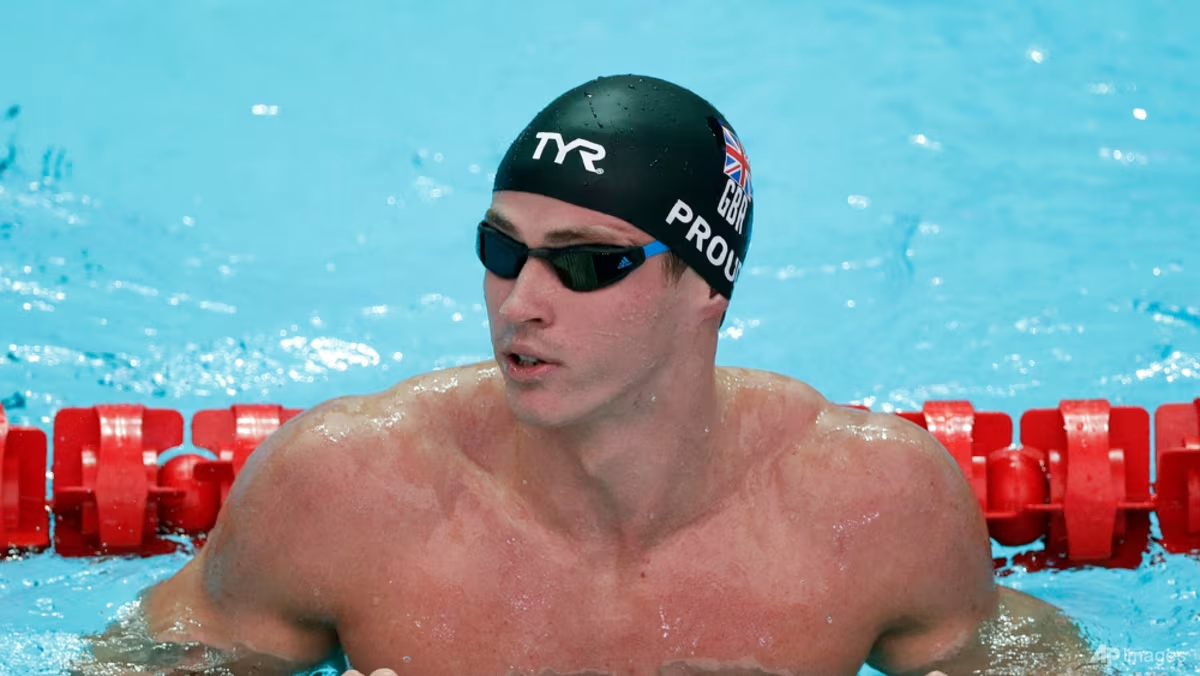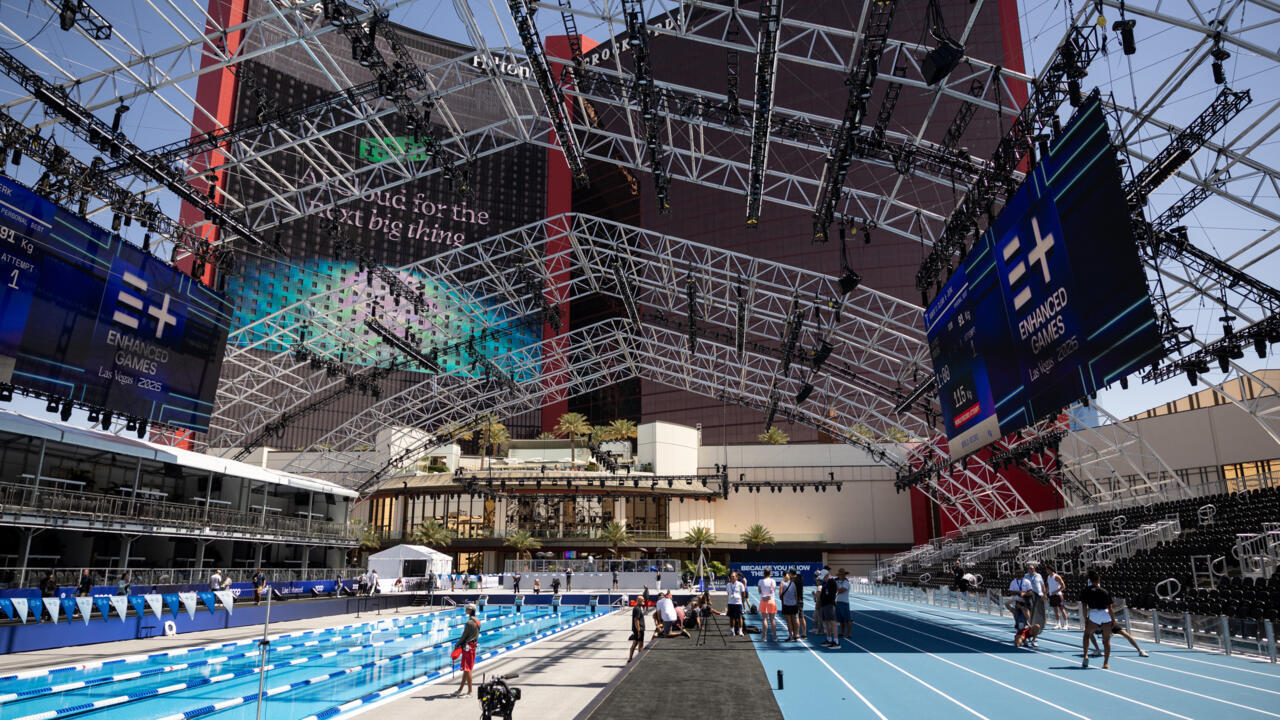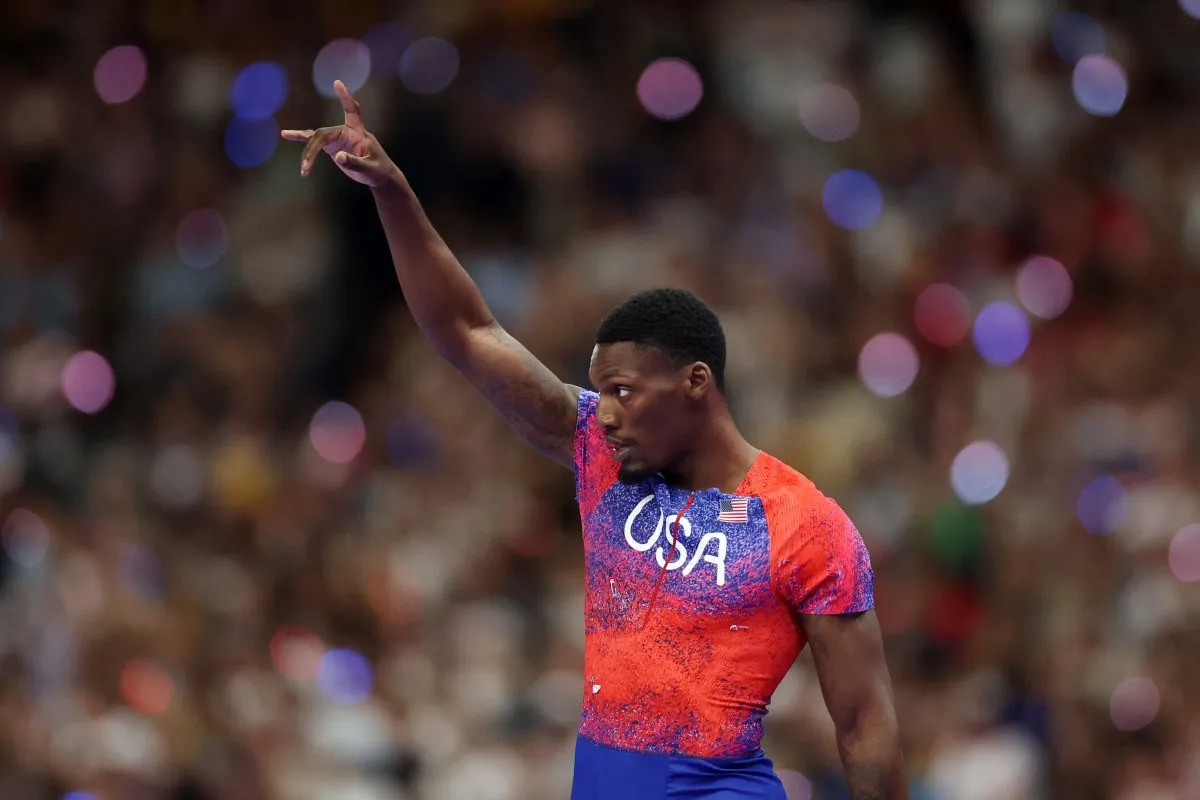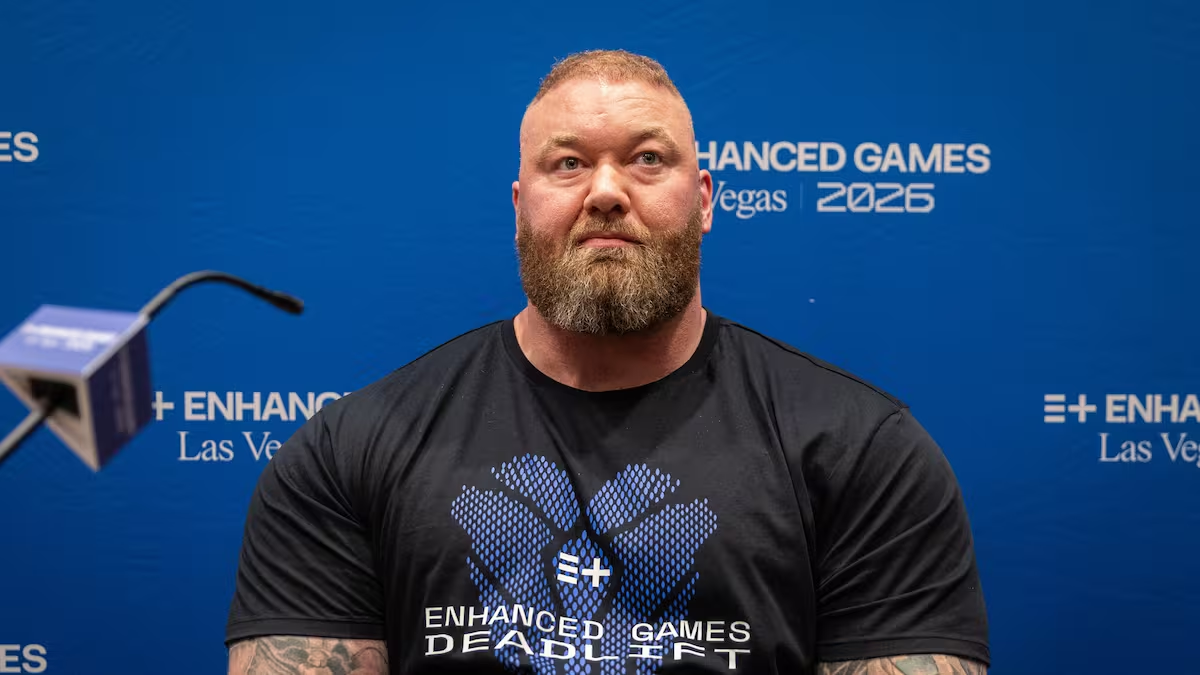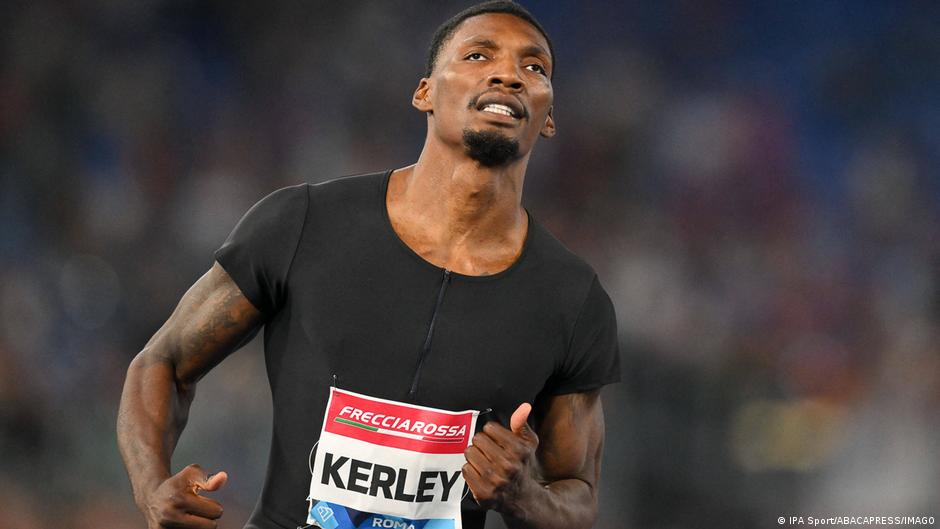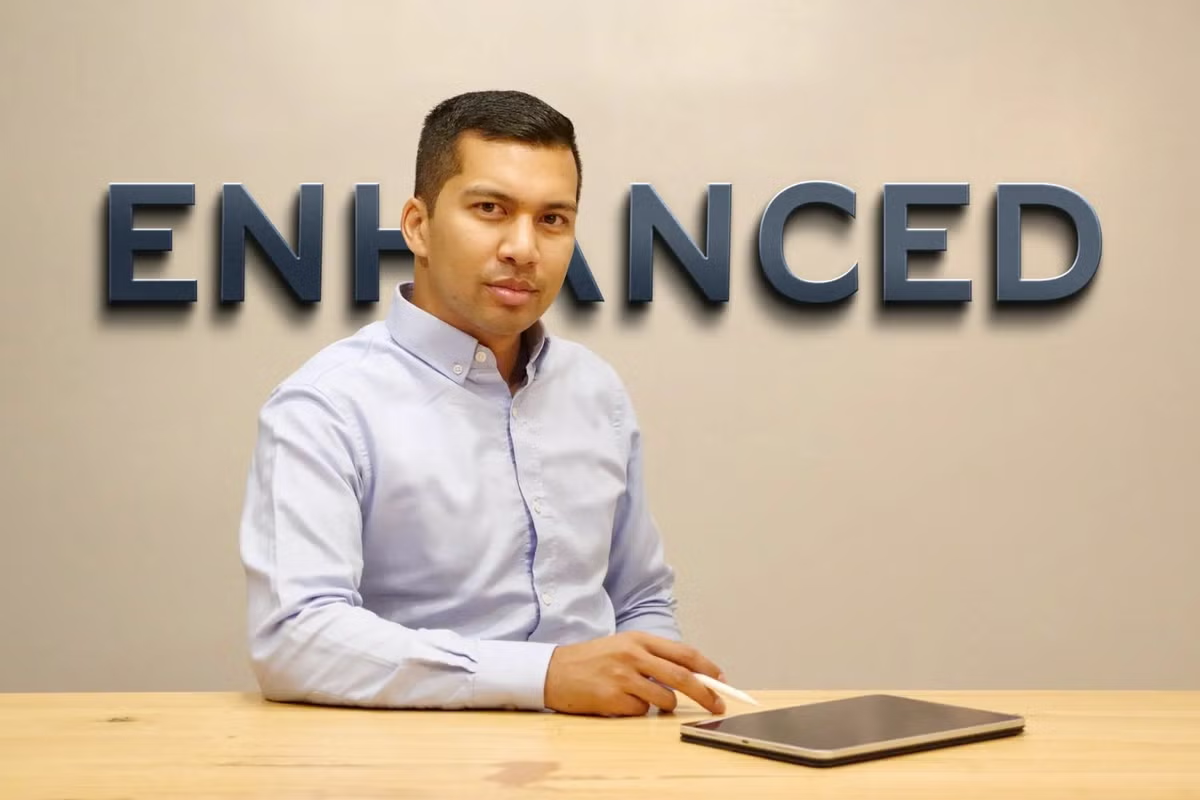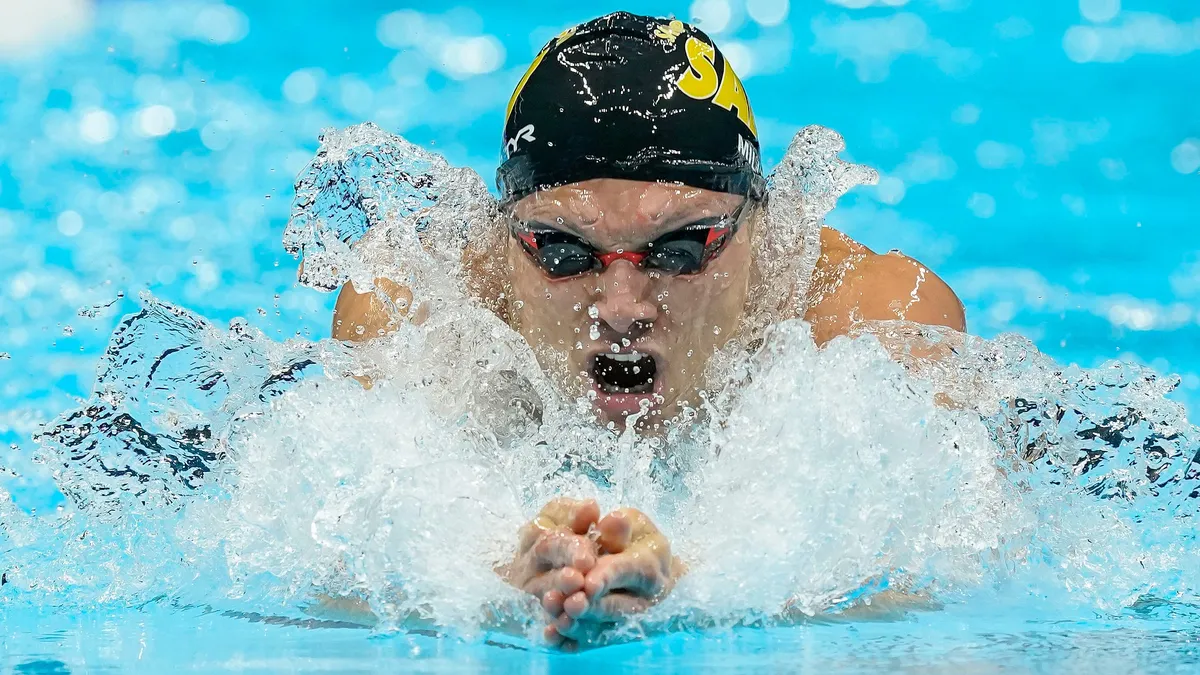
May 21st 2026 By Barclay Bram and Natasha Loder Almost every day for the past 15 years, Ben Proud had to make his whereabouts known to the doping authorities. Travelling for work? His hotel would have to be logged on a clunky website. Staying over at a new girlfriend’s place? That would have to be recorded, too. It didn’t make for the most spontaneous of lives. But it’s what you have to do if you want to be an Olympic athlete. In 2024 Proud had won a silver medal in the 50-metre freestyle swim at the Paris Olympics. It had been his third Olympics and the high point of his career. But last November he was in a slump. He was 31, old for a competitive swimmer. His knees hurt and his back was shot. There was a persistent, dull pain in the tendons around his elbows. One Wednesday at 6am he heard a knock at the door of his flat in Stratford, east London. He opened it to find a man and a woman, sent by UK Anti-Doping, Britain’s drug-testing body. They were there to check that Proud was complying with what is known among Olympic athletes as “the Code”, a set of regulations from the World Anti-Doping Agency that includes an agreement not to use certain substances. Proud knew the testers might pay him a visit that day, but hadn’t expected them to come so early. He had gone to the toilet just before they arrived, so they would all have to wait before another urine sample could be collected. The three of them didn’t make small talk; rather, they sat on the sofa and looked silently out of the window at the view. Nearly two hours later, Proud was ready. The male tester followed him into the flat’s only bathroom, an ensuite; they had to creep quietly through the bedroom to avoid waking Emily Barclay, Proud’s partner, who is also a competitive swimmer. Proud found the experience profoundly awkward. “You stand there with your trousers around your ankles and your bare arse out like a schoolboy,” he said. Proud knew it was a Faustian bargain: taking part would tarnish his reputation, and he would probably be barred from mainstream competition for ever After the testers left, Barclay emerged tentatively from the bedroom. She passed Proud her phone to show him a piece of news. “Kristian has just broken the world record,” she said. Proud stared at the screen, confused. He frequently competed against Kristian Gkolomeev, a Greek swimmer. They’d tied for fifth place at the Tokyo Olympics in 2021, but Proud had comfortably beaten him in Paris. He couldn’t believe that Gkolomeev had somehow become the fastest 50-metre swimmer in history—in the off-season, no less. Reading on, Proud learned that Gkolomeev had signed up with the Enhanced Games, a company that was seeking to disrupt conventional sport by allowing athletes to compete while on performance-enhancing drugs. Later that day, Enhanced (as the wider company is sometimes known) released a documentary about Gkolomeev’s swim, which he had done alone in a pool in North Carolina. Not only had he taken the world record—Enhanced had paid him $1m for the achievement. “The swimming world is going to hate every second of it,” Brett Hawke, Enhanced’s head swimming coach, says in the documentary. “This is where human performance is going. And I think a lot of people will start to embrace it over time.” As the couple watched the documentary, Barclay had to pause it several times because Proud had been so overwhelmed with emotion. His pursuit of Olympic glory had come with steep costs. He’d grown up in Malaysia and moved to Britain to train when he was 16, leaving most of his family behind. There had been years when he had scraped by on nothing more than the £28,000 ($38,000) stipend provided by the national aquatic sports association to elite swimmers. He wasn’t sure what was in store for him after his swimming career came to an end—which, at his age, could be as soon as his next injury. New highs Ben Proud, a swimmer, is taking part in the Enhanced Games If Proud joined Enhanced—and adopted its controversial drug protocols—he could keep swimming at the highest level, perhaps even faster than before, and potentially earn a life-changing amount of money. But he knew it was a Faustian bargain: taking part would tarnish his reputation, and he would probably be barred from mainstream competition for ever. Proud asked Barclay if she would judge him if he threw in his lot with the Enhanced Games. When she said she wouldn’t, he called his agent. He was ready for something new. On May 24th around 50 athletes—in swimming, weightlifting and athletics—will gather in Las Vegas for the first Enhanced Games. Up to $25m in prizes will be awarded, with $250,000 going to those who win first place and bonuses of up to $1m to world-record breakers. Around 2,500 people will watch from the stands of a purpose-built arena, where they’ll also be treated to a Super Bowl-style closing ceremony—The Killers, a rock band, are playing—and have the chance to mingle with scientists, crypto investors and celebrities. The games will be streamed on YouTube and Roku: Bryan Johnson, a venture capitalist who has become famous for trying to chase immortality by tweaking every aspect of his body and lifestyle, will be one of the commentators. This spectacle is an advertisement for Enhanced’s other business: selling performance-enhancing products to non-Olympians. The company has pumped its competing athletes with drugs over the past three months in the hope that their achievements will inspire viewers—from ordinary gym-goers to grandparents trying to keep up with their grandchildren—to also get enhanced. A dizzying array of injectable drugs is already for sale on Enhanced’s website, promising to support everything from “sleep, energy and sharper mornings” to “healthy ageing”. The real purpose of the games is to push the limits of what the public sees as the acceptable use of performance-enhancing drugs Ultimately the real purpose of the games is to push the limits of what the public sees as the acceptable use of performance-enhancing drugs. Some of these have long been a part of the high-street gym scene: anabolic-androgenic steroids, such as testosterone, and human-growth hormones are widely used to improve muscle strength and performance. Increasingly, though, bodybuilders, “looksmaxxers” (people who go to extreme lengths to become more physically attractive) and Silicon Valley coders are supplementing their regimens with a new generation of drugs called peptides. Many peptides are unlicensed and produced by dubious-looking manufacturers in China. Some claim to speed recovery and healing; others to thicken hair, build muscle, deepen a tan or even improve libido. Gym enthusiasts and their coaches are now experimenting with combinations of chemicals aimed at improving strength, longevity or looks—nicknamed “stacks”—all without medical supervision. The Enhanced Games emerged from this subculture. Just before Christmas in 2022, Aron D’Souza, an Australian lawyer in his 30s, was working up a sweat in an upmarket gym in Miami when he overheard the buff people around him chatting about being “enhanced”. After D’Souza asked them what they meant, they cheerily discussed the contents of their stacks with him. For D’Souza, these enhanced gym-goers were prototypes for a healthier, more ambitious humanity. He began to wonder: what if the Olympics allowed for open enhancement? What feats could humans achieve if they could do whatever they wanted with their bodies? D’Souza was well-connected with rich people who liked big ideas, including Peter Thiel, a co-founder of PayPal and a venture capitalist. At Thiel’s annual new year’s party D’Souza pitched his idea for an Olympics on steroids; Thiel later wrote him a cheque. Balaji Srinivasan, a former executive at Coinbase, a cryptocurrency exchange, and Christian Angermayer, a German entrepreneur, followed suit. Their shared interest in the Enhanced Games stemmed from similar political orientations: all three men believe that people should be able to do what they like with their money and their lives with as little state interference as possible—preferably none. (Thiel has characterised regulators as “the Antichrist”.) They also all have close ties with Silicon Valley, where there is a tradition of viewing physical weakness, disease and even death as problems to be engineered away. D’Souza’s pitch was perfectly calibrated for this mindset. Your browser does not support this video. 0m50m The starting block The dive from the starting block into the pool will be the fastest the swimmers move for the entire 50-metre freestyle race. “I’m not daydreaming or letting my attention go anywhere else. I focus on my block and on the process,” Proud said. 1/5 To draw attention to his nascent company, D’Souza began courting controversy. His main target was the International Olympic Committee (IOC). He argued that the IOC exploited athletes commercially while paying them nothing. (An early version of Enhanced’s website accused the IOC’s president of jetting to fancy hotels to visit billionaires and dictators while Olympic athletes slept in their cars.) D’Souza also called for national anti-doping agencies to be defunded for their “discrimination” against enhanced athletes. There are some grounds for criticising anti-doping agencies, especially on the issue of consistency. Tough bans have been imposed on individuals while groups of athletes from powerful countries such as Russia and China have been shown leniency. Few would go as far as D’Souza in suggesting that anti-doping rules be scrapped entirely, but many observers agree the system is broken. John Hoberman, a professor at the University of Texas at Austin who studies the history of doping in sports, told us that doping has been “out of control for a long time” and that frequent testing doesn’t appear to be a strong enough deterrent. Some experts have even argued that medically supervised enhancement could be a safer option for competitive athletes, given that so many of them take black-market drugs anyway. But even critics of the current anti-doping regime viewed the Enhanced Games with concern—Hoberman, for instance, has called it a “dishonest and careless project”. D’Souza knew his idea would need scientific credibility to get off the ground. In 2024 he started to approach potential scientific advisers and organised two gatherings grandly billed as “conferences on human enhancement”. The company also needed to find athletes willing to put their bodies on the line—so it offered $1m to anyone who broke a world record in certain disciplines while on an enhancement protocol. In February 2024 James Magnussen, a 32-year-old retired swimmer from Australia known as “the Missile”, was the first to take the bait. Having won silver and bronze medals at the London Olympics, he had been trying out several alternative careers, as many former Olympians do: gym-owner, sports commentator and “Dancing with the Stars” contestant. But after hearing about the Enhanced Games, he was now ready, as he put it on a podcast, to “juice to the gills” and break the world record in the 50-metre freestyle. Magnussen had proved that an enhancement protocol could help a retired elite athlete return to sport faster and more successfully than anyone had imagined Magnussen asked Brett Hawke, who had coached two of the previous world-record holders in the discipline, to train him. He then started a stack composed of anabolic steroids, testosterone and human-growth hormone—as well as some peptides—using dosages agreed upon with his own doctor. At the time, no one knew what it would take to transform a retired swimmer into a world-record breaker. But it became clear that the drugs did work—almost too well. Magnussen’s recovery between sessions was so quick that he asked Hawke to push him harder. His lifts in the gym became heavier and heavier. By the time he swam for the world record in May 2025, he had put on 20kg of muscle; in photos, his back bulged out of his swimsuit like the Incredible Hulk. The record attempt was a flop—Magnussen’s gains were so large they had slowed him down. “Unfortunately I didn’t actually grow gills,” he said, “because with all that muscle I was very low in the water.” Even so, he had proved that an enhancement protocol could help a retired elite athlete return to sport faster and more successfully than anyone had imagined. Perhaps the athletes just needed fewer drugs—and protocols informed by science. In December 2023 Guido Pieles was on his way to a medical conference when he received an unexpected email. It was from D’Souza. He wanted Pieles, an expert in sports cardiology and congenital heart conditions, to advise Enhanced. “Hang on, really? Are they joking?” Pieles recalls thinking. But he was interested enough to take a call with D’Souza anyway. “I had a lot of questions,” he remembers. Pieles wondered whether the athletes’ enhancement could be run as a clinical trial. Not only would this be safer—because the athletes would be under medical supervision—but the data gathered from the trial could then drive further research into the use of enhancement drugs in ordinary people, with the goal of improving their long-term health and longevity. Fuel injection “I don’t know why there is so much fuss about it,” said Guido Pieles, the chair of Enhanced’s independent medical commission, about the drug protocols Pieles agreed to join D’Souza at his first enhancement conference in February 2024. By the end of the event, he had convinced D’Souza and Maximilian Martin, one of Enhanced’s co-founders and, at the time, its chief strategy officer, to the merits of a trial. Pieles was then dispatched to assemble an independent team of experts, which would design the trial, pick the drugs, decide the doses and supervise the athletes’ health. (This team ended up including both mainstream doctors and scientists as well as enhancement specialists, whose work tends to be on the fringes of sports science.) The experts stipulated that the athletes could use only drugs that had been approved for humans—ruling out most peptides. They also knew that the possibility of receiving a placebo would deter athletes from taking part—no one chasing a cash prize would accept such uncertainty about the contents of their protocol. Instead, the trial would measure the outcomes over time of a group of athletes, most of whom would take enhancements. Enhanced wouldn’t be able to prove whether any effects on health or performance were caused by the drugs, the intense competition, or both. But with blood tests every two weeks it would be possible to track how athletes responded to the drugs and changes in dosage. This close observation could also mitigate the known risks to the athletes’ cardiovascular and endocrine systems of taking enhancement drugs. Enhanced decided to run the trial in the United Arab Emirates (UAE), which offers both world-class medical facilities and a strong, but suitably flexible, medical regulatory system. When we visited Abu Dhabi in early February, the trial had yet to be approved by the Ministry of Health, so the athletes had not started taking the drugs. But Pieles, an athletic-looking 52-year-old, was ready to answer our questions. ERTH already had all the training equipment the athletes needed. “I’ve never experienced having all your wants and needs taken care of like this” There would be a menu of enhancement drugs on offer rather than a set prescription, Pieles said, allowing each protocol to be tailored to the specific demands of the athlete’s sport. Testosterone and anabolic steroids would be made available to build muscle; human-growth hormone to repair tissue; erythropoietin to boost red-blood-cell production; meldonium to enhance endurance (whether it actually does this is disputed); and modafinil and Adderall to sharpen focus and reduce fatigue. Dosages would start low but would be gradually increased to levels that Pieles said would exceed those used in standard medical care, while staying within what he considered safe limits. (These levels would also typically be lower than those seen in some users of high-street gyms.) Pieles said that people in the enhancement business laughed when he told them what he planned on giving the athletes (“Your stack is so boring!”). He thought they had a point. “I don’t know why there is so much fuss about it,” he told us. In February around 40 Enhanced athletes moved to Abu Dhabi to begin training under their specially designed drug protocols. Their new home and training centre was ERTH, a luxury hotel that is being converted into a state-of-the-art sporting complex as part of the UAE’s plan to become a leading venue for global sport. Building works were shielded from view by placards declaring, appropriately, that the facilities were being “enhanced”. Even so, ERTH already had all the equipment the athletes needed: an enormous gym, a running track, a 50-metre indoor pool. “I’ve never experienced having all your wants and needs taken care of like this,” said Hawke, the head swimming coach. The athletes also had access to physios, sports massage and doctors; a private beach; and the hotel buffet, where the chefs had reimagined the indulgent menus to make them leaner and protein-rich. “This meal might cost me $75 back in Austin,” said Emmanuel Matadi, a sprinter, sitting at an outdoor table shielded from the strong sun by an umbrella. He shook his head in disbelief at the mountain of grilled salmon and vegetables on his plate. “I often don’t get all the calories I need simply because I don’t have the time or the money to cook at this level.” Normally elite athletes pay for their own food, coaches, training facilities and travel. Ivan Rojas, an experienced weightlifting coach who now works for Enhanced, told us that when he coached the American team one year at the world weightlifting championships he realised they hadn’t been given travel uniforms. He ended up buying them embroidered polo shirts with his own money. There are modest prize pots and performance fees on offer at established competitions, but if athletes have to drop out they lose this income. “That’s how track is,” Marvin Bracy-Williams, a 100-metre sprinter, told us. “You have a bad day, somebody ain’t eating.” To make ends meet, Bracy-Williams had spent years as part of the practice squads of National Football League teams, where there is steady pay on offer. But after he broke his arm in 2019 he once again took up competitive sprinting: “It’s like gambling. You’re spending money to be a part of something, hoping that you win big.” Bracy-Williams had been offered a sponsorship deal worth $120,000 ahead of the Paris Olympics, conditional on his being selected for the American athletics team. But he pulled a leg muscle during training and in the qualification trials ran two seconds slower than his personal best. He didn’t make the cut. “I watched the money walk away,” he said. Desperate to get back into the game, Bracy-Williams contacted someone who could hook him up with performance-enhancing drugs. He knew the risks—a probable ban from the sport, being dropped by his sponsors, social stigma—but felt as though he had no other choice. “I was willing to do whatever it took to just not hurt any more,” he said. Bracy-Williams started taking small doses of drugs, primarily testosterone. But they didn’t make much difference: his times didn’t budge and the pain in his leg grew worse. In agony one day, he confessed to his coach. The coach was sympathetic, but told Bracy-Williams he’d have to report him to America’s anti-doping agency. The next day inspectors turned up and tested Bracy-Williams. His sample was positive, and he was suspended from the sport until November 2027. “The hardest is when it’s 9am and you know all your friends are at practice,” he told us, “and you’re just sat there with nowhere to be.” “I was always very vain,” Angermayer recalled. “Even in my 20s, I was already thinking: how can I slow down ageing?” For Bracy-Williams, the appeal of the games is clear. He’s one of six Enhanced athletes who have faced drug-related suspensions in their careers, leading some critics to dub the games the “Cheaters’ Olympics”. Athletes who were known for being squeaky clean, like Proud, the 50-metre freestyle swimmer, have more to lose. Anyone—be it a competitor, doctor or coach—who takes part in the Enhanced Games could face a long-term ban from professional sports. Proud sometimes seemed to be trying to justify his participation. He argued that Enhanced was actually levelling the playing field, which he believes is skewed in favour of athletes from countries that turn a blind eye to doping. “One of my close friends narrowly missed a gold to one of those Chinese swimmers,” he said, referring to a doping controversy at the Paris Olympics, in which 11 Chinese swimmers who had previously tested positive for a banned heart medicine were nevertheless allowed to compete. “You have to suck it up and get on with it, because as swimmers we don’t feel we have the power to stand up and say that something like this is clearly wrong.” He also seemed glad finally to be making money. “I always said, growing up, you never get into swimming for the money...that’s fine to say when you’re 20, 23 years old, but when you get to 28 or 30, it’s a very different story.” Since joining Enhanced he has earned both a signing bonus and a salary (he didn’t disclose the exact figures, but the total is believed to be in the hundreds of thousands of dollars). And he still stands to earn $1.25m if he both wins his race and breaks the world record. In late February Proud stood in his hotel room, shaking as he inserted the needle into the soft flesh just below his waist for the first time. He felt a small prick and pushed the plunger. Now he knew he could never go back. Whether the inaugural games marks the launch of a viable business or a one-off PR stunt will largely come down to Enhanced’s leadership, particularly Christian Angermayer, who has become its main backer. D’Souza left the company at some point—it’s not entirely clear when, but his departure appears to have been amicable. Maximilian Martin, the company’s former chief strategy officer, seemingly became chief executive last August. Under him, Enhanced has become less provocative and more polished. Instead of proclaiming, as D’Souza did, that athletes today have to hide their doping like gay people had to hide their sexuality 50 years ago, Martin has tried to reassure the public that performance-enhancing drugs are “not that dangerous…under the right clinical and medical supervision”. Trial run Fred Kerley, a sprinter, is one of the six Enhanced athletes who have faced drug-related suspensions in their careers But thanks to Angermayer’s expanded influence, Enhanced still possesses its founding techno-utopian spirit. In the past few decades he has funded projects researching longevity medicine, brain-computer interfaces and the use of psychedelics to treat mental-health conditions (Angermayer is a proponent of hallucinogenic drugs, which he also believes will help humanity adjust to the mass joblessness that AI will create). Taken together, Angermayer’s preoccupations speak to a vision of the future in which medicines, rather than being simply used to treat disease, can extend human longevity and enhance well-being. We recently met Angermayer in his penthouse flat near Old Street, a trendy area of London. He has been on testosterone-replacement therapy (TRT) since he was 30; now 48, he is built like a gym bunny. Sitting at the head of a table the size of an aeroplane-landing strip, he offered us cannabidiol-infused sodas from a firm he invests in. On the wall was an artwork made of Ecstasy pills, arranged in a colourful halo. ”I was always very vain,” Angermayer recalled. “Even in my 20s, I was already thinking: how can I slow down ageing?” Now he believes he has found a way to bring the drugs he has been experimenting with to a mass market. The business model he described sounded similar to that of Red Bull, an energy-drink brand: stage a series of high-profile sporting events (in Red Bull’s case, extreme ones like cliff diving or motorsports) and use them to publicise a product. Earlier this year, Enhanced launched a range of personalised performance and longevity medicines, as well as services like blood panels and telehealth consultations. Angermayer envisions the games as a way to market these products. The venue in Las Vegas has been built using a modular system, which means it can be reassembled anywhere in the world (it cost about $8m to create, with $6m spent on the pool alone). He has big ideas for future iterations of the competition, musing that the athletes could one day race against humanoid robots or celebrities. Proud remembered the first night of the war as “awful”. Soon though, the explosions became background noise The games under Angermayer are well-suited to the political moment, in tune with the cultural and ideological energies of Donald Trump’s second term (“A hundred percent the reason they’re happening in the US is because Trump won,” Angermayer has said). Trump’s son Donald junior is an investor through his work at 1789 Capital, a venture-capital firm that aims to stimulate a MAGA-adjacent “patriot economy”. The administration has also proved friendly to ideas that Angermayer and others interested in body-optimisation and longevity medicine have long promoted. Earlier this year an expert panel from the Food and Drug Administration (FDA) recommended making TRT more widely available. The FDA is also poised to review its restrictions on some unapproved peptides (Angermayer says Enhanced will only sell peptides that have credible data on their safety in humans). Still, Enhanced has yet to turn a profit. According to its filings it lost $4.7m in 2024 and $26.7m in 2025. Lucrative media rights and big-name brand sponsorships have largely not materialised, perhaps because companies fear damaging their relationships with traditional sporting bodies. In early May the company went public by merging with a special-purpose acquisition company (SPAC), a shell company that is already listed. (SPACs have become a popular backdoor route for companies looking to avoid the bureaucracy of a traditional listing.) The merger documentation acknowledged that Enhanced possesses an “unproven business model” but nonetheless valued it at $1.2bn. Even so, most shareholders in the SPAC decided to sell their shares before it went public—taking most of the $200m in cash the combined firm might have held. Perhaps these investors didn’t believe in Enhanced’s vision or balked at the structure of the merger, which gave Angermayer’s investment firm around 97% of the voting power. Enhanced is just one project in Angermayer’s portfolio—his most publicised attempt yet to bring his drug-fuelled vision of humanity’s future into being. If the company fails, it’s only his finances that will take a hit. But almost everyone else involved in the games has burned bridges, risked their future livelihoods or their health. Understanding the long-term side-effects of the enhancements used in the protocols will take time. Yet with the launch of Enhanced’s consumer business, more and more people may soon be wagering their bodies on a chance to roll back the clock. Just weeks after we visited the Enhanced facilities in Abu Dhabi, America and Israel attacked Iran, causing turmoil across the Middle East. Suddenly, the athletes were training to streaks of missiles across the horizon and the flash of interceptors. “It’s funny how quickly you grow accustomed to it,” Shania Collins, a 100-metre sprinter, told us. She didn’t leave the ERTH complex for over a month, and her enhancement protocol was delayed because the lab processing the results of some preparatory tests was hit by debris from an intercepted missile. Proud remembered the first night of the war as “awful” (he said that a swimmer from Ukraine “who has been through all of this before” helped the other athletes find a place to hunker down). Soon though, the explosions became background noise. As a side-effect of the testosterone in his protocol, Proud has been sleeping more deeply than ever before, and he often didn’t wake at the warning sirens. Most of the athletes have managed through their protocols well enough. Collins was generally pleased with how she was feeling—her arms were more toned, her biceps more defined, and she was smashing her personal bests in the gym. (She also noticed a difference in her fellow athletes, especially the swimmers: “I looked at them and thought, wow, are these guys modelling now or swimming?”) But she was worried about the potential side-effects of taking testosterone; people online had speculated that doing so would turn her into a man. Her doctors assured her that her dosage was far below that needed for a gender transition. Even so, she had downloaded a pitch monitor on her phone to make sure her voice wasn’t getting any deeper. Enhanced has yet to turn a profit. According to its filings it lost $4.7m in 2024 and $26.7m in 2025 Other athletes were concerned about what would happen to their careers and sponsorship opportunities after the games, and whether their bans from mainstream sport would continue. But despite these worries and the sounds of war, the ERTH complex had become something of a Neverland: a place where athletes whose best days were behind them had another chance to do what they loved, and in the competition of their lives. For months, Proud has been visualising his race—that 20-second chase for a life-changing amount of money. As he approaches the starting block, he will be intensely focused. “I’m not daydreaming or letting my attention go anywhere else. I focus on my block and on the process…You feel your heart pounding, you’re dizzy and you don’t know if you can stand up straight. But your body has this method of keeping its control.” At the sound of the buzzer, he will dive into the pool. If everything has gone well with his enhancement protocol he will spring forward a little farther than usual, and cut through the water more quickly. As Proud crosses the mark on the bottom of the pool signalling the last 15 metres, he will kick harder towards the finish. “The last thing you have to think about is to make sure your touch on the wall is at the perfect distance, at just the right time,” he told us. “And then everything else is history.” ■ Barclay Bram is a senior podcast producer at The Economist. Natasha Loder is The Economist’s health editor. ILLUSTRATIONS: EWELINA KARPOWIAK
Dope and glory: inside the Enhanced Games
Athletes want to break records. The founders hope to take performance-boosting drugs mainstream
5,060 words~23 min read