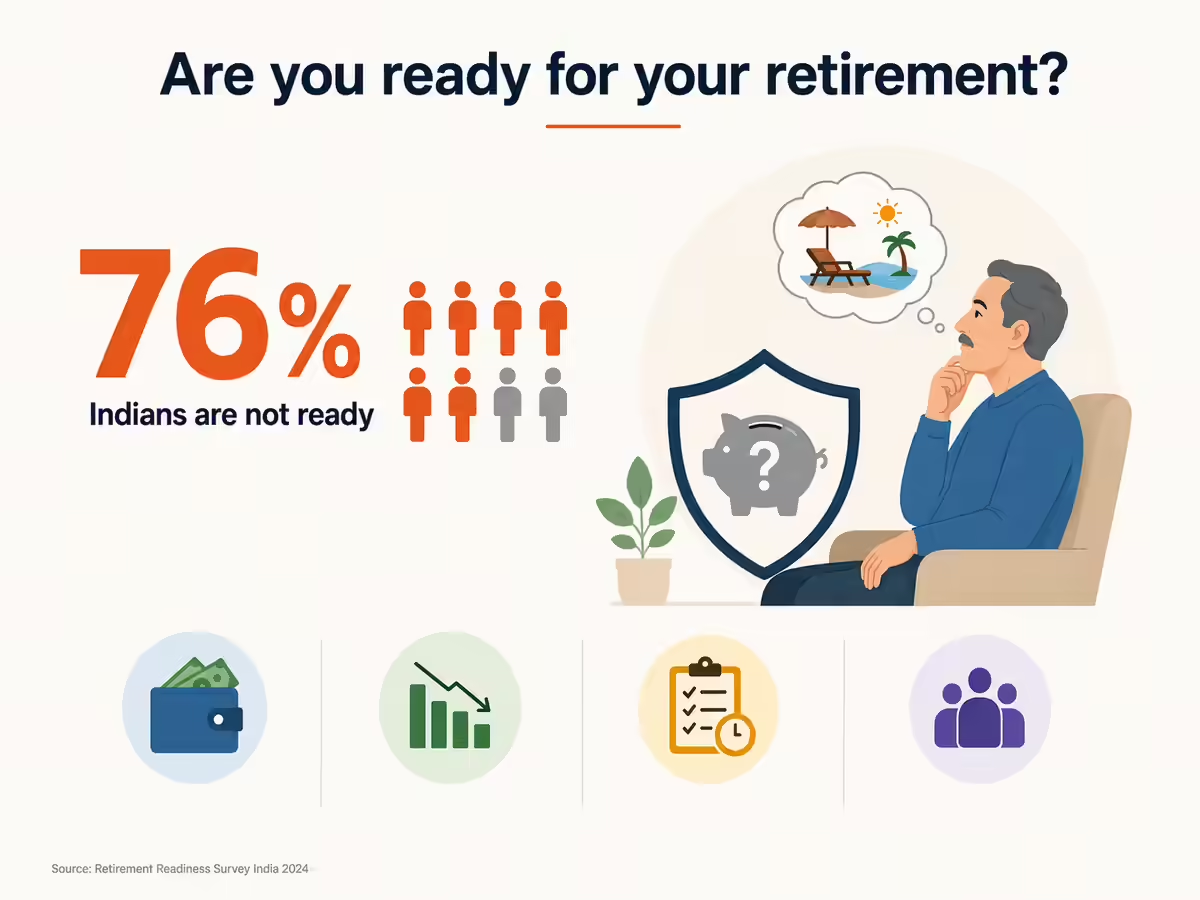
Nearly 76% Indians do not have a detailed retirement plan while 77% Indians have never sought finance advice from a financial expert, details from a survey by 1 Finance Magazine revealed.The study, based on a primary survey of 1,218 Indians predominantly aged 40-60, says three in four Indians approaching retirement have no detailed plan, yet 61.4% of them feel confident about retiring comfortably.survey by 1 Finance has highlighted a worrying gap between retirement expectations and actual financial preparedness among Indians aged between 40 and 60 years.Retirement savings may not last long enough amid rising medical expensesThe survey revealed that about 58.5% plan for their funds to run out before 80; only 19.5% plan beyond 25 years. At the same time, 59.7% expect expenses to fall post retirement, a comfortable assumption undercut by the fact that medical inflation in India runs at 12-14% annually, two to three times the rate of general CPI. A hospitalisation costing Rs 5 lakh today will cost Rs 16-19 lakh by age 75.The survey also claims that the median planning horizon ends at age 80, whereas current life expectancy for urban, upper-income 60-year-olds in India is 22-24 years longer, putting the practical end point at 82-84, before accounting for additional improvements in medical treatment.Retirement corpus gap widens across income groupsThe median respondent saves 15% of annual income for retirement, starting at the age of 39. This leaves around 20 years to build a retirement corpus before the typical retirement age of 60. As a result, the median retirement corpus currently stands at Rs 28 lakh against a target of Rs 1 crore, showing a 3.6x shortfall.The gap varies across income groups. At the 25th percentile, the gap is 3.4x, with savings of Rs 15 lakh against a target of Rs 51 lakh. At the 75th percentile, the shortfall widens sharply to 8x, with Rs 50 lakh saved against a target of Rs 4 crore. Fixed deposits dominate retirement savings while NPS adoption remains lowThe most popular retirement assets, held by 61.3% of respondents, are mutual funds and fixed deposits, followed by real estate and gold at 47.3% apiece. With only 22.7% of users, NPS is at the bottom, according to the survey.One of the stronger financial instincts this study reveals is the desire to retire debt-free, but this cannot make up for a corpus that falls well short of the goal, the survey said.Huge advice gapThe survey said that 76.9% Indians don’t use a professional advisor. Family and friends at 49.5% outrank financial advisors at 18.6% by 2.6x.Many Indians still depend on confidence instead of proper planningAnimesh Hardia, Editor-in-Chief, 1 Finance Magazine, said, “Retirement planning in India suffers from something I'd call a confidence anaesthesia. The survey shows 61% of people without a detailed retirement plan still expect to retire comfortably. That false security removes the urgency to act. And by the time reality sets in, a health scare at 58, a corporate restructuring at 55, the compounding runway is gone. Twenty years of potential wealth creation gets compressed into five years of panic saving. The arithmetic at that stage is almost always unrecoverable." 1Finance take on retirement, “Our research found that nearly 77% of Indians approaching retirement are navigating it entirely without professional guidance, and the more alarming finding is that this does not change even as incomes rise. Among those earning above Rs 25 lakh a year, 44.4% still prefer to go it alone. India has fewer than 1,000 active SEBI-registered investment advisers for 1.4 billion people, but the real barrier is not supply, it is trust.”
Are you ready for your retirement? 76% Indians are not ready; check other details of survey - The Economic Times
A survey by 1 Finance Magazine reveals a significant gap in retirement preparedness among Indians aged 40-60. Nearly 76% lack detailed plans, yet 61.4% feel confident about retiring comfortably. Most rely on fixed deposits and mutual funds, with a median retirement corpus of Rs 28 lakh against a target of Rs 1 crore, highlighting a substantial shortfall.
593 words~3 min read