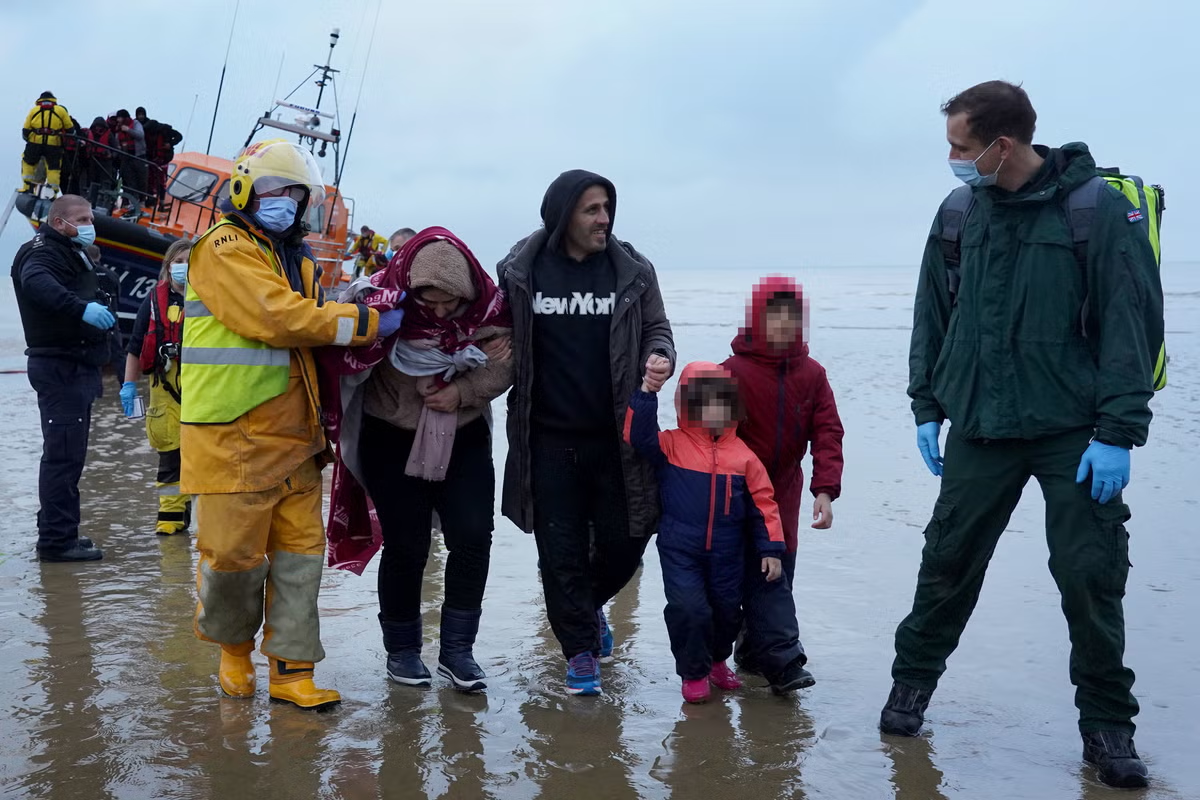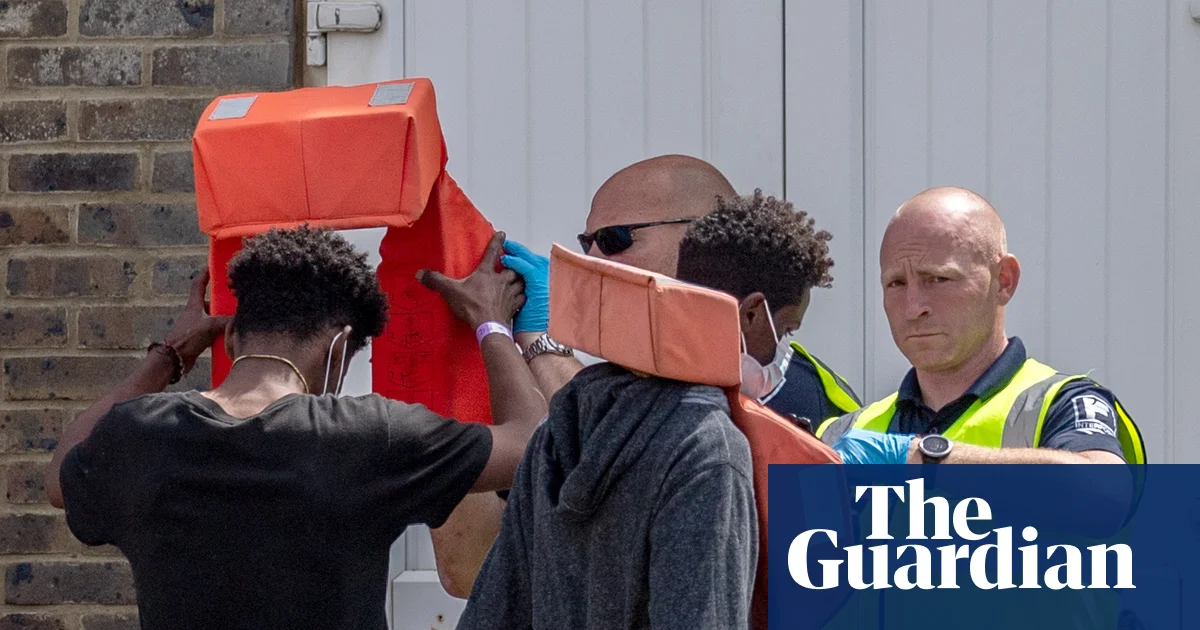
Hundreds of migrant children have been put at “significant risk” in hotels or detention centres after they were wrongly assessed as adults by the Home Office, a damning new report has found. At least 755 children were wrongly placed in adult accommodation or detention last year after officials concluded they were adults during visual assessments at the border, data reported by the Helen Bamber Foundation shows. Freedom of Information (FOI) data sourced from 85 local authorities in England and Scotland shows that in 2025 there were 1,504 referrals to council’s children’s services department for young people who had been sent to Home Office adult accommodation but who were claiming to be children. Of the 1,454 cases where an age assessment was carried out, 52 per cent were found to be children, said the human rights charity, which has been tracking the issue for the past four years. But it warned the actual number was likely to be significantly higher as not all councils shared the relevant data. For the first time on Thursday, the government published numbers on how many migrants had their ages assessed and what the outcomes of these evaluations were. It revealed that in the year to March 2026, 6,420 people were age assessed for the first time - with seven per cent of asylum claimants going through this process. Some 43 per cent of migrants subject to an age evaluation, either by Home Office officials or by council workers, were found to be adults, with the remaining 57 per cent found to be children. In July to December 2025, 326 migrant children were designated as adults before the decision was overturned, the data found. A further 377 people are still waiting on a decision on their age. Home Secretary Shabana Mahmood talks with French police officers during a presentation of the operational resources used to counter illegal immigration, on the shores of Zuydcoote, near Dunkirk, on April 23, 2026. (AFP/Getty)Kamena Dorling, director of policy at the Helen Bamber Foundation, said that it was a “huge step forward” that the Home Office has published this data for the first time. She added: “Despite the mounting evidence of the profound harm being caused, the Home Office continues its practice of wrongly assessing children who come to the UK alone to seek protection, as adults. “These are children who end up placed with strangers in adult accommodation, in immigration detention and even in adult prisons. Change is urgently needed to prevent many more children from being harmed. The Home Office must acknowledge this is as a serious safeguarding failure.”More than 70 children whose ages were disputed by the Home Office have been detained for removal to France under the government’s “one in, one out scheme”, according to data gathered by charity Humans for Rights Network. Twenty-six of the 76 age-disputed asylum seekers have since been released and are in the care of children’s social services, according to a report in The Guardian. The Independent revealed in March that a child, who cannot be identified for legal reasons, had been charged with endangering lives of migrants in a Channel crossing under a controversial new law. Despite the him being assessed to be under the age of 18, the Crown Prosecution Service (CPS) argued the prosecution was in the public interest due to the “seriousness of the offence”.At a hearing at Canterbury Crown Court, Judge James, the honorary recorder of Canterbury, asked the prosecution to explain why the CPS was pursuing the case given that the only available conviction would be a referral order, which requires a young person to meet with a panel of people who support rehabilitation.Migrants claiming to be children are subject to age checks at the border (Getty)The former independent chief inspector of borders and immigration, David Bolt, found that Home Office officials were using factors like “lack of eye contact” to make age decisions and said he had heard evidence from lawyers and charities that children were being “pressured” into declaring they were over 18. Ministers now plan to replace human judgement with AI facial-recognition technology, in a move that charities and rights groups have said amounts to an “experiment on migrants” that will lead to “serious, life-changing consequences”.The aim is for facial age estimation to be “fully integrated into the current age assessment system over the course of 2026”, according to the Home Office. It is not yet clear whether the AI age-estimation technology would be used on children as they arrive in the UK on small boats, or to inform final asylum claim decisions. The Home Office has said the technology will be used to assist officials, and that no final decisions have been made about what stage of the process it will be integrated.A Home Office spokesperson said: “Robust age assessments are a vital tool in maintaining border security, which is why we are modernising this process by testing fast and effective AI age estimation technology.“Where uncertainty on age remains, an individual will be treated as a child. The local authority will then make a thorough assessment using well established age assessment techniques.”
Migrant children put at ‘significant’ risk after being wrongly treated as adults
Exclusive: Home Office accused of ‘safeguarding failure’ as hundreds of migrant children initially assessed as adults
850 words~4 min read