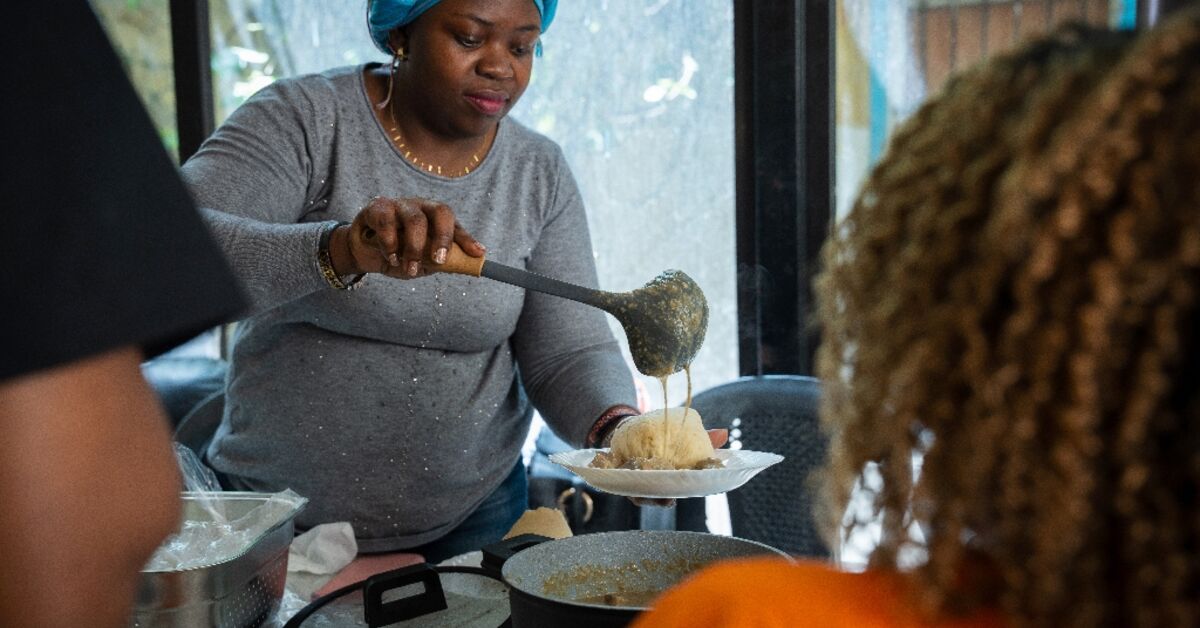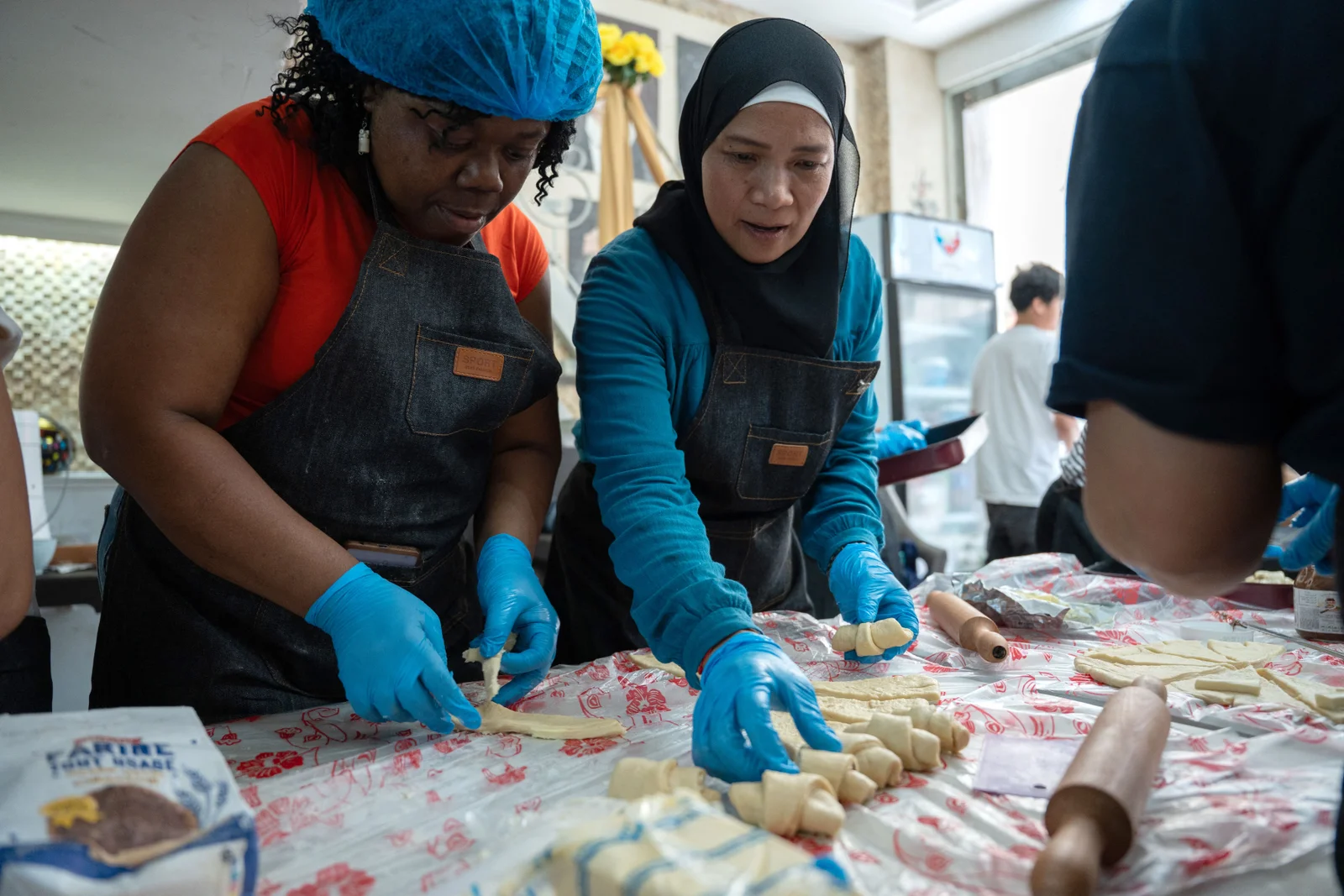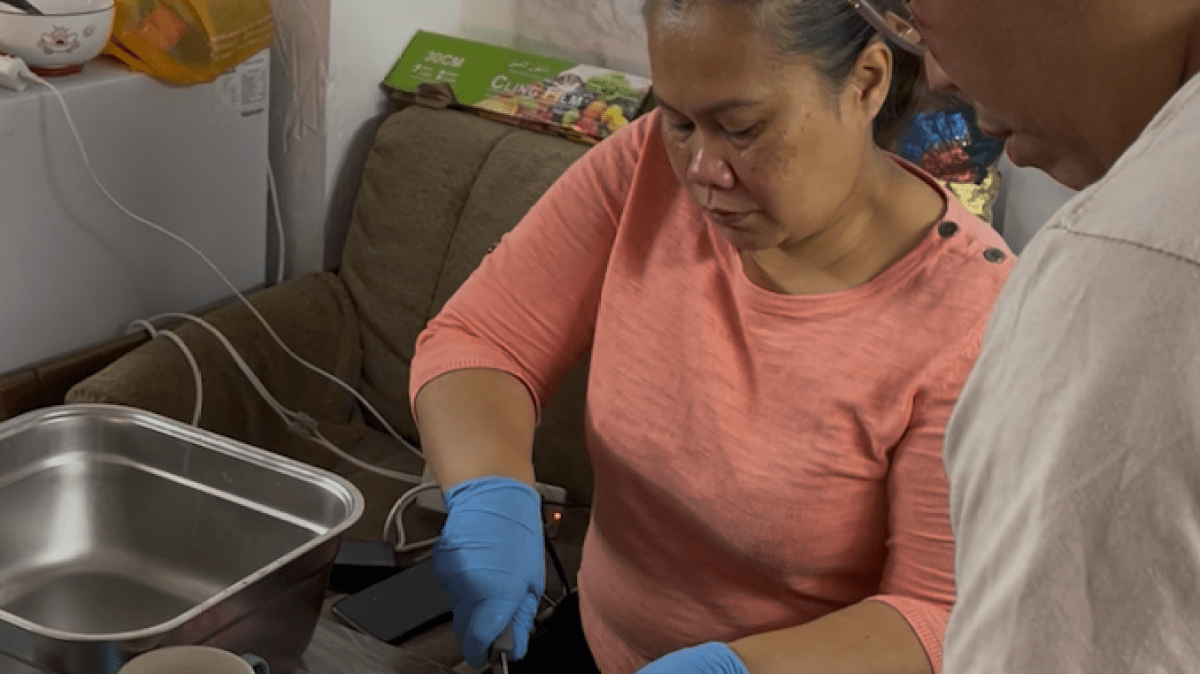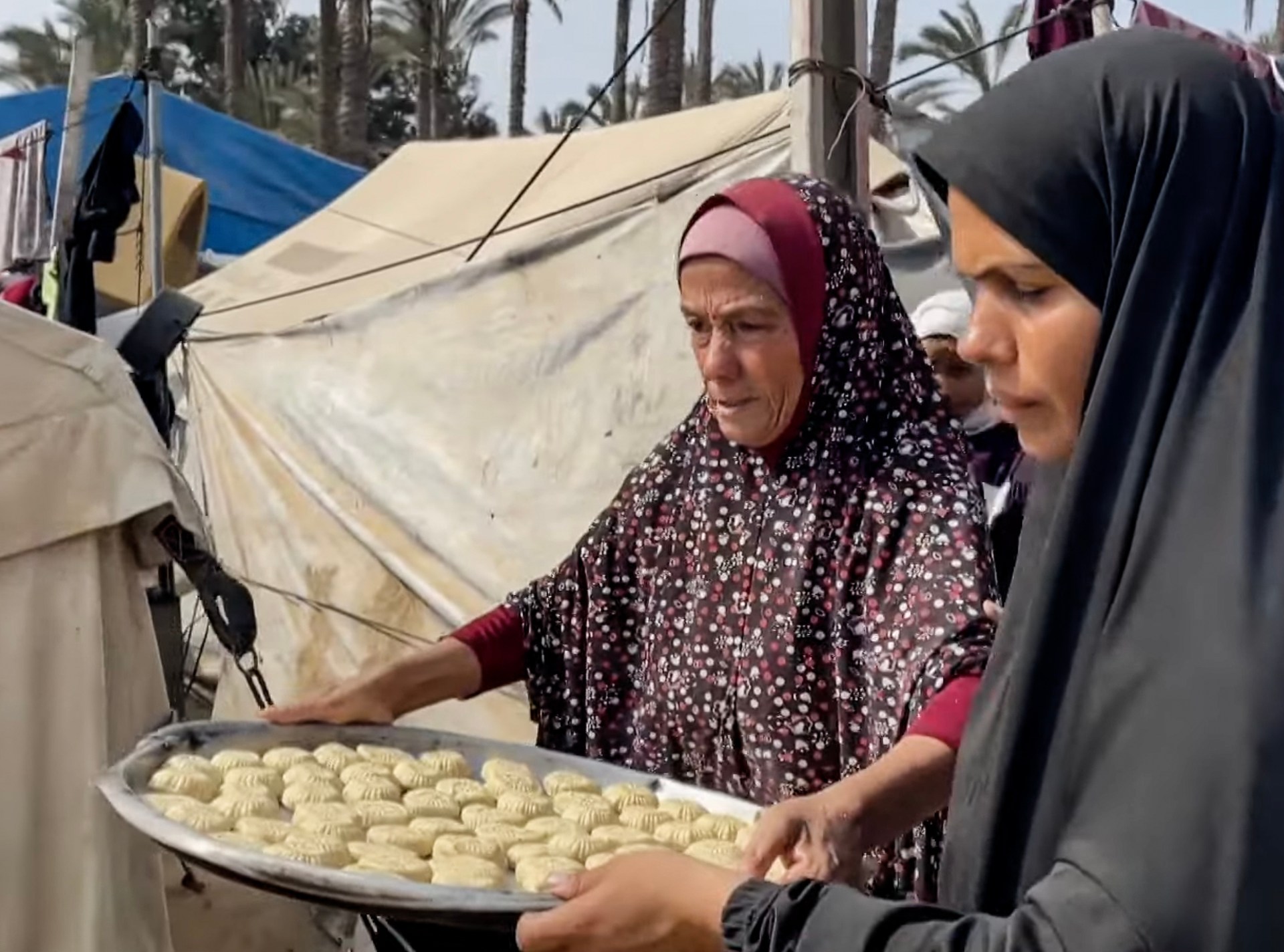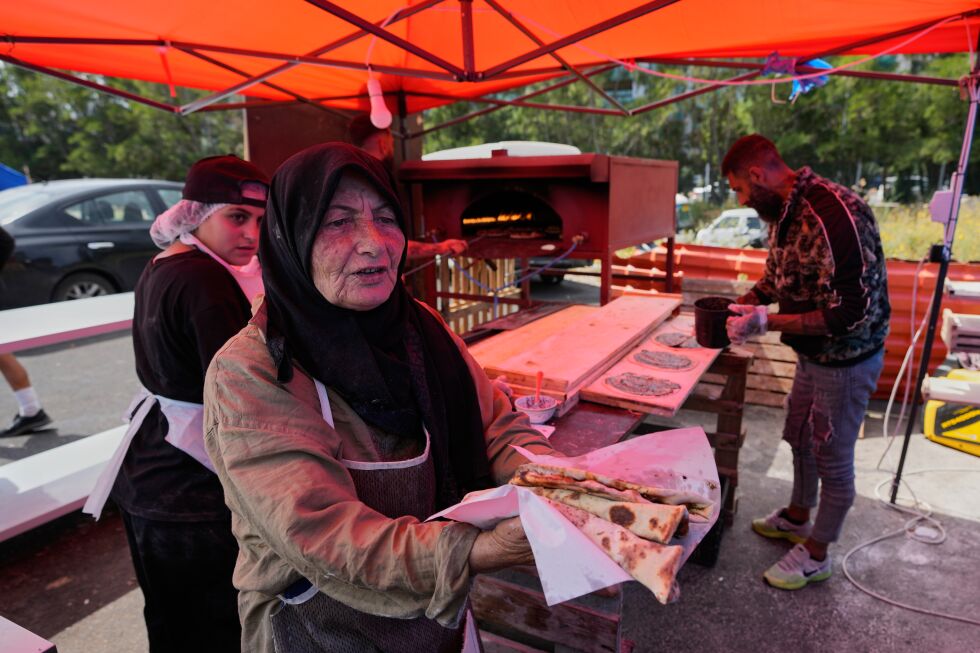
BEIRUT (AP) — Even months after she was displaced by war, Soubhiye Zeiter starts every morning the same way: with a large cup of coffee and a few quiet moments beside a small table decorated with flowers outside her tent in Beirut.But once the coffee is poured, the quiet disappears quickly.By early morning, dozens of people are already lined up outside Zeiter’s small bakery stand in a tented settlement in the heart of the Lebanese capital, waiting for her mana’eesh — the popular Lebanese flatbread breakfast topped with cheese, meat or za’atar — a thyme and herb seasoning. Children weave among customers, volunteers rush trays of dough in and out of ovens, and Zeiter, 63, greets nearly everyone who walks by, often calling people over to sit and have some coffee.Known to many as Om Mohammed — an Arabic nickname that means Mohammed’s mother — the grandmother fled her home in the Beirut southern suburbs with 15 members of her family at the start of the war between Israel and Hezbollah. She was living just south of the capital when the Israeli military issued an evacuation warning to the sprawling neighborhoods ahead of an intense aerial bombardment.
The ongoing war between Israel and the Hezbollah militant group displaced over one million people in the tiny country during months of cross-border fighting. Many families fled villages in southern Lebanon and Beirut’s southern suburbs, seeking shelter in schools, public buildings and tented settlements in Beirut and across the country.