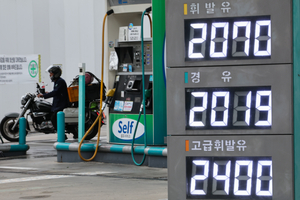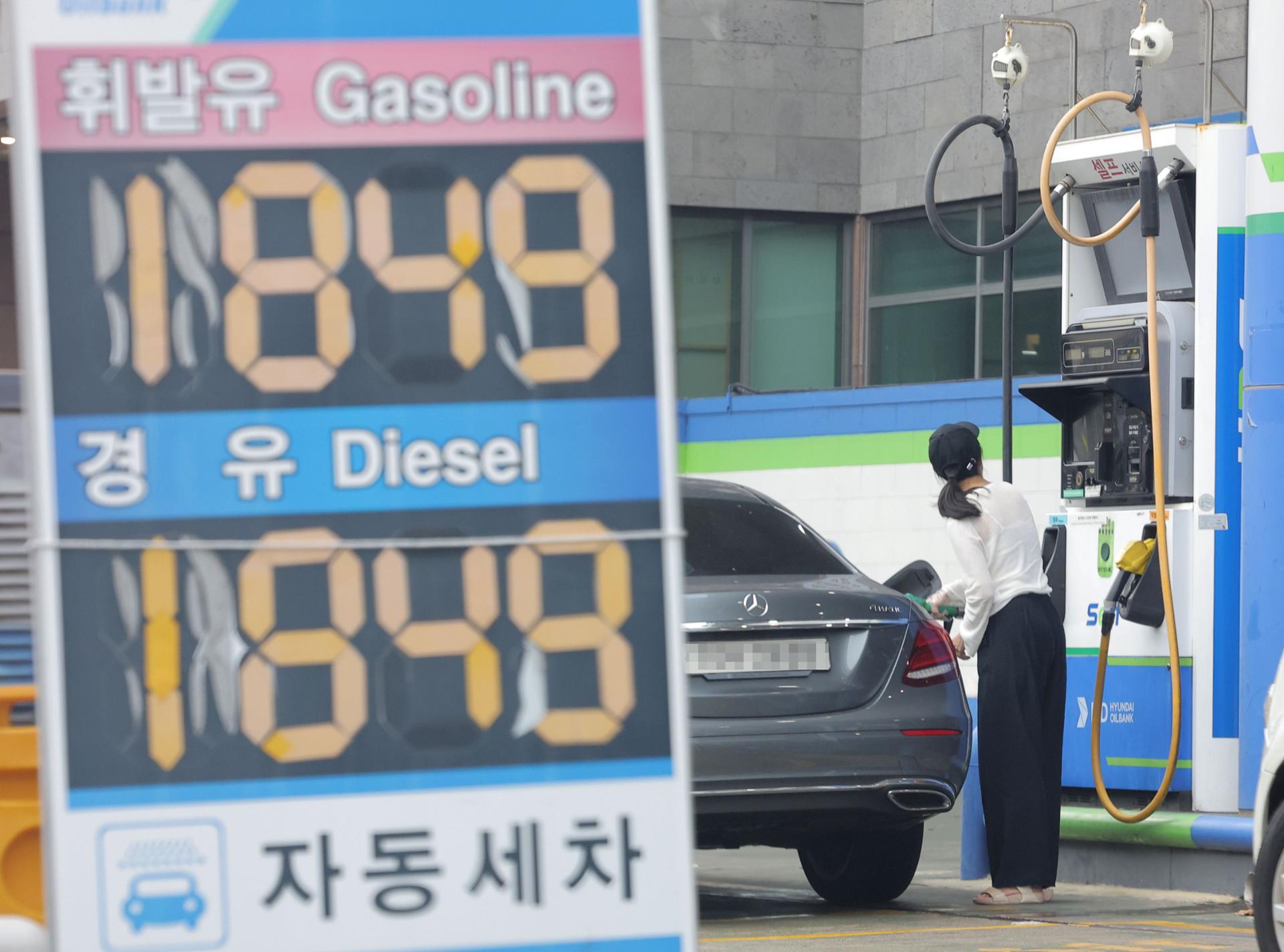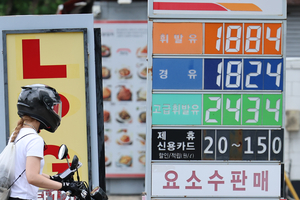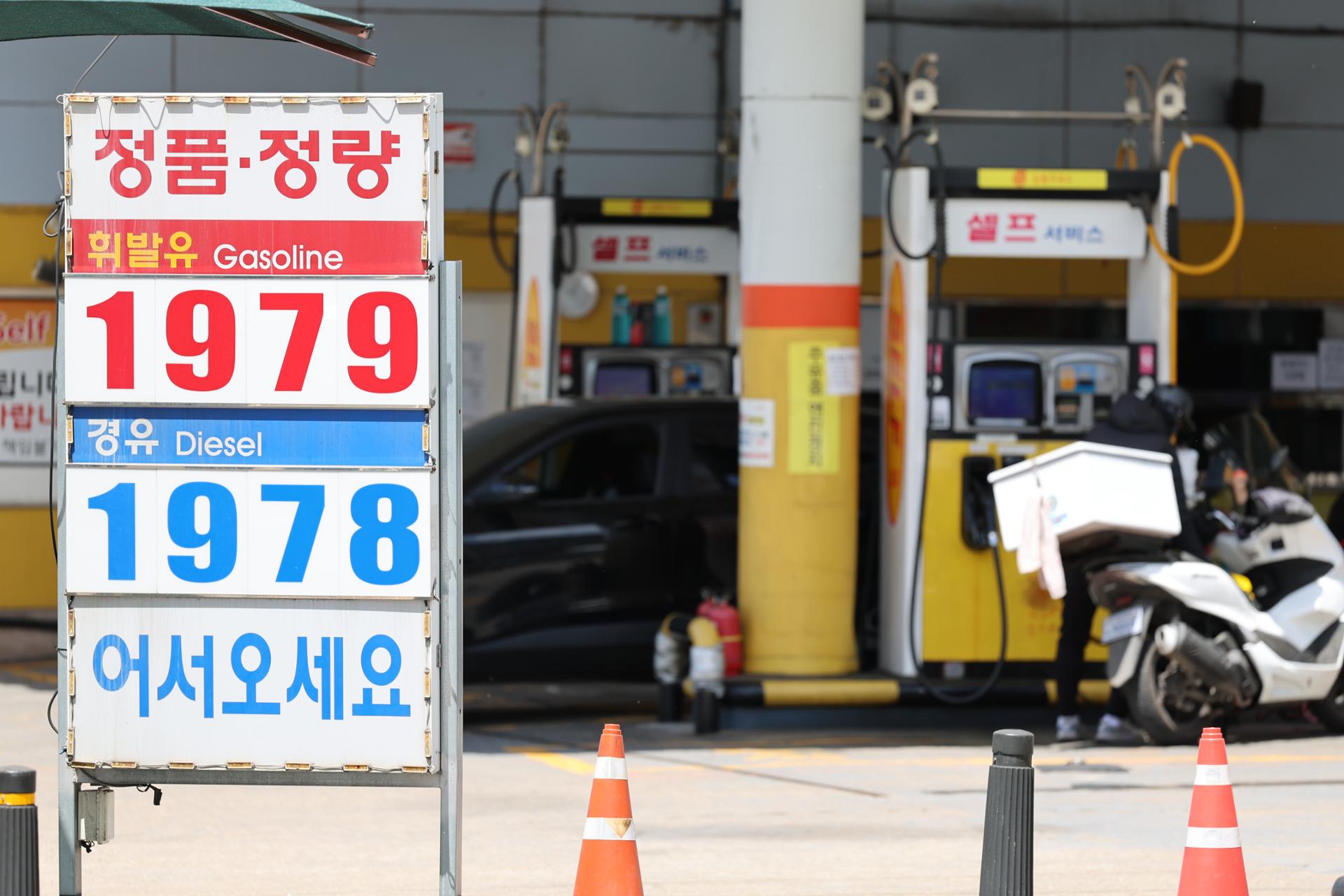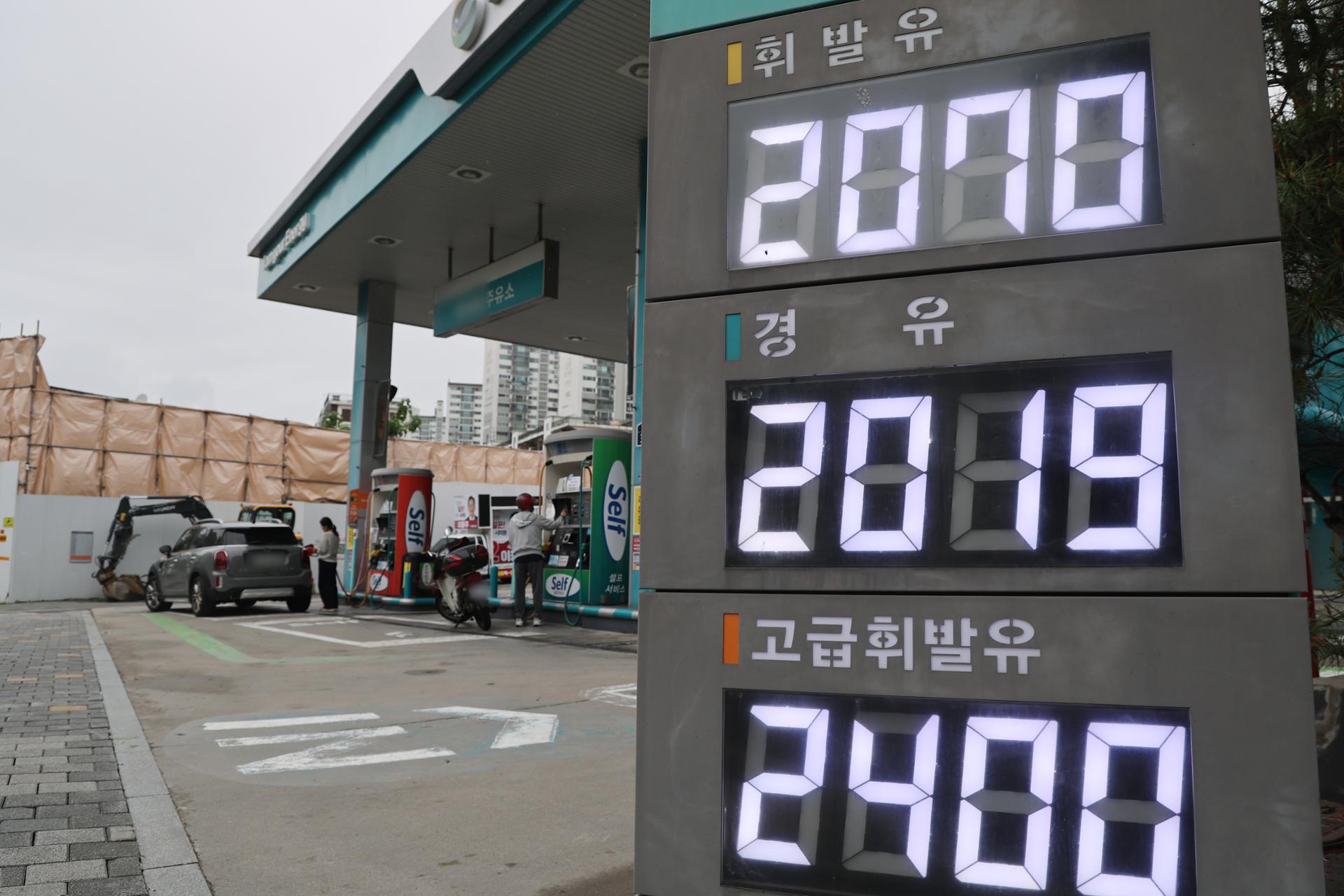
Gas prices are on display at a gas station in Seoul, Thursday. Yonhap The government froze the price ceilings on fuel products for the fourth consecutive time Thursday, amid lessening volatility in global crude prices and a relatively stable supply of oil entering the country.Maximum prices for regular gasoline, diesel and kerosene supplied to gas stations by local oil refineries will remain unchanged at 1,934 won ($1.3), 1,923 won and 1,530 won per liter, respectively, for the next two weeks, according to the Ministry of Trade, Industry and Resources.It marks the fourth consecutive time the government maintained fuel price caps at the current level.Despite some upward pressure on fuel prices, the ministry said it has made the decision as global oil prices, while fluctuating around a relatively high range of $100 per barrel, have not changed much over the past two weeks due to an impasse in peace negotiations between the United States and Iran.It also considered rising inflationary pressure due to higher energy prices, which increase the financial burden on people's livelihoods.In April, Korea's consumer prices rose 2.6 percent from a year earlier, the fastest pace in 21 months. Prices of petroleum products surged 21.9 percent on-year, marking the sharpest increase since July 2022.The government has set maximum prices for fuel products every two weeks under the price cap system, but decided to expand the period to four weeks from now on as volatility in global oil prices has moderated with the prolonging of the Middle East crisis.The price ceiling system was introduced in mid-March in a bid stabilize domestic fuel prices amid global energy market volatility caused by the effective closure of the Strait of Hormuz.The period may be adjusted in connection to future developments in the Middle Eastern situation, the ministry noted.Yang Ghi-wuk, deputy minister for trade, industry and resources security, told reporters that Korea's crude oil supplies are relatively stable, noting that the country has secured about 85 percent of pre-Iran war supplies for use until July.Some 78.5 million barrels of oil have been secured for May, which is equivalent to about 90 percent average oil supply for the month before the war broke out, while alternative supplies secured after the country sent special envoys to the United Arab Emirates, Kazakhstan, Saudi Arabia and Oman earlier this year are coming in as scheduled, he said.Korea has secured a combined 300 million barrels of alternative oil supplies from the four countries.Regarding concerns oil supplies may face disruptions starting in August if the ongoing crisis in the Middle East is not resolved, Yang said it is difficult to make predictions, but the government will closely monitor all developments.On the recent agreement between Korea and Japan to push for a crude oil swap system, Yang said the government will work to flesh out the details of the agreement to make it a "win-win" system for both countries.Japan has larger oil reserve and storage capacity, but Korea has a competitive edge in refining skills, he explained.
Gov't freezes price caps on fuel products for 4th straight time - The Korea Times
The government froze the price ceilings on fuel products for the fourth consecutive time Thursday, amid lessening volatility in global crude prices...
496 words~2 min read