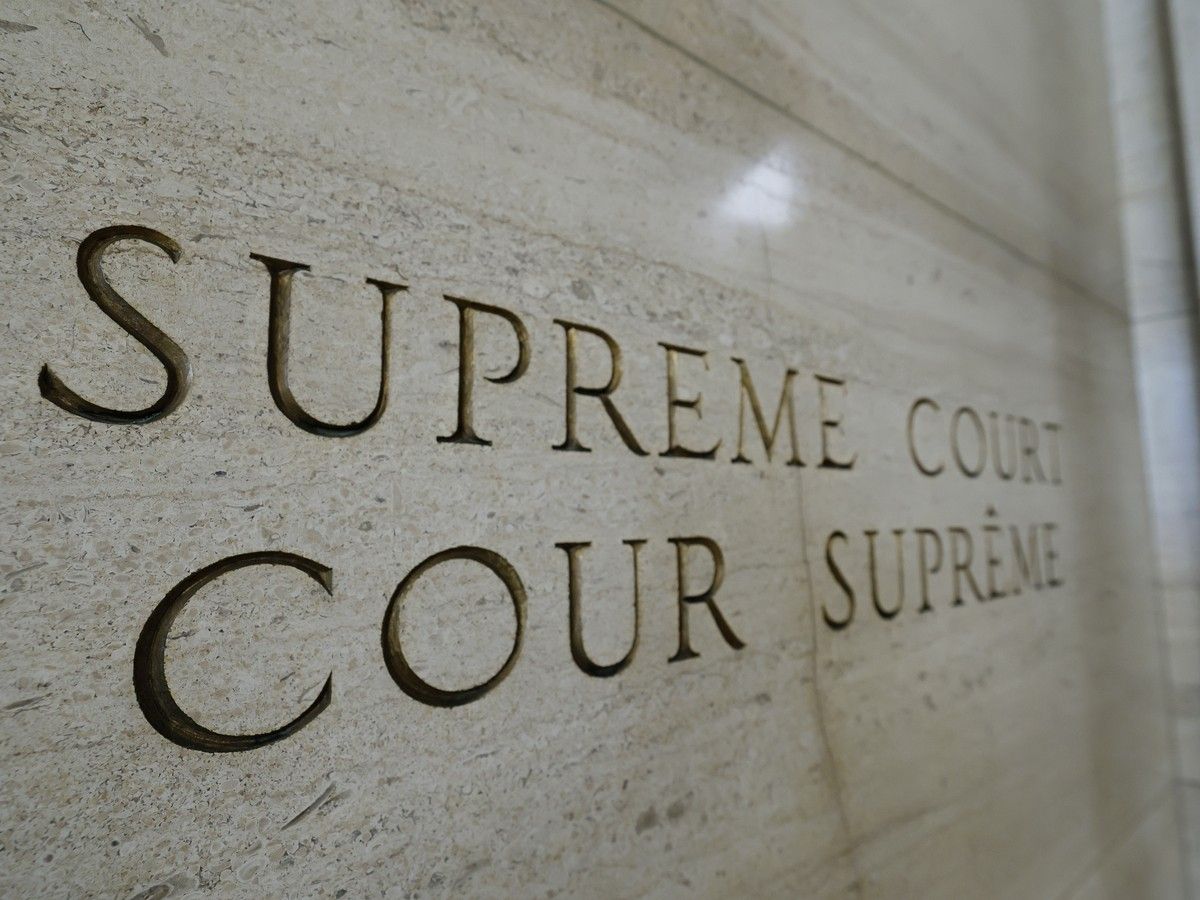
Skip to Content Subscribe Our Offers My Account Manage My Subscriptions FAQ Newsletters Canada Canadian True Crime Canadian Politics Health World Israel & Middle East Financial Post NP Comment Longreads Puzzmo Diversions Comics NP News Quiz New York Times Crossword Horoscopes Life Eating & Drinking Style Sponsored Play for Ontario Travel Travel Canada Travel USA Travel International Cruises Travel Essentials Culture Books Celebrity Movies Music Theatre Television Business Essentials Advice Lives Told Tails Told Shopping Buy Canadian Home Living Outdoor Living Tech Style & Beauty Kitchen & Dining Personal Care Entertainment & Hobbies Gift Guide Travel Guide Deals Savings National Post Store More Sports Hockey Baseball Basketball Football Soccer Golf Tennis Driving Vehicle Research Reviews News Gear Guide Obituaries Place an Obituary Place an In Memoriam Classifieds Place an Ad Celebrations Working Business Ads Archives Healthing Epaper Manage Print Subscription Profile Settings My Subscriptions Saved Articles My Offers Newsletters Customer Service FAQ Newsletters Canada World Financial Post NP Comment Longreads Puzzmo Diversions Life Shopping Epaper Manage Print Subscription HomeNP CommentJamie Sarkonak: How being in a toxic relationship can now get you suedSupreme Court has recognized a civil action for 'coercive control,' but failed to draw a clear line between abuse and toxicityLast updated 6 minutes ago You can save this article by registering for free here. Or sign-in if you have an account.Photo by Getty Images/iStockphotoYou can sue someone for inflicting mental distress, for causing you physical harm, and for causing you to fear that you’ll experience physical harm, which should cover all the bases of domestic violence. But on Friday, a majority of the Supreme Court went a step further and recognized a new way to sue for suffering mere indignity in a relationship.Enjoy the latest local, national and international news.Exclusive articles by Conrad Black, Barbara Kay and others. Plus, special edition NP Platformed and First Reading newsletters and virtual events.Unlimited online access to National Post.National Post ePaper, an electronic replica of the print edition to view on any device, share and comment on.Daily puzzles including the New York Times Crossword.Support local journalism.Enjoy the latest local, national and international news.Exclusive articles by Conrad Black, Barbara Kay and others. Plus, special edition NP Platformed and First Reading newsletters and virtual events.Unlimited online access to National Post.National Post ePaper, an electronic replica of the print edition to view on any device, share and comment on.Daily puzzles including the New York Times Crossword.Support local journalism.Create an account or sign in to continue with your reading experience.Access articles from across Canada with one account.Share your thoughts and join the conversation in the comments.Enjoy additional articles per month.Get email updates from your favourite authors.Create an account or sign in to continue with your reading experience.Access articles from across Canada with one accountShare your thoughts and join the conversation in the commentsEnjoy additional articles per monthGet email updates from your favourite authorsSign In or Create an AccountorIt’s called the “tort of intimate partner violence” — which isn’t exactly an accurate title, as it doesn’t actually require violence to have taken place. The essentials are just this: a relationship between the parties (past or present) must have existed, intentional abusive conduct by one against the other must have taken place, and that conduct must amount to “coercive control.”Torts are civil wrongs for which you can sue, such as defamation and negligence. In the English legal system, they are typically created by judges, though there is a general expectation that judges should be conservative in inventing new torts. This is because society wouldn’t function if every single wrong a person could experience were given its own form of lawsuit, and the constant introduction of new forms of liability would undermine the stability of the legal system.This newsletter from NP Comment tackles the topics you care about. (Subscriber-exclusive edition on Fridays)By signing up you consent to receive the above newsletter from Postmedia Network Inc.We encountered an issue signing you up. Please try againCaution aside, we can now sue on the basis of coercive control. The Supreme Court explains it like this: “The key feature of coercive control is, on an objective measure, the breakdown of the plaintiff’s will, manifested through a diminished power to decide important matters in their own life or to meaningfully take part in decisions that affect the intimate partnership.”It’s clear that the intent of the judges was to capture abuse within a relationship that isn’t necessarily violent. Years of belittling insults, accusations, threats to publicize secrets and intimate photos, cruel mind games like rearranging household items to cause a partner to doubt their memory, etc. That kind of conduct is clearly wrong, but when the line between lawsuit-worthy abuse and non-lawsuit-worthy toxicity is just the breakdown of will and diminished agency, well, it puts a lot of less-obvious cases at risk of court intervention.Stray away from the obvious examples of psychological abuse and manipulation in a relationship and the line-drawing exercise becomes more challenging: what about a person whose wilted morale can be traced to a toxic ex who insulted and humiliated the other for the final months of their relationship? What about relationships where efforts to undermine the other went both ways?The court tried to disqualify more basic, grey-area toxicity from lawsuits on the basis of intimate partner inequality, writing that coercive control is not just “antisocial conduct that often characterizes high conflict relationship breakdown” or the “inevitable ups and downs of a relationship,” and noting that relationships “may suffer from dishonesty, infidelity, emotional neglect, lack of maturity, or even cold and dismissive conduct.”The judges left it ambiguous as to when bad behaviour crosses into civil liability. It requires a pattern, but not necessarily multiple acts of abuse. It requires careful consideration of the power dynamics of a relationship and the subtle events that occurred while the couple was together that aren’t lawsuitworthy on their own. Problematic behaviours, the court notes, can be psychological and financial, ranging from giving the other partner the “silent treatment” to “preventing the victim from seeing family and friends, working, or participating in other educational or recreative activities.”“Intimate partner violence can comprise psychological interference or harassment that would not rise to the threshold of ‘flagrant or outrageous’ required (to sue someone for the intentional infliction of emotional distress) but, because it can be understood as part of a low-grade pressure that objectively brings about domination in the relationship, stands as wrongful under the new tort.“What matters is not the number or frequency of incidents, but the effect on the protected interests of the victim.”Interveners representing a few South Asian law organizations even suggested that the power dynamics within extended Indian families could be part of that coercive context; the court didn’t agree or disagree, leaving that argument to be tried out by anyone in the country.Coercive control, the judges added, does not include violence that “does not interfere with the victim’s dignity, autonomy, and equality.” Where is the line between acceptable resistance and unacceptable violent violation of dignity? Clever abusers could twist this to their advantage.So, to summarize: physical violence doesn’t necessarily count as abuse for the purposes of coercive control; what does qualify is low-grade psychological pressure that accumulates in a way that violates a partner’s “right to dignity, autonomy, and equality.”We’re looking at a vibe check that might capture traditional marriages involving gender roles and the abhorrence of divorce, or the expectations of a religious community. It might include toxic family dynamics between extended families in close-knit circles. While the Supreme Court doesn’t target these, it certainly didn’t rule them out, either. This erodes individual agency: it’s no longer just up to adults to set boundaries in a relationship and end it should it become undignifying — it’s also up to the courts.Courts are not alone in this: the Liberals have been trying to pass a bill criminalizing coercive control as well. There, the line-drawing exercise between acceptable traditional expectations and compromise between partners and criminal coercion is just as blurry. It doesn’t bode well, but unfortunately, it’s going to take a borderline case going to court to really see how unclear standards can screw up a person’s life — as we saw with the Hockey Canada case last year.What we actually need is more investigative power for the police, more capacity in the courts to handle abuse cases with haste, and more robust community supports for victims. The necessary criminal and legal avenues to properly deal with abusive relationships already exist, so use them.National Post Get the latest from Jamie Sarkonak straight to your inbox Join the Conversation This website uses cookies to personalize your content (including ads), and allows us to analyze our traffic. Read more about cookies here. By continuing to use our site, you agree to our Terms of Use and Privacy Policy.
Jamie Sarkonak: How being in a toxic relationship can now get you sued
Supreme Court has recognized a civil action for 'coercive control,' but failed to draw a clear line between abuse and toxicity
1,461 words~7 min read