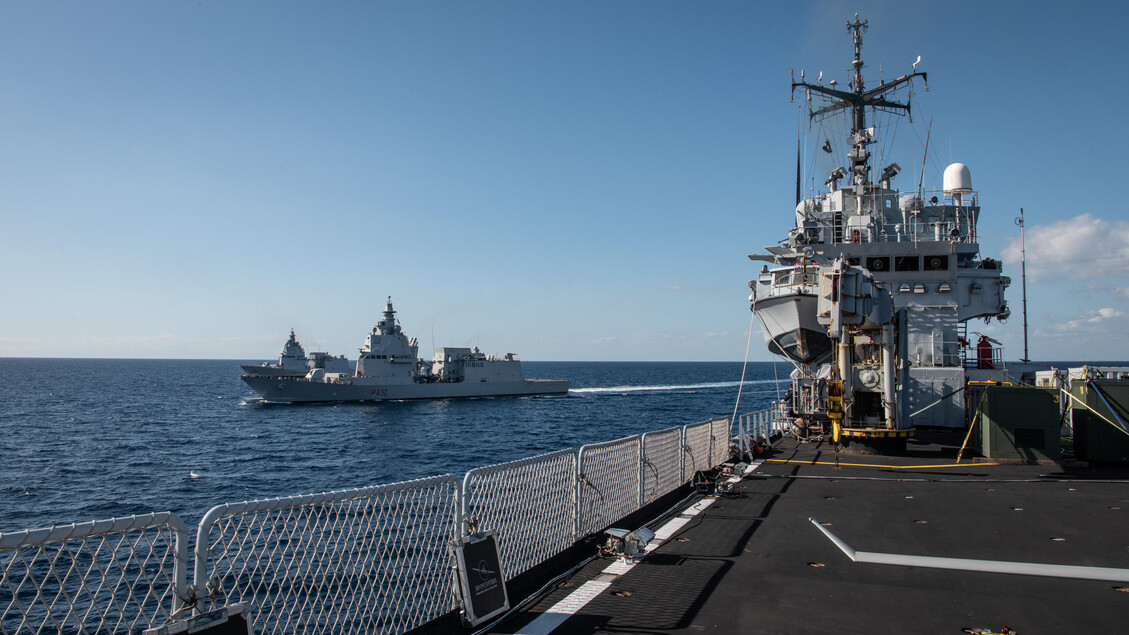
Ericsson and Net Feasa have formed a partnership to deploy 4G and 5G IoT connectivity on container vessels. The system combines onboard mobile networks with satellite backhaul and AI-ready data systems for cargo visibility.The partnership is being developed from Singapore, a major maritime hub, and is aimed at vessel owners and shipping companies. The companies said port operators will also be able to access cargo visibility from the point of departure to the destination port.Maritime transport carries more than 80% of global merchandise trade by volume, according to UNCTAD. The Ericsson-Net Feasa deployment is focused on container shipping, where connected assets can include refrigerated containers, dangerous goods units, and other monitored cargo.UNCTAD projected containerised trade to grow by 1.4% in 2025. Reuters, citing UNCTAD’s Review of Maritime Transport 2025, reported that average shipping distances increased from 4,831 miles in 2018 to 5,245 miles in 2024.Reuters also reported that route changes linked to Red Sea disruption have pushed some vessels around the Cape of Good Hope. The Ericsson-Net Feasa system is designed to support cargo monitoring while vessels are at sea, rather than only when they are near port infrastructure.Onboard networks combine 5G, cloud, and satelliteThe deployment uses Ericsson Radio System products and the Ericsson On-Demand 5G core network. Net Feasa will provide its Agentic Control Tower platform, which is designed to collect and analyse data from connected assets. The platform is also built to secure that data across maritime operations.Net Feasa is a fully licensed Mobile Network Operator and will deploy compact radio access systems on board vessels. The company said the systems are designed to reduce space and power requirements while supporting carrier-grade performance.Ericsson Radio System equipment will include Radio 4490HP and Radio 2271. The deployment will also use Radio Processor 6355 with enhanced AI capabilities and Power 6309. The onboard systems are designed to support multiple frequency bands across different regions and operating environments.Ericsson On-Demand will provide the 5G core as a service, with international roaming running through public cloud infrastructure.Connectivity between vessels and the core network will be supported by Low Earth Orbit satellite systems. The satellite backhaul extends network access beyond port-based coverage.Cargo monitoring use cases already liveThe platform is designed to connect thousands of assets on each vessel. It gives maritime operators access to real-time cargo data across shipping routes.DHL Global Forwarding has cited forecasts showing reefer container volumes rising from 4 million TEU in 2023 to 7.1 million TEU by 2030. That represents a compound annual growth rate of 8.8%. DHL linked the forecast to pharmaceuticals, e-commerce, and perishable trade.Initial live deployments are already taking place. Current use cases include refrigerated container monitoring, dangerous goods handling, and early heat detection.Reefer monitoring allows operators to track conditions inside temperature-controlled containers.The system is built to allow connected assets to communicate and generate data. The companies said the alerts are intended to support action at any point in a voyage.Andres Vicente, Head of Southeast Asia, Oceania, and India at Ericsson, said maritime operators need secure and reliable connectivity that follows vessels wherever they sail. He said the partnership brings onboard 4G and 5G cellular networks to container fleets and creates a foundation for data-driven operations and AI-enabled services from ship to shore.Mike Fitzgerald, Chairman and Founder at Net Feasa, said digitalisation of the intermodal supply chain is at a tipping point. He said agentic AI is being used to gather data from moving assets and analyse it. The data is also secured so carriers can act on it across their operations.The companies also plan to extend the system beyond container vessels to other shipping segments and port environments. The roadmap includes SIM-managed visibility across maritime supply chains, linking connected assets across vessels and ports.(Photo by Growtika)See also: Equipment theft costs push firms toward asset trackingWant to learn more about IoT from industry leaders? Check out IoT Tech Expo taking place in Amsterdam, California, and London. The comprehensive event is part of TechEx and is co-located with other leading technology events, click here for more information.IoT News is powered by TechForge Media. Explore other upcoming enterprise technology events and webinars here.
Ericsson and Net Feasa bring 5G IoT connectivity to container ships
Ericsson and Net Feasa deploy onboard 5G IoT connectivity, satellite backhaul, and AI-ready systems for container vessel cargo visibility.
683 words~3 min read