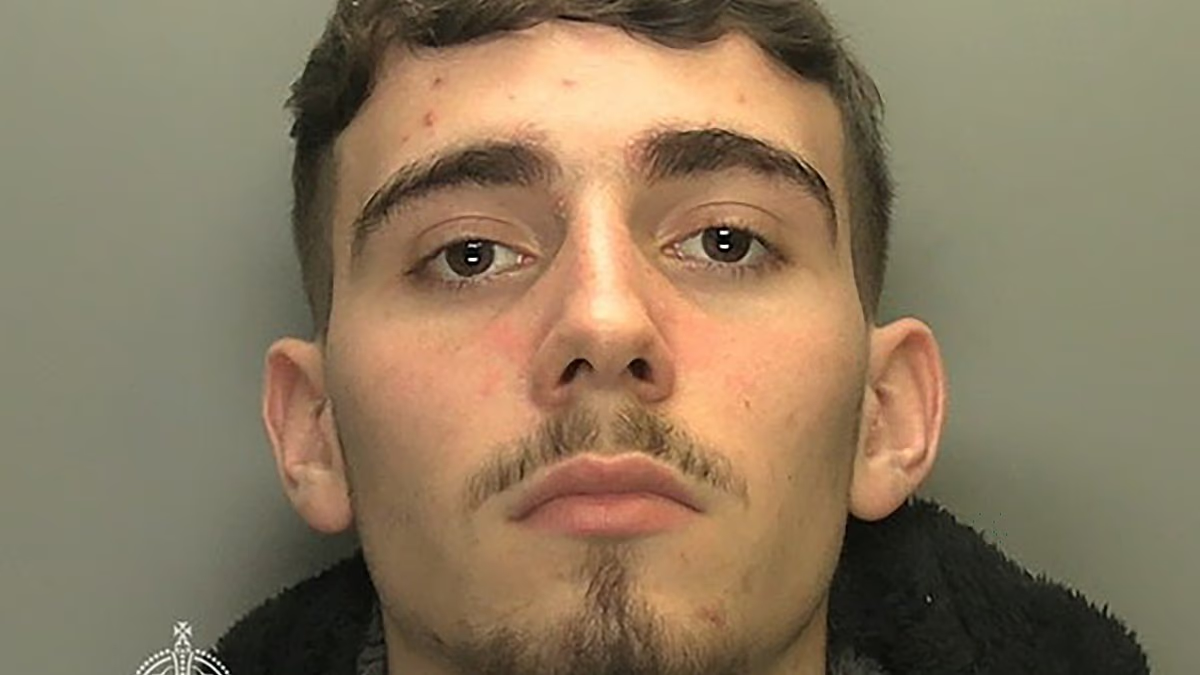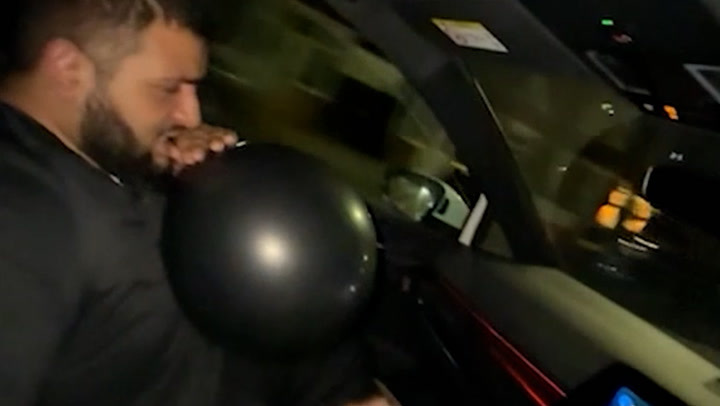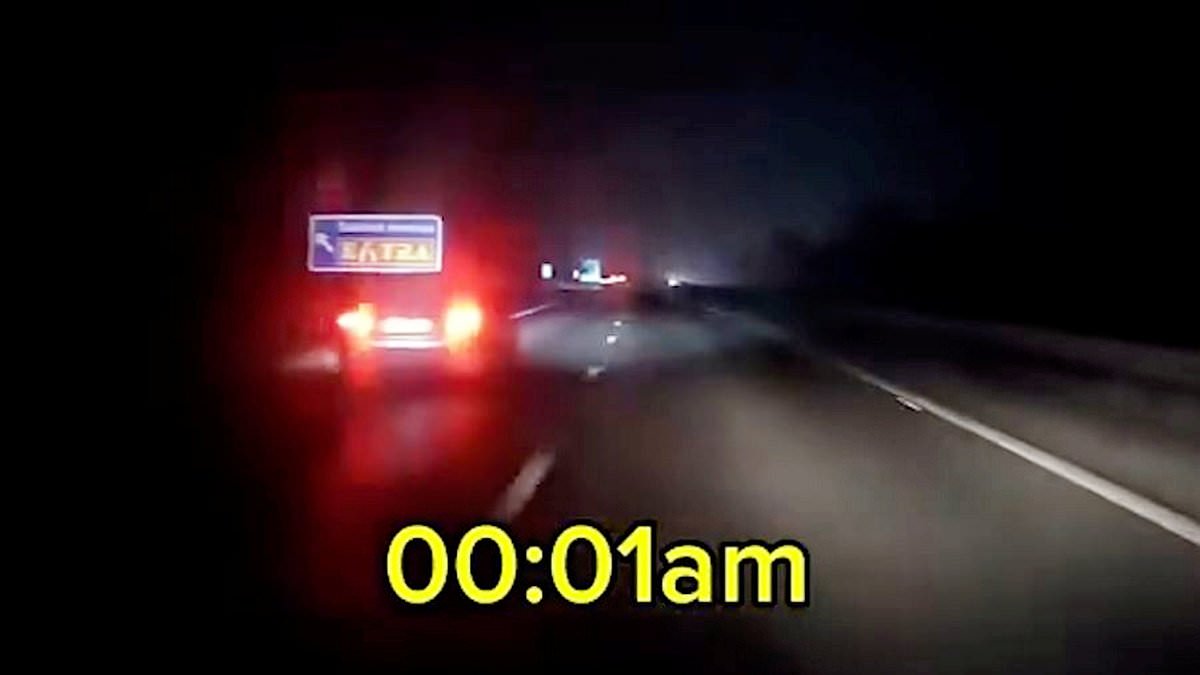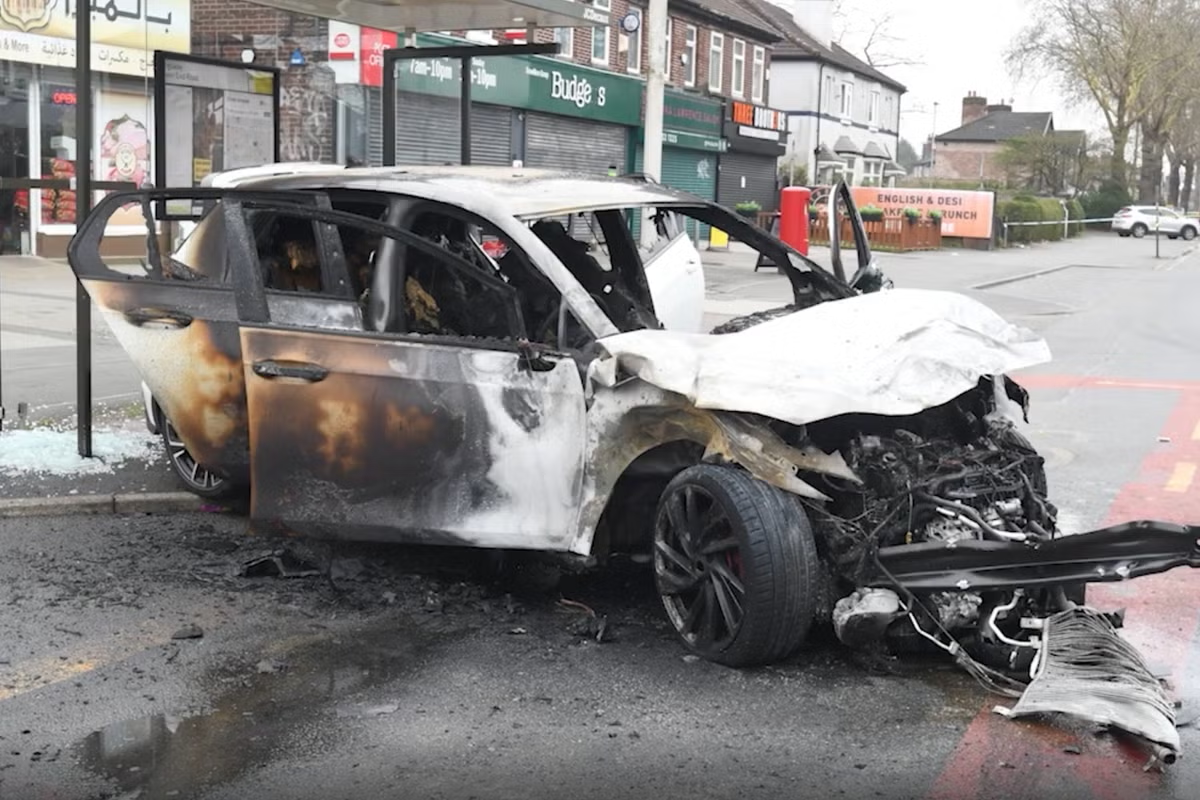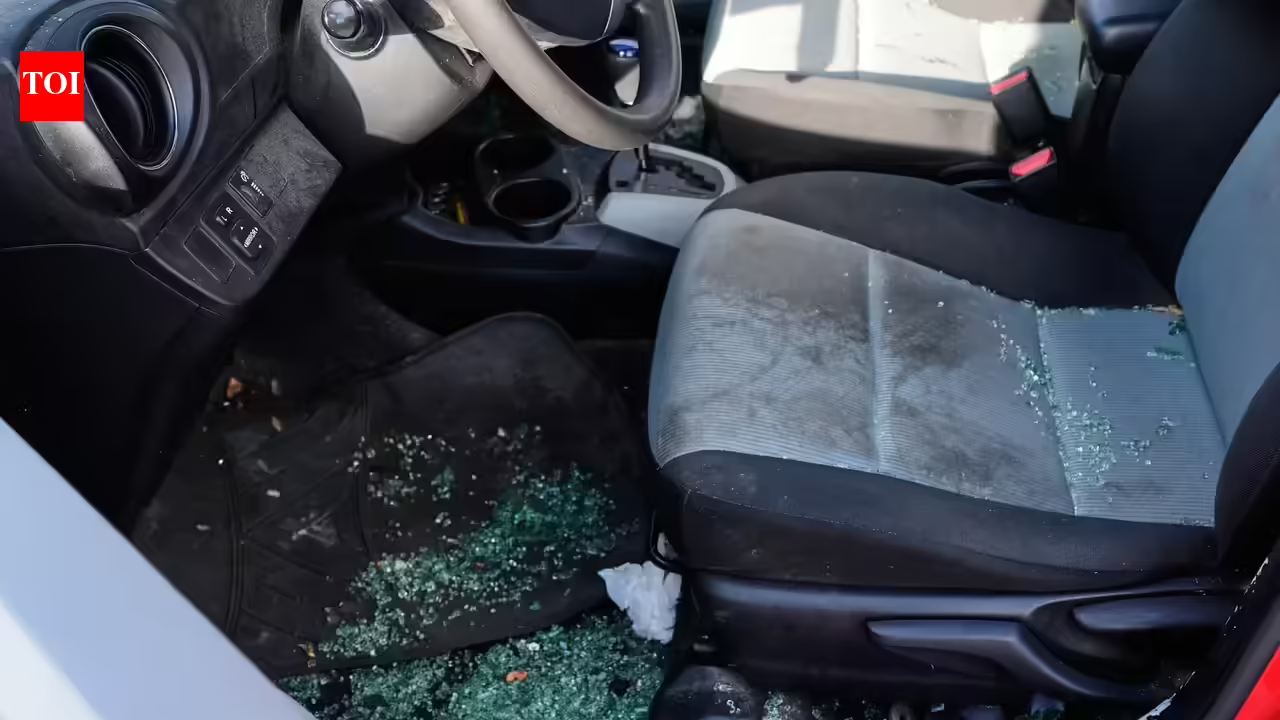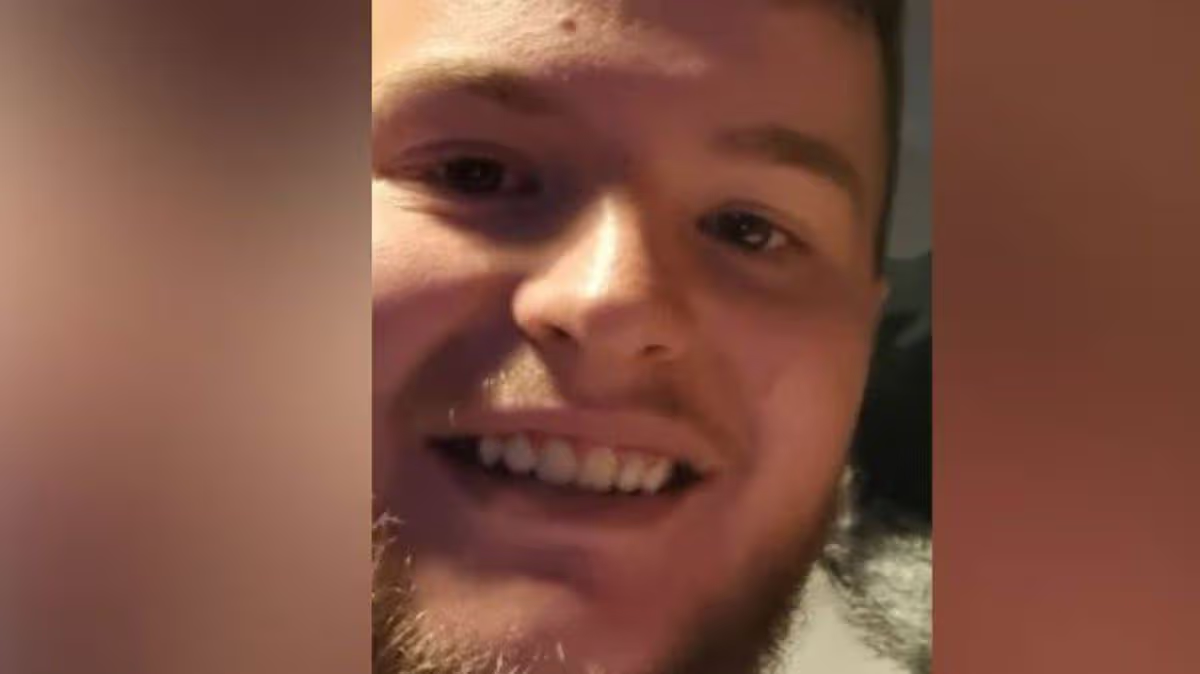
Callum Knott, 26, lost control of his partner's Nissan Juke on the A51 in Staffordshire at around 9pm on July 7Thomas Cooper09:56, 21 May 2026A father-of-two had inhaled nitrous oxide just '20 minutes' before a devastating crash that took his life.Dad Callum Knott lost control of his partner's Nissan Juke at about 9pm on July 7. An inquest into the 26-year-old's death heard he had been travelling along the A51 past Aston Marina, on the outskirts of Stone, when the vehicle left the carriageway.His partner and 21-month-old daughter were also in the car at the time. A Staffordshire Police officer told the inquest: "We were able to establish that at 8.41pm that evening, the Nissan Juke was at Tesco Trent Vale."The CCTV there shows the vehicle was being driven by Callum's partner, Emily Jackson. Callum could be seen in the passenger seat wearing a white t-shirt. Emily entered Tesco where she purchased a packet of balloons at the self-service checkout."At 8.48pm, the vehicle could be seen travelling along London Road in the general direction of Stone. Eleven minutes later, the vehicle was captured passing Barlaston Golf Club on Meaford Road. It was unclear who was driving the vehicle at this time. At 9.03pm, the vehicle entered Newcastle Street at Stone. At that point, it was clear Callum was the driver."Callum, from Stafford, was only in possession of a provisional licence at the time of the collision, despite having passed his driving test back in January 2018. He had previously been handed a driving ban.READ MORE: Migration drops HUGE 48% to lowest level since early 2021 in major Labour winREAD MORE: Teenager dies and three others injured after Vauxhall Corsa smashes into tree in Leicestershire villageCCTV recordings failed to capture Callum's car in the moments leading up to the A51 crash. However, multiple witness testimonies provided a picture of the incident, reports Stoke on Trent Live.Summarising one testimony, the police officer continued: "While briefly glancing down to check her phone notification, she looked up and saw a car that was airborne, severely damaged, and on fire. The vehicle appeared to move from the right-hand side of the road to the left. She was concerned about the fire and the potential for an explosion. She asked her grandmother to stop at a safe distance and call 999."Paramedic Connor Smith happened to be passing the scene while off-duty.A summary of his statement read: "He stopped immediately and approached the vehicle. On inspection, Mr Smith found that the vehicle was heavily damaged with its airbags deployed. He looked through the front window and discovered an unconscious female in the passenger seat and an unconscious male in the driver's seat. In the rear, he identified a young child who was also unresponsive."Mr Smith retrieved his hi-visibility jacket and called emergency services. When he returned to the car, the occupants began regaining consciousness. The driver appeared to be critically injured, with visible signs of trauma and entrapment."The female passenger, despite having a bleeding head injury, attempted to exit the vehicle. She expressed her desire to go home. The female ignored Mr Smith's advice to remain seated and removed the child from the car against his instructions. This raised concerns about potential spinal or internal injuries. Mr Smith attempted to help the driver."Callum went into cardiac arrest at the scene. Paramedics managed to revive him and he was rushed to Royal Stoke University Hospital.Dr Martin Farmer carried out emergency life-saving surgery. However, Callum's injuries proved too severe and he tragically died in the early hours of July 8.Officers subsequently interviewed Callum's partner who was unable to explain how Callum lost control of the vehicle. Nitrous oxide and cannabis were discovered in the car - but Callum's partner denied any knowledge of these substances.Callum's partner had sent messages to his sister while in hospital saying she had experienced a 'flashback memory' of Callum sucking a balloon before he lost control of the car. She maintained she did not recall sending these messages when questioned.Mobile phone records showed Callum had not been using his phone prior to the crash. Further examination uncovered a video of Callum inhaling nitrous oxide 20 minutes before the collision. Forensic Collision Investigator PC Daniel Sutton told the court: "The Nissan Juke was travelling along the straight section when Callum left the carriageway. He travelled approximately 43.2 metres along the grass verge before colliding with a large tree. During this time, there was no physical evidence that any braking or steering had taken place."After hitting the tree, the Nissan suffered extensive frontal damage and was deflected back into the carriageway. During this time, the car rolled over onto its side and slid across the road for around 15 metres. Upon reaching the grassy verge on the other side of the road, the vehicle was slowed and righted back onto its tyres."I was unable to reliably calculate the speed of the vehicle prior to the impact. The speed limit of the road is 60mph and the damage sustained by the vehicle is consistent with this speed."I can't say as to the reason why the Nissan failed to navigate the course of the road. There was no evidence of the vehicle swerving to avoid another vehicle or a perceived hazard that would cause it to cross over into the opposing lanes and leave the carriageway. It is for the court to decide whether the perceived use of nitrous oxide was a factor in this collision."A toxicology report disclosed that Callum had THC present in his system, though it could not be established whether he had smoked cannabis shortly before the crash. It was equally impossible to determine whether he had recently taken nitrous oxide. Toxicologist Dr Lawson explained: "There is no way to test for acute nitrous oxide use in clinical or post-mortem samples. Chronic use can be determined via indirect biochemical markers, but even if these were present, it would not be able to prove that they were under the influence at the time. Acute nitrous oxide use works almost immediately, producing feelings of euphoria together with triggering fits of laughter. It can also cause sound distortion, hallucinations, dizziness and paranoia."In a heartfelt tribute, grandmother Jean Knott said: "Callum was my dearest grandson. He was kind and helpful. I love him."His father Steven Knott added: "Callum was a loving dad of two young children."Coroner Fiona Gingell concluded that Callum lost his life as a result of poly-trauma sustained in a road traffic collision. She determined that insufficient evidence existed to establish whether he had consumed nitrous oxide in the moments leading up to the crash.Article continues belowMs Gingell said: "I have considered whether nitrous oxide played a part in the collision. We have video evidence and what has been seen in the vehicle. I do find that Callum was in possession of nitrous oxide and that he had inhaled it 20 minutes prior to the collision. Based on the fact we don't have any other evidence, I don't believe it would be safe for me to conclude that Callum was under the influence at the time of the collision. I'd like to end today's hearing by expressing my sincere condolences to Callum's family. It's a tragic loss of life. He was very young and clearly had a lot more to live for and the rest of his life in front of him."Ms Gingell added: "What's really clear to me is that Callum was a much-loved son, grandson, father, brother and friend."
Dad-of-two 'inhaled laughing gas 20 minutes' before horror crash that killed him
Callum Knott, 26, lost control of his partner's Nissan Juke on the A51 in Staffordshire at around 9pm on July 7
1,245 words~6 min read