(Image credit: Future)
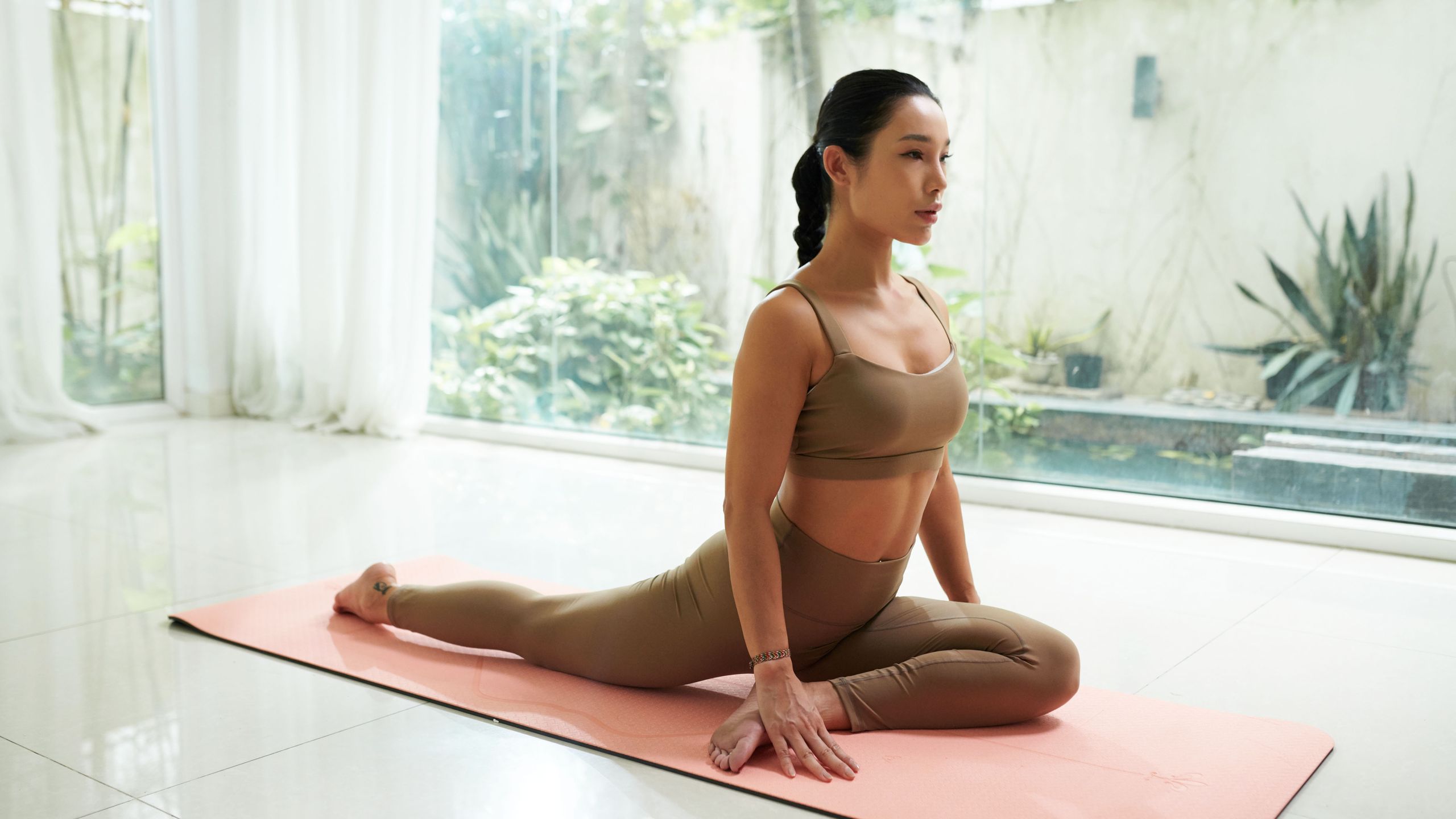
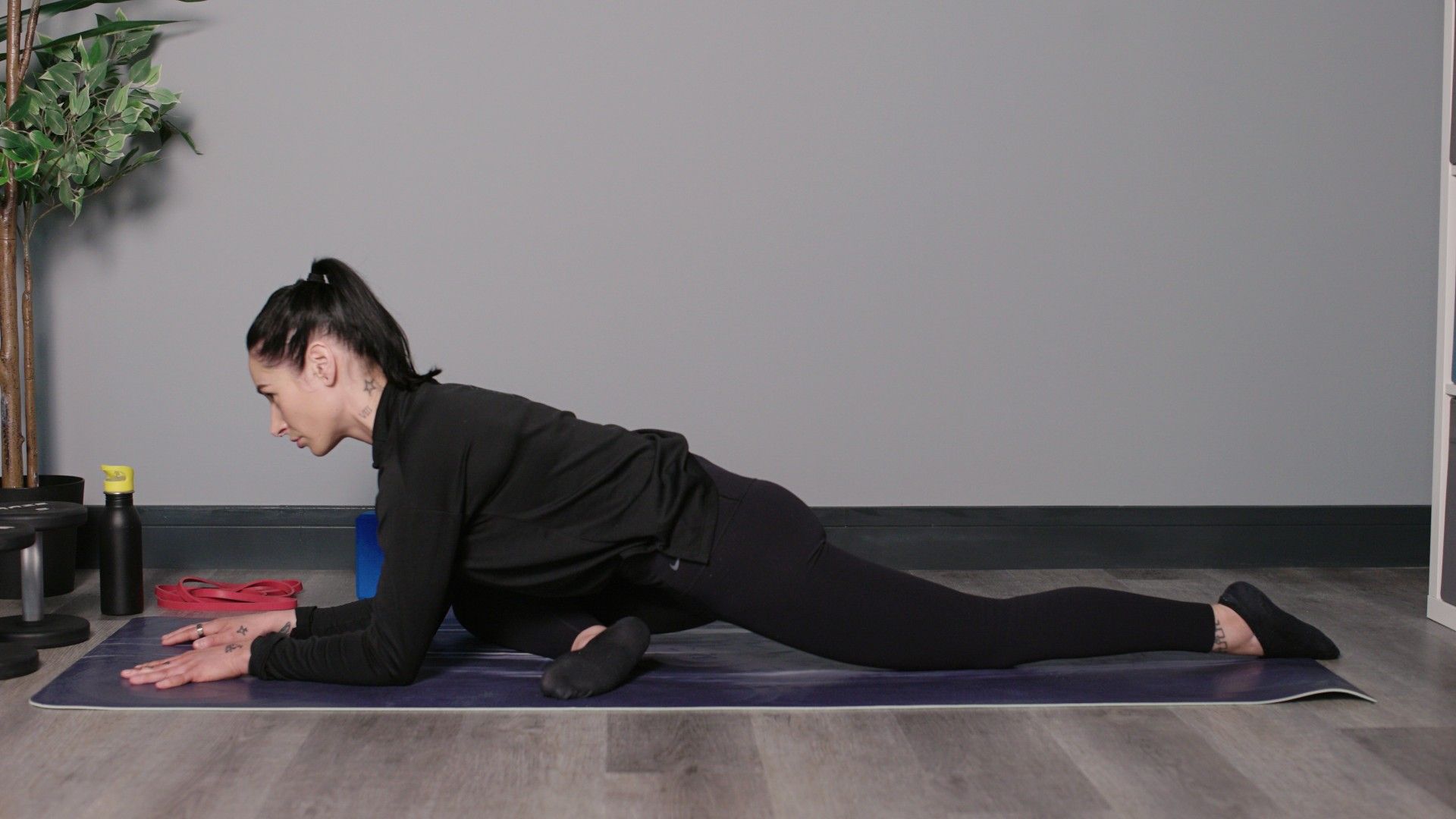
I will always be an advocate for the Figure-4 stretch or 90/90 pose if you find that the pigeon pose doesn't work for you, but the floating pigeon is one of the best exercises for tight hips and glutes that I have tried in a while.Unlike the sleeping pigeon pose, where you fold over your front leg, the floating pigeon posture is more active as you sit tall, engage your core and glutes, and allow your hands to float away from the mat, either in front of you or overhead.What is the 'floating pigeon' stretch?Floating pigeon pose targets the hips, glutes and deep piriformis muscle within the gluteal muscles. Floating pigeon, in particular, helps you stretch out the muscles that get tight from sitting, like your groin and lower back.Unlike other forms of pigeon, you'll sit upright and focus on a tall spine and engaged core as you float your hands to your hips, in front of you, or overhead. It's not to be mistaken for flying pigeon pose, which is a very challenging arm balance.My yoga instructor tells me that lifting your arms away from the mat can help you to check if your alignment is correct, as you're aiming to balance unsupported with your glutes and core active and spine tall.Get instant access to breaking news, the hottest reviews, great deals and helpful tips.If your back hip is overly turned out and your hips aren't square, you'll lean or fall to one side. Equally, if your front butt cheek is far from pressing into the mat, you might place a block or cushion beneath you to help square your hips.The key to pigeon pose in all its forms is to focus on alignment, opening the hips and stretching the gluteal muscles, so use any props that allow you to do it properly rather than compromising. You simply want your bodyweight to act like gravity, drawing your hips down to the mat.That said, pigeon might be contraindicated for some people, even though it offers a deep release for lower-body tension and a temporary boost in flexibility. If you have knee or hip injuries or are pregnant, I wouldn't recommend this pose, especially without speaking with a relevant medical professional or yoga teacher first.How to perform 'floating pigeon' poseStart on all fours with your shoulders stacked over your wristsPosition your right knee behind your right wrist and your right ankle behind your left wrist on the matExtend your left leg behind you, resting on the thigh with toes untucked. Square your hips and sit upright. Position a cushion or block beneath your butt if you needPlace your fingertips close to your hips, and sit tall with your shoulders pulled back and downSlowly lift your hands to your hips, out in front of you, or overhead for a gentle backbendHold the stretch and breathe expansively toward your stomachSlowly bring your hands down to the mat, sit your hips to one side, and gently swing your legs around to release the stretchRepeat on the other side.For less intensity, draw your front heel closer to your body; for more intensity, see if you can create a right angle with your front leg so that your shin is parallel to the front of the mat.You can practice holding this stretch while focusing on your breath. I would start with 10 seconds and build from there. Ensure you squeeze your glutes and engage your core throughout.Tips for 'floating pigeon' pose