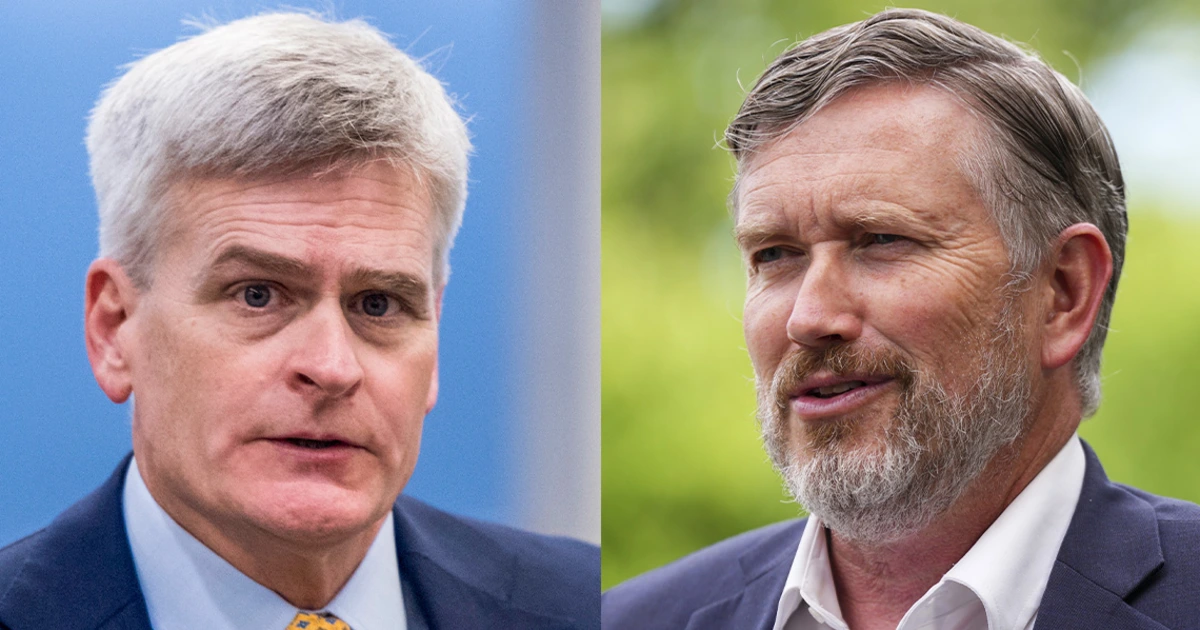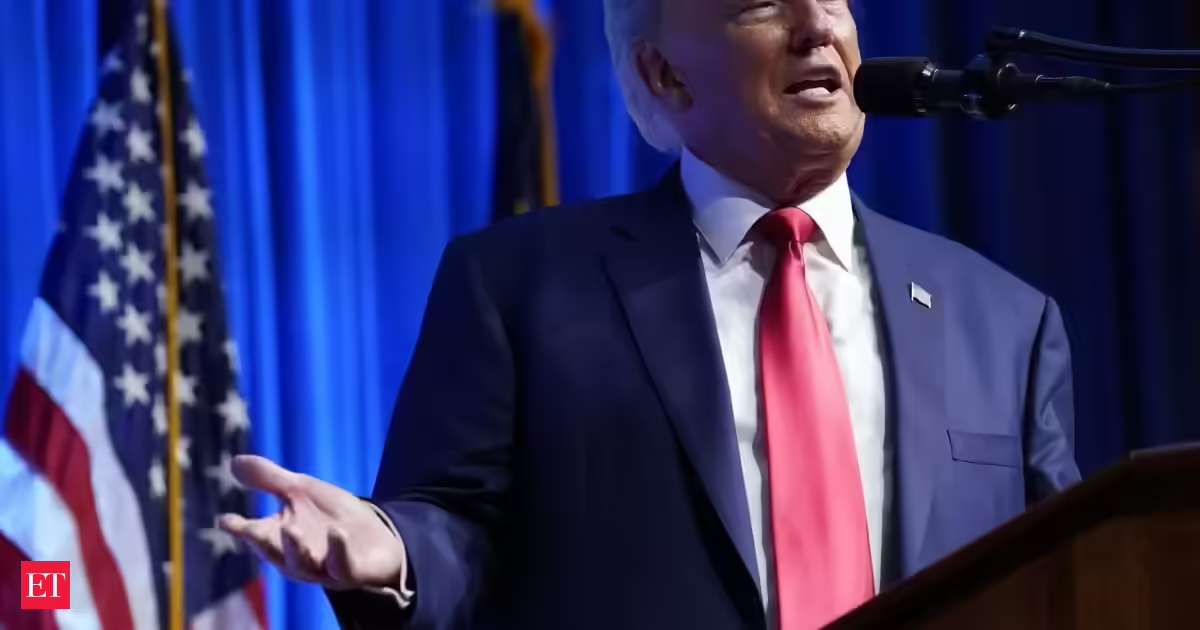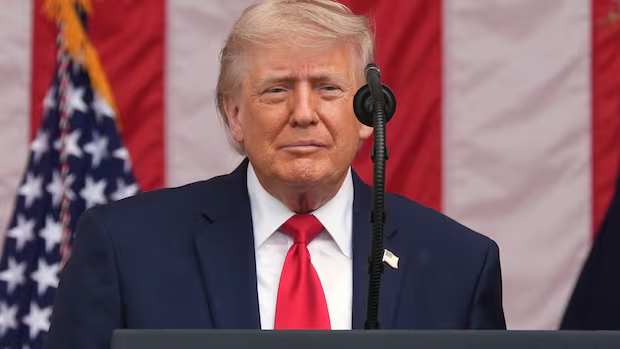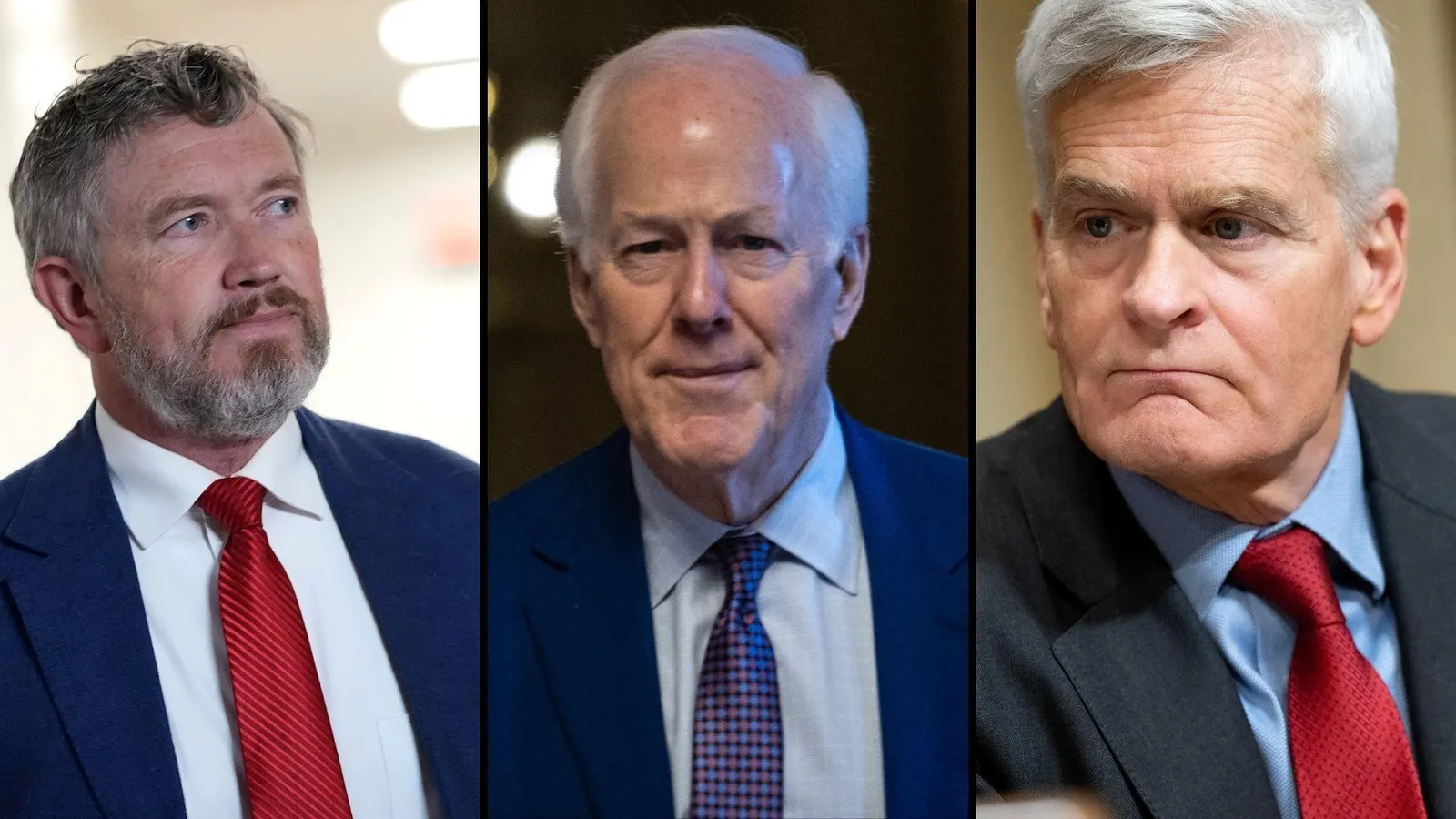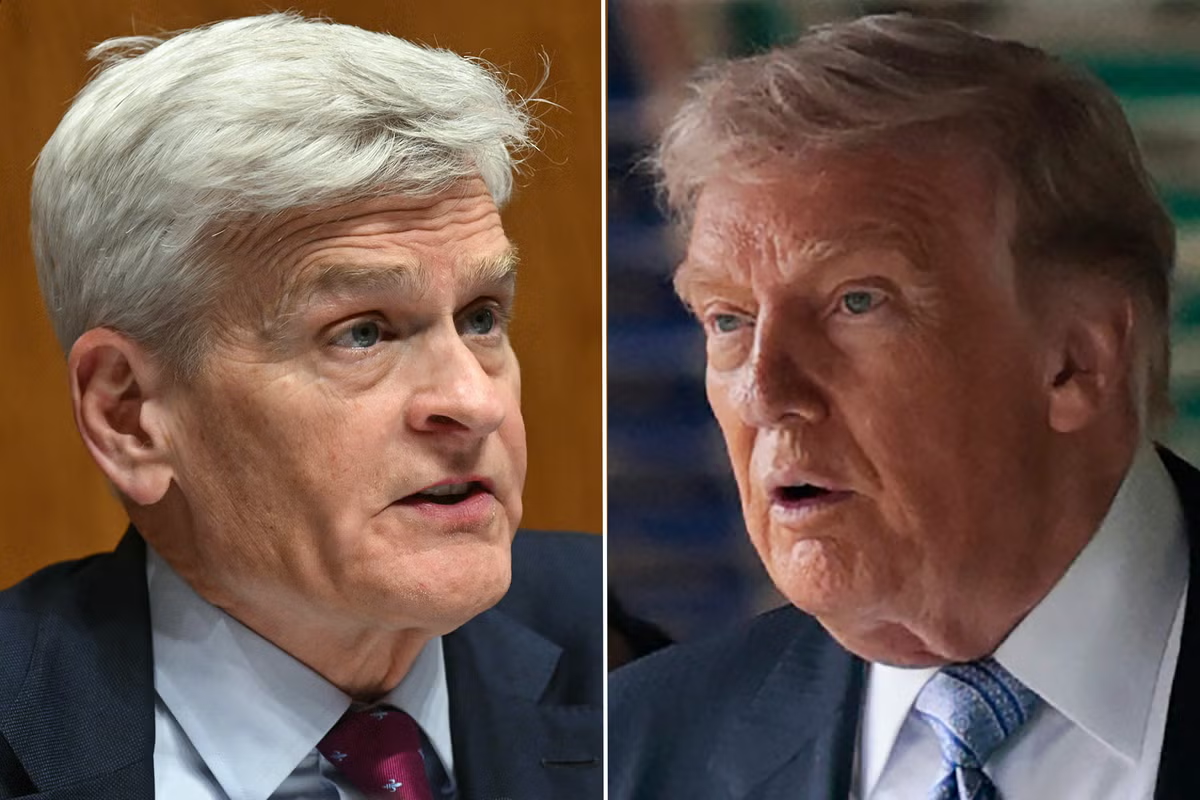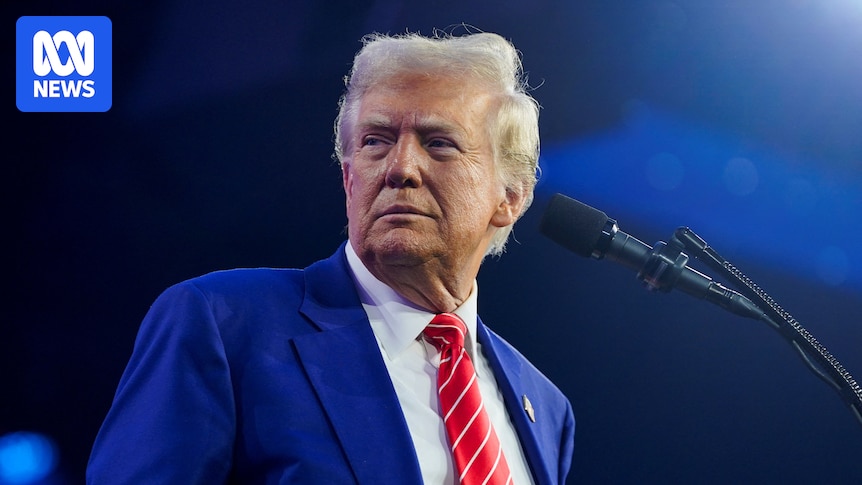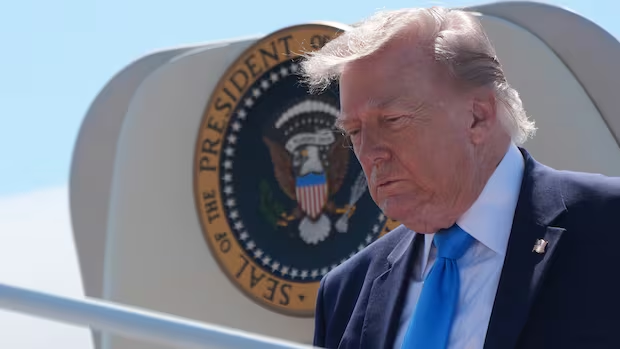
World·AnalysisU.S. President Donald Trump is celebrating back-to-back victories in his push to oust his critics from the Republican Party, but there are clear signs that his revenge campaign could come back to bite him.Targeted GOP members now have nothing to lose by thwarting Trump's agenda in CongressMike Crawley · CBC News · Posted: May 21, 2026 4:00 AM EDT | Last Updated: 36 minutes agoListen to this articleEstimated 5 minutesThe audio version of this article is generated by AI-based technology. Mispronunciations can occur. We are working with our partners to continually review and improve the results.U.S. President Donald Trump, pictured Wednesday giving a commencement address, brushed off concerns about his Republican Party purge, telling reporters: 'I know how to win.' (Jacquelyn Martin/The Associated Press)U.S. President Donald Trump is celebrating back-to-back victories in his push to oust his critics from the Republican Party, but there are clear signs that his revenge campaign could come back to bite him.In the past few days, Trump succeeded in persuading Republican voters to block a pair of sitting GOP lawmakers from seeking re-election on the party's ticket this fall: Kentucky Rep. Thomas Massie and Louisiana Sen. Bill Cassidy. Trump also endorsed a challenger to Sen. John Cornyn, a Texas Republican who has held the seat for 24 years but ran afoul of the president over perceived disloyalty. "He was not supportive of me when times were tough," Trump wrote on social media.Since these Republicans no longer have major incentives to curry favour with Trump, but retain their seats for another seven months, they now have full freedom to defy him in Congress. That creates a potentially serious threat to Trump's own legislative and spending agenda, given the Republican Party's razor-thin hold on both the House and Senate. It means the sweet taste of political vengeance could quickly turn sour for Trump. He now risks losing votes in Congress on issues ranging from authorization for the war in Iran to his own pet construction project, the new White House ballroom. WATCH | Trump gets vengeance on senator who had voted for his impeachment:Trump claims victory after Republican foe loses re-election bidMay 17|Duration 2:01U.S. President Donald Trump claimed victory after Republican Sen. Bill Cassidy, who voted to impeach Trump, lost his bid to remain the party’s nominee in Louisiana.Trump's purge of his critics within the Republican Party could bring some significant unintended consequences for the president, said Matthew Dallek, a professor at George Washington University's graduate school of political management. "These members will be looking, I think, for payback, to kick Trump as they're exiting the door," Dallek told CBC News. "The vanquished can come back and bite Trump."Harder for Trump to control CongressHe said that could manifest itself over the coming months in Trump and the Republicans losing key votes in the House, the Senate or both.Trump's approach to dissent within the party could have even more profound ripple effects down the road, Dallek said."That's a way of shrinking your coalition," he said. "It's possible that Trump is playing with fire." Thomas Massie, a Republican member of the U.S. House of Representatives, lost his bid to remain the party's candidate in the Kentucky district he has held for the past 14 years, after Trump called for his defeat. (Carolyn Kaster/The Associated Press)Even the Republican majority leader in the Senate, John Thune, sees the risks ahead."There's always a consequence with taking on United States senators," Thune told reporters on Wednesday. "What we have to deal with up here [on Capitol Hill] is moving the agenda, and obviously that can become slightly more complicated."Just 4 Republicans can tip Senate balanceThere are 53 Republicans in the 100-member Senate, which means the party can lose votes if just four senators refuse to toe the party line. Mere hours after losing the Louisiana Republican primary to a Trump-backed challenger, Cassidy showed he's prepared to stick it to the president.On Tuesday, he voted with the Democrats for the first time on a resolution seeking to halt further military action in Iran without congressional approval. "In Louisiana, I've heard from people, including President Trump's supporters, who are concerned about this war," Cassidy said on social media. "Until the administration provides clarity, no congressional authorization or extension can be justified."The Republican Party's control of Congress rests on slim majorities. It holds 53 of the Senate's 100 seats, and a margin of 217-212 over the Democrats in the House of Representatives. (Mariam Zuhaib/The Associated Press)Cassidy's vote on the war powers measure helped tip the balance, advancing it to the next stage in Congress. Trump's $1B ballroom ask gets scrutiny Also under the microscope: the $1.8 billion US fund to compensate people the White House claims were victims of the Biden administration's "weaponization" of the justice system. The Department of Justice is using taxpayer dollars to create the fund in exchange for Trump dropping his personal lawsuit against the Internal Revenue Service over the 2019 leak of his tax returns to the media.Cassidy has concerns about the proposed compensation, which he calls a "slush fund." Todd Blanche grilled over Trump administration's $1.8B 'anti-weaponization' fundTrump's controversial ballroom is getting a new push. How did we get here?He has also joined several senators who have signalled reluctance to approve Trump's $1 billion ask for security enhancements to his White House ballroom. "When I go back to Louisiana and I talk to people, they can’t afford groceries and gasoline and health care," Cassidy told reporters on Capitol Hill. "We're going to do a billion dollars for a ballroom?”WATCH | Here's who could cash in on Trump's 'anti-weaponization' fund:Trump's new $1.776B 'Anti-Weaponization Fund' is a wild ride | About That12 hours ago|Duration 12:44The Trump administration set up a roughly $1.8 billion US fund to support Americans facing domestic political persecution — but there are questions about accountability and who may benefit most from the cash. Andrew Chang explains how the 'anti-weaponization' fund originates with U.S. President Donald Trump's own lawsuit, and the concerns about a conflict of interest.
ANALYSIS | Why Trump's revenge campaign against Republicans could backfire | CBC News
U.S. President Donald Trump is celebrating back-to-back victories in his push to oust his critics from the Republican Party, but there are clear signs that his revenge campaign could come back to bite him.
1,293 words~6 min read