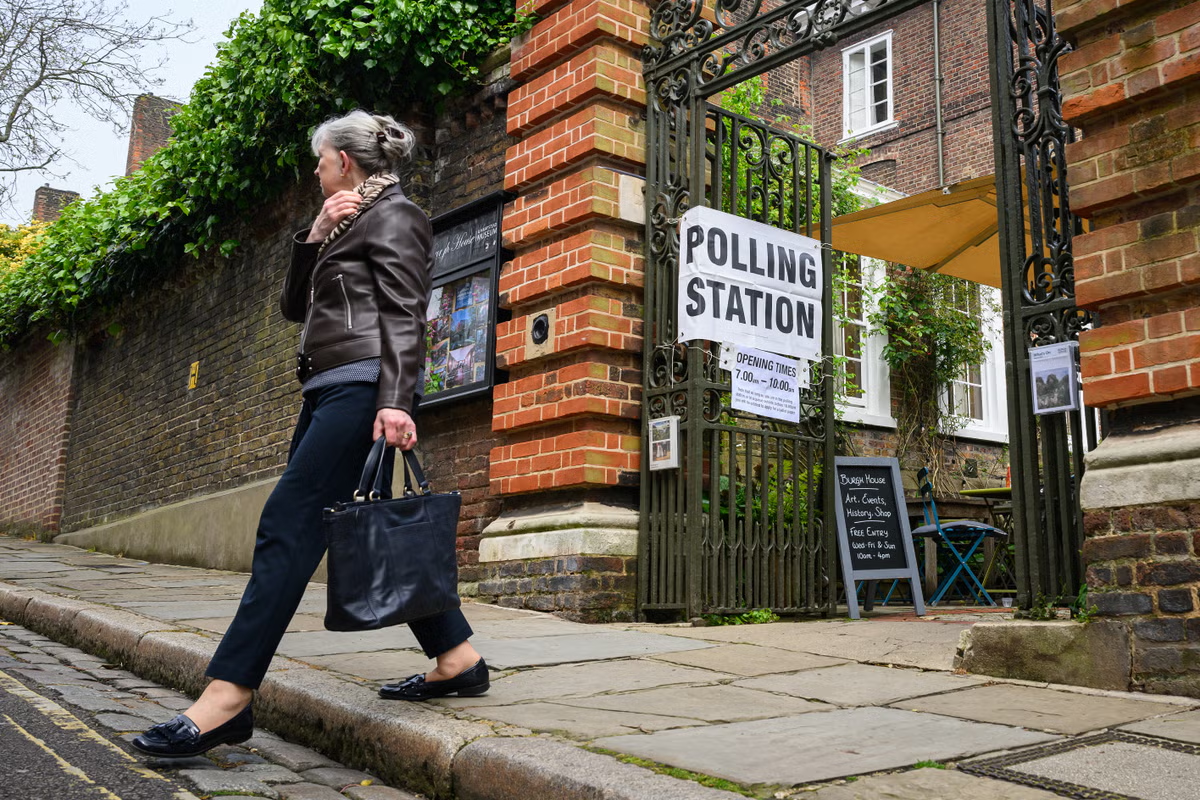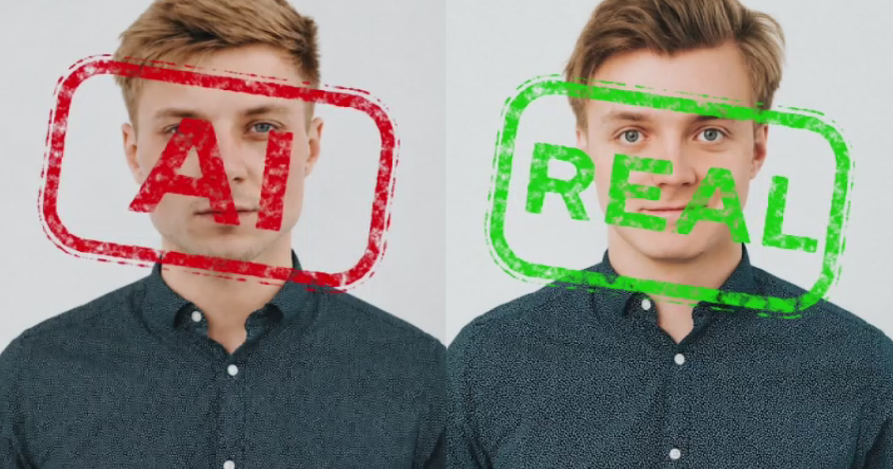
Britons struggle to identify deepfakes even though they understand what they are, a new study has found, as experts warn the UK faces an uphill battle in protecting democracy from AI misinformationNew research found that Briton’s ability to separate deepfakes from real images is barely above chance, with AI-generated videos proving particularly difficult to verify. Identity verification company Veriff conducted a survey of 1,000 nationally representative UK adults as part of a wider international study and asked respondents to assess 16 stand-alone images and videos, as well as eight side-by-side comparisons of real and AI-generated content.Approximately three quarters (74 per cent) of respondents were familiar with the term “deepfake”, but this did not help their accuracy. Among the 44 per cent of UK adults confident in their ability to spot deepfakes, only one in five reached the top band. Nearly one in three did worse than random when it came to guessing when asked to distinguish real from fake content, and only 16 per cent achieved the highest scores. Respondents were shown face swaps, like this, where one photo (on the left) was synthetic and the other (on the right) was real (Supplied)Three formats - video, face-swaps and individual images - were tested as part of the study. Video was the hardest for UK respondents to assess; just 27 per cent correctly identified AI-generated video clips as false, compared with 41 per cent of face-swaps and 53 per cent of individual images.Brits were put side by side with Americans and Brazilians in terms of their AI literacy. Despite coming out on top in recognition of the word “deepfake” when compared to 67 per cent of Brazilians and 63 per cent of Americans, their ability to identify AI-generated content was no better.AI perception was scored on a scale of -1 to 1, where 1 represented perfect accuracy, 0 represented random guessing, and -1 represented consistently incorrect answers. Britons achieved a mean detection score of 0.07, matching the US, and falling slightly behind Brazil’s 0.08. The score indicated that while participants performed slightly better than chance, the difference was minimal. The figures come amid a growing concern about AI media literacy as the Electoral Commission launched a deepfake detection pilot to counter misinformation last month, which went live ahead of the May elections.This face swap was among those shared with respondents; the picture on the left is synthetic (Supplied)Vijay Rangarajan, chief executive of the Electoral Commission, said: “Voters want accurate information. Deliberately misleading or abusive video of candidates must not be shared. Deepfakes are becoming more sophisticated and more accessible, as we have seen in elections around the world. “A deepfake is yet to meaningfully affect a UK election, and we are determined to keep it that way. This pilot means we can identify deepfakes quickly, track their impact, work with parties and candidates to take down or correct misleading material. This will give voters confidence that accurate information about how elections work is available. We will share our findings after the May elections.” A deepfake circulated social media of Nigel Farage with Jeffrey Epstein earlier this year (Getty)AI-generated media has become much harder to detect and easier to generate in recent years, with deepfakes of politicians causing global confusion - such as a fake picture of Nigel Farage with paedophile Jeffrey Epstein, which was circulated on social media earlier this year, or a fake photo of captured Venezuelan leader Nicolas Maduro. Around a quarter of voters during the 2024 UK general election told the Electoral Commission that they saw or heard a deepfake, while over half said they saw misleading information about parties or candidates, according to a survey.Isabella Wilkinson, research fellow at Chatham House’s digital society programme, warned the UK faces an uphill battle as deepfakes have become a core part of disinformation campaigns in democracy.An AI-generated picture of Nicolas Maduro went viral on X in January (Social media)“A healthy, trusted information environment is essential for a well-functioning democracy,” she said. “It forms part of the technical and political infrastructure that modern societies and economies depend on.”She continued: “In the UK and internationally, responding to increasingly sophisticated deepfakes face an uphill battle. Some deepfakes are part of coordinated campaigns, for example, a disinformation campaign during an election, which may be designed to spread chaos, create uncertainty and reduce trust in democratic processes and values.”Ms Wilkinson warned that traditional policies such as media literacy classes and campaign disruption needed to work with technological advancements to help assess the accuracy of content.“‘Traditional’ policy responses to mis- and disinformation (like media literacy in schools and disrupting disinformation campaigns from hostile states) may alone be ineffective to handle this new threat landscape and the uncertainties generated by a flood of misleading AI-generated content. There have been promising technical advancements in content provenance, which helps assess the accuracy of content and includes ‘watermarking’ material to verify how it was created. “But this begs a bigger question, one well-known to experts working to fight mis- and disinformation: is proving that content is inauthentic enough to disrupt the threat it poses to its audience? Do all audiences care equally about whether content is inauthentic?”
Average Briton now struggles to identify deepfakes, study finds
Exclusive: Warning UK faces an ‘uphill battle’ as research suggests public lacks ability to identify AI-generated misinformation
857 words~4 min read