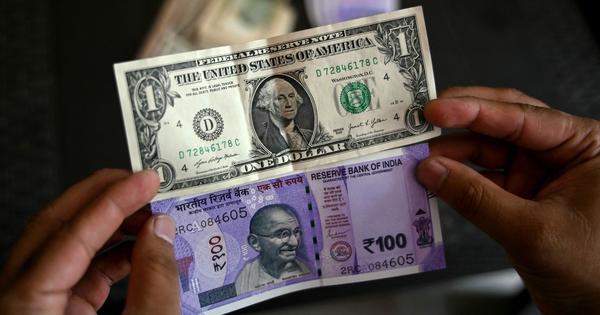
Global consulting firm Kearney has pushed back against fears that the Indian rupee could breach the ₹100-per-dollar mark and slide to ₹120–140 as against the commentary by certain market pundits, arguing that the country’s structural growth drivers remain strong enough to absorb external shocks even as geopolitical tensions intensify.At the same time, the global consulting firm warned that India’s GDP growth could be reduced by 1 to 1.5 percentage points over the next six to nine months if the West Asia conflict results in sustained commodity inflation, supply-chain disruptions and broader macroeconomic uncertainty.In an interview with businessline during Kearney’s “100 Years of Impact” global celebrations, Bob Willen, Global Managing Partner and Chairman; Shigeru Sekinada, APAC Chair; and Siddharth Jain, Managing Partner and Country Head of Kearney India, said the recent weakening of the rupee to around ₹97 against the US dollar has revived concerns over imported inflation and currency volatility.Instead, Kearney believes India is entering a new investment cycle led by green energy, electronics manufacturing, data centres and infrastructure, sectors that are expected to generate domestic demand, attract capital and strengthen the economy’s ability to withstand global turbulence.“India’s structural growth story remains intact,” the executives said, noting that these long-term investments are creating productive capacity that can offset the impact of temporary shocks.Kearney, formerly known as A.T. Kearney, said the combination of large-scale industrial investment, policy support and a growing domestic market places India in a stronger position than many emerging economiesCommenting on the disruptions Willen said the current disruptions could shave about 1 per cent off global GDP, but India’s diversified economy and large domestic market should allow it to continue expanding at close to 7 per cent. Jain said the impact on India is likely to be in the range of 1-1.5 percentage points, significantly less severe than some market fears, and added that he does not expect the rupee to fall to the “alarming levels” being discussed in some market circles, arguing that currency depreciation also improves the competitiveness of India’s export sectors.Risks facing Indian economy“Most corporates are underestimating the risk,” Jain said, warning that businesses are focusing primarily on visible pressures such as raw material shortages and rising input costs while failing to account for second- and third-order effects such as fertiliser shortages, food inflation and a broader squeeze on middle-class consumption.Kearney’s central message is that India is facing a period of short-term stress rather than structural weakness. Over the next six to nine months, the firm expects the economy to contend with higher energy prices, inflationary pressure, softer discretionary demand and continued volatility in currency and commodity markets.Among the sectors most exposed to near-term stress are fertilisers, commodity chemicals and energy-intensive manufacturing, where higher fuel and raw material costs could sharply pressure margins. Jain said fertiliser shortages deserve far greater attention because they could reduce agricultural output and trigger a wider food inflation cycle.Recovery signalsAt the same time, the firm remains strongly optimistic about India’s structural growth drivers. Willen noted that India has evolved from a predominantly outsourcing-led economy into a more diversified and infrastructure-driven market, while Jain said he is seeing early signs of the private capital expenditure cycle reviving, with promoters planning large-scale manufacturing projects built to global standards.“I am seeing early signs of the capital cycle picking up,” Jain said, noting that Indian promoters are increasingly planning world-class manufacturing facilities rather than incremental expansions.Drawing on Kearney’s work with several ministries, Jain said policymakers appear significantly more advanced in their crisis planning than many companies appreciate. According to him, the government’s priorities include securing alternative energy supplies, expanding strategic reserves and gas storage, balancing fiscal discipline with inflation management and ensuring that the nascent investment cycle is not disrupted.Willen said one of the clearest policy responses likely to accelerate in the current environment is import substitution. As supply chains become more volatile and imported inputs more expensive, companies and governments are reassessing which critical products and components can be manufactured domestically. He added that the present environment could also create an opportunity for structural reforms and privatisation in sectors requiring fresh investment and operational improvement.Energy independence gets a pushThe executives argued that the crisis is likely to accelerate India’s broader push toward energy independence. Jain said electrification, battery manufacturing, renewable energy, hydrogen and higher ethanol blending are all expected to gain momentum, although he cautioned that electric vehicles alone will not provide an immediate solution because much of India’s fuel consumption remains concentrated in diesel-powered commercial vehicles.“There is no choice. Ethanol blending will accelerate,” Jain said, while noting that full replacement of conventional fuels remains unrealistic in the near term.Kearney said the energy sector has become its busiest area for private equity due diligence over the past 12 to 18 months, with investors increasingly backing battery storage, renewable energy supply chains and component manufacturers positioned to benefit from the expansion of solar, wind and hydrogen. Jain said global capital, including Japanese investors and banks, is actively exploring opportunities across these segments as part of a broader effort to diversify away from China.AI’s IT playbook editArtificial intelligence is the second major force that Kearney believes will reshape India’s economy. Willen said AI tools are already capable of eliminating or reducing up to 50 per cent of coding work in some software development tasks, raising important questions for the IT services industry.Jain, however, argued that the shift is more likely to transform business models than reduce sector revenues. Technology spending as a percentage of revenue for many companies could rise to three times current levels as organisations invest in data infrastructure, automation and new operating models, he said.Japan’s India betSekinada said the strategic partnership between India and Japan is entering a stronger phase, driven by complementarities in technology, manufacturing and talent. Bilateral trade, currently about $26-27 billion, has the potential to double as Japanese companies and financial institutions seek alternatives to China and deepen their participation in India’s industrial growth.Jain added that Japanese capital is showing particular interest in green energy, hydrogen, solar and wind, sectors where India is emerging as a major investment destination.Advice to Corporate IndiaFor corporate India, Kearney’s clearest advice is to use the current disruption to strengthen long-term competitiveness rather than focus solely on immediate cost pressures.“The biggest advice to corporate India is to invest more in research, development and innovation,” Jain said. “It will not help next quarter, but in the mid to long term that is the only way to survive.”Kearney believes the sectors best positioned to benefit from the current realignment include green energy and its manufacturing value chain, data centres, electronics manufacturing, consumer industries and transport infrastructure. By contrast, fertilisers, commodity chemicals, energy-intensive industries and parts of the IT services sector undergoing AI-led disruption face the greatest adjustment pressure.For Willen, Jain and Sekinada, the next six to nine months may test India’s resilience, but the broader conclusion remains unchanged: short-term disruptions are accelerating the very shifts in energy, manufacturing, infrastructure and technology that could define India’s next phase of economic expansion.“Short term there is always a crisis,” Jain said. “Long term is where the opportunity liesPublished on May 21, 2026
Rupee shock may slow India: Kearney sees 1-1.5 percentage point West Asia hit on GDP
Kearney warns West Asia crisis may lower India's GDP growth by 1-1.5%, but rupee depreciation fears are exaggerated.
1,183 words~5 min read