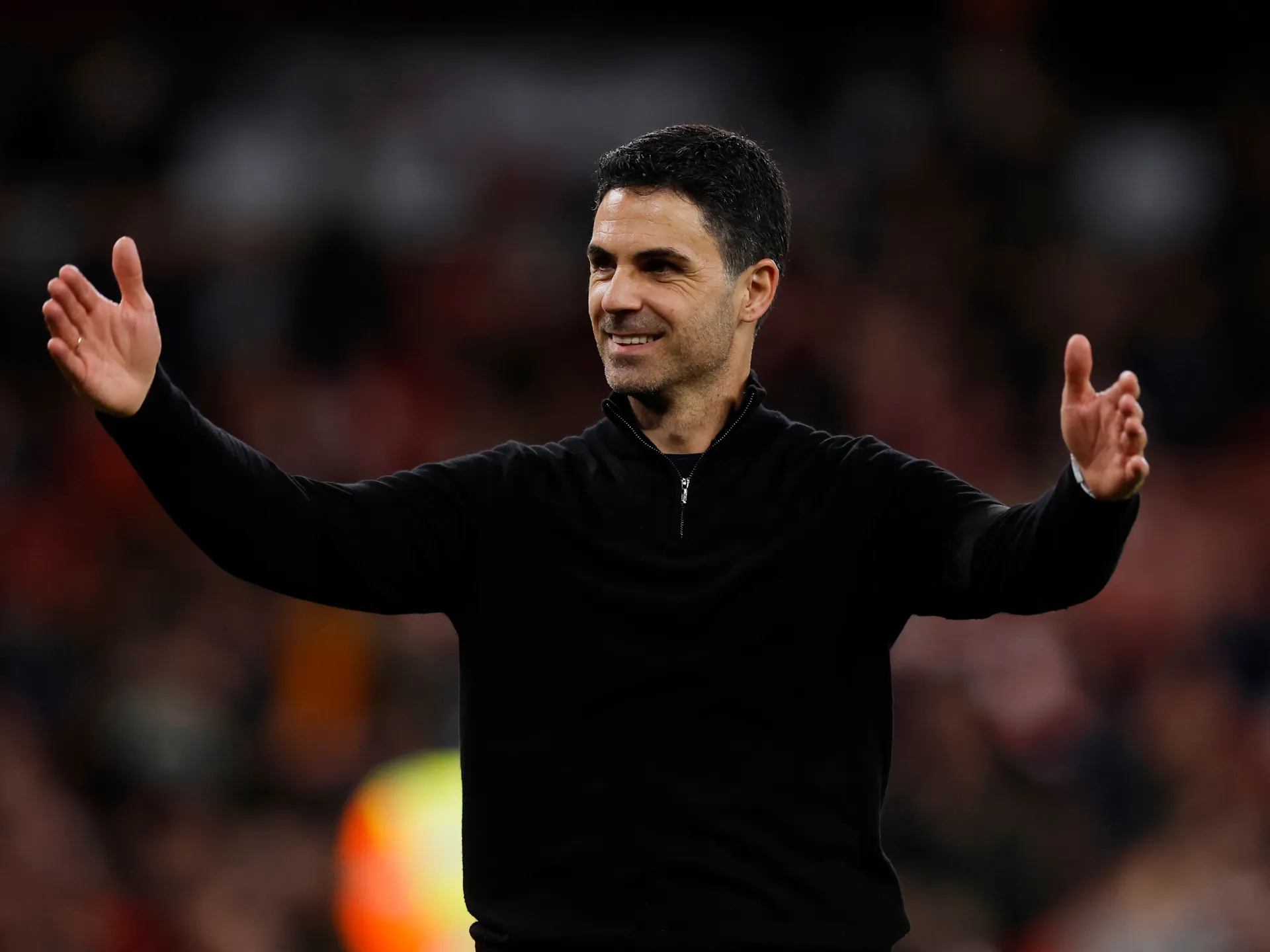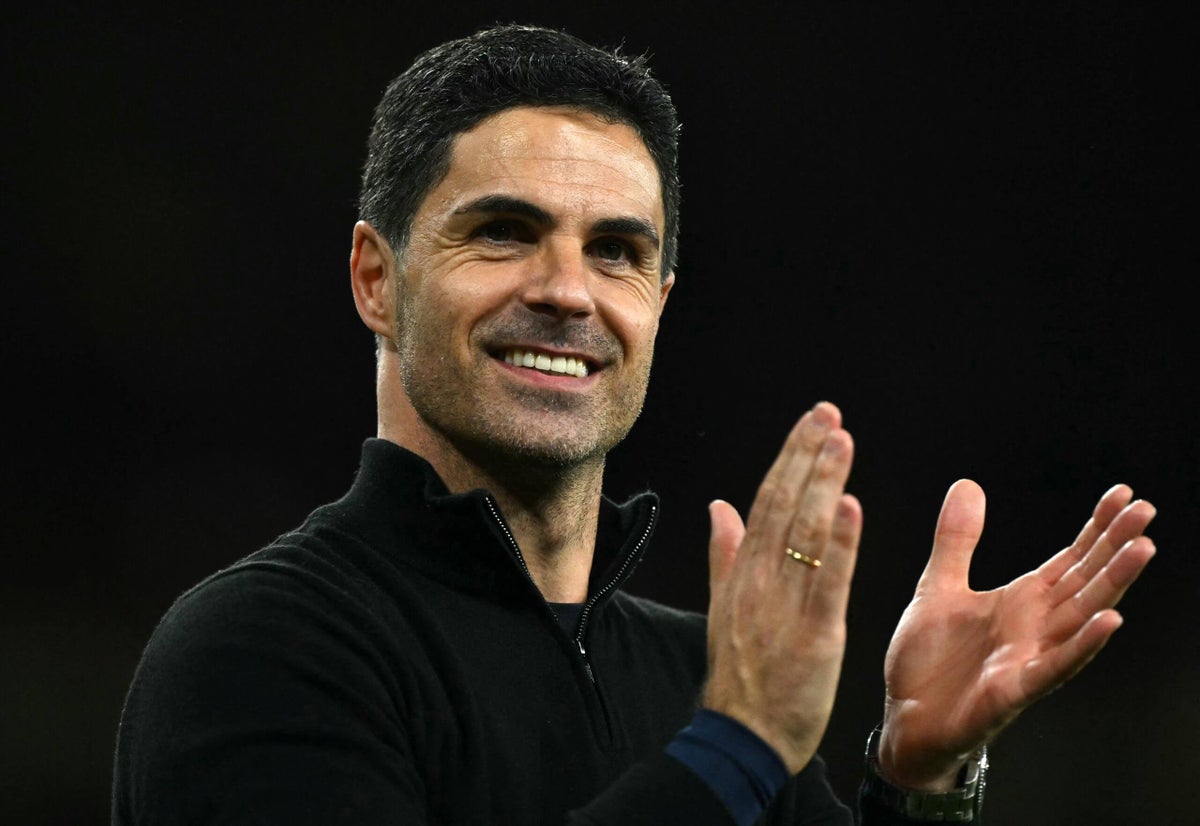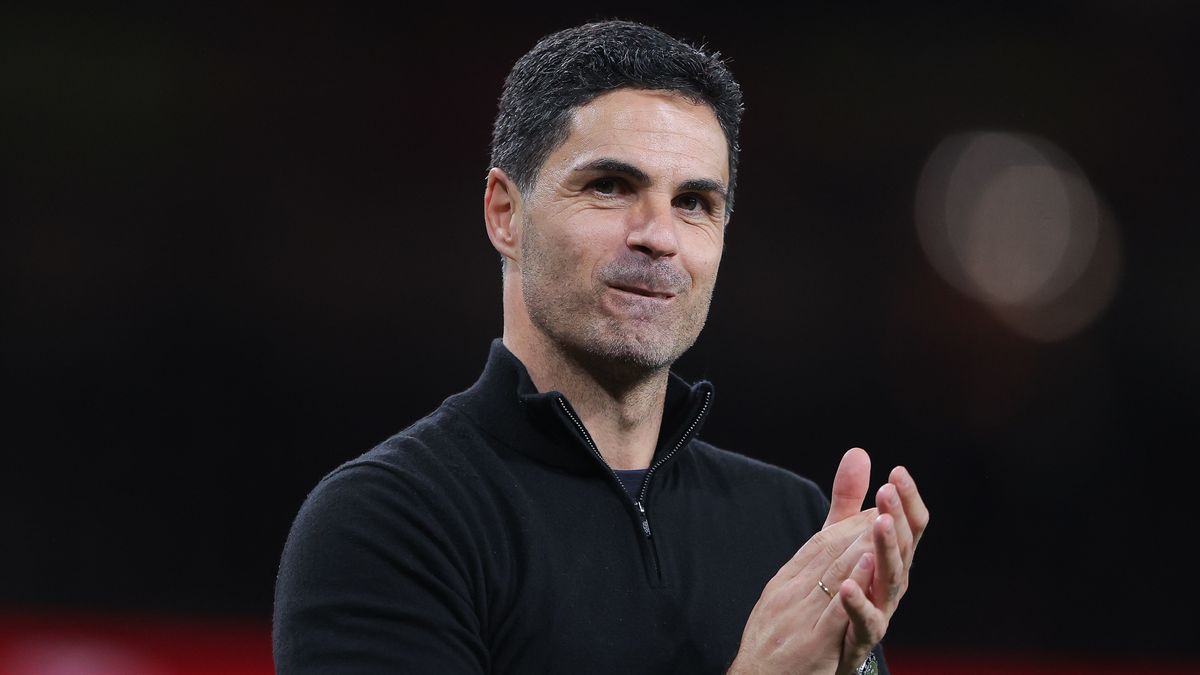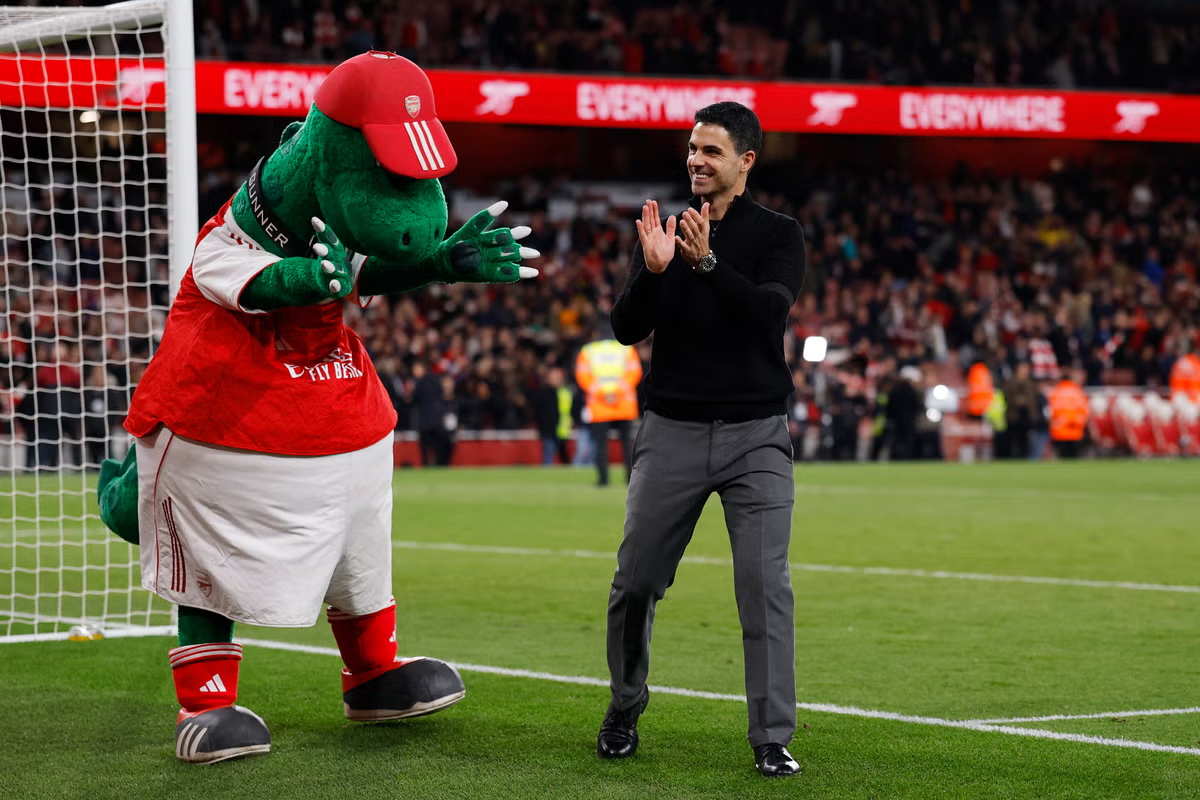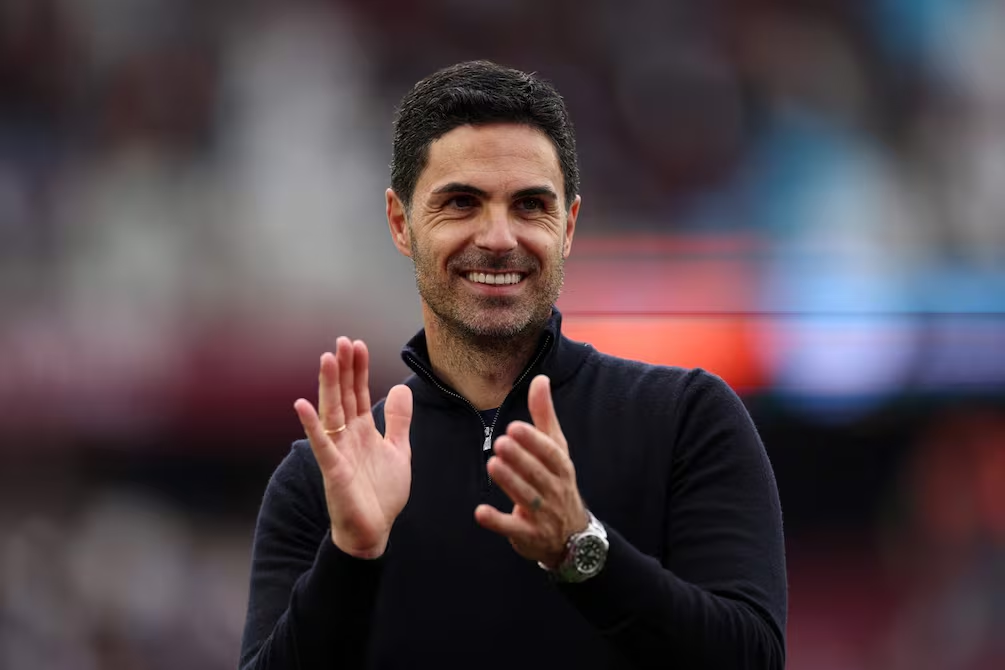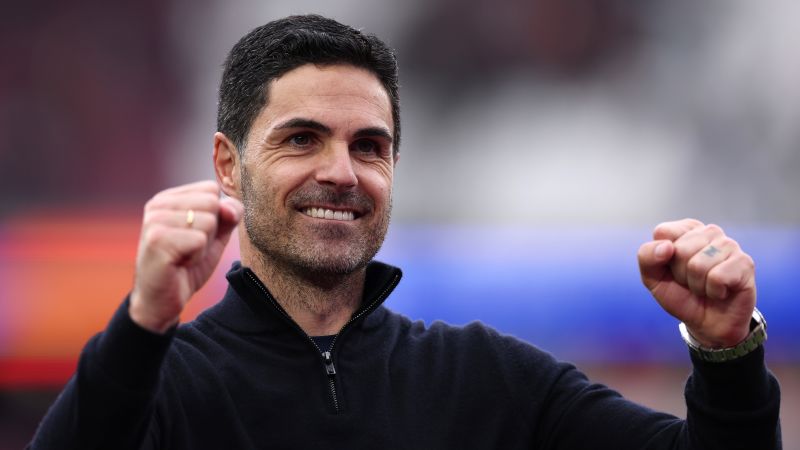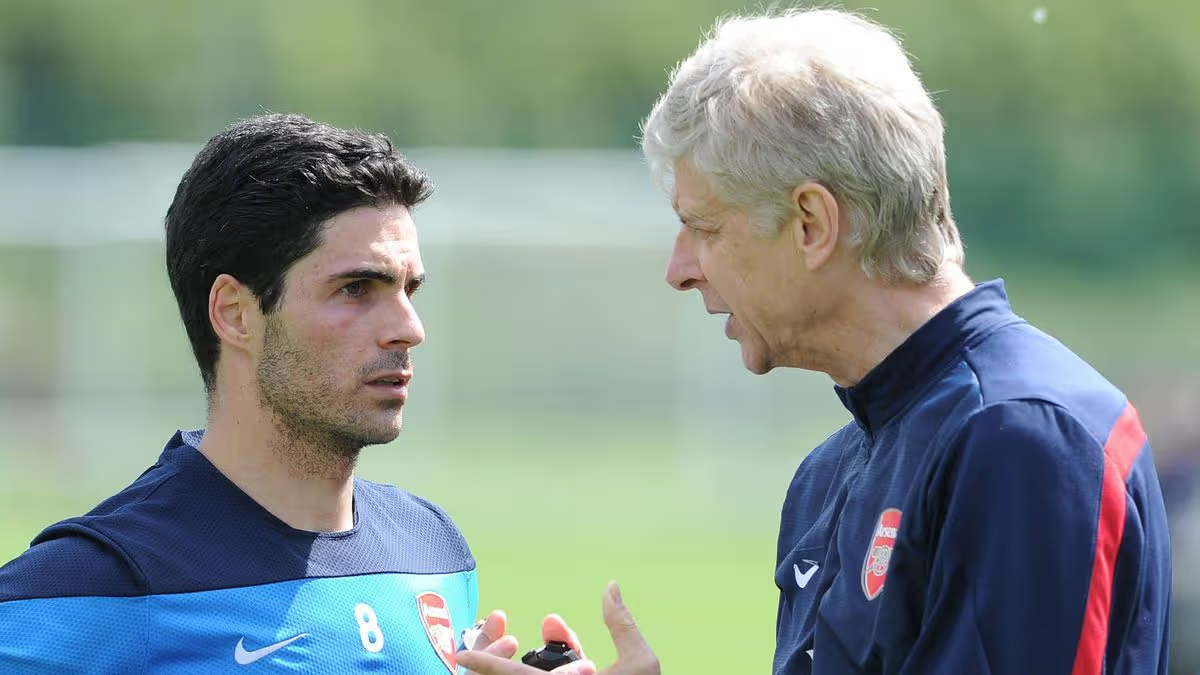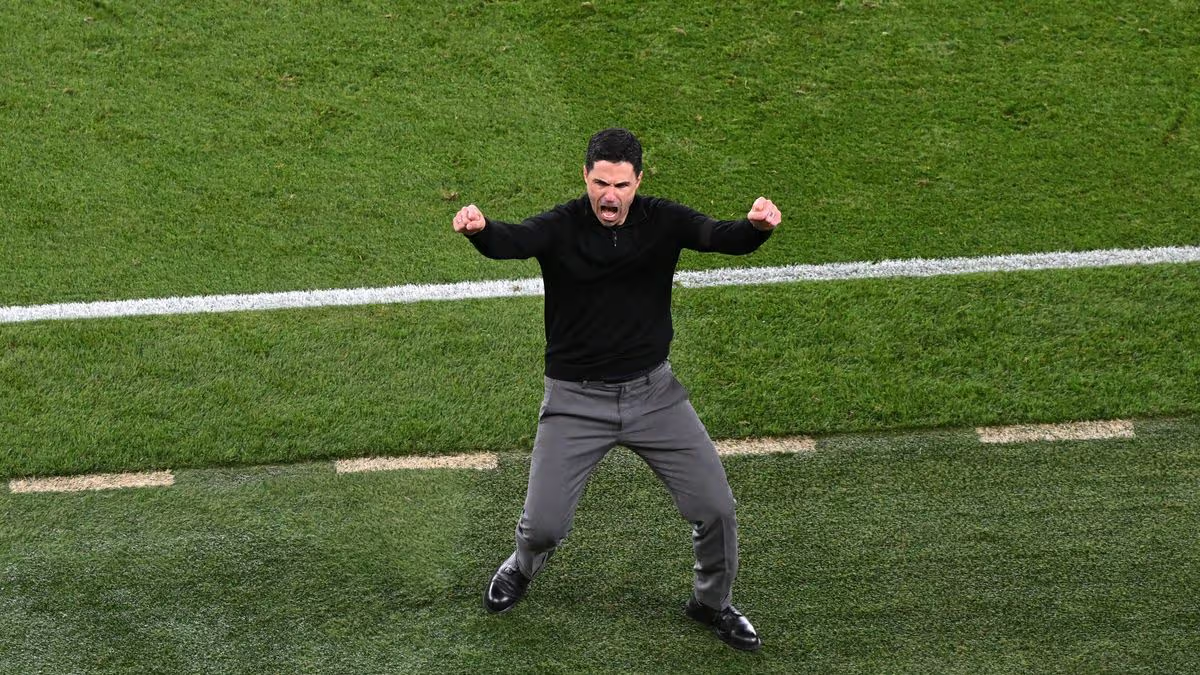
It has become conventional to believe that Mikel Arteta arrived at Arsenal as a disciple of his former boss Pep Guardiola, only to rethink his purist principles and develop towards a more physical style – a process of learning and evolution that has culminated in Arsenal’s first Premier League title in 22 years.New archival research reveals that readers of The Irish Times have been alert to the true nature of this man from the beginning.When Arsenal beat Chelsea in the 2020 Covid-era FA Cup final, The Irish Times noted: “Arsenal’s patient, tenacious performance was in keeping with the attitude instilled by Mikel Arteta, the Guardiola protege who, Arsenal hope, will one day bring Guardiola-style football. In fact, Arteta’s main short-term impact has been to make Arsenal more conservative ... under Arteta, Arsenal are scoring less and conceding less ... In terms of reconnecting Arsenal with the prouder parts of their club traditions, Arteta’s first few months have been less Arsène Wenger, more George Graham.”Arteta’s real values were always plain to those who wanted to see (and to readers of this newspaper). His pragmatic, defence-first approach won the endorsement of The Irish Times early on. “For years [Arsenal] have been regarded as a soft touch, as an arrogant and deluded club who believe they are better than they really are. Arteta’s task is to make people take them seriously again, and if that means an initial emphasis on defence, well, taking pride in defending is part of the Arsenal story too.”In 2021, Arsenal beat José Mourinho’s Tottenham in an empty-stadium North London derby. The Irish Times declared that these clubs were heading in opposite directions. “Spurs in seventh are suffused with gloom and foreboding, while Arsenal in 10th feel like they might finally be getting somewhere – even if the actual results are a lagging indicator.”That was the day that Pierre-Emerick Aubameyang sealed his own fate in Arteta’s eyes by turning up late to the match, a few days after the manager had announced that a new, indomitable team spirit had taken root at the club.By then the Arsenal players were already familiar with Arteta’s earnest and intense personality, and his habit of underlining his points in team talks in off-the-wall yet on-the-nose ways. For example, the time he overturned all the furniture in the room, then told the players: guys, your performances have been like this furniture – a total mess.The potential for mockery is obvious, and one of Arteta’s first priorities was to purge those senior players who “weren’t having him”. Mesut Özil first, then the captain, Aubameyang. Arteta was not against senior players as such – the big-hearted Granit Xhaka stayed and would become a key man. But there could be no place for smirkers and ironists. Arsenal's Jurriën Timber heads the opening goal into the net during the Premier League match between Arsenal and Manchester United at the Emirates Stadium on December 4th, 2024. Photograph: Adrian Dennis/AFP via Getty Images Contrary to received wisdom, the actual anomaly in the Arteta era was the 2022-23 season, when a youthful, free-scoring Arsenal raced out of the blocks and led the table in February, only to be hauled in by the more powerful Treble-winning Manchester City side.Arsenal’s two league defeats to City that season, 3-1 at home in February and 4-1 away in April, have often been identified as the moment when Arteta realised he needed to adapt by adding size and power to the team. More likely it was the moment when he realised he’d taken a wrong turn, needed to retrace his steps and go back to basics.[ Arsenal no longer fear falling short and now have clear sight of immortalityOpens in new window ]His summer 2022 signings had been Gabriel Jesus (5ft 9in), Oleksandr Zinchenko (5ft 9in) and Fabio Vieira (5ft 7in). Today’s Arsenal would not look twice at any of these players. The 2023 signings were Declan Rice (6ft 2in), Kai Havertz (6ft 3in), Jurriën Timber (5ft 11in, but built like a tank) and David Raya, who is not the tallest goalkeeper in the world but might now be the best. The title-winning, Monster Truck Arsenal was approaching its final form.In 2023-24 Arsenal scored 3 per cent more goals, and conceded 33 per cent fewer; only Pep Guardiola’s last 90-plus points season stopped them winning the title. In 2024-25, amid a debilitating series of injuries and red cards, goals scored dropped sharply from 91 to 69.But if you looked past that immediate decline, you would have noticed that Arsenal’s identity had developed a new and strange characteristic.Initial reviews were mixed. When Arsenal beat Tottenham in September 2024 at the height of the #barclaysman craze, The Irish Times lamented the lack of true Barclaysmen out on the pitch.But then: “The real Barclaysman had been staring us in the face all along ... Mikel Arteta [is] pigeonholed as a Guardiola-school coach. Yet [he] spent the peak Barclays era playing in central midfield for David Moyes’s Everton. Now his team were repelling Tottenham’s weedy ballplayers with a Tony Pulis-style back four consisting of four big strong centre halves. Arsenal were ceding possession and playing on the break, and Bukayo Saka was annoying the Spurs crowd by very deliberately taking as much time as possible over every corner.”Arsenal won that game 1-0 with a Gabriel header from a Saka corner. At the time everyone was laughing at Ange Postecoglou’s affected lack of concern about set pieces, but the real story was what was happening at Arsenal, where Arteta had become the first big-club manager to make set pieces the most important element in his team’s game plan.Arsenal striker Viktor Gyökeres scores the team's fourth goal against Tottenham Hotspur on February 22nd. Photograph: Glyn Kirk/AFP via Getty Images Smaller teams have always tried to use set pieces as a way to compete with superior opposition – you think of Sam Allardyce, Pulis, Midtjylland, Heimir Hallgrímsson. Big teams historically have not done this – why not?They might say we have the option of winning because we have better players. But when you boil it right down, it’s about pride. Set-piece practice is boring. It takes time, it’s about acting as a cog in somebody else’s master plan, and the best players tend to rebel against it, believing that spending lots of time on set pieces is beneath their dignity. Real Madrid are the extreme case of this tendency – many of their current players seem to believe that submitting to any coaching whatsoever is beneath their dignity.To convince a squad of players who have enough ability to win the Premier League that it was worth devoting serious time and effort to mastering set pieces is an underrated achievement in man-management by Arteta. His Arsenal might be the humblest team ever to be this good.The Irish Times, showing its usual awesome prescience in Arteta-related matters, predicted that Arsenal would win this season’s Premier League: “The time for winning is now ... Few teams have ever begun a season looking more primed for success.”[ Arsenal seek to improve ‘every area’, says Arteta after hiring renowned throw-in coachOpens in new window ]This title race has not really been as close as the table makes it appear. Monster Truck Arsenal dominated the Monster Truck League. Arteta’s bet on set pieces paid off – 18 goals from corners is a new Premier League record. His bet on strength and resilience paid off. The success of his recruitment policy contrasting starkly with that of now ex-champions Liverpool, who bet on very expensive, technically skilled but comparatively frail players. Compare the sickly racehorse Alexander Isak and the healthy carthorse Viktor Gyökeres. Some, including The Irish Times, have sneered at Gyökeres’s touch, but he has contributed 21 goals and been available for 57 out of 61 matches, while Isak, at more than twice the price, has scored four and missed most of the season with various injuries.Football’s perpetual arms race being what it is, other teams will respond, and Arsenal’s set-piece advantage will inevitably shrink. But now they have proved what they have suspected in each of the last three seasons: that they are the strongest team in the league. A newly self-assured team and coach now have the challenge of proving they can find new ways to win.
Ken Early: Mikel Arteta’s Monster Truck Arsenal proved themselves the strongest team in the league
Newly self-assured team and coach now have the challenge of proving they can find new ways to win
1,379 words~6 min read