
The Pattern It replaces
function UserProfile({ userId }: { userId: string }) {
const [user, setUser] = useState<User | null>(null);
const [isLoading, setIsLoading] = useState(true);
const [error, setError] = useState<Error | null>(null);
The Pattern It replaces function UserProfile({ userId }: { userId: string }) { const [user,...
The Pattern It replaces
function UserProfile({ userId }: { userId: string }) {
const [user, setUser] = useState<User | null>(null);
const [isLoading, setIsLoading] = useState(true);
const [error, setError] = useState<Error | null>(null);

This is where most tutorials stop. But if you try to use use() with a promise created inside a Client...
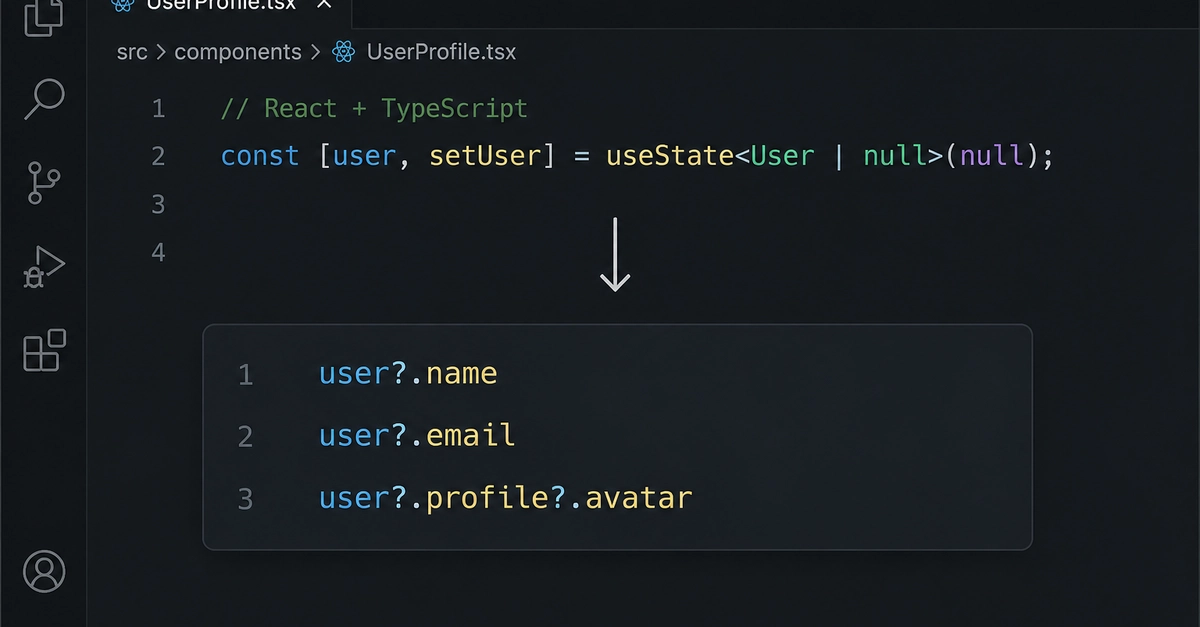
One React + TypeScript Pattern That Slowly Turns Into Workflow Fatigue One React +...

1. The codebase should be created for concentrating on <>JSX Section</> -The JSX section...
Learn how to handle errors in TypeScript using Either and TaskEither monads instead of try-catch blocks. Type-safe, composable,…

The Scene It's 2 AM. You're staring at your screen, debugging why your dashboard keeps...
You added a useLayoutEffect to measure a tooltip, shipped it, and the next time your Next.js (or...