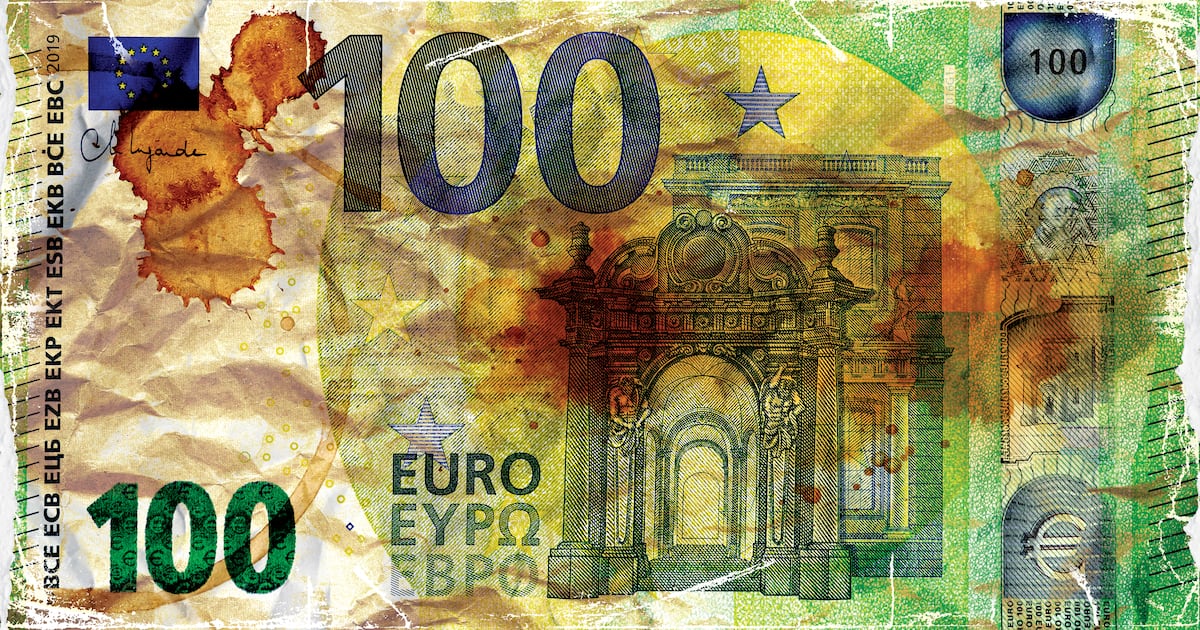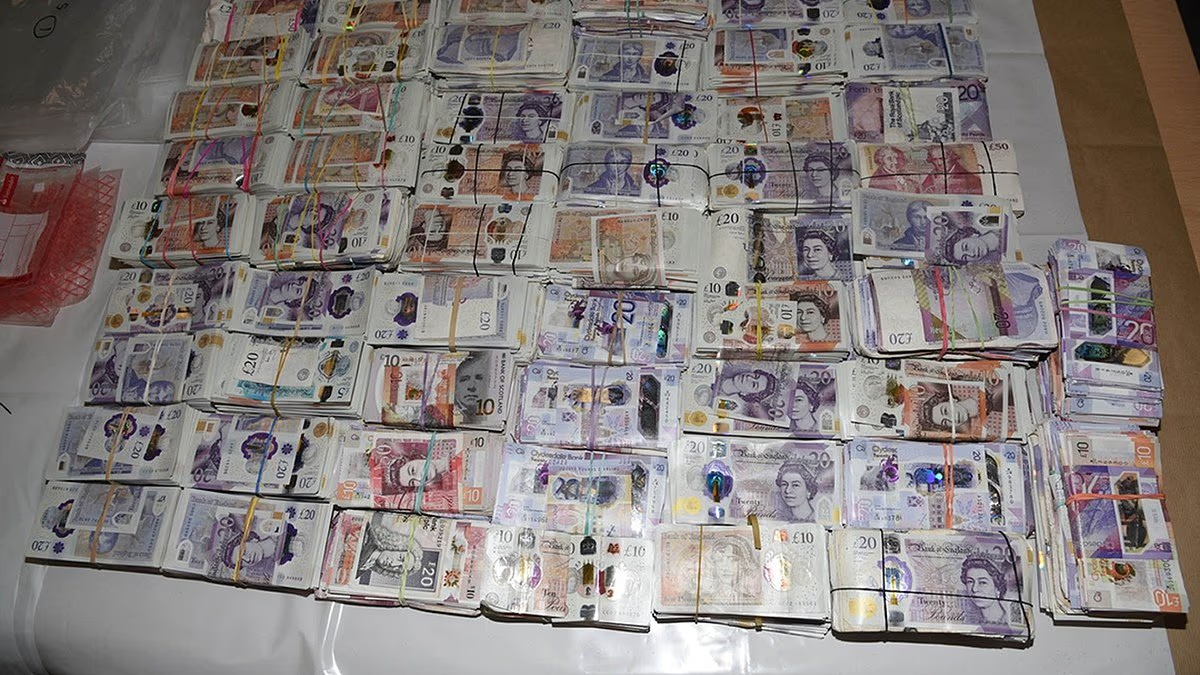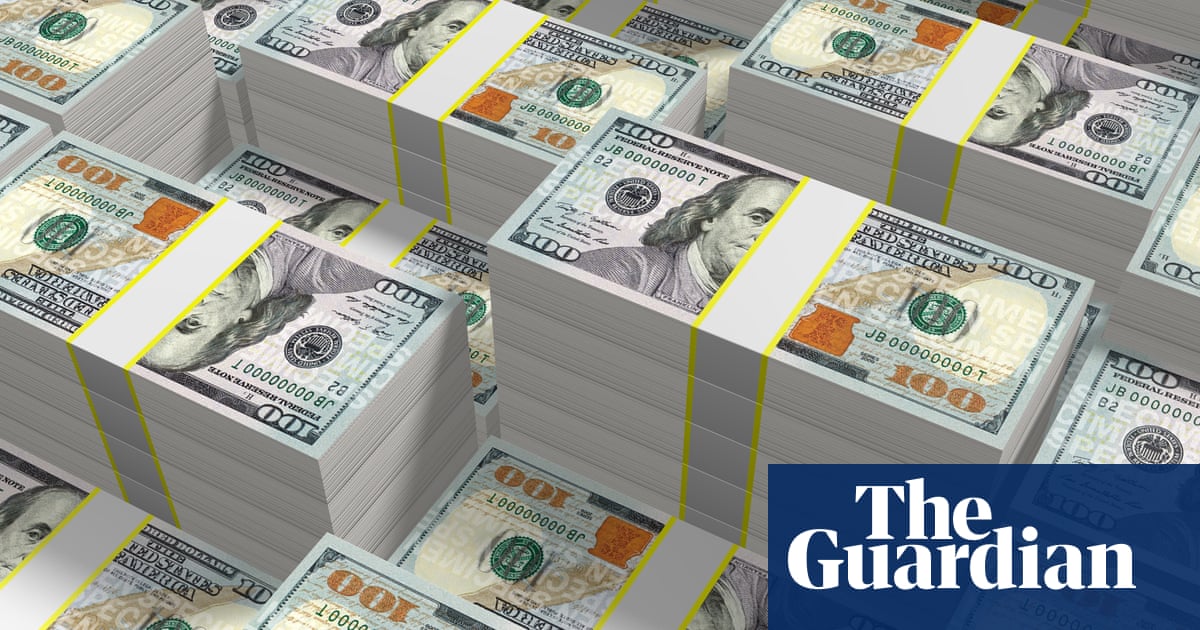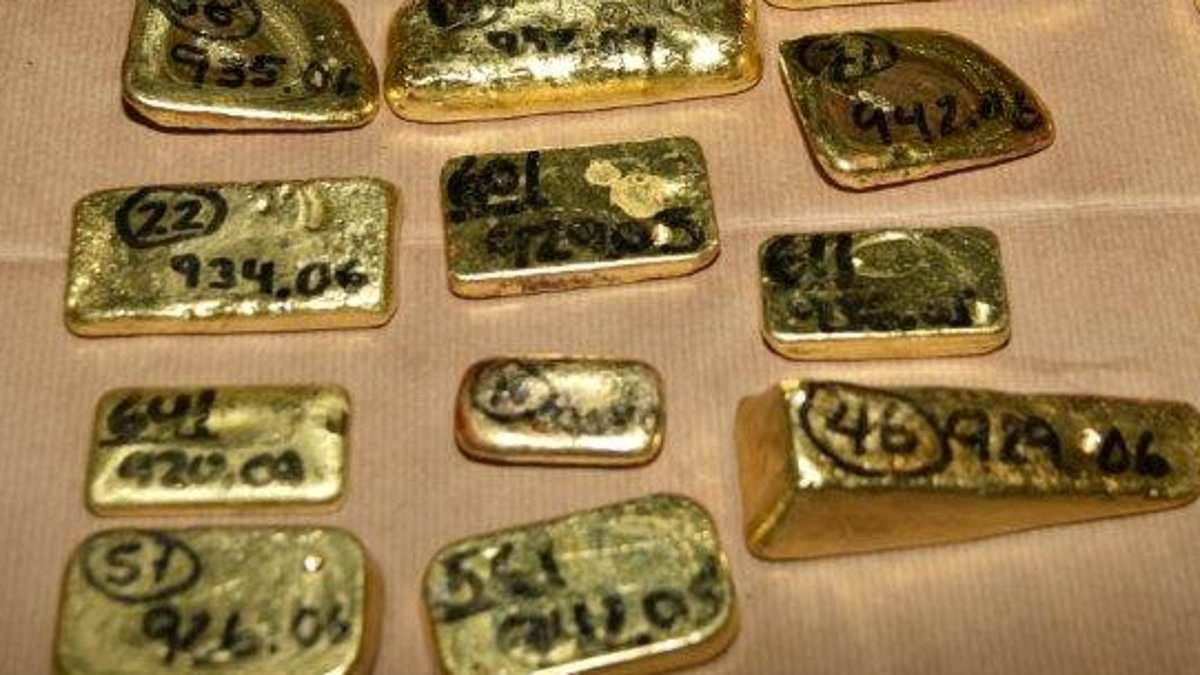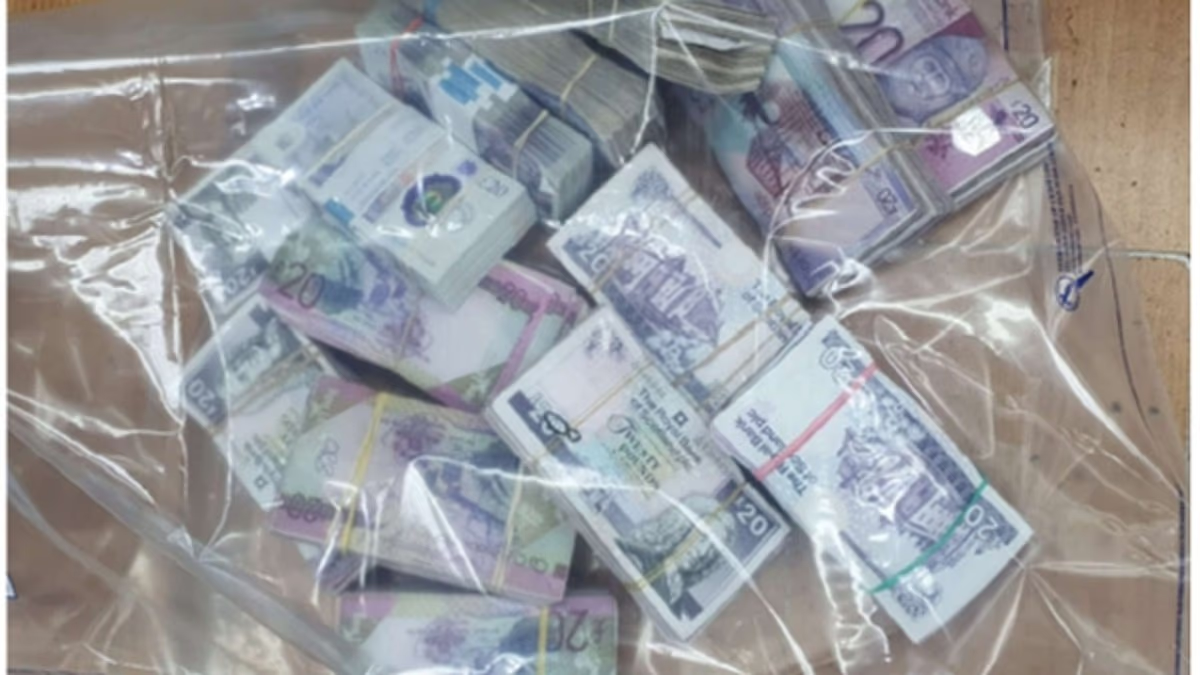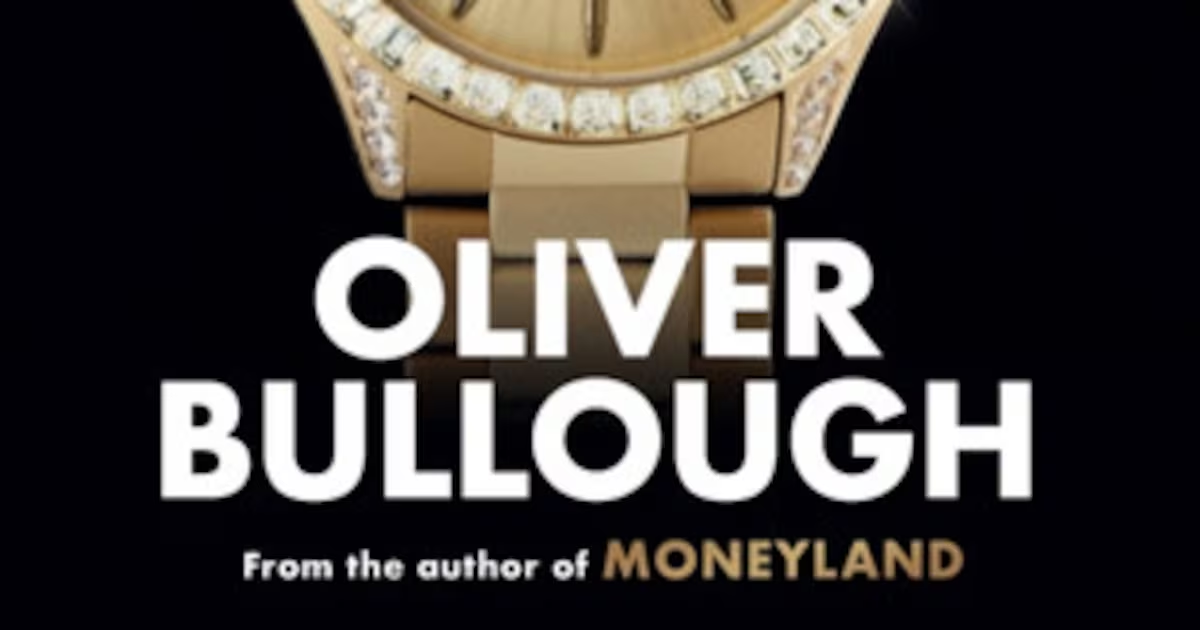
Everybody Loves Our Dollars: How Money Laundering Won by acclaimed British investigative journalist Oliver Bullough shows how people who want to keep their dodgy dealings away from the nefarious gaze of the taxman and other authorities favour the big bucks — the sort of banknotes we mere mortals could never dream of being able to accumulate.And when we do carry out high-value transactions — buying a car, booking a holiday or paying the domestic worker — we tend to use credit cards and other electronic payment methods.However, Bullough argues that cash — specifically high-denomination dollar, euro and pound banknotes — is the international currency of crime.“Why do the criminals want them?” he asks. “Because they want to buy things without suspicious [bank] compliance officers being able to notice the transaction and report it to the authorities. Drug smugglers take payment in hard currency, as do people smugglers, wildlife traffickers, kleptocrats, terrorists — anyone who wishes to evade detection.“By making it so easy for criminals to obtain banknotes, Western governments are making it profitable for them to commit crime.”That’s quite an indictment.Bullough says the reason that $100 bills are by far the most frequently printed banknotes in the US is that criminals prefer them to anything smaller.“If the largest banknote was a $50, then criminals would need to either make twice as many trips to smuggle their wealth, or risk shipping more value in each shipment; if the largest banknote was a $20, they would need to make five times as many shipments and the whole business model would fall apart,” he suggests.Money-laundering, therefore, is the support mechanism for the worst people in the world and, if we could make it harder, we’d make crime less profitable and make breaking the law less appealing— Oliver BulloughFortunately for the criminals, the presses are whirring around the clock, churning out mind-boggling quantities of high-denomination banknotes.In April 2024, the value of all the dollar bills in circulation hit a new record high of $2.345-trillion, “which is almost exactly double the total a decade earlier, and that was in turn almost exactly double the total a decade before that”.“In fact, the total value of notes in circulation, as reported by the Fed, has been doubling every decade for as long as I’ve been alive. For euros, the picture is similar.”Bullough argues that money-laundering is such a menace because it allows criminals “to hide the origin of their wealth, to spend it like anyone else and thus to enjoy the fruits of their criminal labours. It doesn’t matter what crime they commit: if they couldn’t launder the proceeds, there would be no profit in it.“Money-laundering, therefore, is the support mechanism for the worst people in the world and, if we could make it harder, we’d make crime less profitable and make breaking the law less appealing.“South America’s cartels need to launder their money, as do Nigerian kleptocrats, Afghan terrorists, American tax evaders, and pretty much any other criminals you can think of. Money-laundering is as central to the criminal economy as banks are to legitimate businesses and, since criminals only commit their crimes because they’re profitable, there would be far, far less crime without it.”There is no shortage of jargon and numerous acronyms in the anti-money-laundering lexicon, but Bullough’s skills as a journalist and his long study and understanding of his subject mean that he is skilled at conveying complex systems and ideas in a simple, immensely readable manner.The book is packed with anecdotes and examples of how mind-boggling sums of money are illicitly moved around.For instance, certain hi-tech components for the drones with which Russia is bombarding Ukraine cannot legally be traded with Russia, but they are.“Those lethal slices of silicon had been smuggled to Russia and somehow paid for, a trade that would never have happened if the payment for them could not be laundered. Thousands of Ukrainians are dead and injured, and tens of thousands are traumatised nightly because of money-laundering,” Bullough writes.It is estimated that hundreds of billions of dollars are laundered each year.Not only are banknotes favoured, but there are also elaborate schemes involving the buying and selling of container loads of cellphones, designer handbags and luxury watches.“‘I reckon the luxury watch trade is 80% money-laundering,’ a senior British police officer told me once over drinks. ‘Why wouldn’t it be? You can carry a huge, big bag of money and be very noticeable, or have the same value strapped to your wrist, and be completely anonymous,’” the author recounts.The two basic trade-related money-laundering techniques involve under- and overinvoicing — buying something for nothing, or nothing for something.US trade data has shown razor blades being imported from Panama at $29.35 each and from the Cayman Islands at $18.96, “in what looks transparently like drug profits being sent back to South America (neither Panama nor the Cayman Islands is a noted manufacturer of razor blades, and no-one in their right mind would buy blades for those prices anyway).“Similarly, someone was spending $8,911.85 to buy stainless steel sinks from Venezuela, when the same kind of sinks could be bought from Hong Kong for little more than a dollar.”Casinos are also used to launder cash and several jaw-opening examples are given in this book. Cryptocurrencies are also investigated.Bullough is scathing about existing efforts to crack down on the criminals: “The anti-money-laundering system constantly fails to stop money-laundering, so there is no point in continuing to claim that is actually its purpose, and I don’t intend to do so,” he writes.“In this book, I have tried to describe what the system does in fact do. It discriminates against the already marginalised: Muslims lose out compared to non-Muslims; poorer citizens of sanctioned states lose out compared to oligarchs; developing countries suffer more than rich ones. It is ruinously expensive — for the cost of global compliance, we could provide food and clean water to everyone on earth, with tens of billions of dollars change — and that cost is borne not by criminals, but by everyone.”He suggests that though hundreds of billions of dollars a year are spent fighting financial crime, there is “no way of measuring whether we’re succeeding or not, because we have no idea what we’re up against”.“Instead, we’re stuck not just with zombie guesstimates, but also with zombie ideas — like the idea that Muslim charities fund terrorism and must be driven out of business as a result — that not only do no good but actively harm the causes we profess to support.”This book is well worth reading — and just think of how many copies of it you could buy with that stash of $100 notes that are hidden under your mattress.
Why cash is the international currency of crime
‘Everybody Loves Our Dollars’ follows the illicit movement of enormous sums of money
1,111 words~5 min read