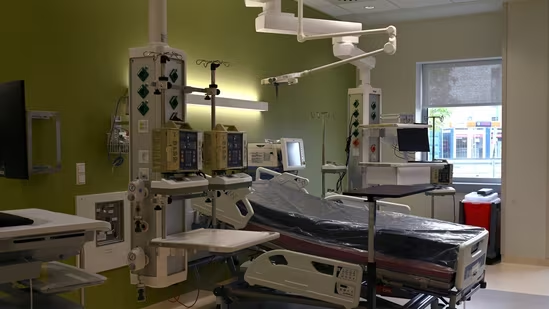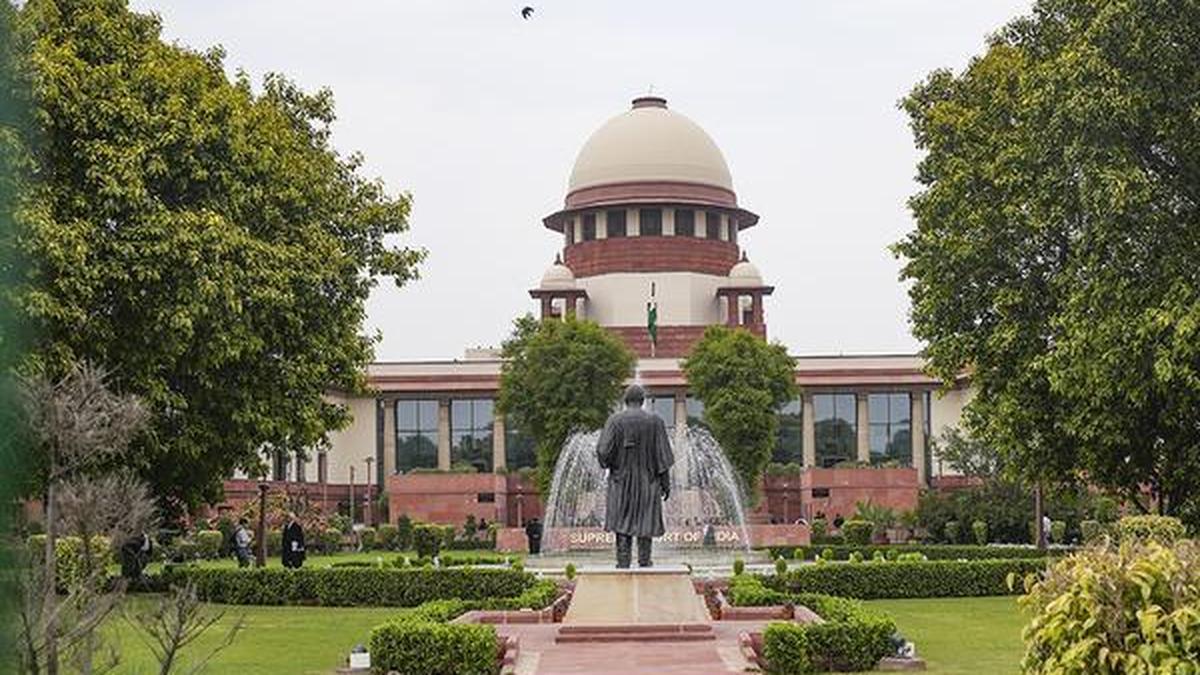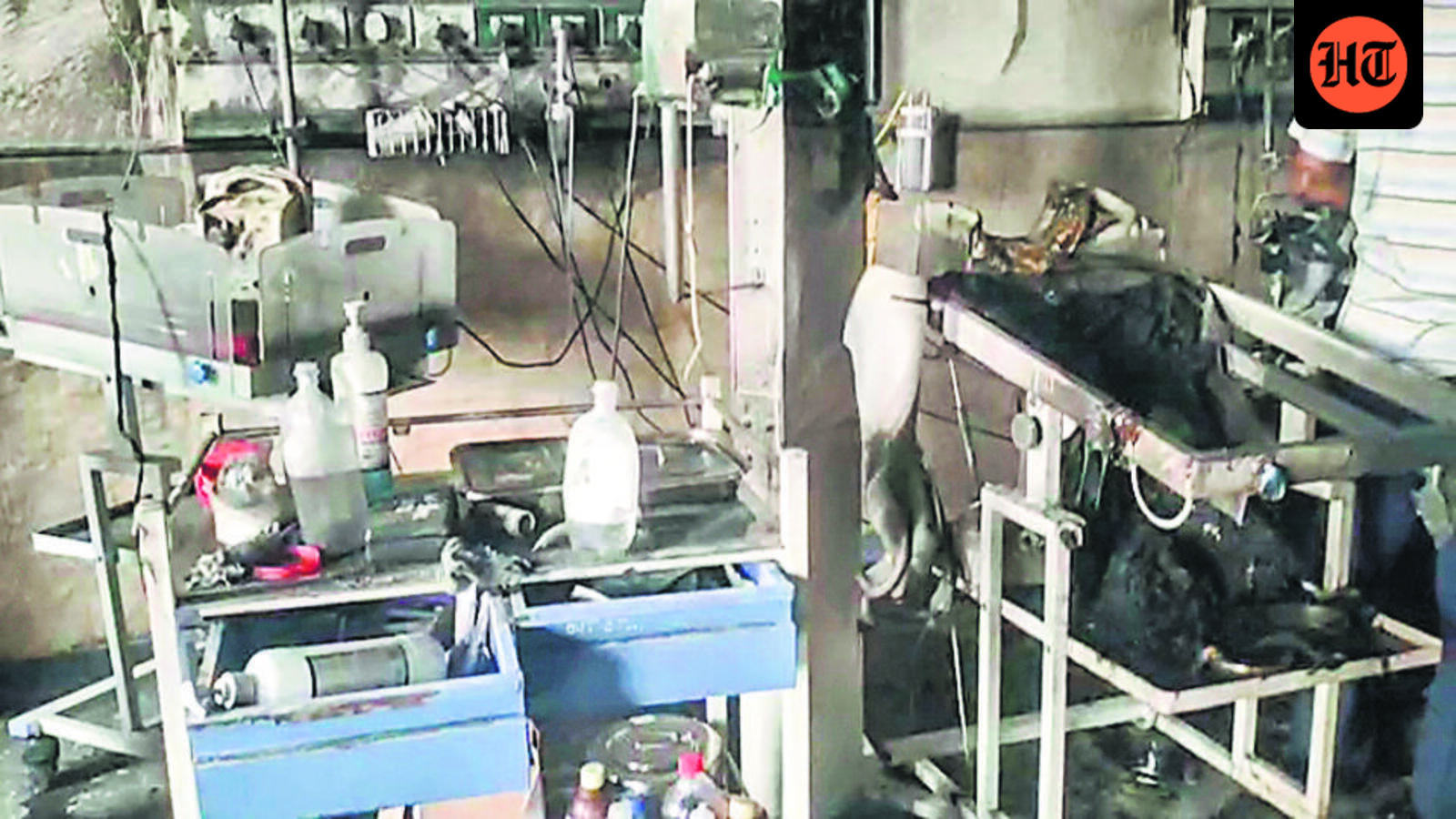
The Supreme Court on Wednesday ordered a nationwide audit of intensive care unit (ICU) facilities and gave states and Union Territories two months to assess infrastructural and manpower gaps and ascertain the equipment needed to bring critical care facilities at par with model guidelines by a court-appointed panel of experts.The court simultaneously ordered a nationwide audit of nursing colleges. (FILE/ANI)The court simultaneously ordered a nationwide audit of nursing colleges, requiring the Indian Nursing Council (INC) to submit a report on hands-on training facilities available to students across the 800 colleges under it.“States/UTs shall ensure gap assessment exercise is undertaken by them and completed in two months. Simultaneously, they will work out modalities of putting into place/implementation of the minimum standards required for having ICU in any institution, starting from Level 1 ICU,” directed the bench of justices Ahsanuddin Amanullah and R Mahadevan.The directions were passed in proceedings wherein the court is considering framing uniform (ICU) guidelines, in regard to which a draft document by a 17-member expert committee consisting mostly of doctors across fields had earlier submitted a draft document, to which states and UTs were on April 20 ordered to respond.The draft guidelines defines what a hospital ICU should provide based on parameters of personnel (qualification of doctors, nurses, paramedical staff), infrastructure (ventilator, oxygen ports, equipments) and treatment protocol which provides for three tiers of ICU —the basic level (Level 1), followed by Level 2 and Level 3, depending on the specialised care required by patients.Additional solicitor general (ASG) Aishwarya Bhati and court-appointed amicus curiae advocate Karan Bharioke, who were both being part of the expert committee, informed the court that states and UTs sought a period of six to nine months to conduct “gap analysis”, which the bench curtailed to two months.Acknowledging the high treatment costs commensurate to which patients in life-threatening situations hardly got necessary treatment, the court noted, “India is in a critical stage where population is increasing by leaps and bounds with the healthcare facilities not able to match this demand.”The court expressed shock on the INC’s submission that under prevailing rules, a nursing college can come up within a 30-kilometre radius from an attached hospital facility, and directed the Centre to revisit this provision.It ordered INC to submit a report by July 31 on all nursing colleges, the facilities provided for practical training, and the distance of the attached hospital from the college.Joining the proceedings virtually, reputed cardiologist Devi Shetty said that a large number of colleges were producing nurses who have not touched a single patient. “Ideally, the institution possessing ICU should be the place to which the nursing college should be attached and if not, then such a facility should be within a radius of 1 kilometre from the hospital,” noted the court order.Renowned hepatologist Shiv Sarin, who was also consulted by the court on framing of guidelines, recommended nationwide GPS mapping of hospitals to ensure patients in need were readily notified of the nearest hospital, specialities and available ICU tiers.The bench took the suggestion further. “The system should incorporate a way of tying up institutions in a net so that there could be communication between institutions for transfer of patients instead of leaving it to the patient’s attender to coordinate,” it said.The court also asked states and UTs to explore the possibility of having a standard module of ambulance facilities with trained people to operate it. “For the present, states/UTs may look into the possibility of providing 5 ambulances (per district) with a ventilator facility to be kept ready for transporting people in need of special care to centres where the same is available,” it said, adding that an arrangement could be worked out through non-government sources by way of corporate social responsibility (CSR) funds or NGOs or voluntary contributions, provided it was maintained under a separate account.The court asked the states/UTs, the INC and the National Commission for Allied and Healthcare Professionals to submit their responses to the directions by July 31. The committee was granted two weeks to examine the same and make any changes. The matter was listed for hearing on August 13.The petition concerned a case of medical negligence emanating from the national consumer court. The case before the consumer court was filed by Asit Baran Mondal, who sought compensation for the death of his wife in a Kolkata hospital in 2013. In the course of proceedings, the Centre informed the court about Model ICU/CCU guidelines prepared by the Union Health Ministry in 2023.
Audit ICU facilities across country: Supreme Court
The Supreme Court ordered a nationwide audit of ICU facilities and nursing colleges, mandating assessments within two months to improve critical care standards. | India News
747 words~3 min read