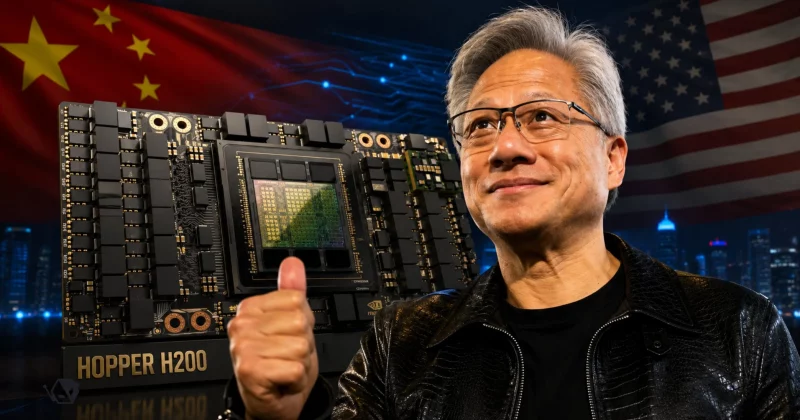
Nvidia has not generated any revenue from H200 chip sales to China and remains uncertain whether the product will be allowed into the country, the US chip giant said on Wednesday, underscoring how geopolitics continues to cloud its access to one of the world’s largest AI markets even as global demand for its data centre processors surged to a record high.While Washington has approved licences for H200 shipments to China-based customers, Colette Kress, Nvidia’s executive vice-president and chief financial officer, said on a post-earnings call it had “yet to generate any revenue, and we are uncertain whether any imports will be allowed into the country”.Consistent with the previous quarter, Nvidia did not include any China data centre compute revenue in its outlook for the current quarter.The comments came after Nvidia CEO Jensen Huang joined US President Donald Trump on a recent visit to China. Trump later said that Beijing had not approved purchases of the H200, despite US clearance. That highlights the increasingly complex position facing Nvidia, which remains the world’s dominant supplier of advanced artificial intelligence chips but has been caught between United States’ export controls and China’s push to strengthen domestic semiconductor alternatives.Nvidia’s financial performance nevertheless beat expectations. The Santa Clara-based company reported revenue of US$81.6 billion for the quarter ended April 26, up 85 per cent from a year earlier and a 20 per cent increase from the previous quarter. Non-GAAP profit rose to US$1.87 a share, above the US$1.77 expected by analysts, while revenue also exceeded the market estimate of US$79.2 billion reported by Bloomberg. GAAP refers to America’s generally accepted accounting principles, which can occasionally include non-operational financial distortions.Data centre revenue reached a record US$75.2 billion, up 92 per cent year on year, driven by the ramp-up of Blackwell GB300 products and demand for InfiniBand, Spectrum-X Ethernet and NVLink solutions. Under Nvidia’s new reporting framework, hyperscale customers accounted for US$37.9 billion, roughly half of data centre revenue, while AI clouds, industrial, enterprise contributed US$37.4 billion.Huang said the company’s growth was no longer tied to a handful of hyperscale cloud providers, thanks to the emergence of a “second category” of AI infrastructure customers, including AI-native clouds, enterprises, industrial companies and sovereign AI projects. He said that market was more fragmented but was growing rapidly as companies built purpose-built AI factories outside public clouds.
Nvidia’s H200 sales prospects in China remain uncertain despite Huang visit
US chip giant reports 85% year-on-year rise in quarterly revenue amid surge in AI demand, but no revenue from H200 sales in China.
387 words~2 min read