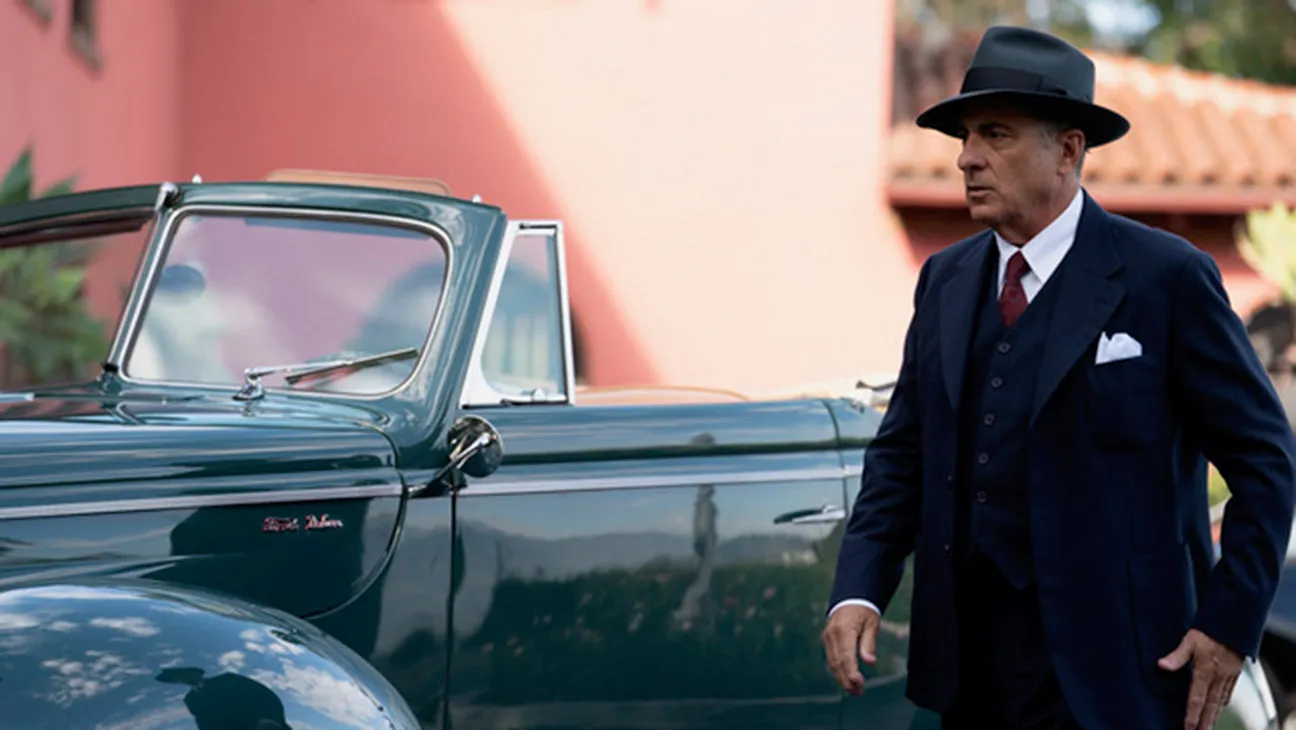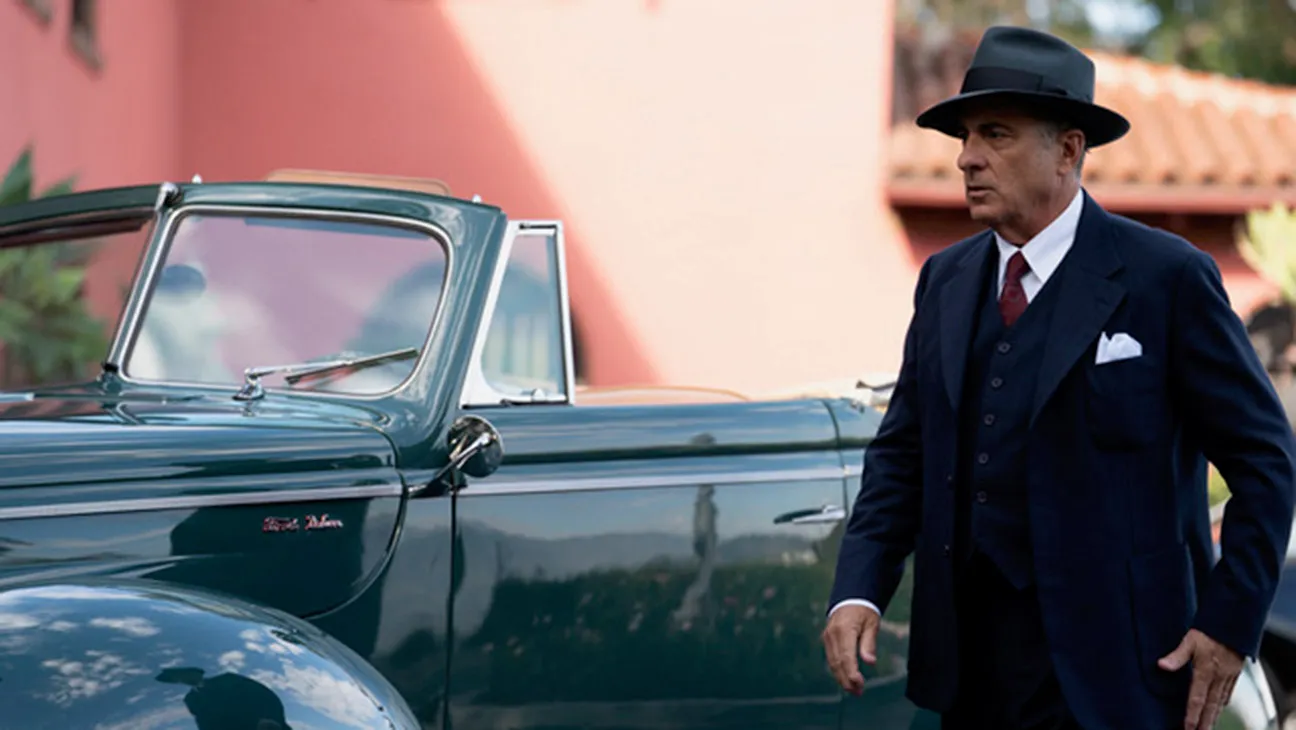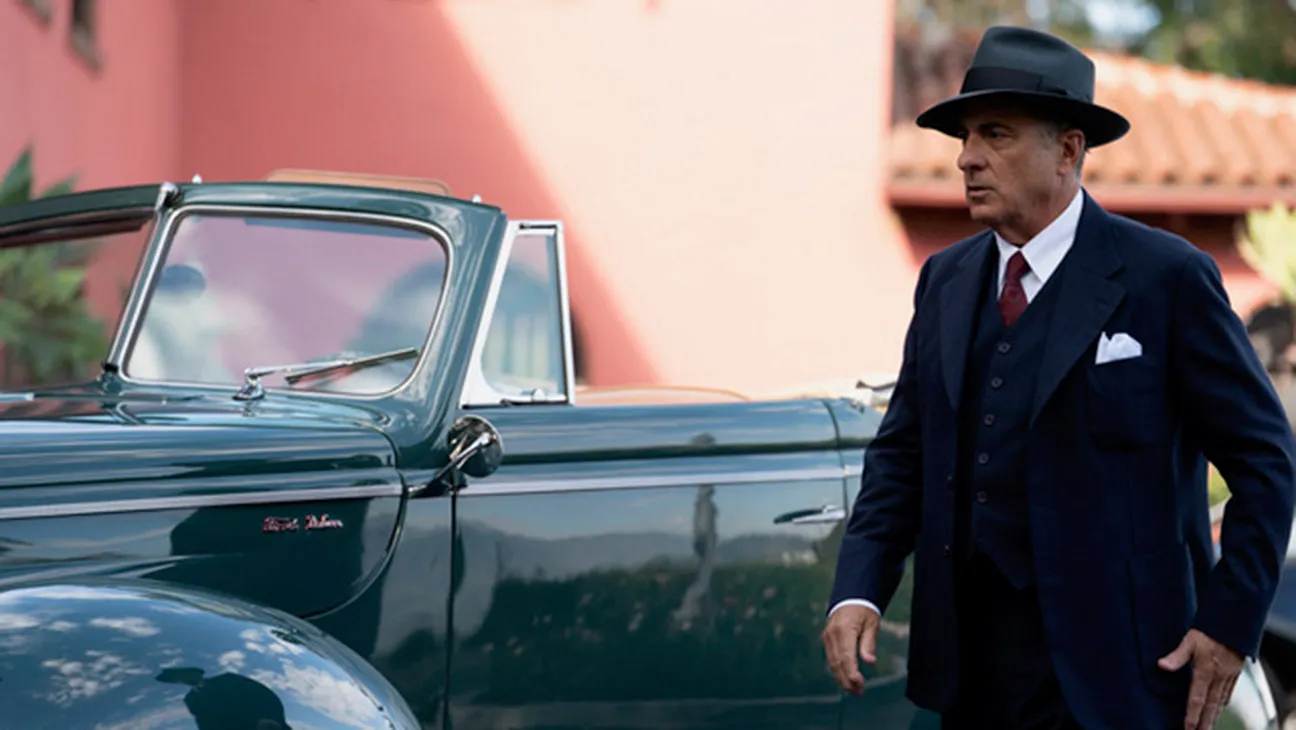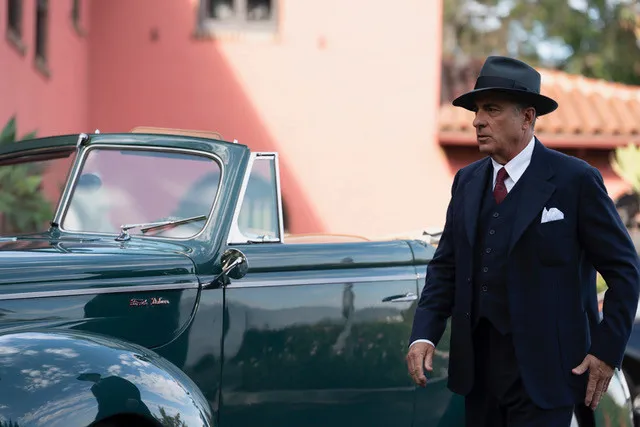
In the opening scene of “Diamond,” we watch Andy Garcia, as a Los Angeles detective who looks like he stepped out of a Hollywood movie from the ’40s, put on his private-eye regalia — the three-piece suit, the pocket handkerchief he carefully irons, the fedora — and then grab his money clip from a tray of artifacts before he goes out. The movie, with its period trappings and mournful jazz soundtrack, appears to be priming us for some old-fashioned moody film-noir fun. But then Garcia’s detective, terse and fastidious, introducing himself as “Diamond, Joe Diamond,” steps out into the streets of L.A., and the first thing to confront him is a police car that’s right out of the 21st century. So are the streets, the skyscrapers, the restaurants. They’re all Los Angeles today. So what’s this relic of a detective doing smack in the middle of it?
For a while, “Diamond” almost looks like a surrealist comedy, as Joe tools around the city in his vintage green 1940s Ford DeLuxe convertible, having encounters with people who are totally contemporary, while he himself remains a pure piece of period pulp. “The Long Goodbye,” Robert Altman’s funny and dazed 1973 riff on the Hollywood detective mystique, featured a Philip Marlowe — played by a sleepy-eyed, shambling Elliott Gould — who was a gumshoe out of water, only the movie presented him as an L.A. eccentric, lost in his movie-fed dreams. “Diamond,” by contrast, looks like it could be a Woody Allen fantasy comedy like “Midnight in Paris,” with a hero who’s literally a man out of time.