Introduction
AI applications often look small from the outside. A Node.js service calls a model, connects to a few tools, stores some state, and returns a response. The codebase may be much smaller than a traditional enterprise application.
The security surface is not small.
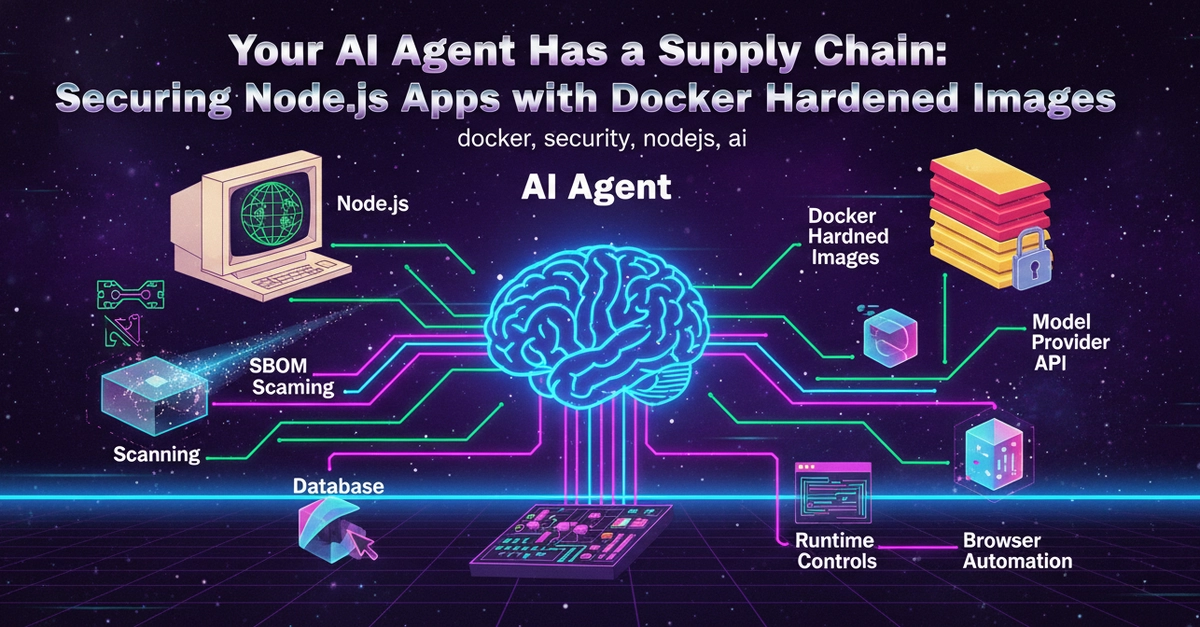
A modern Node.js AI app may use model provider APIs, MCP servers, browser automation, Redis or Postgres, private npm packages, GitHub tokens, internal APIs, and local files. An agent may read repository code, open a browser, inspect logs, summarize customer data, or call tools that perform real actions. That means the container running the app is not just serving HTTP traffic. It is sitting near credentials, tools, data, and execution paths.
This is why the Docker image matters. The base image, dependency install process, runtime user, filesystem permissions, SBOM, vulnerability scanning, and secret handling are all part of the AI application architecture.