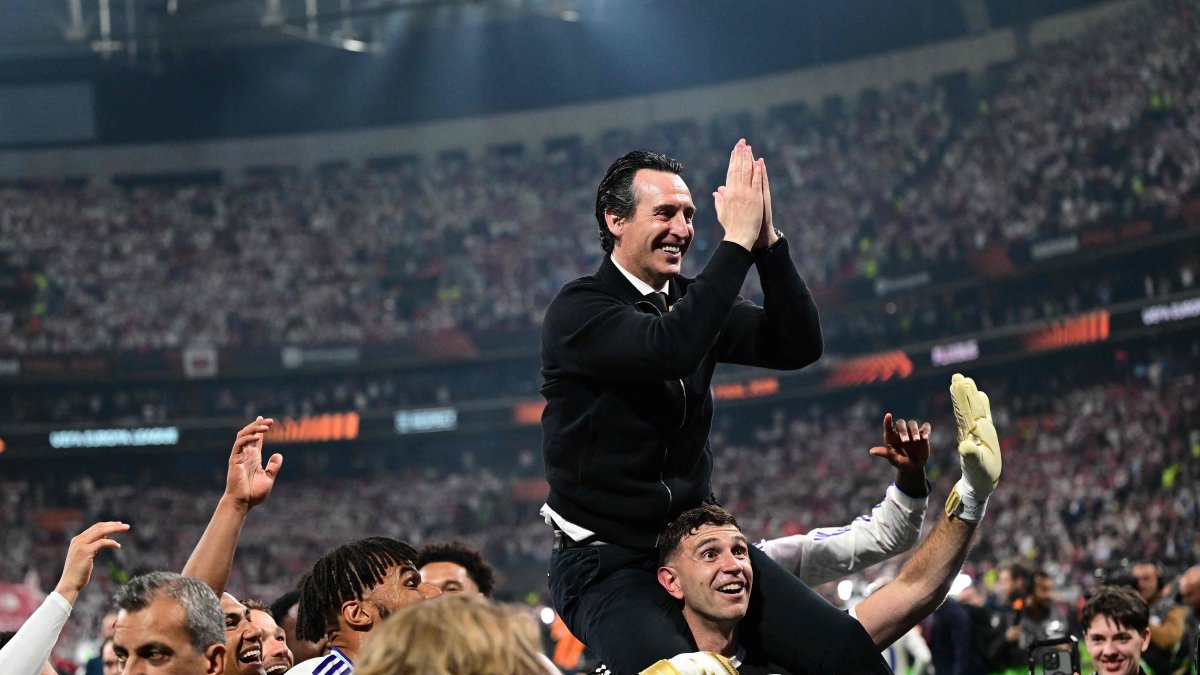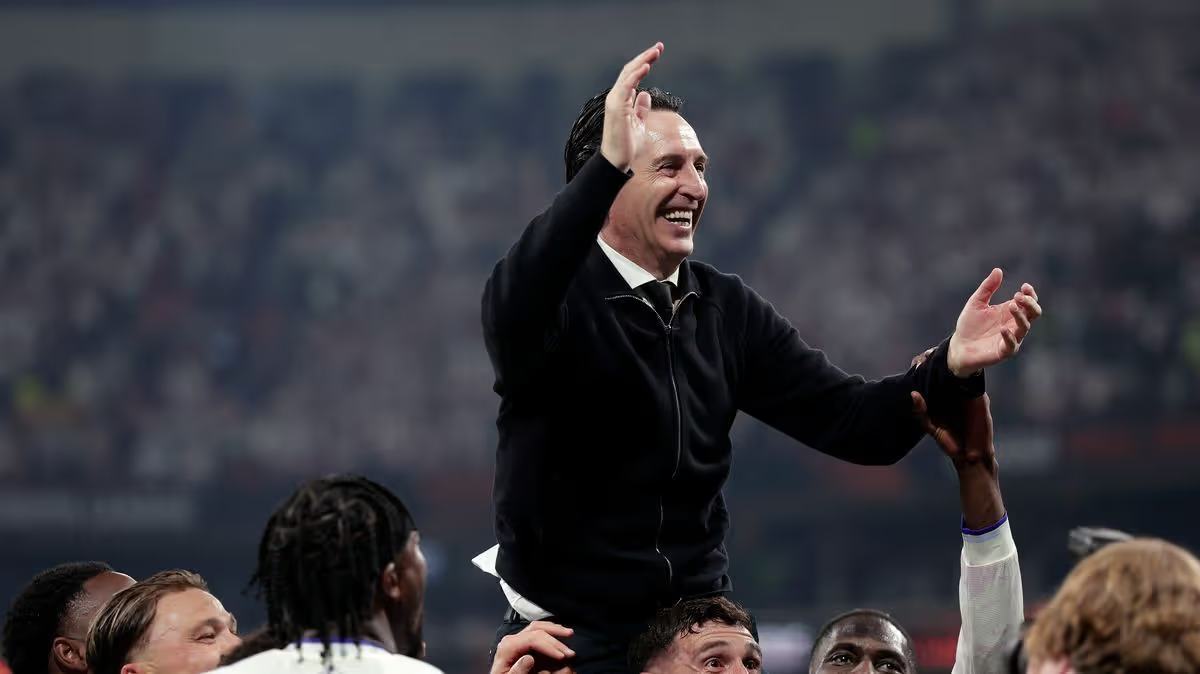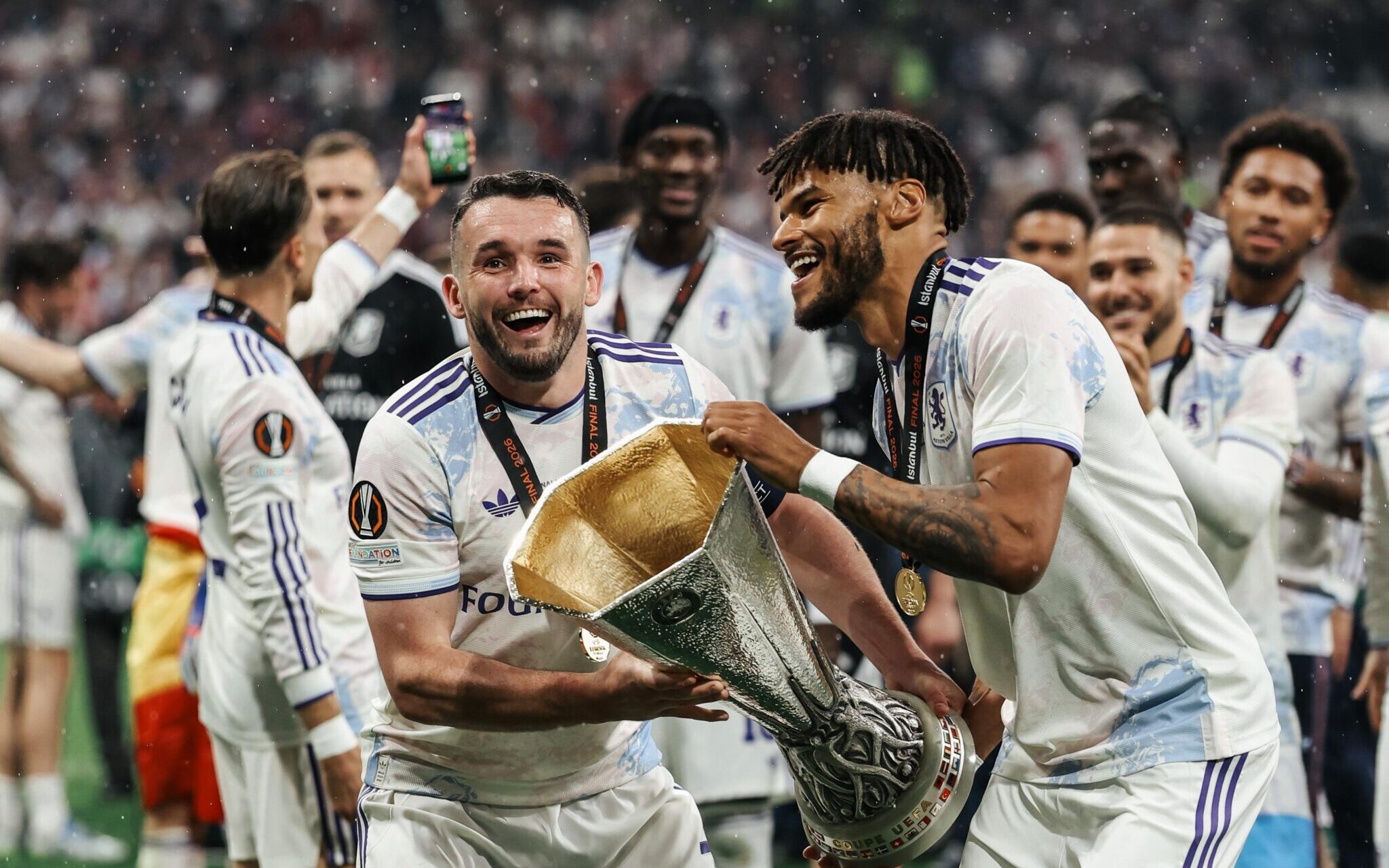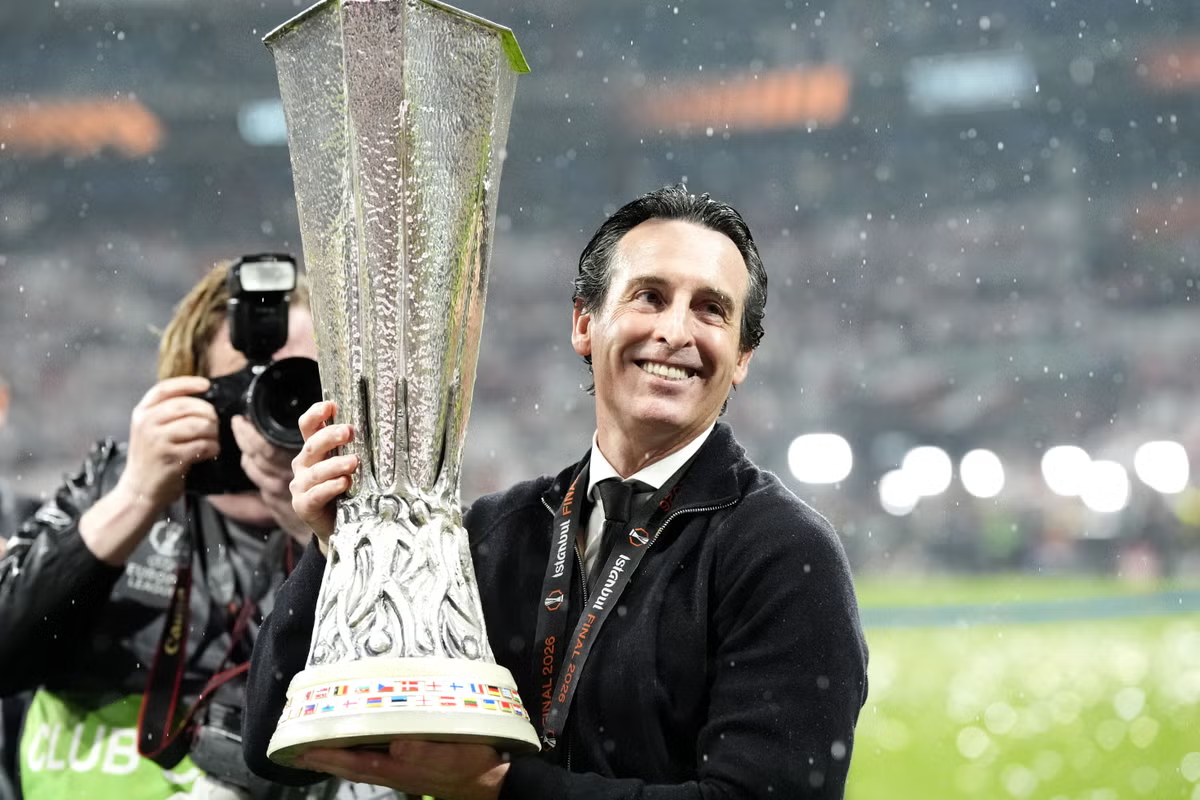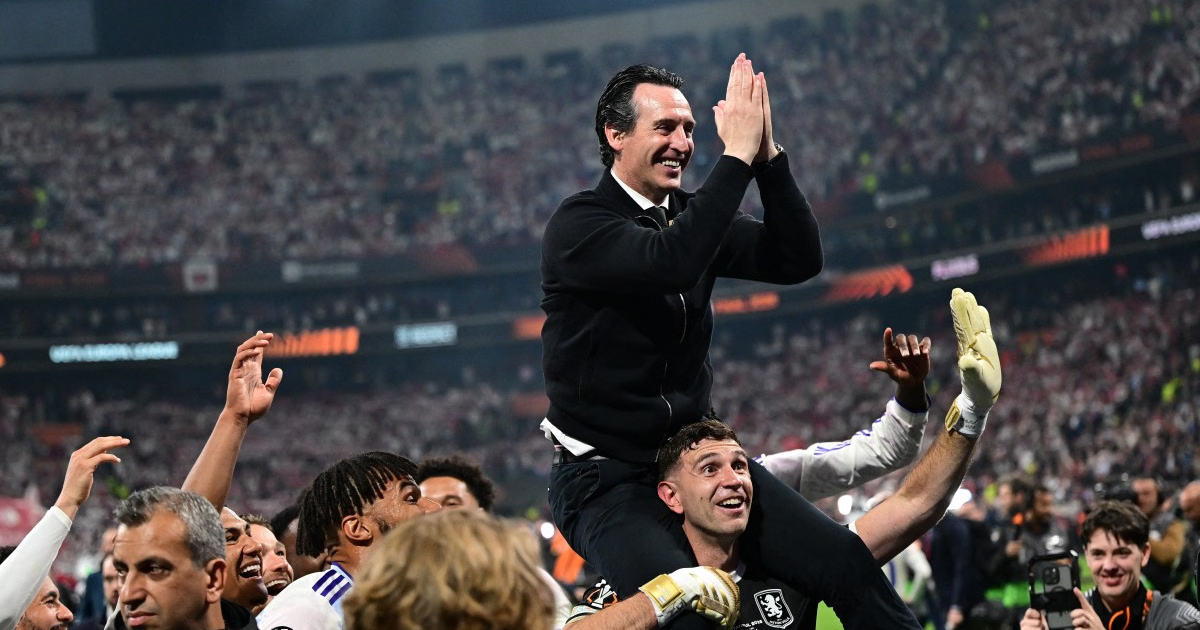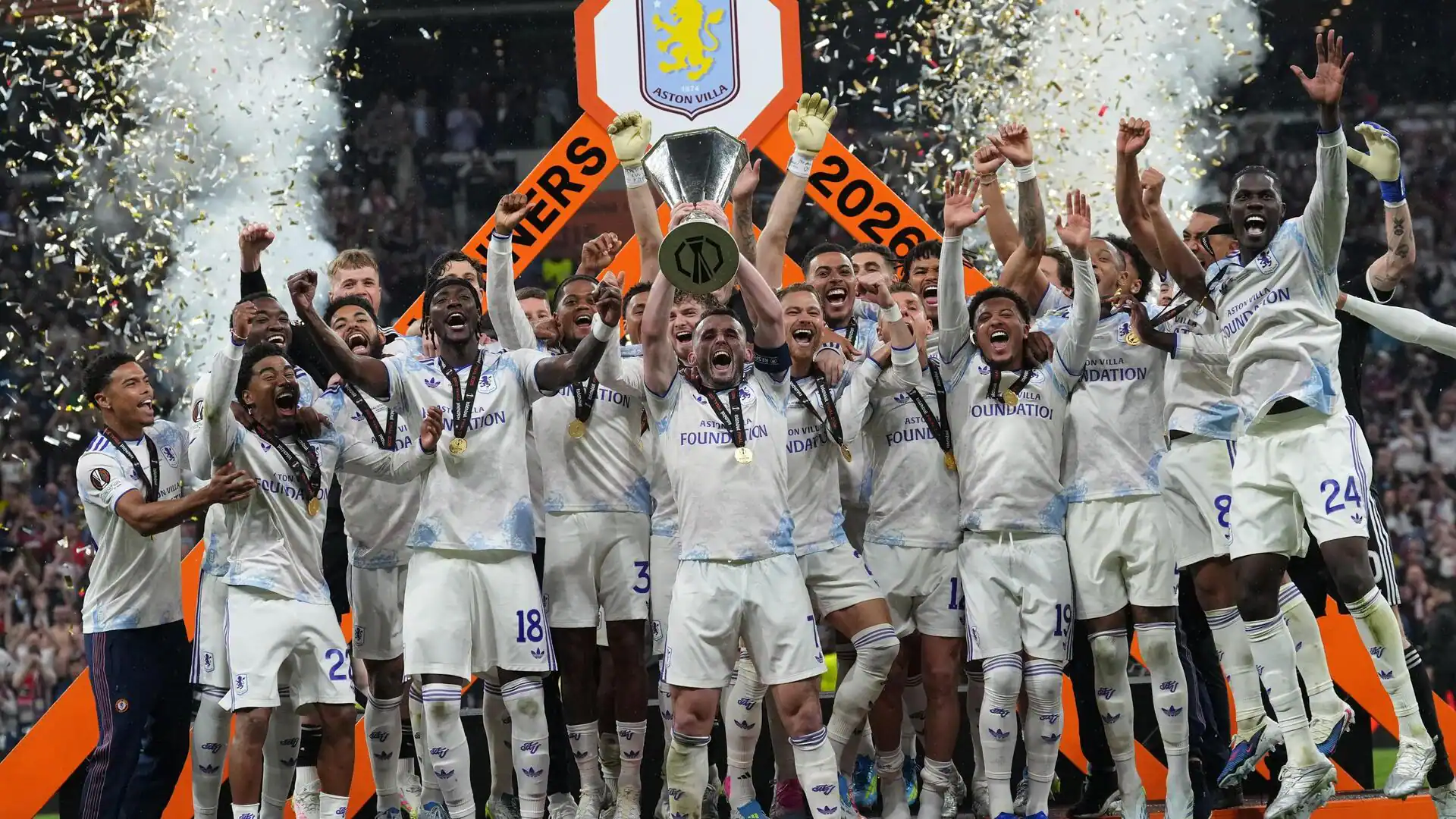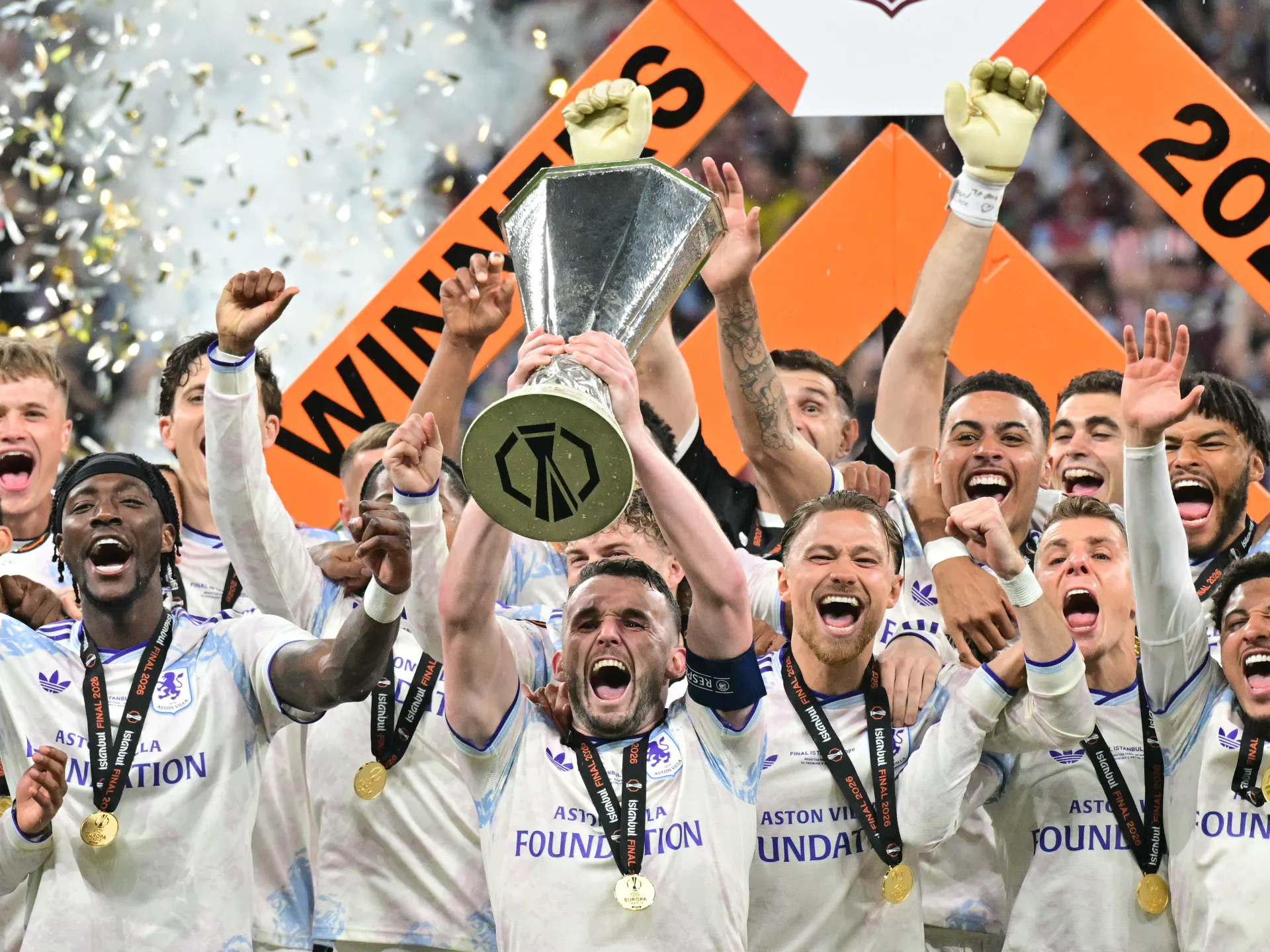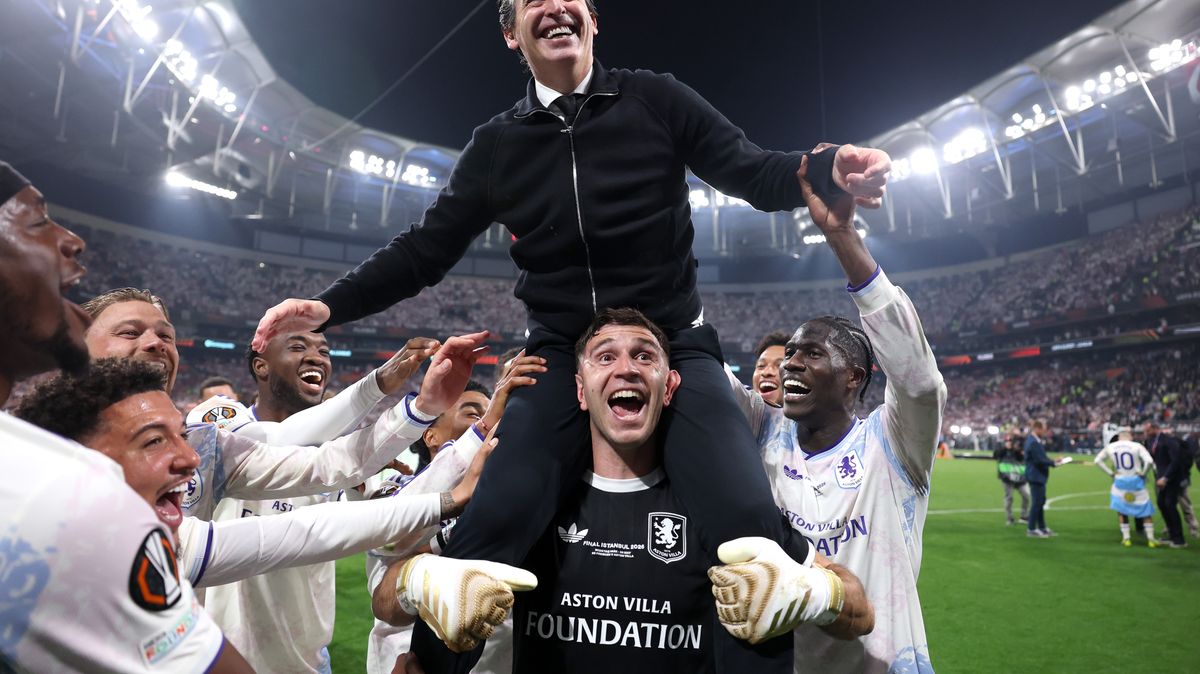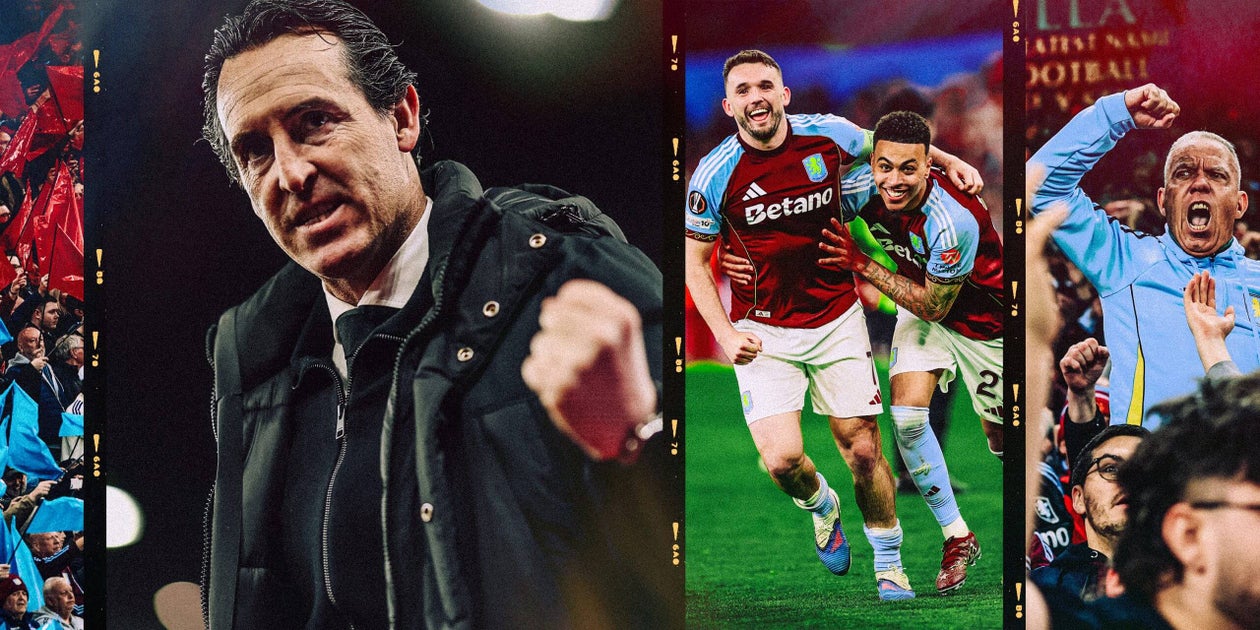
The peak reached, the mountain climbed. Aston Villa bathed in euphoria in Istanbul. It was glorious.Captain John McGinn and manager Unai Emery are legends immortalised into club folklore with the Europa League secured in Besiktas Park after victory over Freiburg.The Villa supporters, far more than the 11,000 allocation — and who partied in the heavy rain earlier in the day — serenaded nearly every player and coach. Villa are crowned Europa League champions, winning their first major trophy in three decades and their first European trophy in 44 years.Having attained a Champions League uplift, the players now, as stipulated in their contracts, have another bonus to enjoy for winning the Europa League. Club workers, who received a five per cent pay rise after Villa last qualified for the Champions League, hoped for something similar.A master of the competition, this is Emery’s fifth Europa League title and a fitting reward for Villa’s transformation under him. In three and a half years, Emery has elevated a team outside the Premier League relegation zone on goal difference to playing three straight years in European competitions and, now, a champion in Europe.An open-top bus parade, tentatively planned in 2024 for the day after the Conference League final, only for Villa to crash out in the semi-final, will take place on Thursday in Birmingham.This has been the most tumultuous season of any other under Emery, too. Defender Ezri Konsa aptly described it as a “rollercoaster”, enduring the lowest lows in his tenure and now, after a win against Freiburg, the highest of highs.“This was like the ending of Mission Impossible,” said a senior club source, who, like others in this piece, spoke on the condition of anonymity. “Many twists against us, but we made it.”“Unai Emery, mate… genius,” said a first-team staff member, in response to The Athletic asking how Villa recovered from the many setbacks this season. This is the story of how Villa and Emery achieved immortality for those in claret and blue.Rewind to September 2025, and Villa were heading for a full-blown crisis. Three points taken from the opening five league games, having scored for the first time in the most recent match against Sunderland. Until then, they were the only team in England’s top seven divisions without a goal.That had come courtesy of Matty Cash in a 1-1 draw away to a Sunderland side who had 10 men for more than an hour. Emery was so furious at full time that, briefly, it was suggested he was not going to attend his post-match press conference. When he did, he accused players of being “lazy” — a comment which did not go down well.He feared a season where he would be looking down the table and told his players, post-Sunderland, that he was genuinely worried. It was felt by friends of Emery’s, not at Villa, that the squad would be overachieving if they finished in a European position again, with the actual level being, without him, somewhere between 8th and 12th.Villa were dysfunctional, reeling from an austere summer. The tone of the visit to Sunderland was set before kick-off, when the team coach arrived at the stadium more than half an hour late — after Emery’s final pre-match meeting overran.Unai Emery did not hold back his anger at Sunderland in September (Neville Williams/Aston Villa FC via Getty Images)The Spaniard, who has a contract that runs until 2029 with no termination clause, alters schedules at late notice. Such is his power, he is even known to change the flight times for Villa’s European matches.Training remained long and players had few days off. There was a feeling that those around him were tiring, with the constant dedication required — arriving at the training ground early, working late and essentially being on Emery time — having an effect.Some players stated pre-season was overly taxing. There were too many games set in five different countries, including playing away in Marseille on one Saturday before travelling to Spain to play Villarreal the following day. It should be noted there were similar complaints a year earlier, but with the latest financial sanctions Villa were experiencing, limiting activity in the transfer market and the squad’s nucleus getting another year older, the risk of stagnancy was at the back of minds.The 54-year-old uses travel apps to help dictate what time he thinks Villa should leave for a match. At Sunderland, he underestimated the traffic on the way. Sunderland was just one example of the usually stable environment Emery had created now on shakier ground.This was an ageing squad, many of whose futures were uncertain. Several players were open, not necessarily pushing, to an exit in the summer.Morgan Rogers, considered by those close to Emery as Villa’s best player, received strong interest but knew he was the one player the club were insistent on keeping. Emery spoke with Rogers, asking him to stay another year, with the 23-year-old happily accepting. There were no major issues in the dressing room, but players were frustrated with the lack of recruitment and Jacob Ramsey, a popular homegrown member of the team, joining Newcastle United, did not go down well.Several representatives of players and staff who have worked with Emery suggested a growing sense that he would leave if Villa did not qualify for the Champions League this season. Sources at other clubs, including some who have worked with Emery previously, routinely pondered his future, irrespective of success. Emery’s future has been brought up repeatedly, but the topic was a particular talking point in the early months of the season.“Unai has been in Europe constantly for 18 years,” said one source. “He won’t want to be at Villa if they aren’t in Europe — he buzzes off it.”However, doubts over Emery’s future were disputed by other sources, arguing that he held a level of autonomy at Villa and a high volume of staff unlikely to be found elsewhere. Most importantly, Emery remained happy and appreciative of the environment he had been allowed to create.Emery, among the highest-paid managers in the Premier League, has around 15 Spanish staff on the football side — having added a physio last summer — which left the biggest question as to how, and if, he left. Sources at other clubs have discussed the idea of hiring Emery, such as Manchester United, but were reluctant to authorise so many of his staff to come with him.Previous and current staff who have worked intimately with Emery can say very little about his personal life. He is an affable, well-mannered individual, but does not tend to socialise, other than with his closest coaches, director of football Damian Vidagany, sporting director Roberto Olabe, and chief scout Alberto Benito. This sense of introspection and seriousness is exacerbated when form dips.“No one knows much about Emery”, said one staff member.Physical and mental burnout was at risk of taking hold. Villa looked exhausted and it was only September.The “negative atmosphere”, as Emery would later describe, started on the final day of the previous campaign at Old Trafford, where Villa missed out on Champions League qualification on goal difference. Emery’s thousand-yard stare at the full-time whistle captured the mood of the summer.Senior figures were glum in the weeks after. There remained a feeling of acute disappointment, regret and injustice. Villa “did not turn up,” as Ollie Watkins would reflect after, while the sense of regret lingered on Emiliano Martinez’s sending off in the first half.The injustice aspect was aimed towards referee Thomas Bramall for blowing the whistle prematurely before Rogers rolling the ball into the net, which would have stood had play been allowed to continue. Villa were unhappy at United, who, during the build-up, were trying to recruit their club doctor, who had a connection to then-head coach Ruben Amorim.Emery was incensed with Thomas Bramall at Old Trafford last May (Darren Staples/AFP via Getty Images)Senior figures were enraged by the performance and refereeing decisions. Co-owner Nassef Sawiris went into the dressing room after, while the club quickly put a statement on social media, expressing their frustration towards Bramall and said they would write to PGMOL technical director Howard Webb.Then-sporting director, Monchi, later received a response from Webb, explaining the reasons behind Bramall’s appointment for the match, though expressing sympathy for the incorrect decision. It did little to lift spirits.Missing out on Champions League football left a £70million black hole in the finances. Qualifying for the Europa League meant life became even more difficult, having to adhere to UEFA’s football earnings rule and squad cost rules. There is a sentiment echoed by club executives that the various sanctions are designed to maintain the power of the footballing establishment and put upwardly mobile clubs, like Villa, at a disadvantage.This contributed to a summer where Villa had the lowest net spend of any Premier League club and a slapdash final deadline day. Victor Lindelof, who was heading to Everton, joined late on, plus loans for Harvey Elliott and Jadon Sancho, both of which provoked disagreement among employees. Emery did not want Elliott, having been offered him earlier in the summer, nor Sancho. Monchi, who would advance deals for players only for Emery to veto them, paid the price and would leave the following month.“The financial stuff is difficult, because when you qualify for the Champions League and Europa League, you need to boost your squad, and you need players to rotate,” said full-back Cash to reporters at the weekend.“It’s unfair, isn’t it? You work so hard as a club, and the owners will want to strengthen, but they can’t.”Then there was Martinez, a vocal leader — even if his ego can sometimes rub people the wrong way. Martinez wanted to leave and made it clear to anyone who would listen. He told team-mates he was joining a top European club, which did not help the increased sense that Villa were on the decline. Martinez spent deadline day at Bodymoor, waiting for a call about a transfer to United that never came.Even with the feeling that players and staff were tiring, plus frustrations over logistical management, no one doubted Emery the manager. He was still seen as the best coach to guide the squad through.“Everyone here was a bit worried,” said Pau Torres to reporters. “The club couldn’t sign a lot of players. Most were on loan or coming back from loans. We said, ‘OK, we are with the players we have, now we need to push in every session.’ It was a really good mentality change.”The uncertainty halted at the end of the window. Several sources said Villa’s first two Europa League games against Bologna and Feyenoord — one trip Emery changed the flight time of — were much needed. They offered a break away from the Premier League and a chance to restore confidence. Wins meant goals and a growing belief in ailing attacking players.“It was more about belief in our qualities, knowing we could do better,” Youri Tielemans told The Athletic. “We have a lot of good players, and we knew that once it clicked, we’d be gone. The Europa League kick-started our season.“We didn’t doubt ourselves. There were concerns about our form, which we didn’t hide from, but it was more about putting in the work, keeping doing what we do, and going back to the basics.”The turnaround was stark, yet nothing majorly changed. The leading message was to double down on the principles and mentality which had brought success.Villa hit their stride emphatically, with every win vindicating Emery’s message. Goals started to go in from all angles, and with more from outside the box than any other team in the league, they defied underlying metrics.Between November 6 and December 6, Villa won seven straight matches in all competitions. The seventh victory of that run was a last-minute 2-1 win at home to Arsenal. Afterwards, one player told The Athletic this was the moment where he felt the race for Champions League qualification was on.Emi Buendia’s last-gasp winner against Arsenal sparked wild scenes (Alex Pantling/Getty Images)“Bouba (Kamara) is very good, (John) McGinn is very good! Unai is very good!” said one first-team source.“Throughout that time, we never really changed anything,” reflected Tyrone Mings in a press conference. “I know it sounds strange, but we were always reiterating that hard work and togetherness were always how we achieved everything.”Villa went on to register 11 straight wins, which defined their season. After Christmas, they were 12 points ahead of United in sixth place.“With the circumstances we had in the summer, we couldn’t spend a lot of money, so to do the job he’s done is unbelievable,” Cash said to reporters.“When we went through a little dip, and I’ve seen some things on Twitter about, ‘Unai’s time is up now’, but then we come again,” Ross Barkley told The Athletic. “Then all the fans and people are like, ‘wow’ because he is one of the best managers in the world. Unai is a consistent manager; he’s always pushing.”Villa have managed to achieve two key objectives, despite discernible cracks in the team. The lack of recruitment indicated a quality deficit in forward areas — club sources admitted they were overly reliant on Watkins and Rogers — with squad depth a concern.The fluctuating season changed course once more. Between October and the end of January, Villa won more games than any other side. In the next 19 matches after the final win of the 11-game run — a 2-1 victory at Stamford Bridge — Villa collected just 23 points, and were 14th in the form table in that period. This coincided with a triple-injury blow to the midfield. Kamara, Tielemans and McGinn were ruled out within three weeks in January.Kamara’s knee injury, which would keep him out for the remainder of the campaign, was sustained away to Tottenham Hotspur in the third round of the FA Cup. At the time, Villa were third in the league, level on points with Manchester City and six behind Arsenal.Kamara boasted the best points-per-game record of any Premier League player this season (2.33). Several close observers believe he is Emery’s best and most important player.Following the 1-1 draw with Leeds United in February, one player admitted his relief in Chelsea drawing against Burnley and missing the chance to move within three points of Villa in fourth place.“Thank f*** for Burnley,” he said.Villa then lost to bottom-of-the-table Wolverhampton Wanderers. Vidagany described the atmosphere in the dressing room as akin to “a funeral”.Boubacar Kamara has been injured since January (Oli Scarff / AFP via Getty Images)“Our success is creating the pressure,” said one senior figure. Preliminary talks over new contracts for players could not be formally agreed until after June 30, at the end of the financial year and once Villa knew if they were in the Champions League. Four days later after Wolves, Villa were demolished 4-1 at home by Liam Rosenior’s Chelsea.Those connected to the dressing room spoke of Villa’s lightweight nature and how much the strategy centred on Rogers. One player confided in Chelsea being the first time under Emery when they were unsure of the game plan. The Spaniard shared frank words with some of the senior players post-match. When Villa dipped, so too did others around them, namely Chelsea.Away from matchdays, Emery allows the dressing room to police itself. He has never fined a player for indiscretions since arriving. Despite his demanding nature, he does not tend to mind what a player does off the pitch, as long as they are performing on it. Nonetheless, without those three midfielders routinely in the changing room, all leading professionals, standards sporadically slipped, with others, who had struggled for consistent starts and were not convincing Emery in training, late on occasion.Yet for the large majority of players, as would be vindicated in Istanbul, they viewed Emery’s loyalty as a strength.“What I find special, different from other managers, is that he doesn’t listen to the outside noise,” said Tielemans. “Let’s say you have a bad game, he’s going to be there to support you. When you’ve proven to him that he can trust you, he’s not going to let you down if you don’t let him down.“It’s a special bond he creates with the players that prove to him they are worthy of playing. Once you’ve got that, and then he’s going to give you the world.”In the meantime, Emery was expertly dealing with the Europa League. His controlled approach helped Villa conserve energy, while qualifying second in the league phase enabled him to adopt his customary approach of keeping the first leg tight away from home before opening up in the second leg. This was shown in the knockout matches against Lille and Bologna.The first significant stumble, though, came at Nottingham Forest in the semi-final, losing 1-0.Sandwiching the two legs was Tottenham Hotspur’s visit. Villa were booed off, having lost 2-1, but more so due to the lifeless display, which cranked up the anxiety for the return tie.“Fans get used to the ‘new normal’ very quickly, so a trophy is what’s needed now to re-energise them again — which is a wild thing to say,” said one senior figure at another Premier League club. “Unai has been there before so many times that I back him to come through once again.”If Emery were ever to leave, there is an admission from several sources that Villa would likely be backpedalling around mid-table once more. “Never write this manager off,” said a club source following Forest.John McGinn scored twice as Villa swept aside Forest in the second leg of the Europa League semi-final (Carl Recine/Getty Images)“We are inside an amazing moment in a season,” explained a senior figure. “It (the Forest home leg) is either viewed as a threat or opportunity… I prefer the second one.”As it transpired, Villa players delivered their best performance of the season, blowing Forest away to win 4-1 on aggregate.“He’s an elite manager, we’re lucky to have him,” said one recruitment figure. “The rest (against Tottenham) probably played a factor into the squad having so much energy,” added one player, not involved in the match. “When it’s a knockout game, the adrenaline is different. It was a top performance and Unai was just being the tactical genius, as always.”Excitement was now palpable among players. Admittedly, many were exhausted at the tail end of a long season, but there was an insistence that they had more than enough for two more big efforts, starting with Liverpool’s visit.“I think it’s been a good season, but if we don’t finish it off now with these three games,” a key player told The Athletic before Liverpool. “It can easily go down as not a very good season, so we’ve got to do the job.”Villa secured Champions League qualification after hammering Arne Slot’s side 4-2 on Friday.Celebrations were minimal as a team meeting was organised for 11am the next day. Emery is a stickler for detail, but players accepted that more important games require even more scrupulous preparation. The theme of the meeting was that the league’s key objective had been met. All eyes were now on Freiburg.The discussion was relatively light, centring on Freiburg’s man-to-man structure. More detailed analysis sessions took place on Monday morning, before Villa flew to Istanbul later that day. “I reckon we’ll watch the Forest second leg first,” Cash told The Athletic. “We haven’t watched that one yet. That’ll be a good hour and a half, then we’ll watch Freiburg, which will probably be two hours. We will then do two or three analysis sessions as well as, for me, individual analysis with the defensive coach.”Villas chefs and other staff flew out on Sunday, settling into the Hilton Hotel where the players were going to stay. If they looked out of their windows, Besiktas Park could be seen.Torres and Cash noted confidently that Villa are good against teams who set up man-to-man, with Emery tending to use a 4-2-2-2 shape, deploying Rogers and Watkins up front and Martinez bypassing any press by kicking long. The goalkeeper did just that from the outset, with Villa dangerous whenever they went direct and used Emery’s customary box midfield to pick up the second balls.Generally, though, the final perfectly encapsulated Emery’s teams doing what they do best: doing the fundamentals well, a penchant for the sublime goal and as demonstrated in the set-piece routine for Tielemans’ volley, leaning on meticulous analysis to nail the small details.In doing so, Emery and his team became legends. Villa gave Emery “the keys to the castle” and he, along with his many staff, turned it golden.
Inside Aston Villa’s Europa League success: From dysfunction to the defining moment of the Unai Emery era
It has been the most tumultuous season of Unai Emery's tenure - and one that has ended in European success. This is how it unfolded
3,425 words~16 min read