Originally published on AIdeazz — cross-posted here with canonical link.
When I started taking fractional CTO engagements alongside building AIdeazz, I learned that most AI startups need radically different technical leadership than traditional software companies. The difference isn't just about understanding transformers or prompt engineering — it's about navigating a landscape where your entire architecture can become obsolete in three months, where a single vendor decision can lock you into unsustainable unit economics, and where the gap between demo and production can kill your startup.
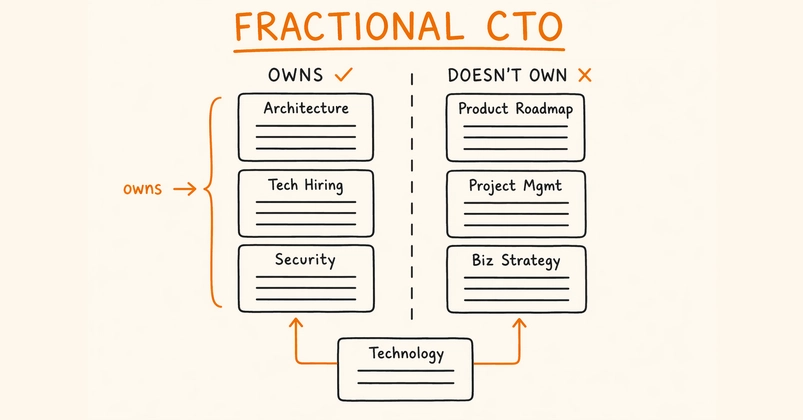
What a Fractional CTO Actually Does for AI Startups
The core work breaks into three categories that traditional CTOs rarely face simultaneously. First, there's the constant model arbitrage: deciding when to route requests to Claude 3.5 Sonnet versus Groq's Llama 3.1, balancing latency requirements against cost per token. At AIdeazz, our multi-agent system routes different agent types to different models based on task complexity — a decision that saves us roughly $3,200 per month in API costs.
Second, there's infrastructure design that assumes everything will change. When building our Panama property search agent, I architected the system to swap between OpenAI, Anthropic, and local models without touching application logic. This isn't over-engineering — it's survival. I've watched startups die because they built their entire pipeline around GPT-4's specific output format, then OpenAI changed the API response structure.