Author: Arthur Jean, solo indie maker. More on paneflow.dev and arthurjean.com.
Repo: github.com/ArthurDEV44/paneflow. MIT licensed.
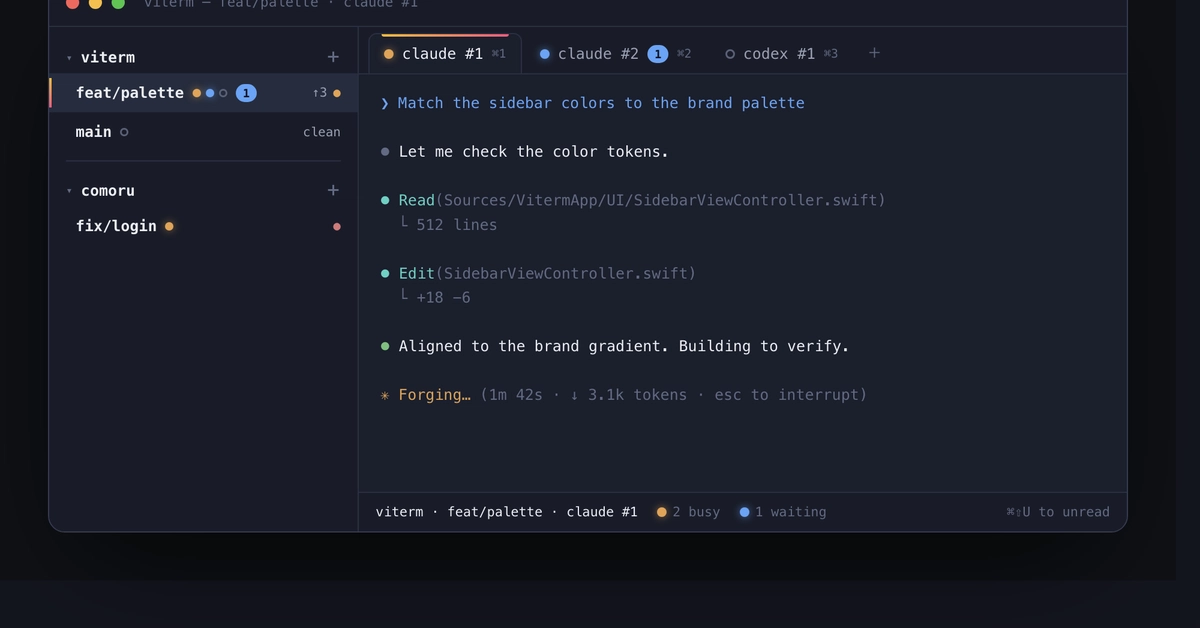
I spend my days running Claude Code, Codex, and OpenCode in parallel panes. Different agents on different branches, each with their own dev server, all in one terminal. tmux can do this, but every multiplexer I tried treated agents the same as any other shell process: no first-class branch context, no live dev-server detection, no session restore that survives a reboot, no programmatic way for an external tool to drive the editor. I built Paneflow because I needed it.
This is a post-mortem, not a launch post. Paneflow is a native terminal workspace, splits, panes, branch-aware workspaces, session restore, built in pure Rust on top of Zed's GPUI framework and the upstream alacritty_terminal crate. It started as a port of cmux, a macOS-only Swift/AppKit project, and the Rust rewrite forced a string of decisions I had no good intuition for at the start. I want to walk through the ones that mattered: which UI frameworks I tried and rejected, how the GPUI/alacritty boundary actually looks, how dev-server detection works under the hood, the N-ary layout tree that replaced binary splits, the cross-platform PTY plumbing, the JSON-RPC control plane that makes agents first-class, and four lessons that surprised me.