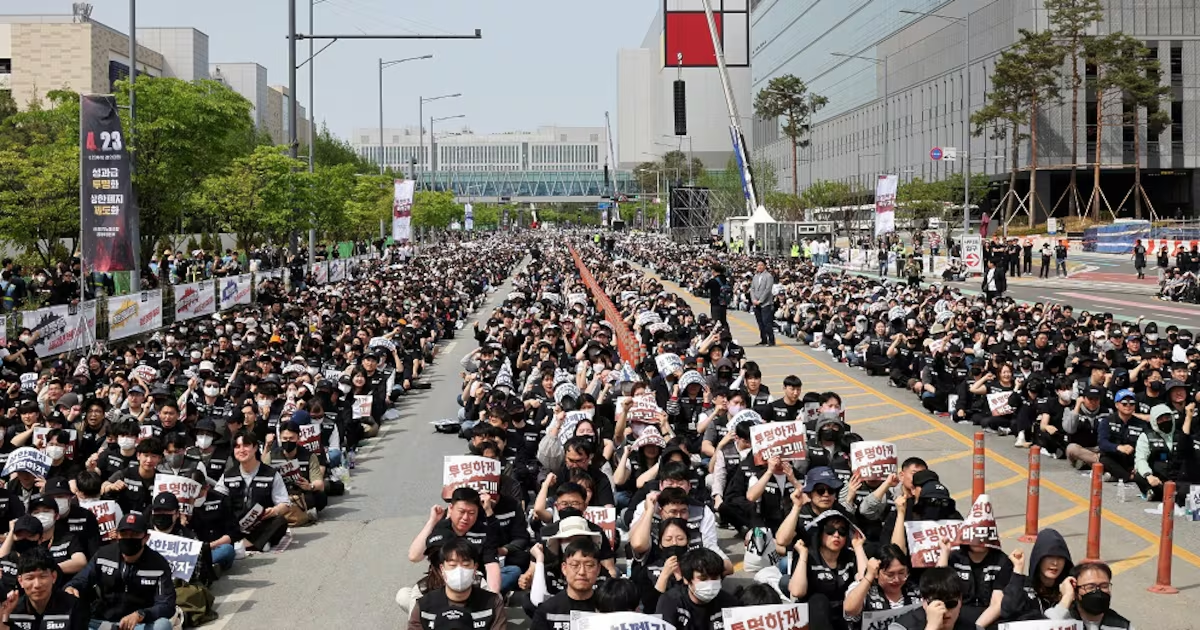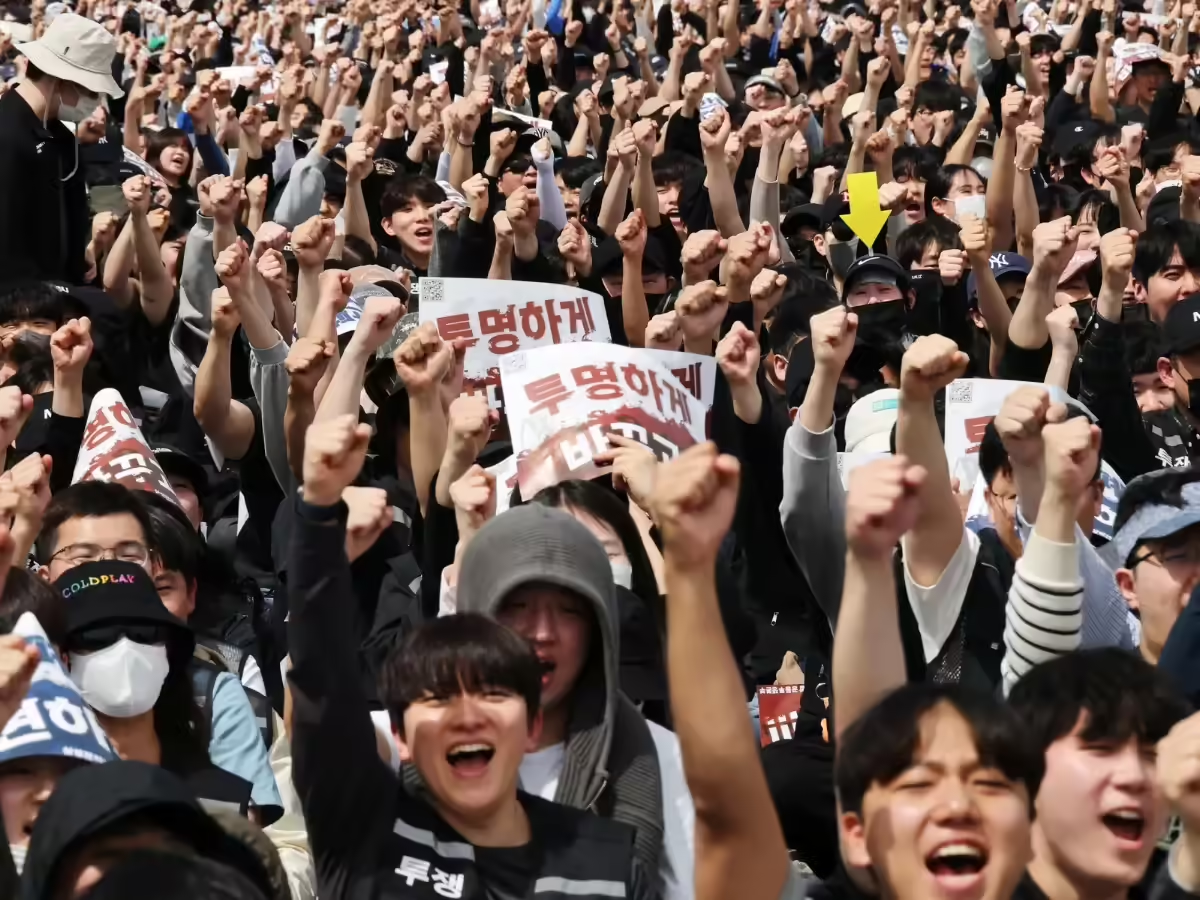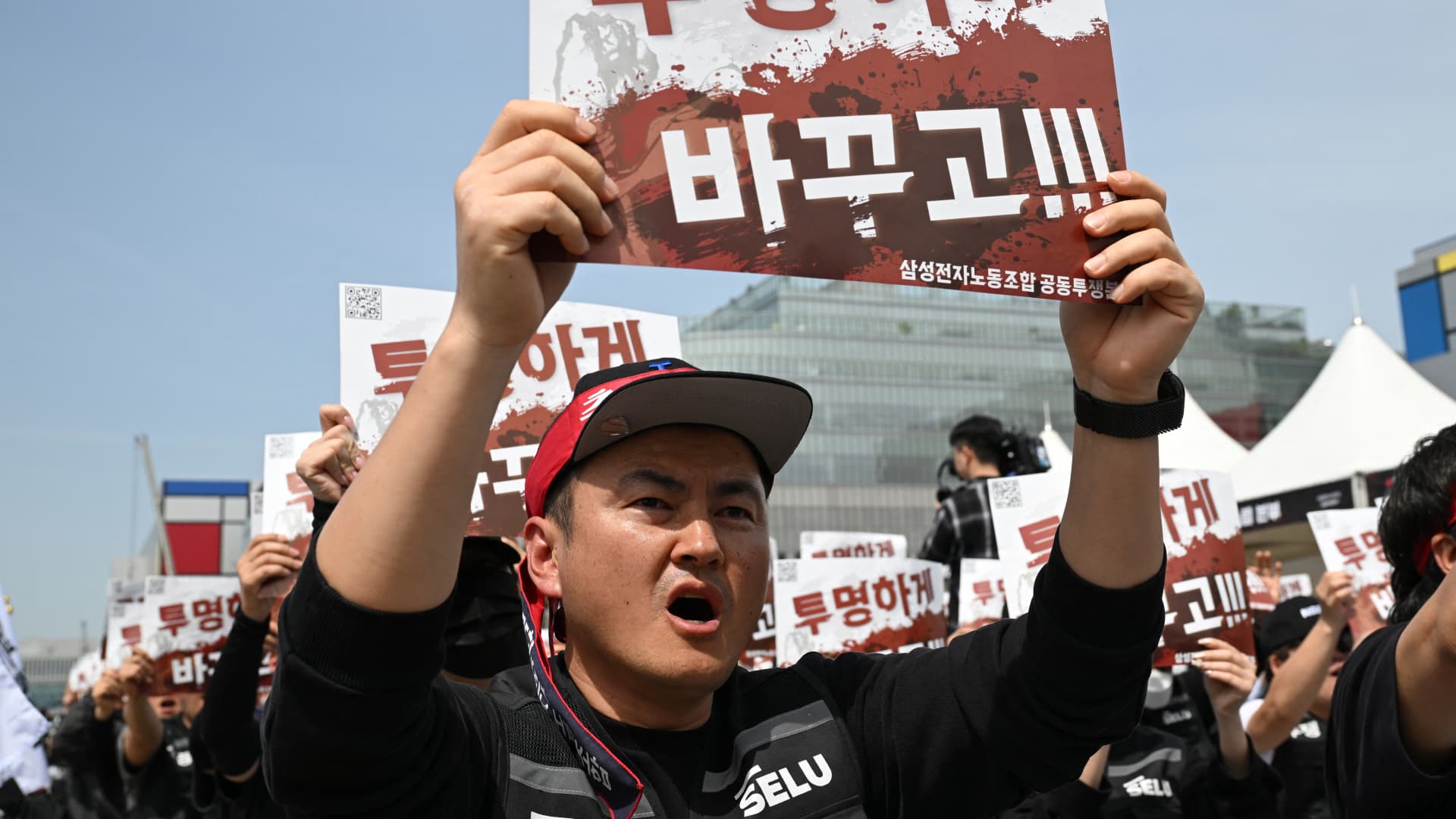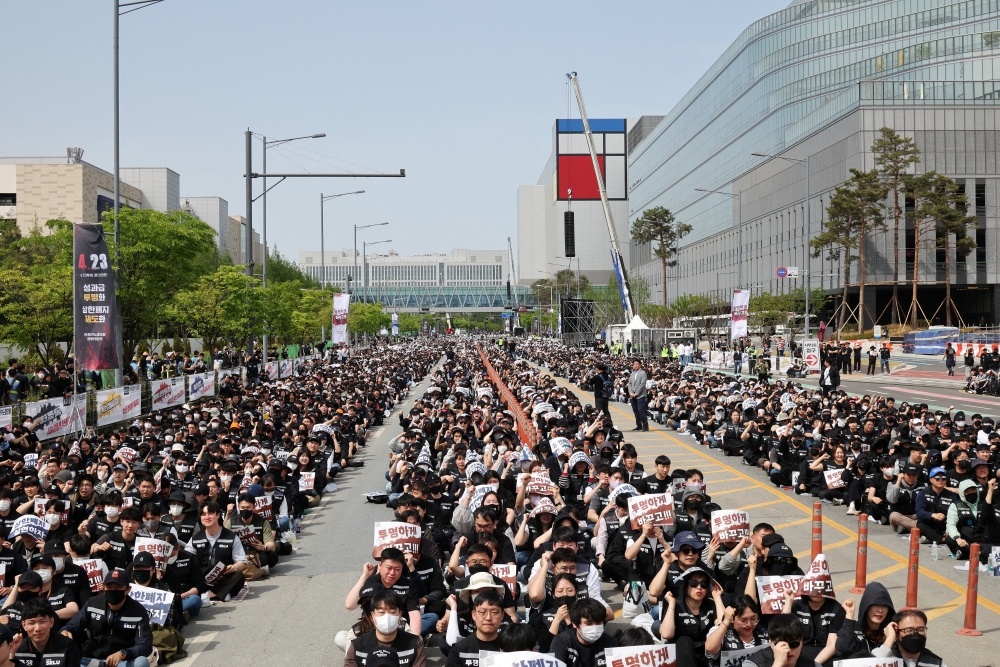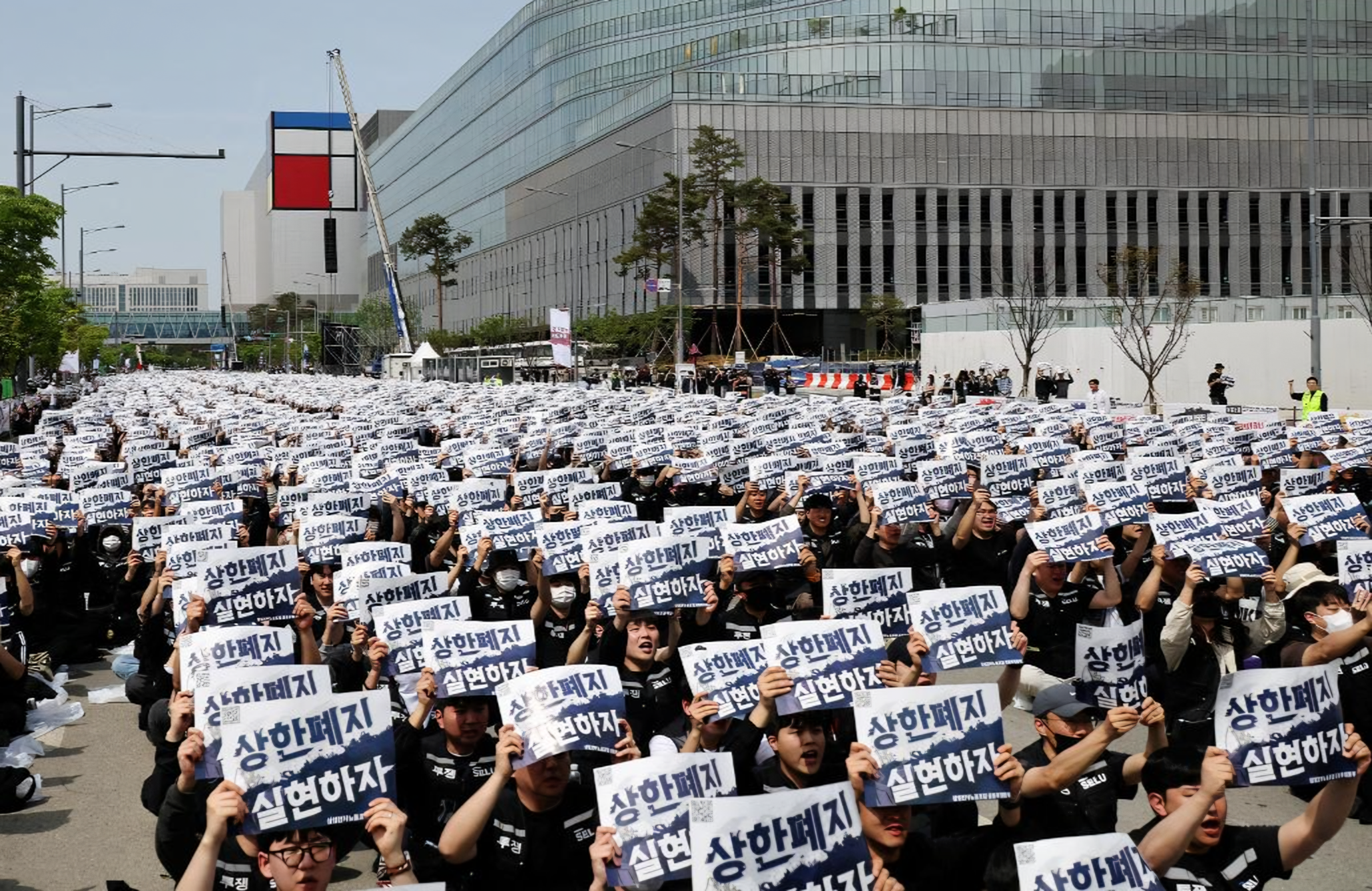
Samsung Electronics’ labor union members chant slogans during a protest against company’s compensation levels ahead of a planned lengthy strike in front of Samsung Electronics semiconductor plant in Pyeongtaek, South Korea, Apr. 23. Reuters-Yonhap
SEATTLE — The threat of a strike at Samsung Electronics this week quickly became an international story, with foreign media outlets closely tracking the potential impact on global semiconductor supply chains during the artificial intelligence (AI) boom.
As Samsung and its largest labor union reached a tentative wage agreement and postponed a planned walkout on Wednesday, foreign coverage focused heavily on the potential implications for the global technology industry rather than the details of the labor negotiations themselves.
“This was never just a wage dispute,” startup and technology outlet Startup Fortune wrote in its coverage of the potential strike.
Samsung is one of the world’s largest suppliers of high-bandwidth memory, or HBM, and NAND flash chips used in AI servers, smartphones, laptops and data centers. Demand for advanced memory chips has surged alongside investment in artificial intelligence infrastructure, increasing the strategic importance of major chipmakers to global technology companies and investors.