Davis Guggenheim had given notice and was on the way out of his job as a Participant Media creative executive in 2005 when producers Lawrence Bender and Laurie David came to him with an idea. At the time, former Vice President Al Gore was touring the country giving slideshow presentations to any group that would listen about the coming threat of climate change, or “global warming,” as it was widely known 20 years ago.
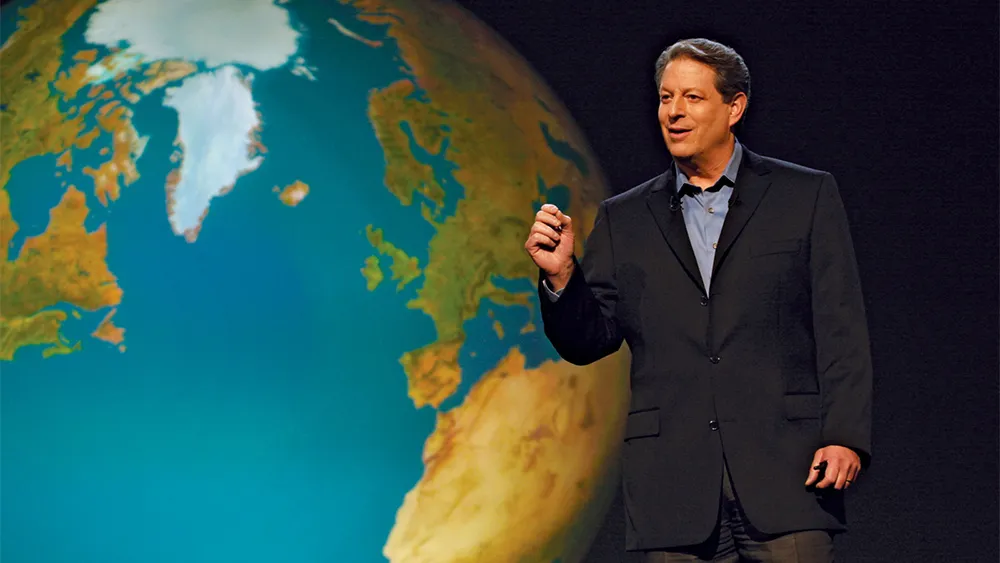
Bender and David thought Gore’s folksy delivery of complicated scientific and climatological information would lend itself to a documentary that might add urgency to environmental policy debates. The pair also thought Guggenheim had the right sensibility to translate Gore’s passion to the screen. Participant Media chief Jeff Skoll also took in one of Gore’s presentations and had one note for producers: “Do it fast.” The result would be “An Inconvenient Truth,” the 2006 Participant Media/Paramount Classics release that shocked the industry following its domestic theaterical release on May 24, 2006, as it became a runaway hit at the box office by documentary standards. More important, the film had enormous cultural impact. “Thousands of people have come up to me and said, ‘I put solar panels on my house.’ ‘I bought a Prius.’ There were certain countries that made it required viewing,” Guggenheim says in an interview at his Concordia Studio in a former surfboard factory in the Venice area of Los Angeles. “Inconvenient Truth” opened in limited release in 2006 and went on to gross about $50 million worldwide. Despite its less than flashy presentation — it’s largely a 95-minute lecture from Gore, with some PowerPoint-style graphics and a bit of behind-the-scenes footage — the film had an impact in the moment that was head-spinning. “You had companies changing their policies, politicians making [climate issues] a priority. It was incredible,” Guggenheim says. “It’ll never happen that way again.”