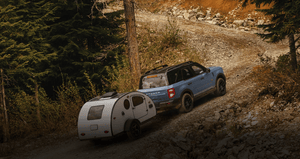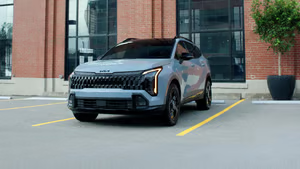
Small SUVs dominate new vehicle sales in the U.S., and the reasons are straightforward. They offer more cargo room and a higher seating position than sedans without the bulk and fuel penalty of a full-size truck or body-on-frame SUV. For families, daily commuters, and solo drivers alike, the compact crossover has become the default choice for a new vehicle. But within the segment, safety performance varies enough to matter. The crash-test results and standard driver-assistance feature counts that separate the top vehicles from the rest of the class are not marginal differences. They represent genuinely different levels of protection in the scenarios that real-world accidents most often produce.
The safety evaluation of a small SUV draws from two primary sources. The National Highway Traffic Safety Administration conducts a battery of crash tests and issues five-star overall safety ratings. The Insurance Institute for Highway Safety runs its own crash-test program and awards its highest recognition, Top Safety Pick+, to vehicles that meet a demanding set of standards across multiple test types and headlight evaluations. The two organizations do not always agree: a vehicle can earn five stars from the NHTSA while receiving a lower designation from the IIHS, and vice versa. The most credibly safe vehicles earn strong marks from both simultaneously.