A Claude Code or Codex CLI session writes a JSONL file to disk. If the agent runs rm -rf on a training-data directory or terraform destroy -auto-approve on production, that file is where an incident review starts.
A JSONL file is not evidence. Anyone with shell access can rewrite it. To a third party who doesn't trust the machine it came from, it proves nothing.
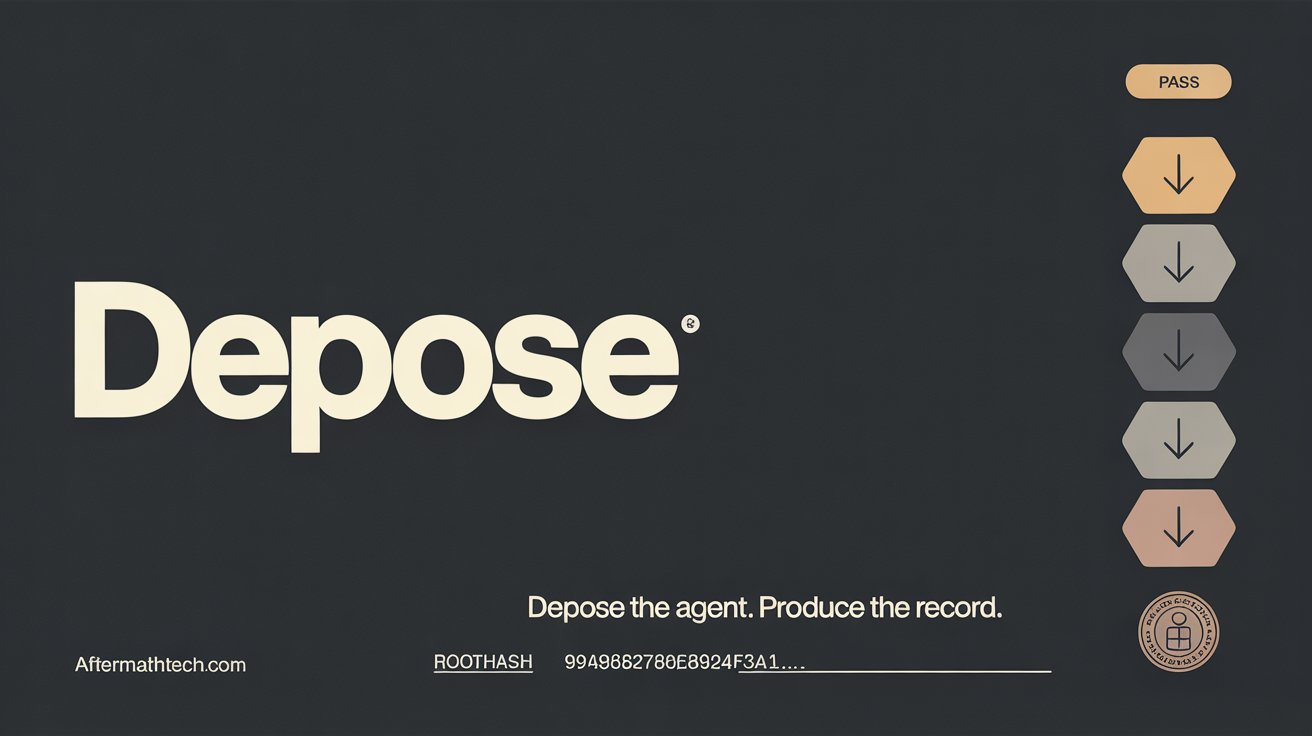
That gap matters once agents have credentials to real infrastructure. Most agent observability tooling is built for debugging and quality, not for the moment after damage is done. This post is about the three cryptographic properties that turn a transcript into something an auditor or regulator can verify, and how the DEPOSE project wires them together.
Three properties
Assume the machine that produced the bundle can't be trusted. Three things need to hold at once: