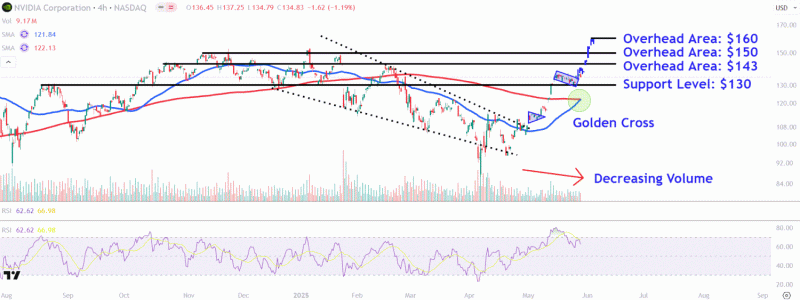
watch nowIt's been a while since Nvidia earnings shocked the world, or even just traders.Options pricing has overestimated the size of Nvidia's post-report swing six of the past seven quarters, and 14 of the past 20, according to Cboe LiveVol data. Implied volatility going into earnings averages 6.7%, compared to the average actual response of 4.6%.Perhaps traders are getting wise this time around: implied volatility in the world's biggest company touched the highest since March on Friday and has come down while the stock slipped this week, reducing current expectations down to a 5.9% move.CBOE LiveVolIt's arguably a higher-pressure earnings for Jensen Huang's AI behemoth following a 34% run off the stock's March lows and an additional trillion dollars of market cap. Adding to the drama is recent history, as shares slid after the past three reports, including a 5.5% dive in February."They would have to just blow the doors completely off, like 50% guidance beat, for the stock to surge," Scott Bauer, CEO of Prosper Trading Academy, said in a phone call. "Given the history of phenomenal metrics and a stock that pops right away and then sells off, I want to sell some premium and lean a little short."Stock Chart IconStock chart iconNvidia, YTDRegardless of direction, just getting past Nvidia earnings alone may help clear the way for the next big market move. VIX futures prices are elevated through Thursday likely due to Nvidia earnings, notes SpotGamma's Brent Kochuba."We continue to think the market correction post OPEX makes sense," Kochuba wrote to clients Tuesday, "and that the main event is NVDA earnings tomorrow night."
Here's how Nvidia has traded each of the last 16 quarters
Options pricing has overestimated the size of Nvidia's post-report swing six of the past seven quarters, and 14 of the past 20, according to Cboe LiveVol data.
266 words~1 min read