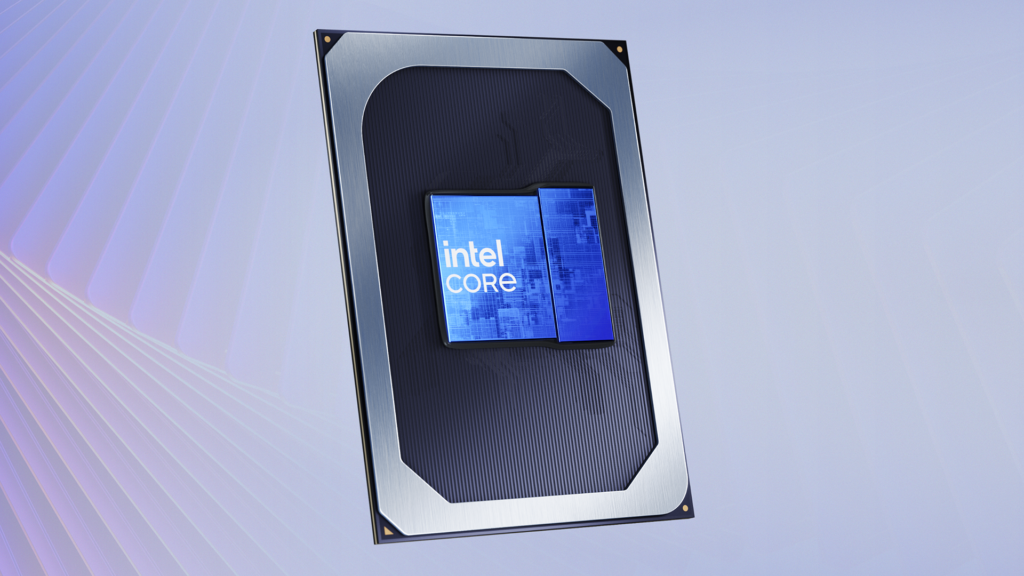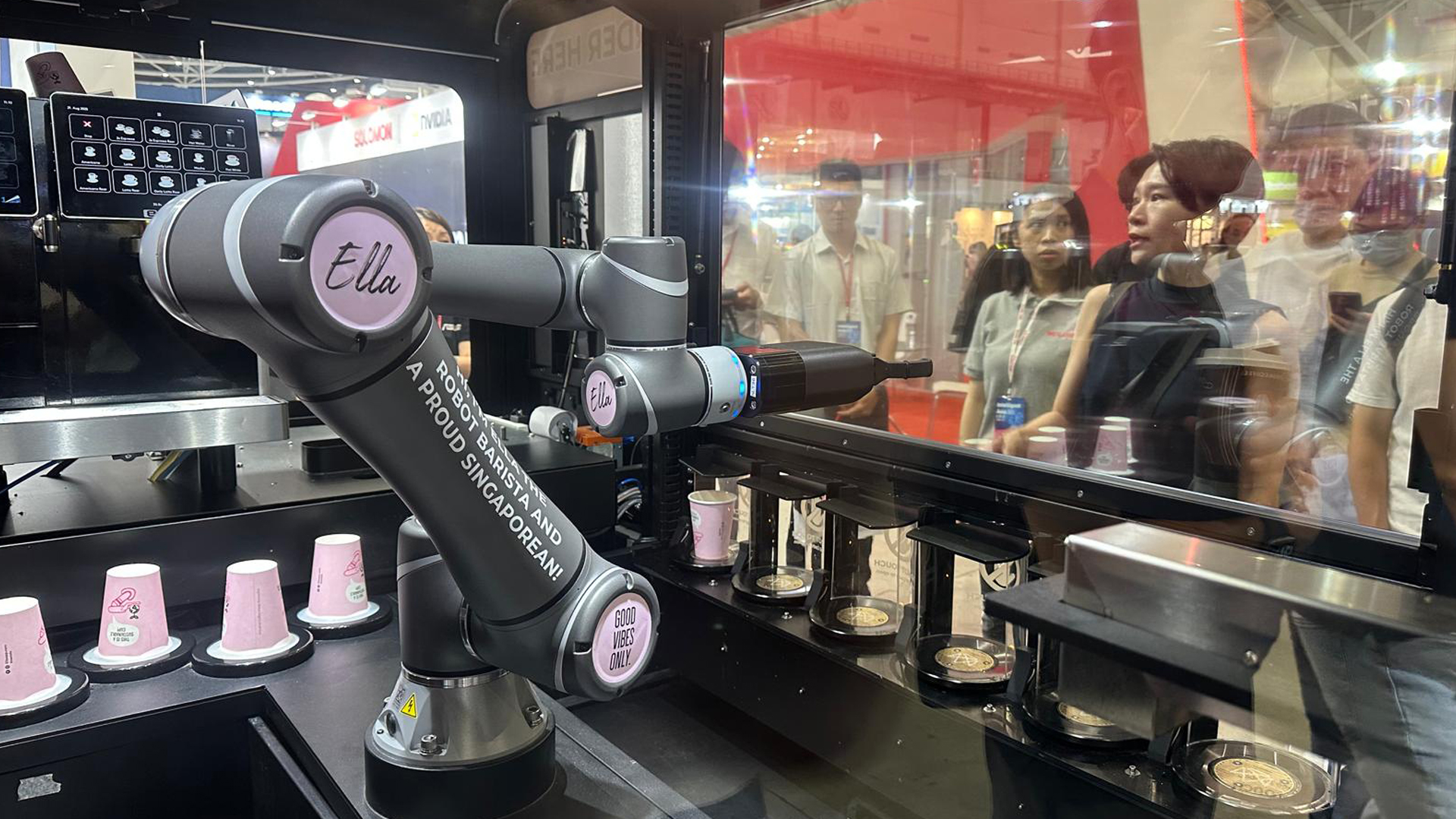
Ella, Sensory AI's multi-agent Physical AI store, now runs completely on Intel architecture and the Intel® Core™ Ultra Series 3 processor, converting away from discrete GPUs at the edge.
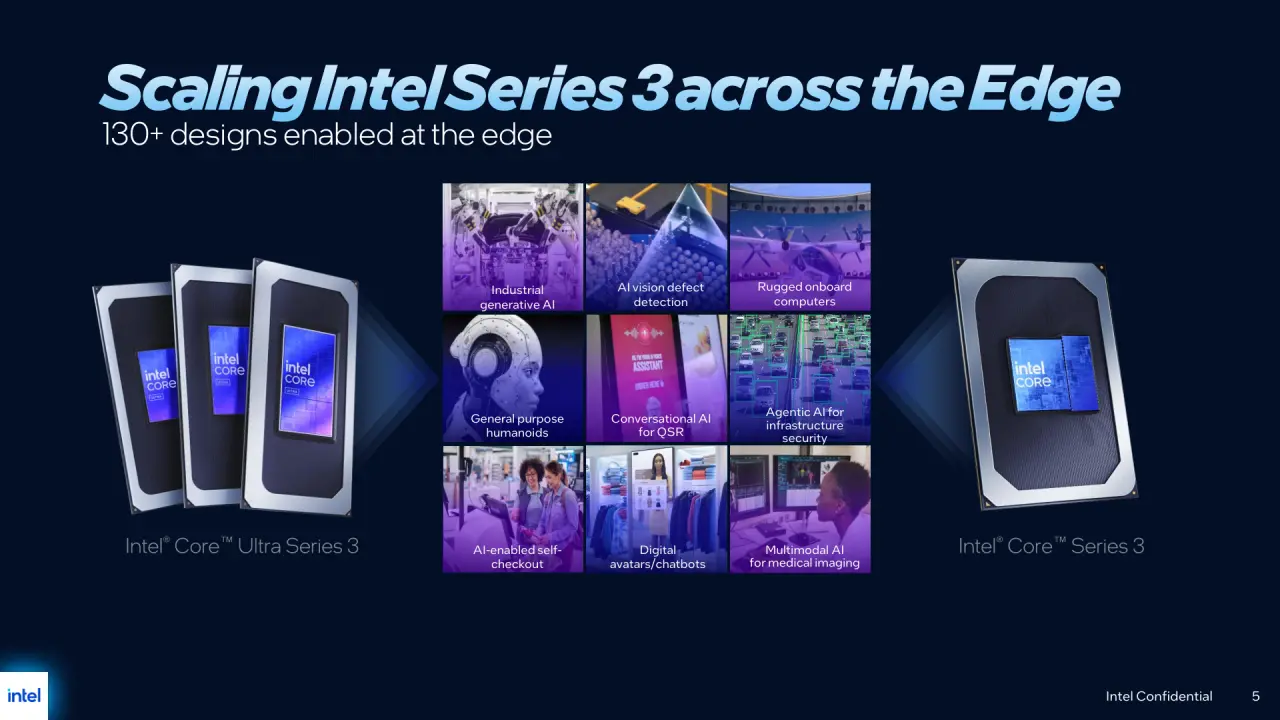
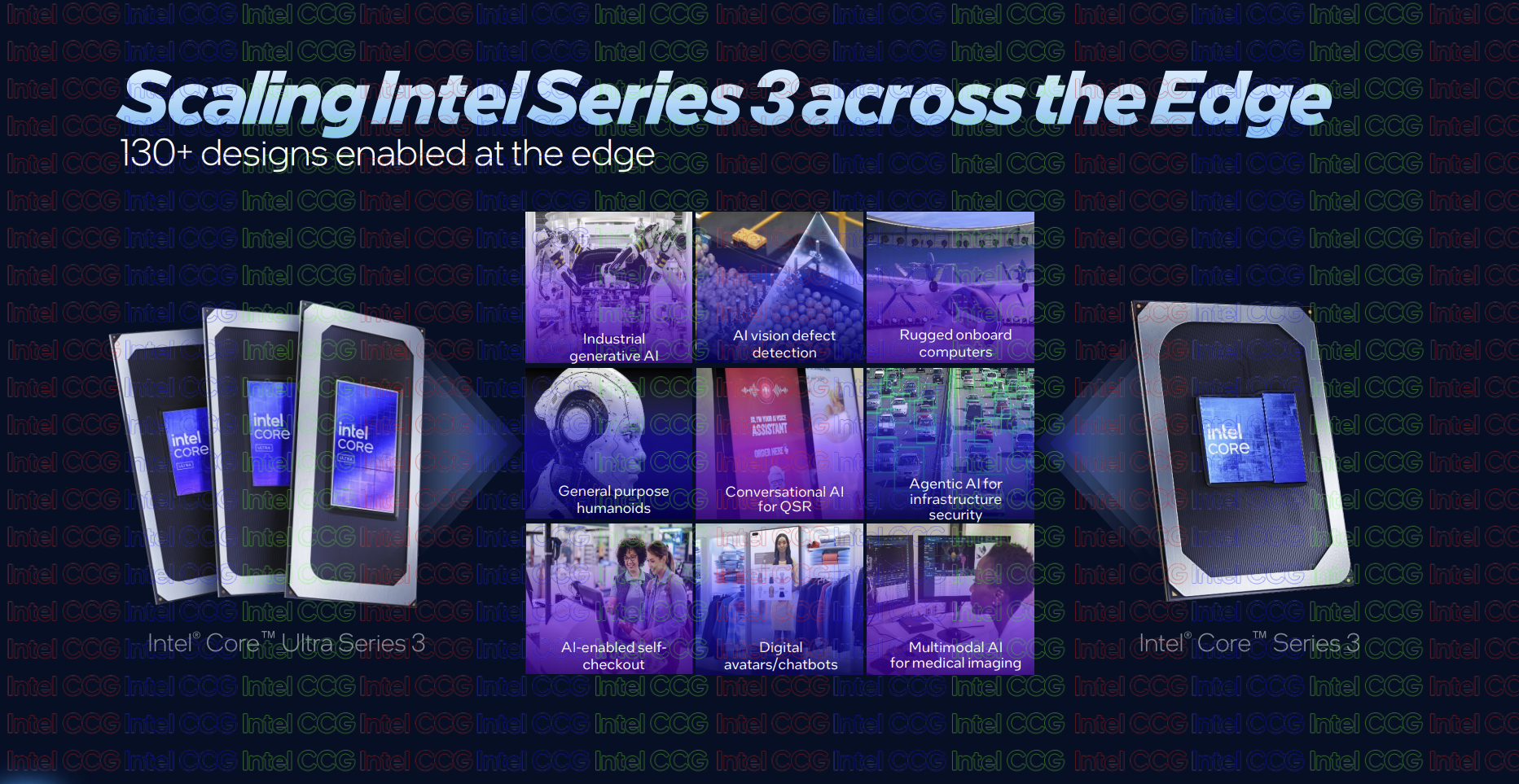
By integrating a CPU, GPU, and NPU, Intel Core Ultra Series 3 delivers edge AI power across global use cases—from hospitality and manufacturing to healthcare and education.
In this article:
At 2 a.m., an emergency room nurse orders a latte at a quiet hospital coffee stand. There is no human behind the counter. Instead, a sleek robotic arm pivots, grabs a cup and begins a precise dance of grinding Italian beans and frothing milk. Within seconds, the drink is ready on a platform for a quick grab-and-go.Intel® Core™ Ultra Series 3 processors now exclusively power that barista robot, called Ella, which anchors a new wave of physical AI coming to the market. Dozens of other robotics developers worldwide have begun testing and adopting these Intel processors to replace the bulky, expensive, and hot discrete graphics processing units (GPUs) typically required to make a machine "think" in the real world.The move toward this new architecture will be on full display this June at the Computex 2026 tradeshow in Taipei, Taiwan. There, Ella will serve up to 200 drinks per hour while debuting three new specialized AI service agents running concurrently on Intel Core Ultra Series 3, showcasing the heterogeneous compute power of the new Intel chip - meaning different parts of the processor handle different tasks simultaneously - all without the delay of sending data to a distant cloud server.A Business Case for Better BrainsElla is the brainchild of Keith Tan, a former café owner in Singapore who faced a problem common to the hospitality industry: high employee turnover and inconsistent quality. Tan spent years training baristas only to see them leave months later. He turned to robotics to solve the labor shortage, but he soon hit a technical wall.Giving a robot enough power to take an order, process the various drink algorithms and move an arm safely, used to require a discrete GPU, a secondary, power-hungry processor that can cost more than the whole system itself. For a business owner trying to make a profit on a $5 latte, the math simply did not work."We used to have an architecture of an Intel CPU with a discrete GPU doing some of the workloads, but it was expensive," says Tan, now founder and CEO of Sensory AI. "The GPU cost more than the entire system. I realized I just can’t spend that much. I have to build a system with the ROI of a cafe. Developers need to look at the total cost of ownership and the real-world deployment when you’ve already trained your models.