Skip to Content News Archives Economy Energy Oil & Gas Renewables Electric Vehicles Mining Commodities Agriculture Real Estate Mortgages Mortgage Rates Finance Banking Insurance Fintech Cryptocurrency Work Wealth Smart Money Wealth Management Investor Personal Finance Family Finance Retirement Taxes High Net Worth FP Comment Executive Women Puzzmo Newsletters Financial Times Business Essentials More Innovation Information Technology FP500 Podcasts Small Business Lives Told Tails Told Shopping Financial Post Store Obituaries Place a Notice Advertising Advertising With Us Advertising Solutions Postmedia Ad Manager Sponsorship Requests Classifieds Place a Classifieds ad Working Profile Settings My Subscriptions Saved Articles My Offers Newsletters Customer Service FAQ News Economy Energy Mining Real Estate Finance Work Wealth Investor FP Comment Executive Women Puzzmo Newsletters Financial Times Business Essentials HomeWorkBank executives’ AI talk takes frightening turn for workersRoughly 30% of work hours in finance and insurance could be automated by 2030, McKinsey estimatesAuthor of the article: You can save this article by registering for free here. Or sign-in if you have an account.Goldman Sachs Group Inc. signage on the floor of the New York Stock Exchange (NYSE) in New York, U.S., on July 16, 2025. Photo by Michael Nagle/BloombergWall Street leaders’ rhetoric about the impact of artificial intelligence on their firms has taken a dystopian turn.Subscribe now to read the latest news in your city and across Canada.Exclusive articles from Barbara Shecter, Joe O'Connor, Gabriel Friedman, and others.Daily content from Financial Times, the world's leading global business publication.Unlimited online access to read articles from Financial Post, National Post and 15 news sites across Canada with one account.National Post ePaper, an electronic replica of the print edition to view on any device, share and comment on.Daily puzzles, including the New York Times Crossword.Subscribe now to read the latest news in your city and across Canada.Exclusive articles from Barbara Shecter, Joe O'Connor, Gabriel Friedman and others.Daily content from Financial Times, the world's leading global business publication.Unlimited online access to read articles from Financial Post, National Post and 15 news sites across Canada with one account.National Post ePaper, an electronic replica of the print edition to view on any device, share and comment on.Daily puzzles, including the New York Times Crossword.Create an account or sign in to continue with your reading experience.Access articles from across Canada with one account.Share your thoughts and join the conversation in the comments.Enjoy additional articles per month.Get email updates from your favourite authors.Create an account or sign in to continue with your reading experience.Access articles from across Canada with one accountShare your thoughts and join the conversation in the commentsEnjoy additional articles per monthGet email updates from your favourite authorsSign In or Create an AccountorAt Standard Chartered Plc, chief executive Bill Winters said Tuesday he’s replacing “lower-value human capital” with financial and technology capital to cut 8,000 support roles over the next four years. A week earlier, Goldman Sachs Group Inc. chief operating officer John Waldron described his firm’s traditional operations as a “human assembly line” ripe for automation.Even in finance, where executives are known for talking tough, discussions of jobs used to be delicate matters. Wells Fargo & Co. chief executive Charlie Scharf said at a conference in December that “no one wants to stand up and say that we should have — that we’re going to have — lower headcount in the future. It’s a difficult thing to say.” The more recent statements from bank executives suggest that’s no longer the case.FP Work touches on HR strategy, labour economics, office culture, technology and more.By signing up you consent to receive the above newsletter from Postmedia Network Inc.A welcome email is on its way. If you don't see it, please check your junk folder.The next issue of Work will soon be in your inbox.We encountered an issue signing you up. Please try again“It’s frightening language indeed,” said Denise Shull, a longtime leadership and performance coach for finance executives. “Would you say those words to your kids?”By using dehumanizing language, “you tell your employees exactly where they stand,” added Brian Elliott, a workplace consultant and author of How the Future Works.Where they stand is this: AI agents are already able to handle routine back-office tasks and even some of the work performed by junior bankers. Roughly 30 per cent of work hours in finance and insurance could be automated by 2030, McKinsey & Co. estimates. And more than half of jobs across banking have a high potential to be replaced by technology, according to research from Citigroup Inc. “Our human assembly lines will become more digitized,” Waldron said in a CNBC interview on May 12. “I’m not sure dynamically how the overall headcount will change, but I think the firm is going to get much more resilient and much more scalable.”Citadel chief Ken Griffin recently said that a “step change” in AI’s capabilities is allowing AI agents to do in hours what staffers with advanced degrees previously took weeks to do. “It’s like, wow, like that’s the first time I’ve seen real impact in our four walls,” Griffin said in April at Stanford University. “These are not mid-tier white collar jobs. These are, like, extraordinarily high-skilled jobs being — I’m going to pick a word — automated by agentic AI.”Read next: College Kids Don’t Want Your AIAI’s potential to boost productivity on Wall Street has led to the jarring juxtaposition of reducing headcount while bank stocks soar, helped along by record earnings. Last year, big U.S. banks reduced staff by the most in almost a decade. The cuts continued in the first quarter at four of the six largest firms.In 2027, global banks could see pretax profits as much as 17 per cent higher than they would otherwise have been — adding as much as $180 billion to their combined bottom line — as AI boosts output, according to Bloomberg Intelligence.“We’ve actually gone from hype to real execution and scaling,” said Kevin Brunner, JPMorgan Chase & Co.’s global chair of investment banking and mergers and acquisitions, said this week in an interview with Bloomberg Television.AI rollouts are happening across large banks, from their call centres and commercial lending businesses to their investment banking pitch books.In a December interview, Bank of America Corp. chief executive Brian Moynihan said employees “don’t have to worry” as AI was “not a threat to their jobs.” In April, after reporting a first-quarter profit of US$8.16 billion fueled by strong trading, Moynihan said “eliminating work and applying technology” allowed the bank to shed 1,000 people through attrition. Join the Conversation This website uses cookies to personalize your content (including ads), and allows us to analyze our traffic. Read more about cookies here. By continuing to use our site, you agree to our Terms of Use and Privacy Policy.
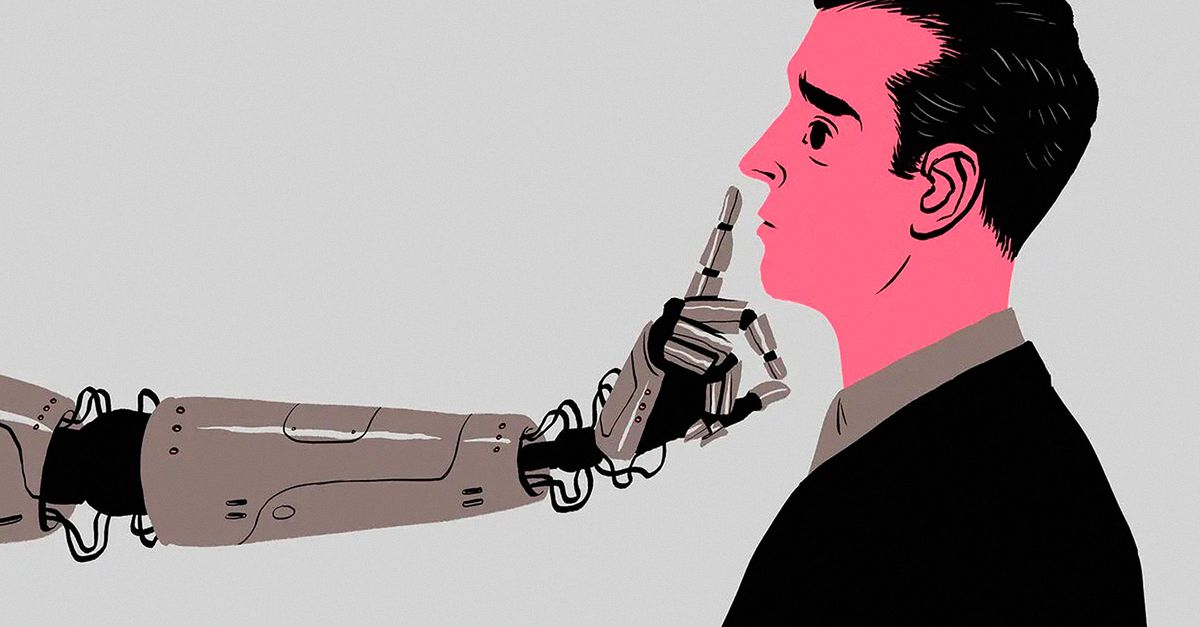
Bank executives’ AI talk takes frightening turn for workers
Wall Street leaders’ rhetoric about the impact of artificial intelligence on their firms has taken a dystopian turn. Read more.
1,116 words~5 min read