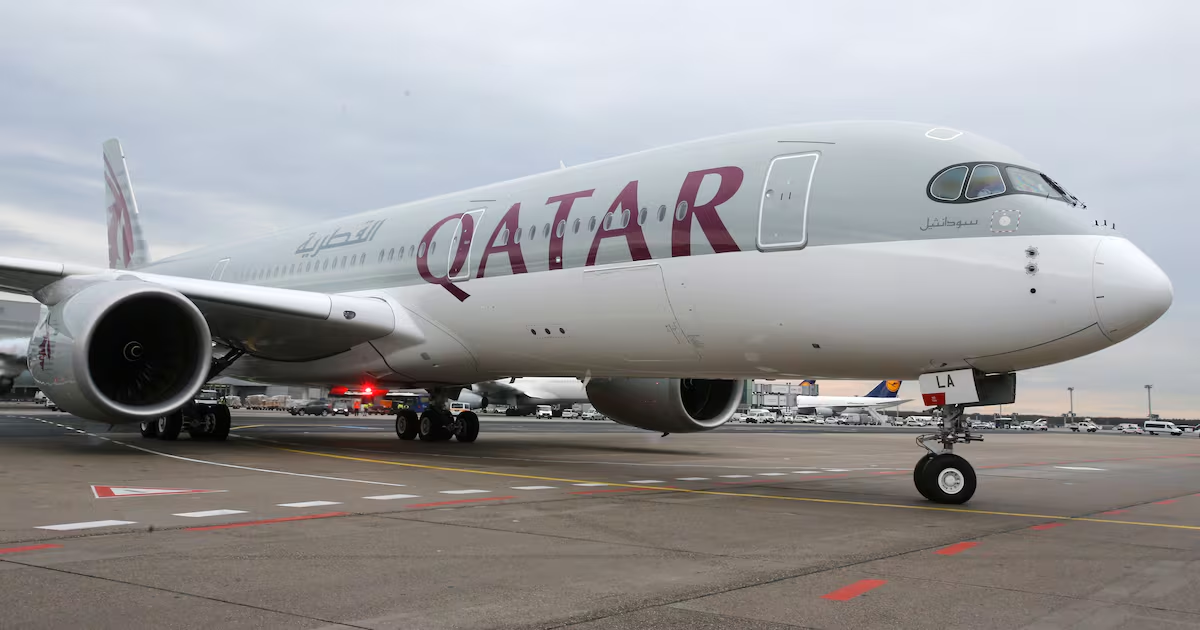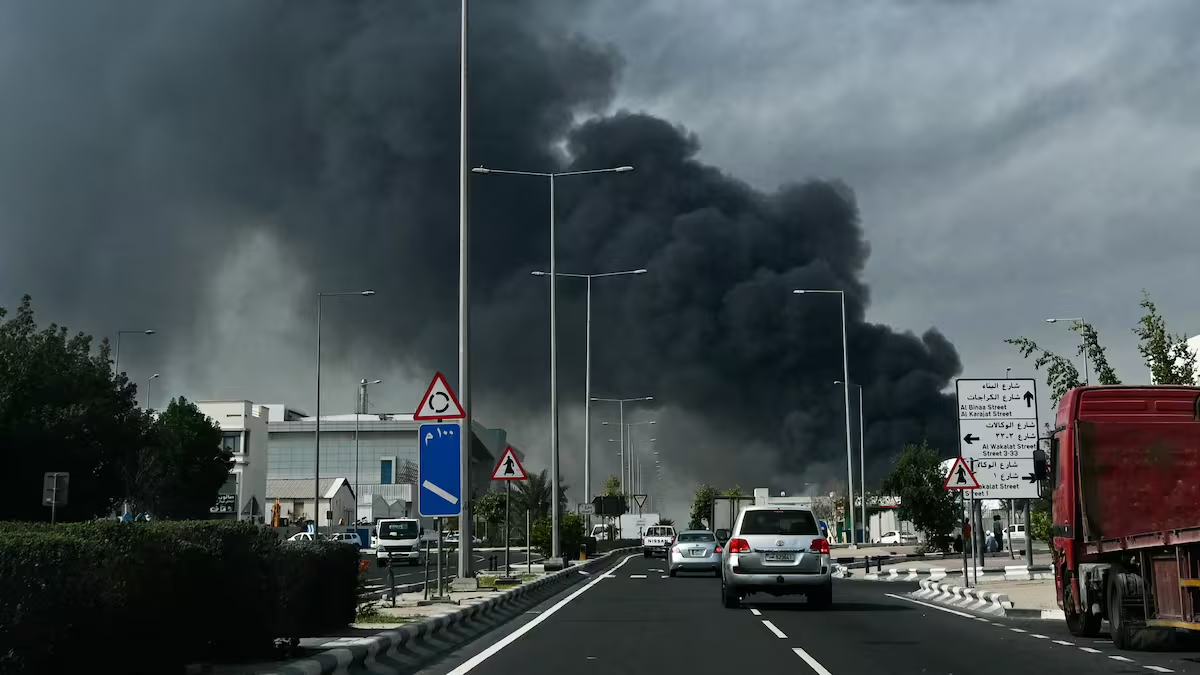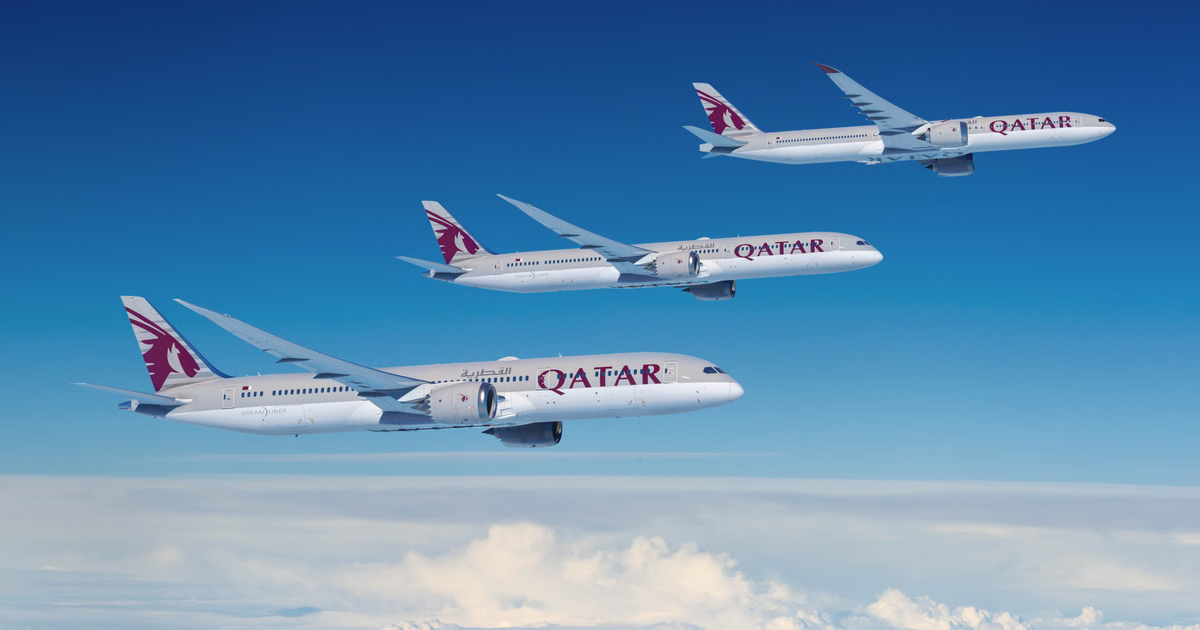
The state-owned carrier said Wednesday that its final month was affected by “significant geopolitical events”, even as it carried 41.8 million passengers during the year and continued rebuilding its international flight schedule.The results come after the US-Israel-Iran war triggered one of aviation’s biggest crises since the COVID-19 pandemic, with temporary airspace closures across parts of the Middle East forcing thousands of flight cancellations and route disruptions since the conflict escalated earlier this year.For Qatar Airways, the conflict struck at the heart of its hub-and-spoke model. Doha’s Hamad International Airport is one of the region’s busiest transit gateways, and disruptions to regional airspace affected schedules, connections and passenger flows. During the crisis, Qatar Airways also operated special flights as it worked to restore network connectivity. In fact, the airline only recently resumed its UAE operations, resuming flights betweeen Doha and Abu Dhabi on May 13.Rebuilding stageDespite that, Qatar Airways said it was now rebuilding its global schedule and expects to serve more than 160 destinations by summer 2026.Qatar Airways' recently appointed Group CEO Hamad Al-Khater said the financial year tested the airline operationally and financially.“It is not often that a single financial year asks an organisation to demonstrate both the best of what it can achieve and the depth of what it can withstand. The 2025/26 financial year did both,” he said.He added: “We are actively rebuilding our global network… under genuine pressure.”The airline said its cargo division transported 1.43 million tonnes of chargeable freight, giving it a 12 per cent share of the global air freight market.Qatar Airways also reported an 86 per cent on-time performance, placing it among the world’s more punctual international carriers.Other partnerships One of the biggest strategic announcements during the year was a major fleet commitment, with the airline signing agreements with Boeing and GE Aerospace covering up to 210 aircraft and 400 engines.The airline said its summer 2026 schedule will continue to focus on restoring network depth after the regional disruptions.Behind the profit figure, however, Qatar Airways — like other airlines in the region — has had to navigate a much tougher operating environment, with conflict-driven airspace closures exposing how vulnerable Gulf hub carriers remain to geopolitical shocks despite strong passenger demand.Dhanusha is a Chief Reporter at Gulf News in Dubai, with her finger firmly on the pulse of UAE, regional, and global aviation. She dives deep into how airlines and airports operate, expand, and embrace the latest tech.
Qatar Airways made $1.94bn — but the Iran war dealt a blow to Doha’s key hub status
Qatar Airways profit dips 7% as Iran war disrupts routes, but the Gulf carrier rebuilds its global network, restores flights and targets 160 destinations by summer 2026
501 words~2 min read