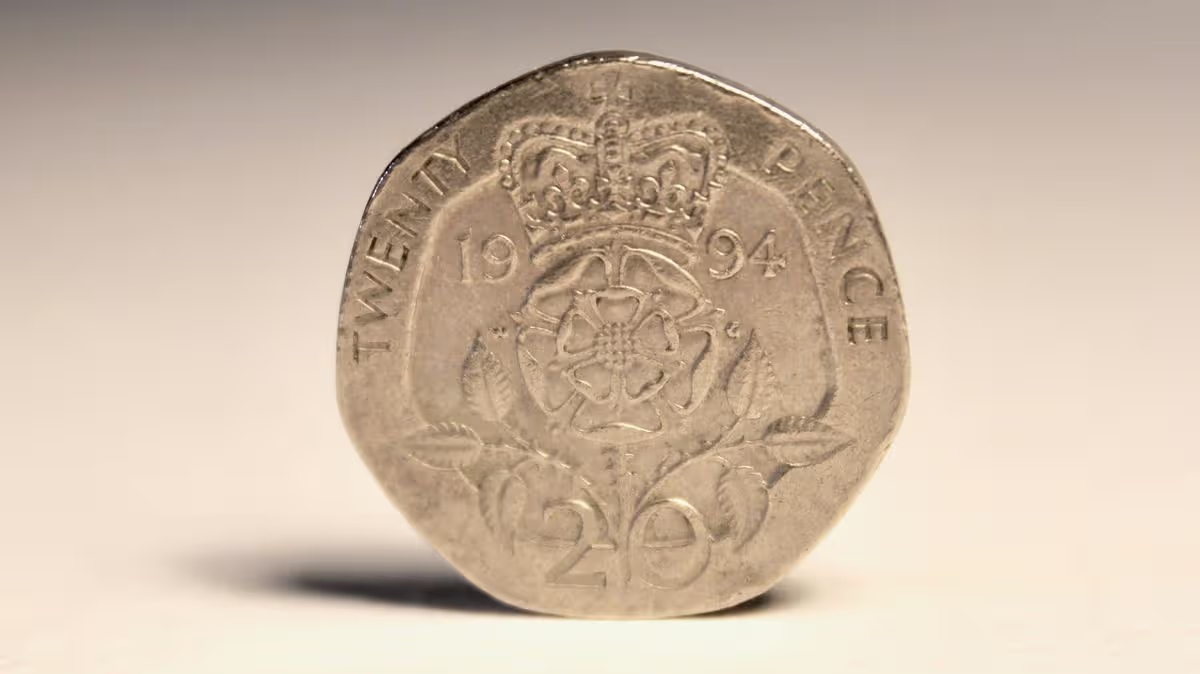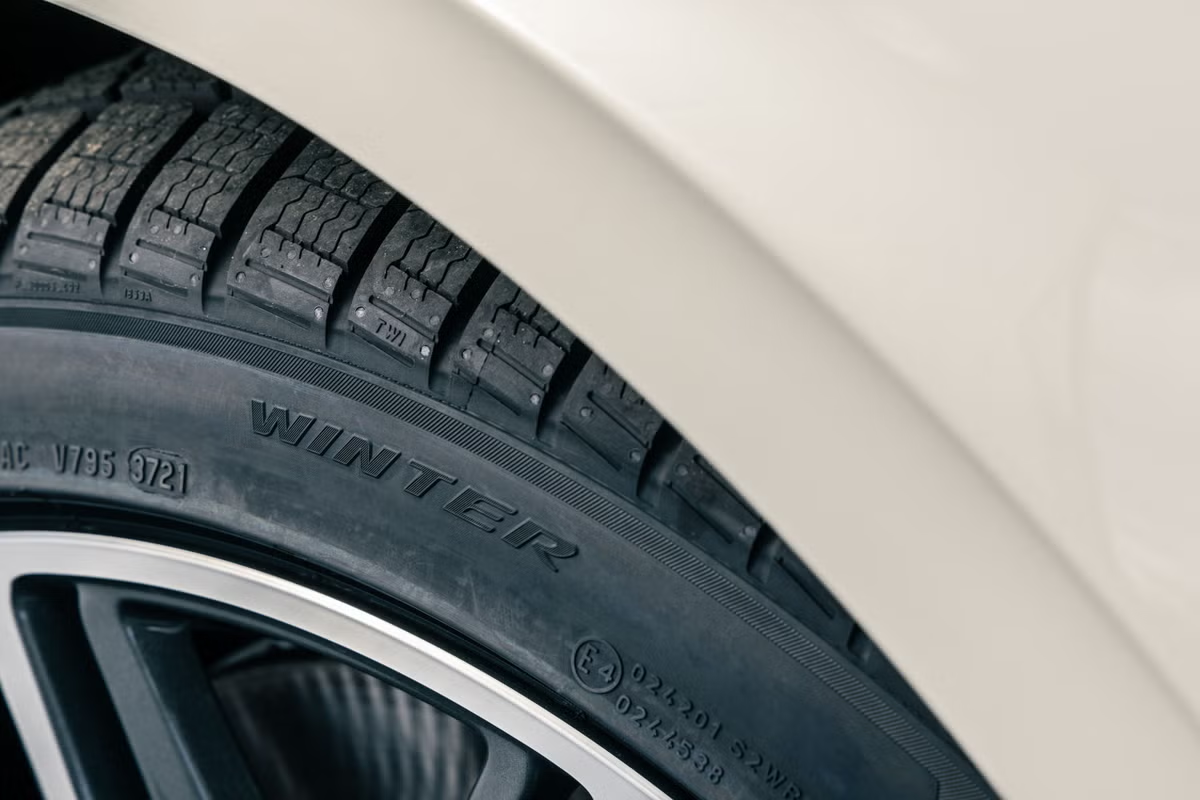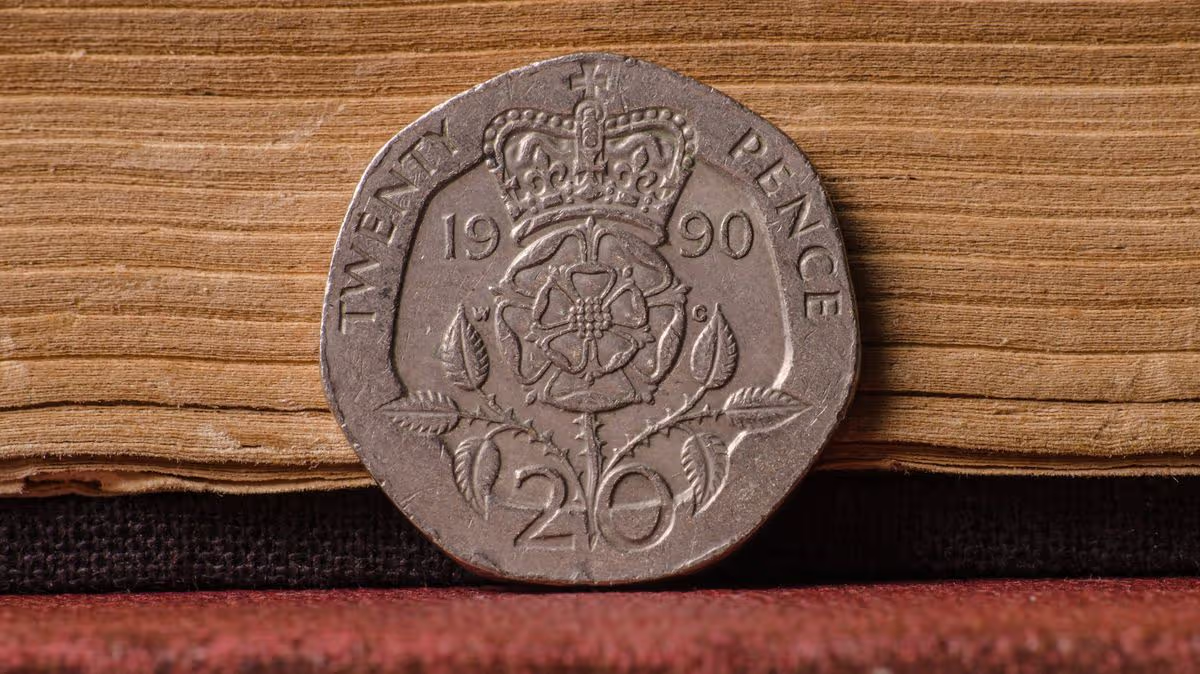
Drivers could have their licence taken away for failing this test, which can be done with pocket change15:08, 20 May 2026Updated 15:08, 20 May 2026Motorists are being reminded of how important it is to keep 20p in their car for a crucial check most drivers don't do often enough. This 'loose change check' takes only seconds and offers a more affordable option than the equipment mechanics rely on.Drivers who ignore the dangers could face fines of up to £10,000 and risk having their licence revoked. According to the RAC, motorists should inspect their tyre tread at least once a fortnight and before long trips.Experts suggest that regular checks help identify wear and tear early on, preventing hazardous driving conditions. The RAC says: "The tyres are the only contact point between your vehicle and the road."If your tyres are past their best, then the safety of your vehicle will be compromised. Driving a car with bald tyres can risk a fine of £2,500 and three penalty points - and that's per tyre, too. If all four tyres are worn below the legal limit, you could potentially be summoned to court, lose your licence and face a £10,000 fine."What is the minimum legal tyre tread depth?The UK's legal minimum tyre tread depth depends on your vehicle type, according to the Express, though it must form a continuous band around the entire circumference. For cars, caravans and vans, tyres must measure "at least 1.6 mm" - although most experts recommend a minimum tread depth of 3mm for tyre replacement.The RAC said: "Tests by UK technical organisation MIRA found that, once tyres are below 3mm, stopping distances increase dramatically. The difference in wet braking distance between a tyre worn to 3mm and one worn to 1.6mm can be as much as 44%."Worn tyres are particularly dangerous in the wet because a tyre's tread helps disperse water away from the contact patch between tyre and road. If there's less tread depth, less water can be shifted, increasing the risk of aquaplaning and losing grip."Regular tyre maintenance should also focus on ensuring tyres have sufficient air pressure and are in good overall condition (with no cuts, cracks, bulges, or foreign objects like stones or glass). Under-inflated tyres increase fuel consumption and blowout risks, while over-inflated tyres reduce grip.Can I check my tyre tread myself?Yes, motorists don't need to wait for a mechanic to assess how their tyres are coping with road wear and tear. You can buy your own depth gauge from retailers such as Amazon, Halfords, and Screwfix for less than £10.That said, there's a 'free' method to roughly gauge whether you're approaching the point of needing new tyres. It involves using a 20p coin as a rough way to measure the life left in your tyres.Article continues belowExplaining the popular test, the RAC said: "The 20p test is a simple, quick and easy way of checking the tyre tread of your car's wheels. Just insert a 20p coin into the tread grooves on the tyre."If you can't see the outer band on the coin, your tyres are above the legal limit. However, if you can see the band and that section of the coin is still visible, your tyres could be unsafe and require professional inspection by a mechanic."
RAC says keeping 20p in your car could stop you risking £10k fine
Drivers could have their licence taken away for failing this test, which can be done with pocket change
545 words~2 min read