Two developers sit down to build the same feature: a search endpoint that returns users matching a query string. Both have Claude Code open. Both type roughly the same prompt: "build me a REST endpoint that searches users by name with pagination."
Five minutes later, both have working code. It compiles. The tests pass. The endpoint returns results.
But the code is not the same.
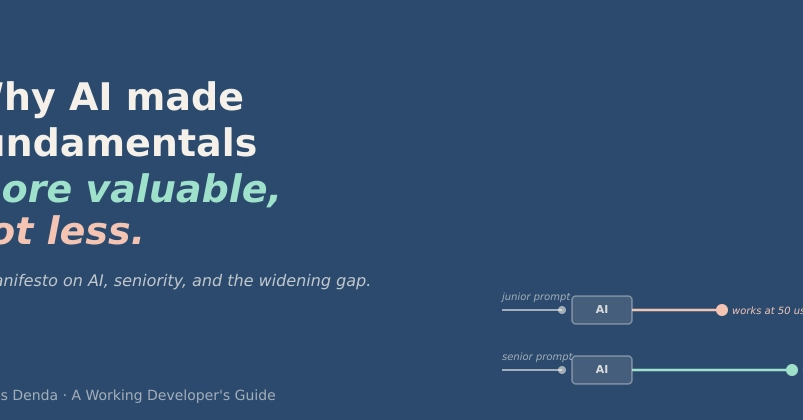
Developer A — three years of experience — accepts the first output. It uses SELECT * FROM users WHERE name LIKE '%query%' with LIMIT and OFFSET. It works in development with 50 users. It will break at 50,000 users and make the whole service slow at 500,000.
Developer B — twelve years of experience — reads the output, asks a follow-up: "What's our expected scale? And what's the user table's index strategy?" The revised code uses a full-text index, cursor-based pagination, proper query limits, a cache layer for popular searches, and a rate limiter. It works in development with 50 users. It also works at 5 million.