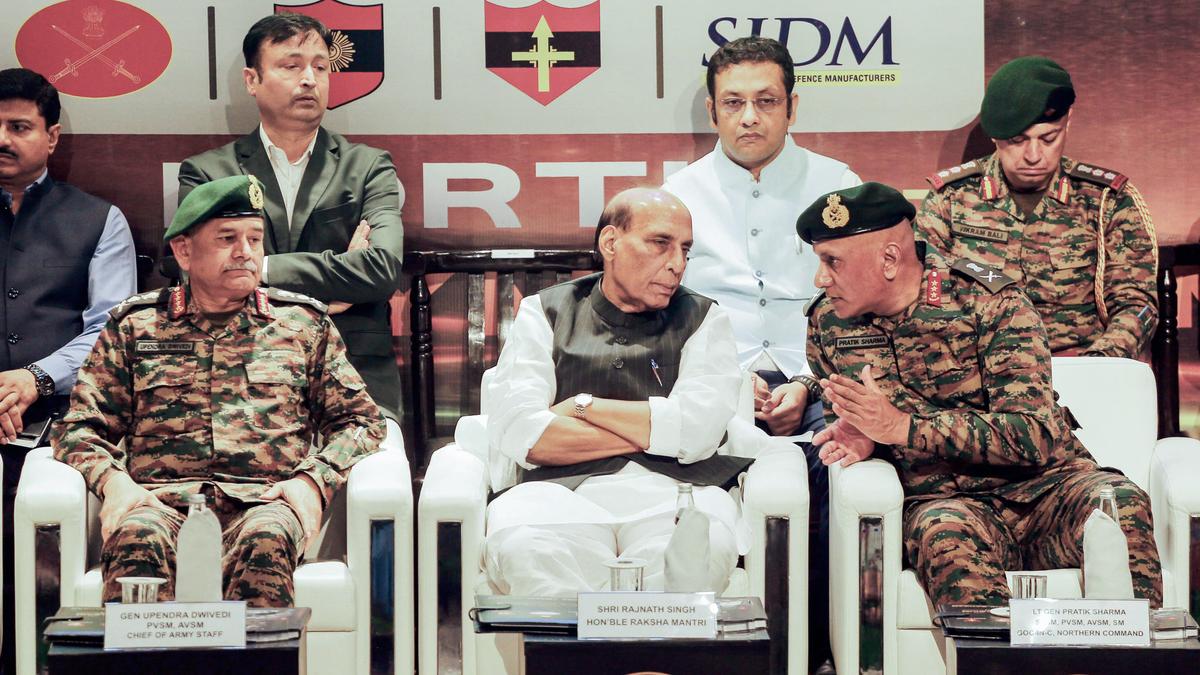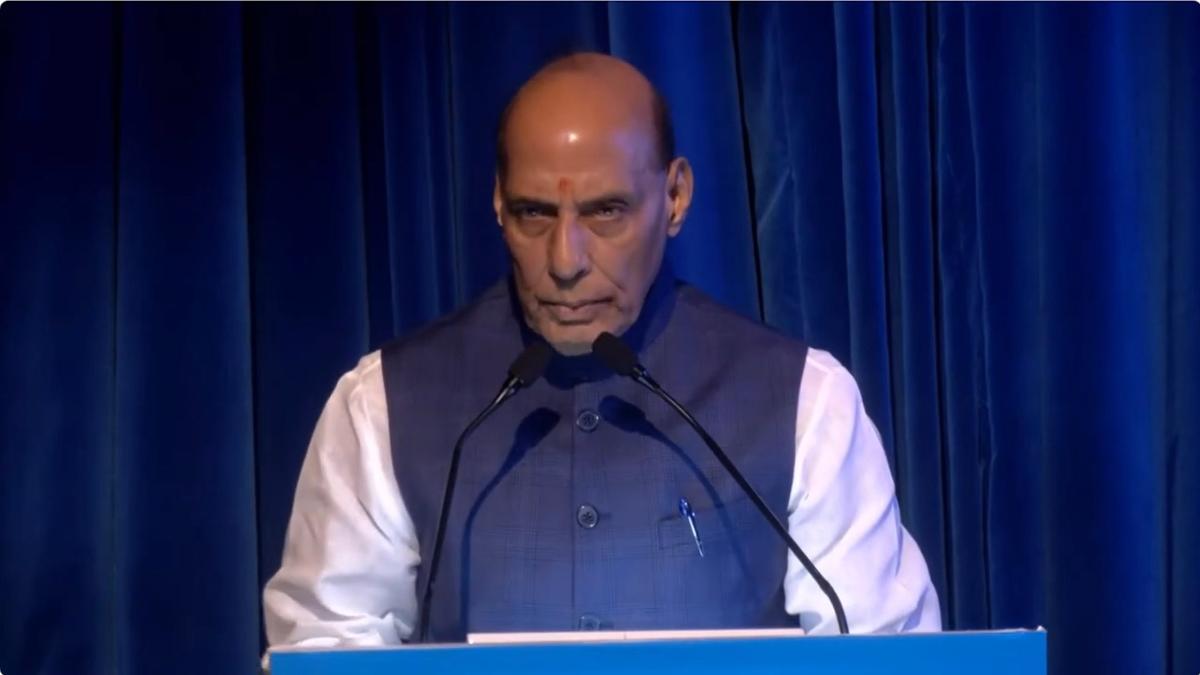
Defence Minister Rajnath Singh on Wednesday (May 13, 2026) asserted that India’s future military strength will depend on how effectively its armed forces, defence laboratories, and industries work together, while emphasising self-reliance and jointness as essential pillars of national security.Addressing the third edition of Kalam & Kavach, a defence conclave, at the Manekshaw Centre in New Delhi, on video, the Defence Minister said modern security challenges require faster integration between innovation, production, and operational deployment.“A nation’s strength will increasingly depend on how quickly its defence forces, laboratories, and industries think and act as one,” Mr. Singh said while stressing the importance of strategic autonomy and future readiness.The conclave, themed ‘Taking JAI Forward With I²’, brought together policymakers, military leaders, diplomats, defence industry stakeholders, scientists, startups, academia, and strategic experts to deliberate on India’s evolving defence and security landscape.Highlighting the changing character of warfare, Mr. Singh said future battlefields would reward nations capable of reducing the time between an idea, prototype development, and deployment in the field. Referring to current geopolitical tensions, cyber threats, supply-chain disruptions, and hybrid warfare, he said national security could no longer rely on outdated assumptions.“National security demands our preparedness, resilience, innovation, and strategic confidence,” he stated.‘Dependence is a vulnerability’The Defence Minister described self-reliance in defence manufacturing as a strategic necessity rather than merely an economic objective. He warned that excessive dependence on foreign suppliers for critical defence capabilities leaves nations vulnerable during crises.“We must design, develop, produce, maintain, and upgrade key systems within our own national ecosystem. That is how we will secure our strategic autonomy,” Mr. Singh said.He also underlined the importance of jointness among the armed forces, stating that modern warfare does not recognise silos and success would depend on seamless integration across land, sea, air, cyber, and space domains.Minister of State for Defence Sanjay Seth, in his inaugural address, described Kalam & Kavach as a platform combining knowledge, innovation, resilience, and national security objectives.Chief of Integrated Defence Staff Air Marshal Ashutosh Dixit stressed the need for indigenous innovation and cutting-edge technologies to strengthen India’s strategic future.The conclave featured discussions on AI-enabled warfare, autonomous systems, hypersonic technologies, quantum-enabled C4ISR (command, control, communications, computers, intelligence, surveillance, and reconnaissance), aerospace advancements, and defence manufacturing, alongside an exhibition showcasing innovations by Indian private industry, MSMEs, and startups.
Rajnath Singh calls on defence forces, industry, and labs to act as one
Rajnath Singh emphasizes collaboration among defense forces, industry, and labs for India's strategic autonomy and future military readiness.
380 words~2 min read