Brooks knew this from experience. Working on IBM’s 360 mainframe operating system project, he watched software organizations collapse under their own complexity. Every new worker contributed exponentially to communication costs. New people needed training, and ramp-up time means they are slow to produce. Existing workers had to stop what they were doing to train the newcomers — a double whammy that compounded with every new hire.
For 50 years, no one found a way around it. Of the 66 unicorns (startups worth over $1 billion) that were flush with cash in 2021, 30 haven’t raised funds since, and 11 have raised at lower valuations. Although other factors were undoubtedly at play, this is yet another data point that illustrates productivity can not be bought simply by hiring more engineers.Then, in 2022, something changed.
Why AI Repeals Brooks’s Law
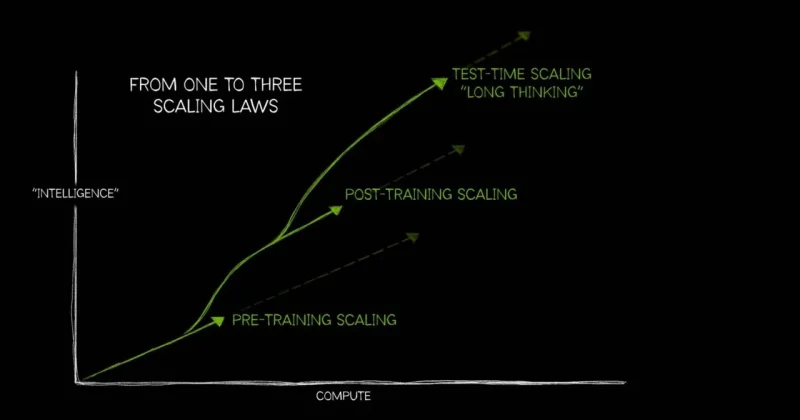
Since 2023 a new set of laws have begun to govern how capital gets deployed, ones that more or less render the Mythical Man-Month* irrelevant. This is apparent if you look at companies pouring capital into AI models and seeing immediate returns in research and model capability. Model companies have managed to deploy more capital with smaller teams and produced outsized revenue growth as a result. In fact our internal data show that the larger AI companies have nearly three times the revenue run rate per full-time employee as non-AI software and tech companies.