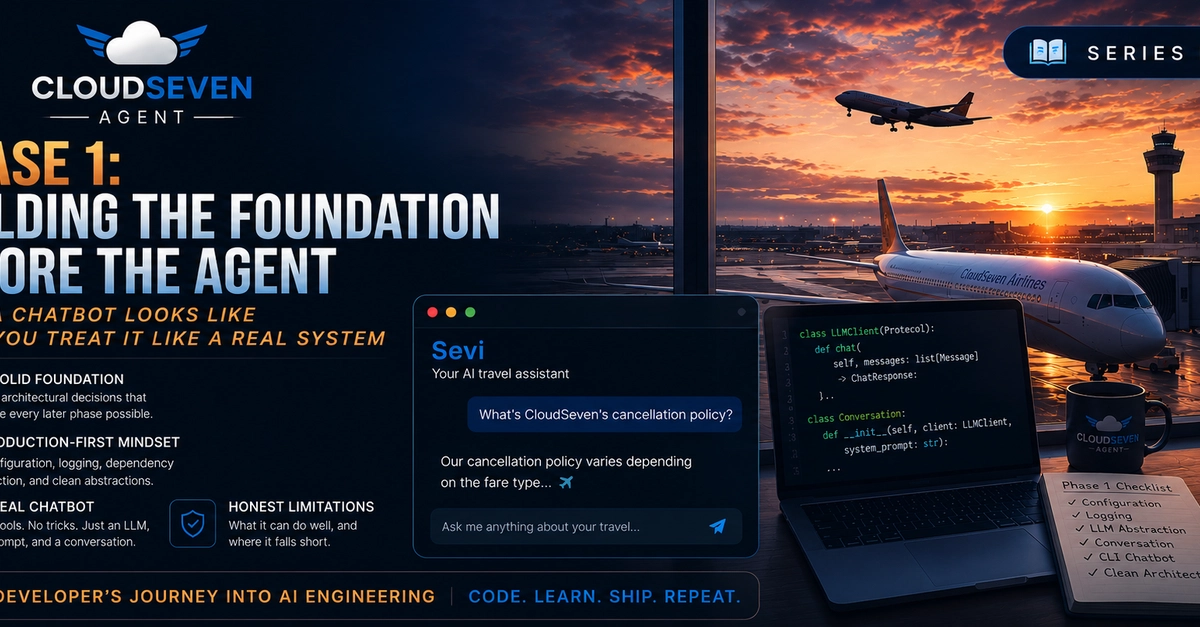
In Phase 1 of this project, we built a type-safe “Brain” using .NET 10 and Google Vertex AI. In Phase 2, we successfully gave hands and feet to our AI substrate. By connecting Microsoft Semantic Kernel, we created an autonomous agent that can read real local project files, think independently, and detect security vulnerabilities or performance bottlenecks.
Here is a quick summary of what I accomplished and the critical technical lessons I learned during Phase 2.
Autonomous Tool Execution: The AI agent now receives a high-level goal (e.g., “Find architectural patterns and security bugs”). It automatically runs native C# plugins like ListProjectFiles and ReadCodeFile to explore and analyze the workspace without manual guidance.
Dynamic Provider Routing: I implemented a dynamic runtime pipeline. The system can switch between Gemini 2.5 Flash and Groq (Llama 3.3 / Llama 3.1) on the fly based on user selection, completely decoupling the business logic from a single AI vendor.
Angular 19 Cyber-Dashboard: Built a modern interface using Angular Signals and Tailwind CSS v3 to visualize the agent’s real-time analysis results, complexity scores, and strategic recommendation logs.