Here are a few details from past drafts of my latest novel that ended up on the cutting room floor: the family babies, a brother-and-sister duo marooned from their older siblings by an age gap, branch off from their folks, who run a Reagan-era discount chain, to open a survivalist superstore (tagline: “It’s closer than you think!”). Years before, at age nine, the sister monkeys around the periphery of her parents’ high-pressure party, gets drunk, and throws up (okay, I appreciate the wisdom of editing a tanked third grader out of my manuscript); incensed by her brother’s ire, she punches him and cries out that he’s “an old shit-ass bag.” And at one point, there was an entire point-of-view that didn’t make the final edit: that of the matriarch’s love interest, a pretty, practical woman who is also an employee at the family business. An entire voice, psyche, universe: gone.Article continues after advertisement
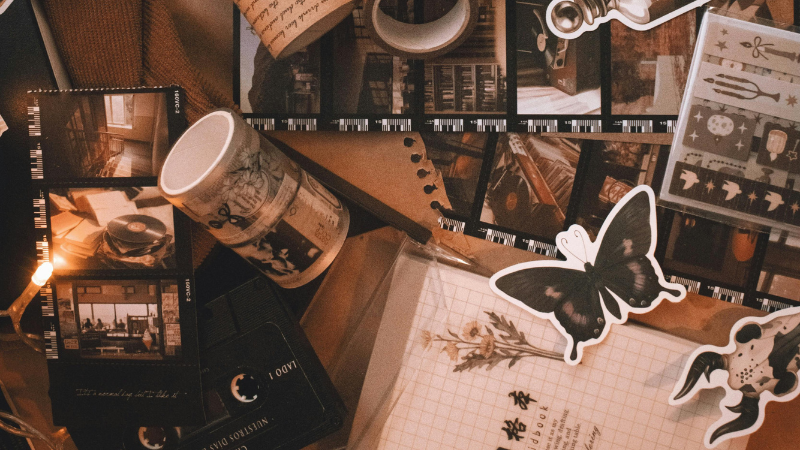
Most of what I end up cutting out of my writing is ephemera—the details and minutia of character and story we write at draft one that forms the narrative’s cobblestone, establishing the early world concretely enough to be paved over later. Ephemera is a bilateral entity for the fiction writer. The most precise definition of ephemera is an object that is meant to be discarded once it has outlived its purpose—paper goods like movie tickets, play handbills, lipstick tubes, rings that green the fingers. Stories are filled with this literal kind of ephemera in the form of what the characters wear, carry, purchase, pocket. But there’s ephemera in the spiritual sense of craft—the spare remarks and objects that constitute the overflow cut for cleaner syntax or word count.