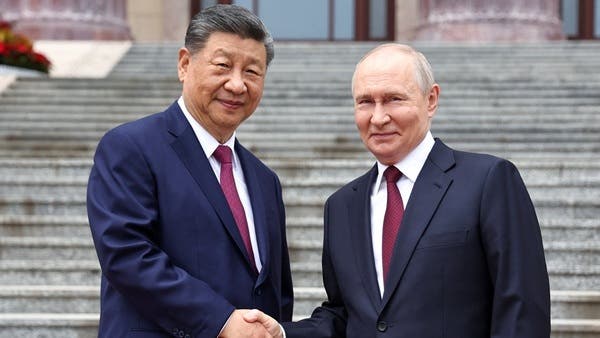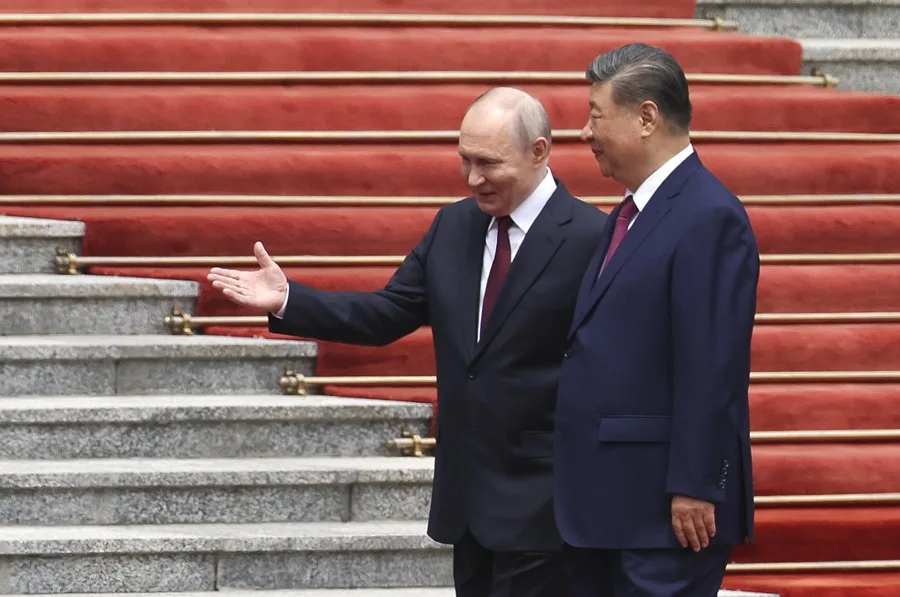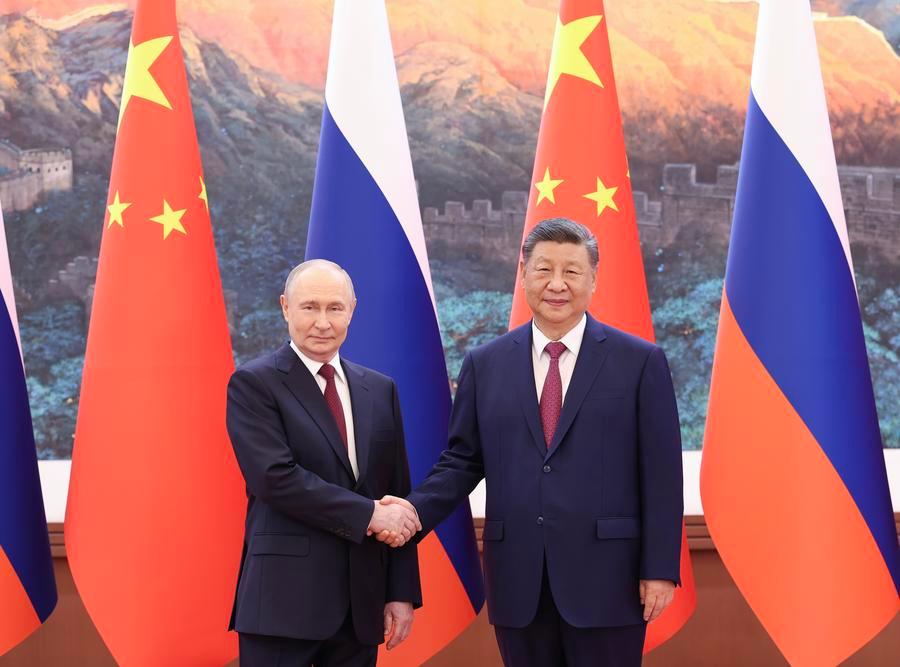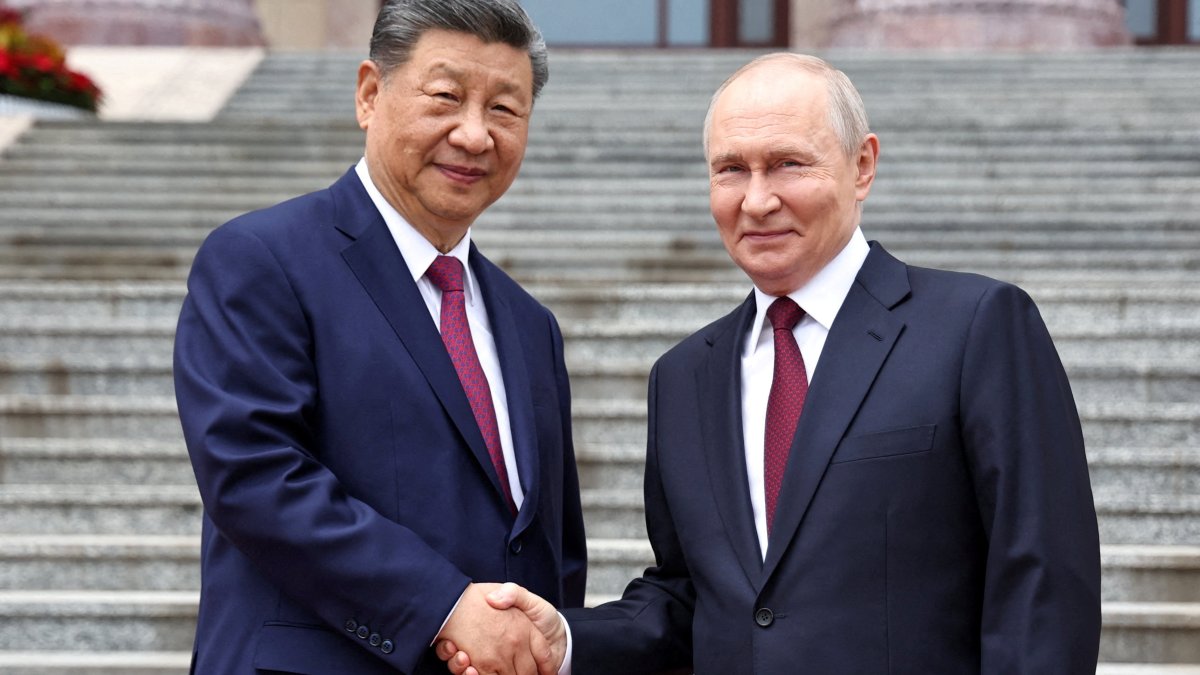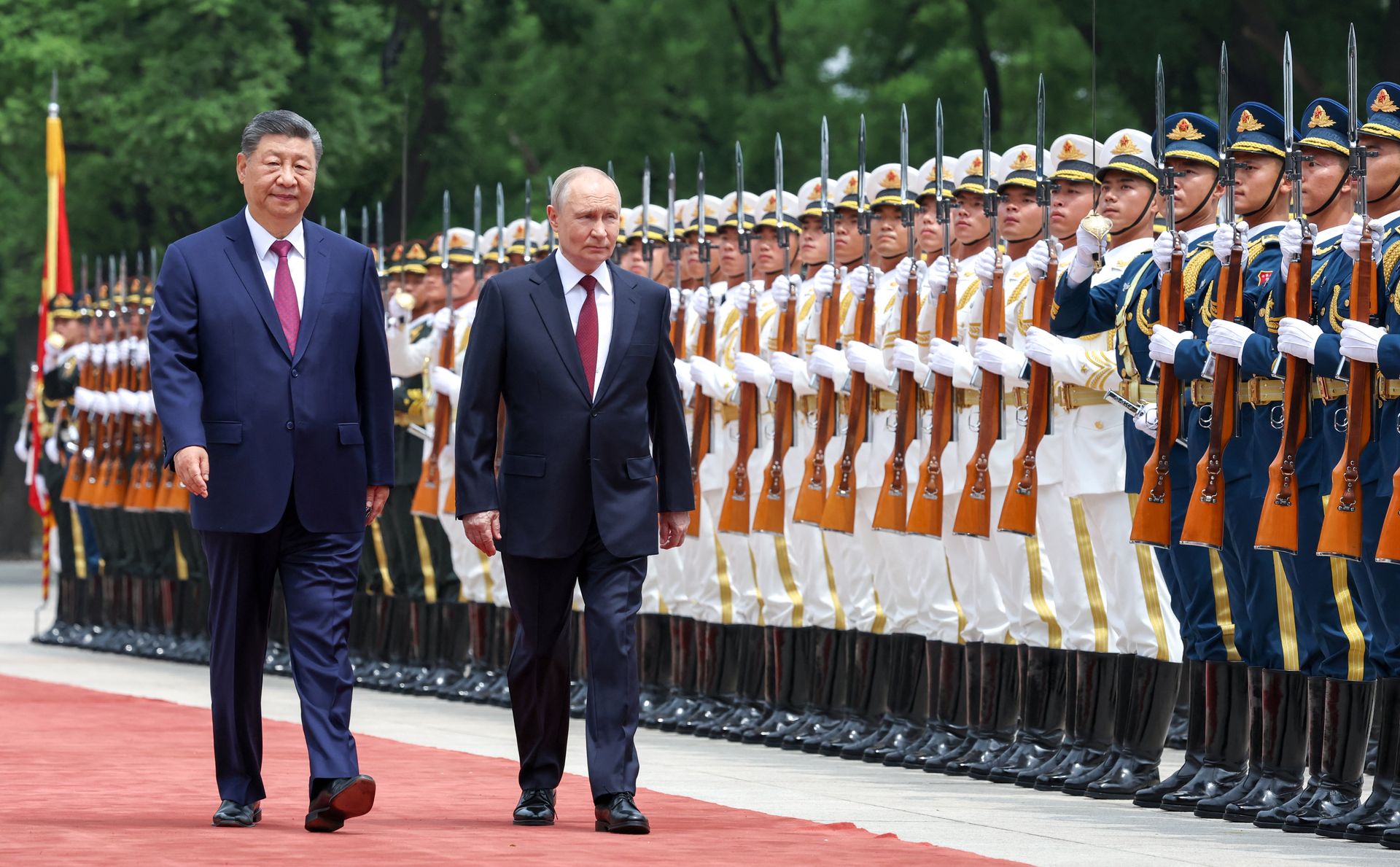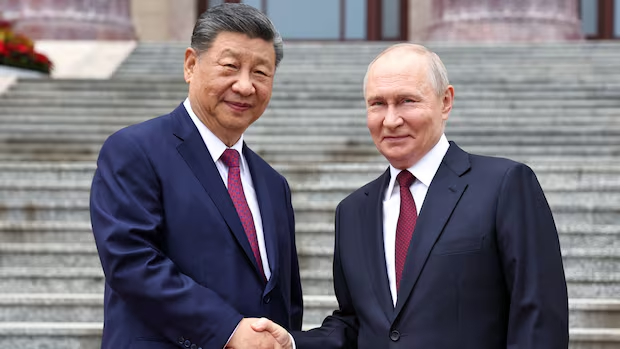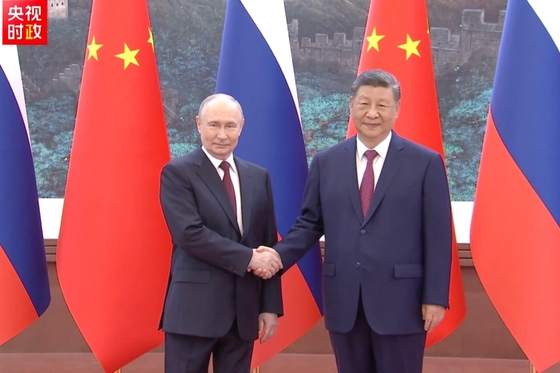
1. [para. 1][para. 2] Chinese leader Xi Jinping and Russian President Vladimir Putin met in Beijing on Wednesday, agreeing to extend a cornerstone bilateral friendship treaty during Putin’s state visit. The talks were held at the Great Hall of the People and included both restricted and expanded sessions, according to China’s state-run Xinhua News Agency.2. [para. 3] The two sides agreed to continue extending the China-Russia Treaty of Good-Neighborliness and Friendly Cooperation, signed 25 years ago, which provides a legal foundation for long-term ties. This year also marks the 30th anniversary of the establishment of their strategic partnership.3. [para. 4][para. 5] Xi stated that the treaty created an institutional basis for long-term good-neighborly relations and comprehensive strategic coordination. He called for deeper political trust and strategic coordination, emphasizing that the relationship had advanced through expanded cooperation and joint defense of international fairness and justice, given both countries are permanent U.N. Security Council members.4. [para. 6][para. 7] Xi said the ties are built on equality, mutual respect, trustworthiness, and mutual benefit, citing progress in trade, investment, energy, science and technology, people-to-people exchanges, and local-level cooperation. He urged government departments to implement leader consensus, strengthen mutual trust, broaden cooperation, and improve coordination across bilateral mechanisms.5. [para. 8][para. 9] Xi called for upgrading practical cooperation in trade, investment, energy, resources, transportation, and scientific and technological innovation, as well as fostering cooperation in emerging fields and using new productive forces for growth. He also advocated expanding exchanges in education, culture, film, tourism, and sports to bolster public support for bilateral ties.6. [para. 10][para. 11] Xi stressed closer coordination in multilateral forums, including the U.N., Shanghai Cooperation Organization, BRICS, and APEC. Putin said Russia-China relations had reached an unprecedentedly high level, citing frequent high-level exchanges, strong political trust, growth in bilateral trade, and mutually beneficial energy supply arrangements, as well as cooperation in transportation, logistics, and science and technology.7. [para. 12][para. 13] Putin noted that cultural and educational exchanges were gaining momentum, and that the friendship treaty had laid a solid legal foundation with greater practical importance in the current environment. He expressed willingness to uphold the treaty’s spirit, strengthen strategic coordination, and deepen practical cooperation.8. [para. 14][para. 15] Putin described Russia-China cooperation as a stabilizing factor in a turbulent international environment, committing to strengthen multilateral coordination, support China in hosting APEC, enhance the SCO’s standing, strengthen BRICS unity, uphold U.N. authority, advocate civilizational diversity, and promote a more just international order. The leaders also exchanged views on major international and regional issues, including the Middle East.9. [para. 16][para. 17] Xi and Putin heard reports from vice-premier-level cooperation committees covering progress in investment, energy, trade, cooperation between China’s northeast and Russia’s Far East, and people-to-people exchanges. The foreign ministers reported on coordination in international and regional affairs. After the talks, they signed a joint statement on further strengthening comprehensive strategic coordination and deepening good-neighborly cooperation, and witnessed the signing of 20 cooperation documents covering trade, education, science and technology, and other areas.10. [para. 18] During the visit, the two sides also issued a joint statement advocating world multipolarity and a new type of international relations, and reached 20 additional cooperation documents in related fields, according to Xinhua.AI generated, for reference only
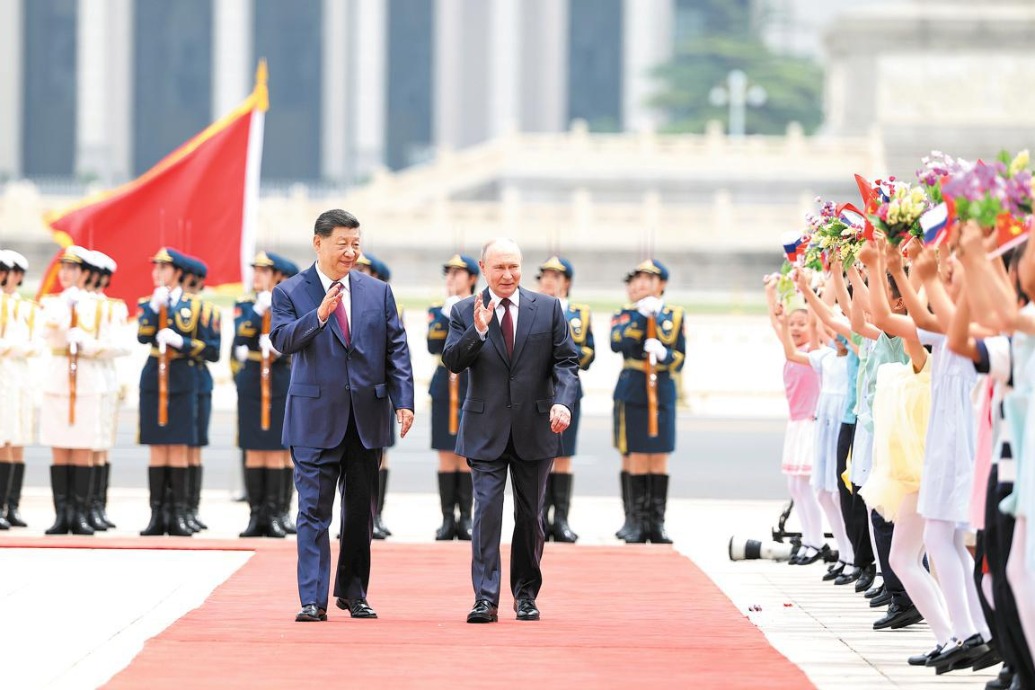
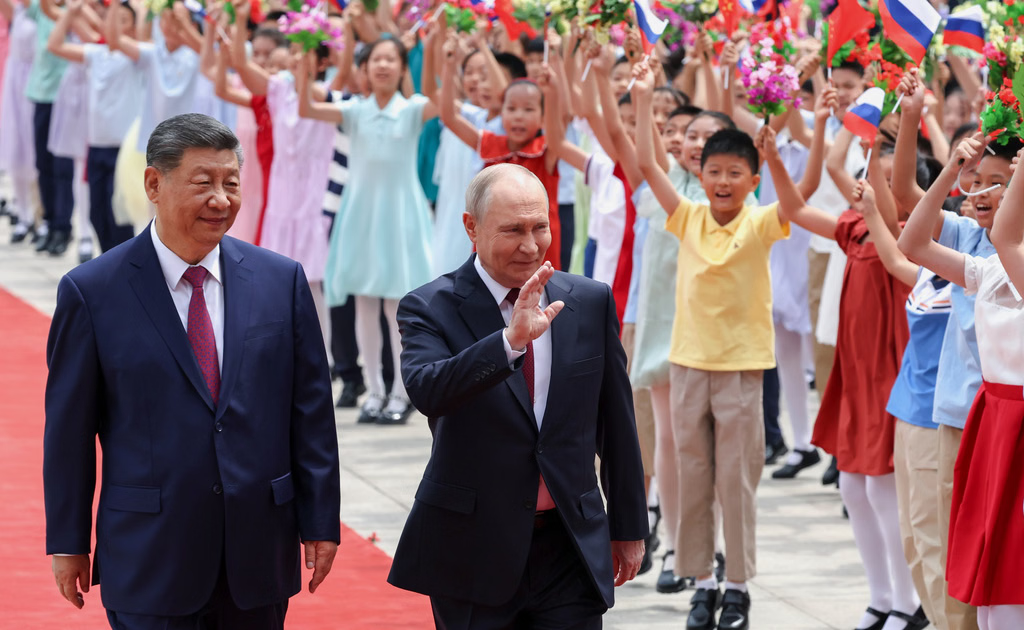
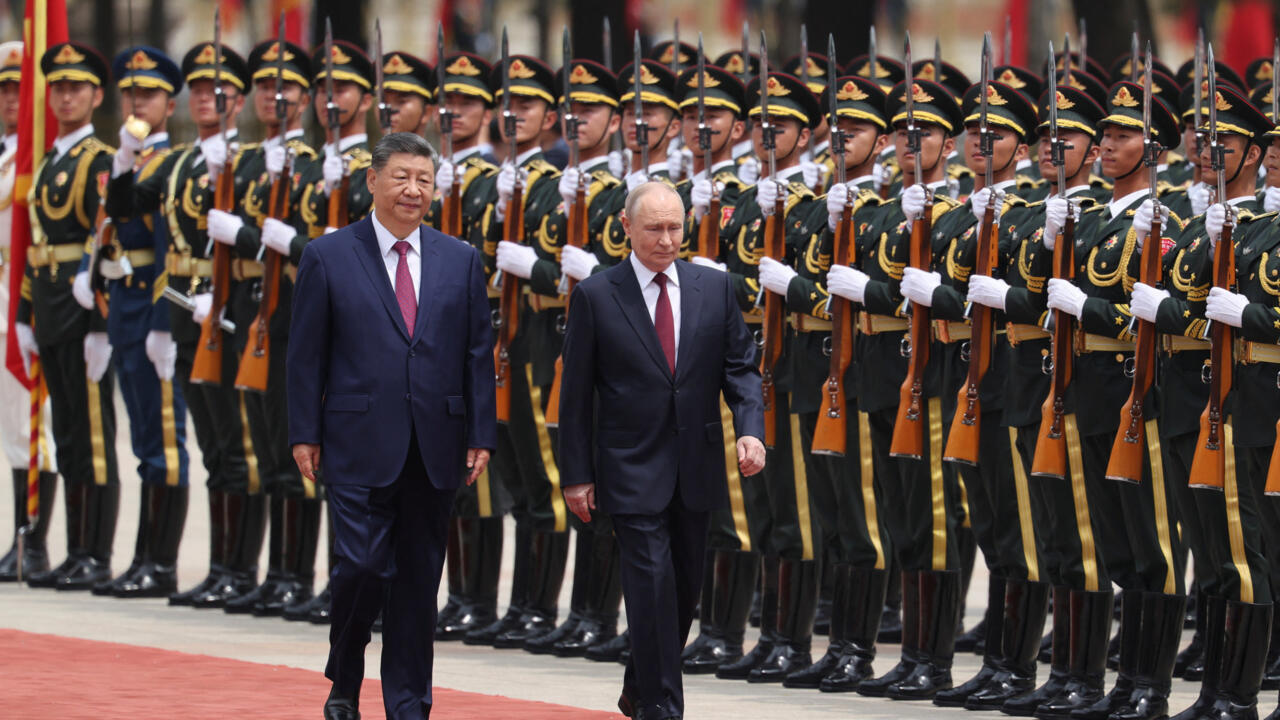
Xi and Putin Agree to Extend China-Russia Friendship Treaty
The two governments issued joint statements on strategic cooperation and multipolarity, underscoring efforts to tighten ties amid a turbulent international backdrop
536 words~2 min read