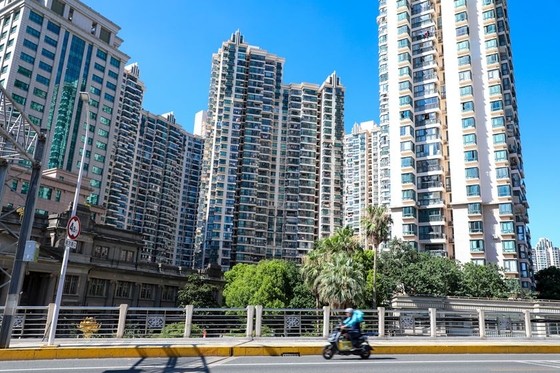
1. Shanghai has introduced a pilot program enabling state-owned enterprises to acquire second-hand homes in three significant districts—Jing’an, Xuhui, and Pudong—to convert them into affordable rental units. This scheme aims to support the city’s struggling property market and stabilize falling home prices. State-owned housing companies at the district level will handle the purchases, with financial backing from the Shanghai branch of China Construction Bank. The program encourages a “trade-in” mechanism where owners of pre-owned homes, upon selling, use the proceeds to purchase new properties within the same district. [para. 1][para. 2]2. This initiative follows the Chinese central government’s “de-stocking” directive, which seeks to absorb excess property inventory and promote the sale of new homes. Since the property sector’s liquidity crisis began in late 2021, policymakers have sought ways to jumpstart secondary market activity and spur new housing demand amid persistent headwinds in the real estate sector. [para. 3]3. According to Lin Bo, a research manager at China Real Estate Information Corp. (CRIC), the decision for district platforms to buy up homes is mainly intended to stabilize the market. Over the past six months, new home transactions in Shanghai have slowed by more than 60%, and prices in the secondary market have dropped at an accelerated pace since mid-2025. [para. 4]4. Official data from the National Bureau of Statistics reveals that second-hand home prices in Shanghai have declined both month-over-month and year-over-year since May 2025, falling by about 15% since June. In December 2025, transaction prices in the targeted districts were about 30% lower than their historical peaks, according to the China Index Academy. [para. 5]5. The CRIC report noted that the purchases will mainly target “old, small, and rundown” apartments, which are typically sold at a discount. Government intervention in this segment could help stabilize prices and facilitate homeowners’ ability to replace old properties with new ones, thus reinvigorating the replacement chain. [para. 6]6. Though vital for setting a price floor, experts question whether official purchases alone can reverse the market’s decline, given the high cost—and limited supply—of suitable replacement homes. Many owners of small, aging units may struggle to upgrade within the same districts due to persistently high prices, particularly in Jing’an and Xuhui; Pudong is more affordable by comparison. [para. 7][para. 10]7. Each district has specific acquisition criteria: Jing’an and Xuhui prefer smaller secondary homes with clear title near economic hotspots, while Pudong restricts purchases to homes built before 2000, within the Inner Ring Road, under 70 square meters, and below 4 million yuan (about $574,000). [para. 8]8. The acquisition program’s success will depend heavily on how purchase prices are set and whether sellers are willing to transact. Currently, the pilot’s pricing mechanism is not fully defined, other than promising negotiations based on market conditions or professional appraisals. Persistent market declines could make bridging buyer-seller price gaps challenging. [para. 9]9. Substantial investment will be required: the China Index Academy estimates over 26,000 qualifying pre-owned units in target districts. If 30% upgrade, annual program costs could reach 31.5 billion yuan. Fiscal strength in Jing’an, Xuhui, and Pudong is a factor in their selection for the pilot. [para. 11][para. 12]10. Financing strategies vary: Jing’an combines allocated funds, corporate capital, and loans; Xuhui relies initially on district funds and then turns to bank financing. Once purchased, homes are renovated for affordable rentals. Small, older apartments in prime locations can offer rental yields around 3%, higher than the city average, making the model potentially sustainable if rental income covers costs. Future cost recovery may rely on public REITs or property sales. [para. 13][para. 14][para. 15]AI generated, for reference only
Shanghai Pilots State Home Purchases in Three Districts to Halt Market Slide
Authorities in Jing’an, Xuhui, and Pudong tap state funds to buy older apartments and convert them into rentals, aiming to unlock a frozen property replacement chain
597 words~3 min read